
Maharashtra
Nothing but Sachin Waze’s statement to show corruption case against Anil Deshmukh: Bombay High Court


The Bombay High Court has granted bail to former Maharashtra home minister Anil Deshmukh in an alleged corruption case observing that prima facie, there is nothing but the statement of dismissed cop Sachin Vaze – whose tenure as a Police Officer has been “controversial” – to show that money was collected from bar owners at the NCP leader’s behest.
The court has also considered his age, 73 years, and ailments, some of which are classified as “de-generative”.
Justice MS Karnik, in a detailed 16-page judgement which was uploaded late last night, granted bail to Deshmukh in the corruption case registered against him by the Central Bureau of Investigation (CBI) on furnishing surety of Rs 1 lakh. He has been directed to cooperate with the investigation.
However, the former minister will not be let out immediately as, following a request from the CBI, the said the bail order will be effective after 10 days.
The court noted that as per the prosecution chargesheet, its case is “mainly based on Sachin Waze’s statement”, who has been granted pardon after turned approver. “The question of the reliability of Mr. Sachin Waze’s version is a matter for trial,” observed Justice Karnik, adding: “It is a matter of record that Sachin Waze was suspended for 16 years.”
Waze had claimed that Deshmukh had promised to reinstate him in police service. Post reinstatement, Waze claimed to collect money from bar owners and deliver it to Kundan Shinde, Deshmukh’s former aide, as instructed by Deshmukh. According to Waze, Deshmukh instructed him to collect Rs.3 lakhs each from 1750 Orchestra Bars/Pubs/establishments in Mumbai totalling Rs.40 to Rs.50 crores approximately.
However, the court took note of the ACP Sanjay Patil’s statement, which were pointed out by Deshmukh’s lawyers – senior advocate Vikram Chaudhari and advocate Aniket Nikam. Patil had said that Waze informed him that he is collecting the money for ‘No.1’, and when Patil asked Waze as to who is ‘No.1’, he was informed that it is ‘CP, Mumbai’. CP at the relevant time was Param Bir Singh.
“The statements as they stand, even without testing its veracity, which is a subject matter of trial, creates some doubt as to whose behest the money was collected,” remarked justice Karnik. “I may hasten to add that these are very prima facie observations limited to considering this application for bail.
The court further remarked that “It is a matter of record that Sachin Waze was suspended for 16 years” and that his tenure “as a Police Officer has been controversial”. Waze was arrested for his alleged role in Antilia bomb scare case and murder of businessman Mansukh Hiran. “He is allegedly involved in extortion cases, fake encounter case, etc,” noted HC.
“Except for Mr. Sachin Waze, none of the statements recorded indicate that it was under the instructions of the applicant that the money was to be collected. It is for the trial Court to look for corroboration in material particulars for relying on the statement of Sachin Waze, the approver,” the court averred.
The HC also factored his old age and that he is suffering from multiple ailments, some of which are classified as de-generative.
Justice Karnik observed that while granting him bail in ED case, the HC had remarked: “In the light of the materials on record, it would be audacious to observe that the applicant is not a sick person”.
Deshmukh was arrested in November 2021 by the ED in a money laundering case. In April 2022, the CBI arrested him in a corruption case. He is presently in judicial custody and lodged at the Arthur Road Jain in Mumbai.
The CBI has filed chargesheet on June 2, 2022, with respect to the issue of corruption, the basis being collecting/extorting monies from restaurants and bar owners.However, the two other facets of corruption – the transfers and postings within the police and influencing investigations – are still under investigation. The chargesheet is yet to be filed by the CBI on these aspects.
“Therefore, there is no question of the trial concluding any time soon in the near future. The CBI may proceed with the investigation but not at the cost of continued incarceration of the applicant,” added HC.
Deshmukh is no longer the Home Minister and therefore, there is no question of his influencing the investigation
Also, relying on bail order in ED case, Justice KArnik said that Deshmukh “appears to have roots in society and the possibility of fleeing away from justice seems remote”.
Maximum punishment, if found guilty, is seven years. Also, there are no criminal antecedents reported against him. Having regard to the totality of the circumstances, in my opinion, the applicant can be released on bail.
Release on bail on furnishing personal bond of Rs.1,00,000/- with one or more sureties in the like amount.
Report to the office of the CBI on every Tuesday, between 10.00 a.m. to 12.00 noon for one month from the date of his release. Thereafter, he shall report to the office of the CBI on every alternate Tuesday, between 10.00 a.m. and 12.00 noon, for the next three months.
To remain within the area of Greater Mumbai till the trial is concluded and shall not leave the area without permission of the competent Court.
Surrender his passport to the trial Court, if not already surrendered.
Not make any inducement directly or indirectly, threat or promise to tamper with witnesses.
Not tamper with evidence.
Co-operate with the expeditious disposal of the trial.


Maharashtra
67 TMC of water to Mumbai, drought-hit Marathwada neglected: Uddhav Sena attacks Fadnavis govt

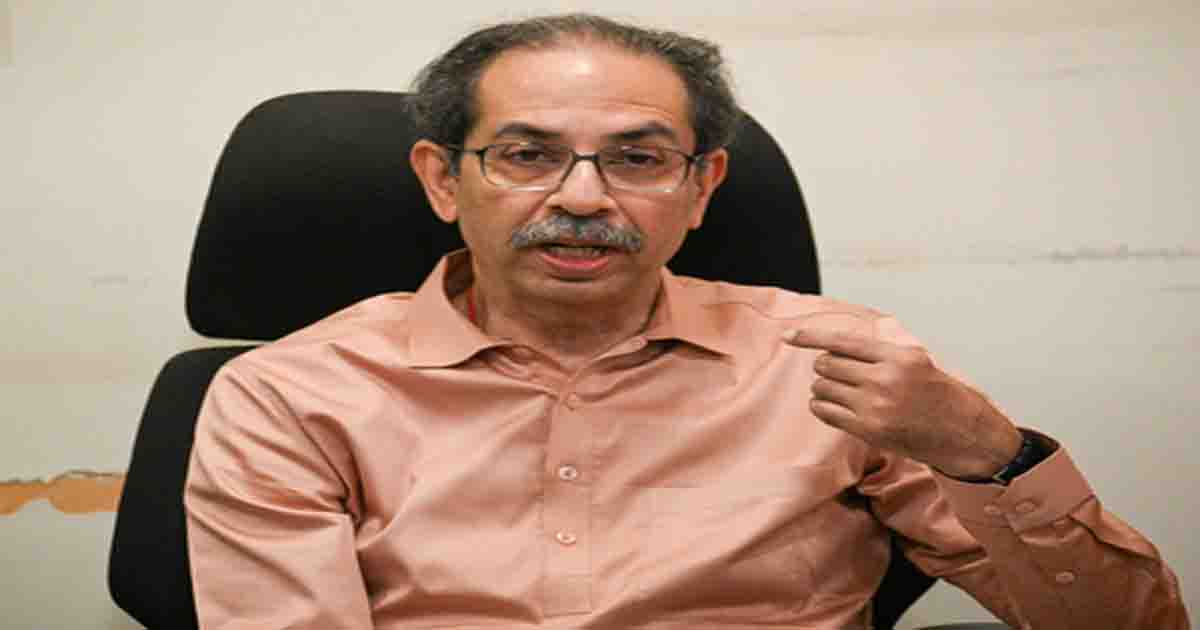
The Shiv Sena (Uddhav Balasaheb Thackeray) on Tuesday criticised the Maharashtra government’s handling of a severe drought in Marathwada while examining a state proposal to divert surplus water from the Koyna hydroelectric project towards Mumbai.
The Thackeray camp in the party mouthpiece ‘Samaana’ editorial argued that acute water scarcity, crop losses, and lack of livelihood in Marathwada are forcing rural residents to abandon their villages. At the same time, it pointed to recent discussions chaired by Chief Minister Devendra Fadnavis on planning long-term water supply—reportedly spanning 50 years—and diverting water discharged after power generation at the Koyna project toward Mumbai, Navi Mumbai, and Thane.
The editorial highlighted depleting reservoirs, reliance on water tankers across Marathwada villages, failed kharif crops due to erratic rainfall, bleak rabi prospects, and shortages of drinking water, fodder, and rural employment. It questioned the rationale of planning up to 67 TMC of water for the Mumbai metropolitan region—alleging benefits for builders—while Marathwada faces severe distress and migration.
“The leadership of Marathwada, which has burnt to ashes, ought to break through walls of factionalism, unite across party lines, and wage a fierce struggle on issues concerning the people. Crops have withered in the fields, reservoirs have dried up, stoves have gone cold, and cattle are wandering in search of fodder. Just because the Chief Minister has declared a drought does not mean the problems have been ‘resolved’. The state government asked the Centre for Rs 40,000 crore rupees for drought relief; the Centre approved a mere thousand crore rupees. That is not even enough to console the drought-affected,” remarked the editorial.
The editorial alleged that while the state sought Rs 40,000 crore from the Centre for drought relief, central assistance fell far short, and criticises elected representatives and political leaders across party lines for failing to unite around affected farmers and displaced families.
The Uddhav Thackeray-led Shiv Sena said that people suffering due to lack of water in the villages and hamlets of Marathwada are also Marathi people of Maharashtra.
“If the sixteen public representatives from areas like Latur, Chhatrapati Sambhajinagar, and Solapur had been sensitive, a common platform would have been created to help the drought-affected. But that did not happen, and each person remains busy calculating their own political gains and losses,” it noted.
The editorial claimed that dark shadows of despair and apathy have spread across Maharashtra. In many countries in Europe, people have called for general strikes over issues affecting the public.
“Had a situation such as the severe drought in Marathwada, coupled with a government’s failure to address it, occurred in a European country, an apathetic and spineless government there would not have lasted even an hour. We are witnessing with our own eyes the displacement of ‘Marathi’ people from Marathwada due to drought. MLAs, MPs, corporators, mayors and other elected representatives should hang their heads in shame,” the editorial said.
The Ministry of Statistics and Programme Implementation (MoSPI), with the RBI as the knowledge partner, organised a conference here on Monday to familiarise data users with the New Series of Gross Domestic Product (GDP), Consumer Price Index (CPI) and Index of Industrial Production (IIP).
Following the release of revised series of GDP, CPI and IIP at different points during 2026, the conference was organised to acquaint data users with the methodological changes, data sources and key improvements incorporated in each of the revised series.
It also aimed to facilitate a better understanding of these changes and their implications for the resulting estimates.
The conference brought together representatives of the Reserve Bank of India (RBI), SEBI, economists, forecasters, credit rating agencies, experts from financial institutions and the banking sector, academia, research institutions, industry and investor organisations, users of official statistics and senior officials of the Central and State Governments.
Dalip Singh, Director General (Central Statistics), in his welcome address, noted that macroeconomic statistics form the foundation of economic analysis, policy making and informed decision making and that GDP, CPI and IIP together provide a comprehensive measure of economic activity and growth.
He observed that, as the structure of the economy, production processes, consumption patterns and technology continue to evolve, the statistical system must evolve continuously to remain representative of prevailing economic realities.
Saurabh Garg, Secretary, MoSPI, while setting the context, noted that the conference was being held in Mumbai after about a year, this time after the completion of the base revision exercise, with the first-quarter GDP estimates of the new series already released and the second-quarter estimates due shortly.
Looking ahead, he outlined the Ministry’s priorities, including the rebasing of Gross State Domestic Product to 2022-23 and the development of District Domestic Product estimates for more granular decision-making; preparation for the implementation of the System of National Accounts (SNA) 2025, with its focus on well-being and distributional accounts.
Poonam Gupta, Deputy Governor, RBI, in her inaugural address, congratulated MoSPI on completing the base revision of the three series in a timely manner and commended the Ministry’s extensive consultations with users.
She highlighted the key features of the revised series — the use of double deflation and a wider range of administrative data in the national accounts, the alignment of demand- and supply-side GDP estimates through the Supply-Use Table framework, the updated weighting pattern and more precise measurement of core inflation in the CPI and the greater weight assigned to technology- and consumption-oriented sectors in the IIP.
Deepak Parekh, former chairman, HDFC, in his keynote address, described 2026 as a year of modernising India’s statistical architecture, noting that the revisions address concerns earlier raised on the national accounts and welcomed the growing use of high-frequency indicators and new data sources such as night lights and online search trends, while cautioning that technology and AI must be supported by appropriate safeguards and cannot substitute for judgement.
The inaugural session was followed by three technical sessions on the new series of GDP, CPI and IIP, in which officers of MoSPI and the RBI presented the methodological changes, data sources and key improvements.
Maharashtra
Tracking drug addicts in Mumbai now easier: Advanced van deployed at Mahalaxmi concert; action taken against 12 drug users.
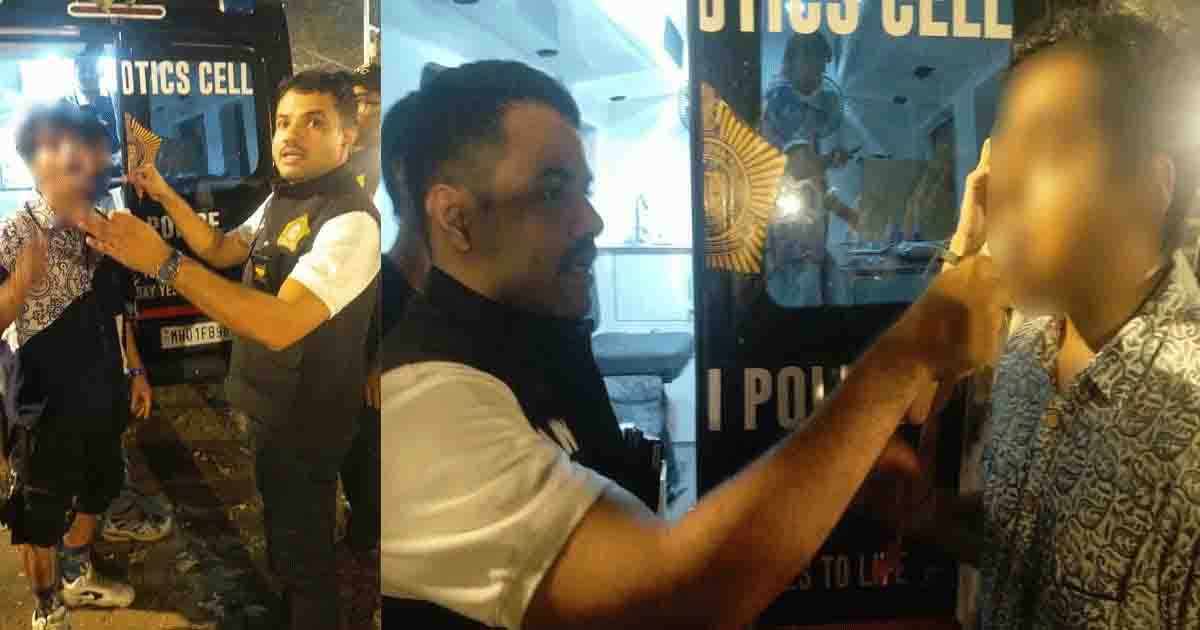
Mumbai: Detecting drug users at concerts, parties, or other events in Mumbai has become significantly easier. The Anti-Narcotics Cell (ANC) has added a state-of-the-art van to its fleet, specifically designed to identify individuals under the influence of drugs. In its very first operation, the van helped detect 12 individuals involved in drug use, leading to subsequent legal action against them. To curb drug consumption and trafficking, the Mumbai Police’s Anti-Narcotics Cell has begun utilizing this specialized “Anti-Narcotics Investigation Van,” which was inaugurated by Chief Minister Devendra Fadnavis. The van is custom-built for tasks such as detecting narcotics, conducting on-site analysis, and collecting samples, while also facilitating technical investigations. Following its induction into the force, the van was deployed on November 22 at the ‘AEDE’ live music concert held at the Mahalaxmi Racecourse. Attendees were screened to determine if they had consumed drugs; a total of 12 individuals were found to be under the influence and faced appropriate action. The van can be parked in various neighborhoods, streamlining investigative procedures.

Bhuvan Bam recalls Shah Rukh Khan giving him a head massage, Madhuri Dixit calls him a ‘generous actor’

‘Ma’s journey has been full of love and tragedy’: LoP Rahul Gandhi shares video featuring mother Sonia, sister Priyanka

Earthquake tremors felt across Bihar, no damage reported

Five killed, three injured as Scorpio collides with coal-laden truck in Lakhisarai

Hema Malini gets emotional remembering Dharmendra on his first death anniversary: ‘Life seems so empty without him’

Congress trying to protect 3 crore Bangladeshi infiltrators in voter list: HM Shah

Red Fort car blast probe exposes blueprint for spread of terror modules across India

Trump flags Iran targets as talks continue

‘Conspiracy, not accident’: NCP on Ajit Pawar death

BJP, Shiv Sena slam Mallikarjun Kharge for terming Diwali ‘Khushiyon ka Eid’
-

 Crime4 years ago
Class 10 student jumps to death in Jaipur
-

 Maharashtra2 years ago
Mumbai Local Train Update: Central Railway’s New Timetable Comes Into Effect; Check Full List Of Revised Timings & Stations
-

 Maharashtra2 years ago
Mumbai To Go Toll-Free Tonight! Maharashtra Govt Announces Complete Toll Waiver For Light Motor Vehicles At All 5 Entry Points Of City
-

 Maharashtra2 years ago
False photo of Imtiaz Jaleel’s rally, exposing the fooling conspiracy
-

 National News2 years ago
Ministry of Railways rolls out Special Drive 4.0 with focus on digitisation, cleanliness, inclusiveness and grievance redressal
-

 Maharashtra2 years ago
Maharashtra Elections 2024: Mumbai Metro & BEST Services Extended Till Midnight On Voting Day
-

 National News2 years ago
J&K: 4 Jawans Killed, 28 Injured After Bus Carrying BSF Personnel For Poll Duty Falls Into Gorge In Budgam; Terrifying Visuals Surface
-

 Crime2 years ago
Baba Siddique Murder: Mumbai Police Unable To Get Lawrence Bishnoi Custody Due To Home Ministry Order, Says Report