
International News
Top Indian-American editor steps down to save staff jobs

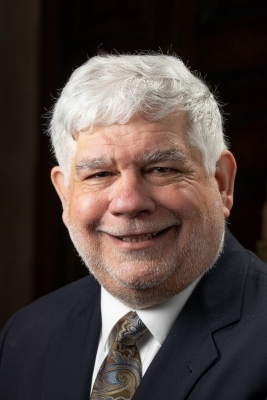
An Indian-American Pulitzer-winning editor of a prominent US publication has announced his decision to step down next year in an attempt to save the jobs of his staff members from impending company wide layoffs.
Peter Bhatia, 69, editor and vice president of Gannett-owned Detroit Free Press, announced his decision at a staff meeting held last week after the company reported back-to-back quarterly losses.
“We’re in a difficult period economically,” Bhatia was quoted as saying in his newspaper, which employs a total of 110 people.
“The company is going through a layoff process and I essentially made the decision to lay myself off in the interest of saving other jobs. I do have other opportunities that will probably come to work out at some point,” he added.
“But if by getting my salary out of the budget it saves some jobs of people on the staff, I think that’s the right thing for the Free Press,” Bhatia, who will step down in January, said.
Bhatia, who hails from Lucknow, joined The Free Press in September 2017, after two years as editor and vice president of The Cincinnati Enquirer and cincinnati.com.
There are no reports of Bhatia’s replacement yet but the deadline for the newspaper staffers to volunteer for layoffs is next week, Detroit Free Press reported.
The staff layoffs are tentatively set to take effect January 18, 2023, the paper reported.
Meanwhile, journalists who worked with Bhatia over the years, took to Twitter to say that he stood for “quality journalism” and his quitting is a “big loss” and a “sad day” for Detroit Free Press.
“Turns out you can be an amazing journalist, win Pulitzers and keep your principles after all. Peter is one of the absolute best,” reporter Amber Hunt wrote.
“Tragic news for the Detroit Free Press. Peter was a big reason for my decision to work here. Nobody has championed newsroom diversity and acted on it as much as he has, or made sure his colleagues were in a good place. Truly a rare kind in leadership,” reporter Dana Afana tweeted.
A seven-time Pulitzer juror, Bhatia has led newsrooms that won 10 Pulitzer Prizes, including six in Portland.
He is the first journalist of South Asian descent to lead a major daily newspaper in the US, running The Oregonian from 2010 to 2014.
Bhatia graduated in 1975 from Stanford University with a B.A. in history and a double major in history and communication.
In 2020, he won the Ben Bradlee editor of the year award from the National Press Foundation.
Earlier this month, Gannett named him its 2022 top employee.


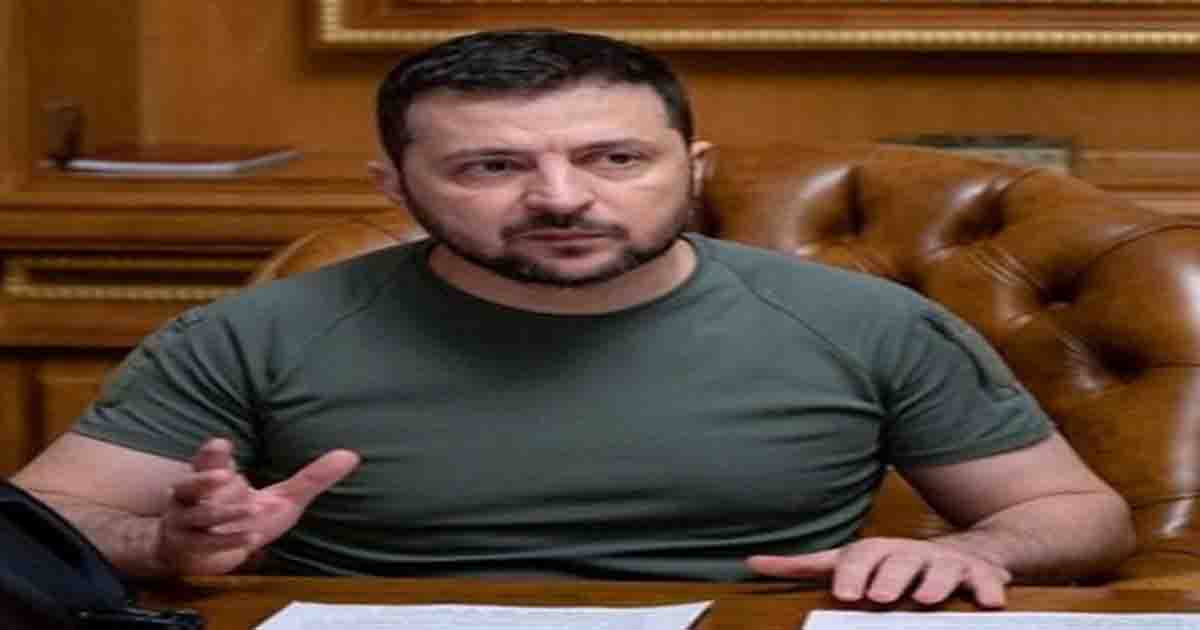
Ukrainian President Volodymyr Zelensky said that the United States temporarily suspended crucial intelligence sharing with Ukraine for three days, leaving its forces without American warnings of Russian ballistic missile attacks during that period.
In an interview with NBC’s Meet the Press, Zelensky also said restrictions on satellite communications used by Ukrainian forces had not been fully lifted, raising fresh questions about Washington’s military and intelligence support for Kyiv.
The Ukrainian leader said the intelligence interruption affected information that only the United States could provide, particularly advance warnings of ballistic missile strikes.
“We didn’t see attacks of Russia using ballistic missiles,” Zelensky said.
He said Ukraine continued receiving intelligence from European governments and other international partners, but their capabilities could not fully replace American systems.
“We have dozens of countries who help. But only United States has this unique intelligence to say, to tell us, to tell our side when Russia uses ballistic missiles,” he said.
“And we didn’t get it during ballistic attacks during three days.”
Zelensky said the intelligence-sharing arrangement had since been restored.
“It was blocked for some period of time. And then it was deblocked by American side. We are very thankful for this. Now it works,” he said.
The disclosure came amid growing tensions between Washington and Kyiv over President Donald Trump’s handling of the war with Russia.
Zelensky also raised concerns about restrictions affecting Starlink, the satellite internet network operated by Elon Musk’s SpaceX, and its military-related services.
Asked whether the interruption had been deliberate, Zelensky said Ukrainian military officials believed the restrictions originated with the American government.
“Of course the message came from government. I don’t know from whom, what cabinet, and etc,” he said.
He added that Ukrainian officials believed SpaceX had technically implemented the restrictions following instructions from Washington.
Zelensky acknowledged that he did not know which American official might have authorised the move.
Asked whether satellite services had been fully restored, he replied: “No, not of course. We have limitation.”
The Ukrainian President’s account was challenged by Treasury Secretary Scott Bessent, who appeared separately on the same programme.
Bessent said Trump and Secretary of State Marco Rubio had denied that anyone in the administration ordered restrictions on Starlink.
“President Trump and Secretary Rubio have categorically said that no one in the Trump administration did that,” Bessent said.
He called Zelensky’s allegation reckless and said he had no information about the reported intelligence interruption.
“Again, I don’t know anything about that, but we’ve been very clear,” Bessent said.
The conflicting accounts left unresolved who was responsible for the communications disruption and why American intelligence sharing had been temporarily interrupted.
Zelensky said Ukraine remained dependent on American military assistance despite its growing network of European partners.
“If it’s without United States’ support, it’s very difficult,” he said.
Russia launched its full-scale invasion of Ukraine in February 2022. Since then, American intelligence, weapons and satellite communications have played an important role in Ukraine’s defence against Russian military operations, including missile and drone attacks.

India’s strong economic growth trajectory and the implementation of the India-EFTA Trade and Economic Partnership Agreement (TEPA) are creating significant opportunities for Norwegian investors, particularly in manufacturing, renewable energy, infrastructure, financial services and the digital economy, according to industry insights.
With GDP growth projected to remain around 6.5 per cent annually through 2030, India is widely expected to become the world’s third-largest economy by the end of the decade, according to EY India report.
Analysts attribute this outlook to strong domestic consumption, rising investments, ongoing infrastructure development and reforms aimed at improving the ease of doing business.
The India-EFTA TEPA, which came into effect in October 2025, is being viewed as a major milestone in India-Norway economic relations.
The agreement seeks to promote trade liberalisation, facilitate investment flows and deepen cooperation in areas such as innovation, sustainability and advanced technologies.
The pact includes investment commitments of $100 billion over 15 years and is expected to support the creation of one million direct jobs in India, aligning with the country’s broader goals of expanding manufacturing capacity and strengthening its position in global value chains.
Industry experts believe the agreement creates a strong framework for Norwegian companies to expand their presence in India by combining Norway’s expertise in technology, sustainability and capital-intensive industries with India’s large market and growth ambitions.
Several sectors have been identified as priority areas for collaboration, including manufacturing, renewable energy, oil and gas, maritime services, seafood processing, information and communication technology (ICT), fintech and financial services. These industries are expected to benefit from increasing bilateral cooperation under the TEPA framework.
The rapid expansion of India’s digital economy and digital payments ecosystem is also creating opportunities for Norwegian companies seeking exposure to one of the world’s largest and fastest-growing consumer markets.
At the same time, India’s policy measures aimed at attracting foreign investment are expected to provide a supportive environment for long-term investors, as per the report.

London, Oct 17: A tanker has reportedly been attacked 78 nautical miles northeast of Al Jubail, Saudi Arabia, the United Kingdom Maritime Trade Operations (UKMTO) said on Saturday.
The master of the tanker reported being attacked by a rocket-propelled grenade from a small boat, resulting in damage to the aft port quarter, according to the UKMTO.
Crew are accounted for and reported safe, and a complete damage assessment and environmental impact are unknown, said the UKMTO.
Earlier this week, Yemen’s Houthi group said that it had launched a large-scale missile and drone attack targeting an airport and oil facilities in Saudi Arabia. It also vowed to continue strikes against Saudi targets in the coming days.
In a statement broadcast by Houthi-run al-Masirah TV, Houthi military spokesperson Yahya Sarea said the group targeted Saudi energy giant Aramco in Dhahran in the Eastern Province, as well as King Khalid International Airport and an Aramco refinery in Riyadh.
According to Sarea, the operation involved “a large number of ballistic and cruise missiles and drones,” which accurately hit their targets, causing damage and fires.
The Houthi spokesperson said the operation was carried out in retaliation for Saudi Arabia-led strikes on the Houthi-held capital of Sanaa and other areas under the group’s control. He said Saudi-led forces had carried out 2,281 air and missile strikes since the latest escalation began, Xinhua news agency reported.
Sarea vowed that the group’s attacks “deep inside Saudi Arabia” would continue in the coming days, targeting airports and oil facilities. He also renewed a warning to international airlines, civilians and employees to stay away from airports and oil facilities in Saudi Arabia that the group had designated as targets.
The Houthi claim came after the Saudi-led coalition in Yemen said it intercepted six Houthi missiles and three drones heading towards Saudi Arabia on Tuesday. An Aramco administrative building in Dhahran was targeted Tuesday evening, sparking a limited fire, while debris from two cruise missiles intercepted over Riyadh injured four people and damaged 15 homes, Saudi authorities said Wednesday.

Suspicious passenger apprehended at Delhi Jama Masjid Metro Station after trying to flee during screening

Tiger Shroff attack: Bihar family denies accused is their son

Bollywood in the Crosshairs After Firing at Tiger Shroff; Legal Action Initiated Against Bishnoi Gang, Three Shooters Arrested

E-Office System Implemented in Mumbai Municipal Corporation; 14,000 Users to Be Integrated in Phases to Make Administration More Transparent and Efficient

Bihar MLC election: Three FIRs filed against Anant Singh, Jan Suraaj candidate Anuj Singh

Rahul, Cong ecosystem want to force regime change: BJP after Neha Bora praises B’desh Gen-Z protest

BJP pays tribute to ex-President Abdul Kalam, recalls his enduring influence on generations of India’s youth

Attack on democratic rights: INDIA Bloc leaders on detentions of anti-ECI protestors

INDIA bloc begins protest march against ECI

Maha Congress stages agitation against Gyanesh Kumar
-

 Crime4 years ago
Class 10 student jumps to death in Jaipur
-

 Maharashtra2 years ago
Mumbai Local Train Update: Central Railway’s New Timetable Comes Into Effect; Check Full List Of Revised Timings & Stations
-

 Maharashtra2 years ago
Mumbai To Go Toll-Free Tonight! Maharashtra Govt Announces Complete Toll Waiver For Light Motor Vehicles At All 5 Entry Points Of City
-

 Maharashtra2 years ago
False photo of Imtiaz Jaleel’s rally, exposing the fooling conspiracy
-

 National News2 years ago
Ministry of Railways rolls out Special Drive 4.0 with focus on digitisation, cleanliness, inclusiveness and grievance redressal
-

 Maharashtra2 years ago
Maharashtra Elections 2024: Mumbai Metro & BEST Services Extended Till Midnight On Voting Day
-

 National News2 years ago
J&K: 4 Jawans Killed, 28 Injured After Bus Carrying BSF Personnel For Poll Duty Falls Into Gorge In Budgam; Terrifying Visuals Surface
-

 Crime2 years ago
Baba Siddique Murder: Mumbai Police Unable To Get Lawrence Bishnoi Custody Due To Home Ministry Order, Says Report