
International News
Russian Navy to get ‘unmatched’ hypersonic cruise missile Zircon soon, says Putin

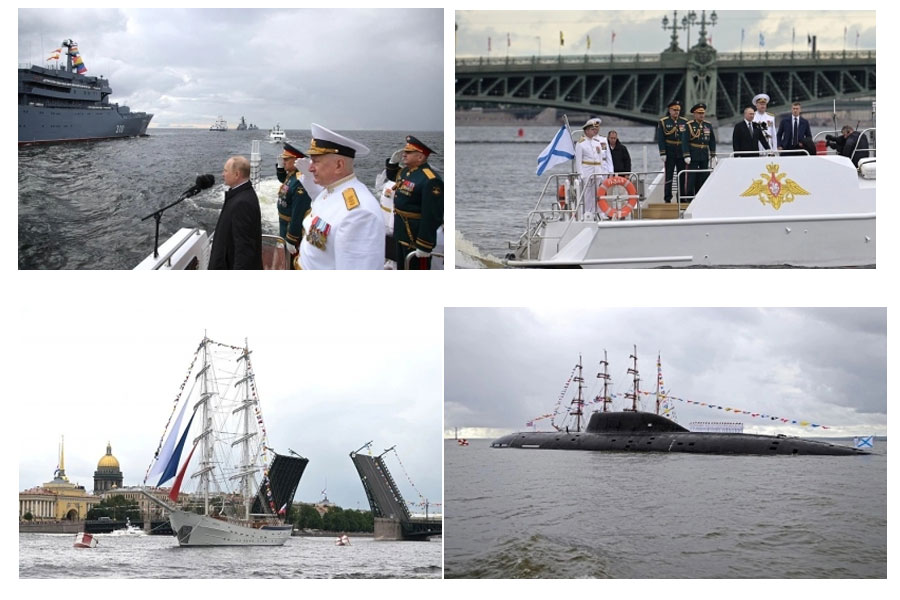
Zircon, the universal hypersonic cruise missile designed to destroy sea and ground targets, will be supplied to the Russian Armed Forces in the coming months, the country’s President Vladimir Putin has announced.
As it underwent several tests in the Barents Sea over the past year, Putin had promised that Zircon, which according to him is capable of reaching speeds of about Mach 9 and hitting targets at a distance of more than 1,000 km, would be put on combat duty soon.
Addressing the Main Naval Parade in St Petersburg on the occasion of Russia’s Navy Day, Putin said that Admiral Gorshkov, one of the most modern ships of its Northern Fleet, will be the first one to be equipped with the “unmatched” missiles which have “no obstacles”.
“The Admiral Gorshkov frigate will be the first to go on combat duty with this formidable weapon aboard. The area in which the ship equipped with Zircon hypersonic cruise missiles will carry out its duty will be selected based on Russia’s security interests,” said Putin.
The announcement was labelled as a “chilling threat” by a section of the media in the West.
“At this speed it would reach London in about five minutes,” said UK’s Daily Mirror.
It was on February 20, 2019 that the Russian President – during his annual Presidential Address to the Federal Assembly – informed about Zircon, the “promising innovation” also spelt as 3M22 Tsirkon, for the first time officially.
“It can be launched from water, from surface vessels and from submarines, including those that were developed and built for carrying Kalibr high-precision missiles, which means it comes at no additional cost for us,” he had said then.
As it moved ahead with its plan to equip submarines and surface ships with the Zircon complex, the flight tests of the hypersonic cruise missile continued even during Moscow’s military operation in Ukraine. The Russian Defence Ministry released a video on May 28 which showed Zircon being fired from Gorshkov in the Barents Sea and hitting a target in the White Sea after travelling a distance of 1,000 km (625 miles).
“The flight of a hypersonic missile corresponded to the specified parameters,” the Russian Defence Ministry had commented after Zircon’s last test.
Analysts in New Delhi too have been closely watching the bigger picture unfold at a time when the defence ties between India and Russia continue to grow.
“The successful test launch of a Tsirkon hypersonic cruise missile shows that Russia continues to pioneer emerging defence technologies. Therefore, despite diversification, it is important for India to continue to develop defence partnerships with Moscow,” Professor Gulshan Sachdeva, Chairperson, Centre for European Studies at New Delhi’s Jawaharlal Nehru University, had told IndiaNarrative.com, last year.
Meanwhile, Putin said on Sunday that the current environment requires “commensurate, prompt, and decisive actions” from Moscow.
“First and foremost, these are our waters of the Arctic, the Black Sea, the Sea of Okhotsk, the Bering Sea, and the Baltic and Kuril Straits. We will ensure their protection rigorously and using all available tools,” he said at country’s the naval capital with Defence Minister Sergei Shoigu and Commander-in-Chief of the Russian Navy Nikolai Yevmenov also in attendance.


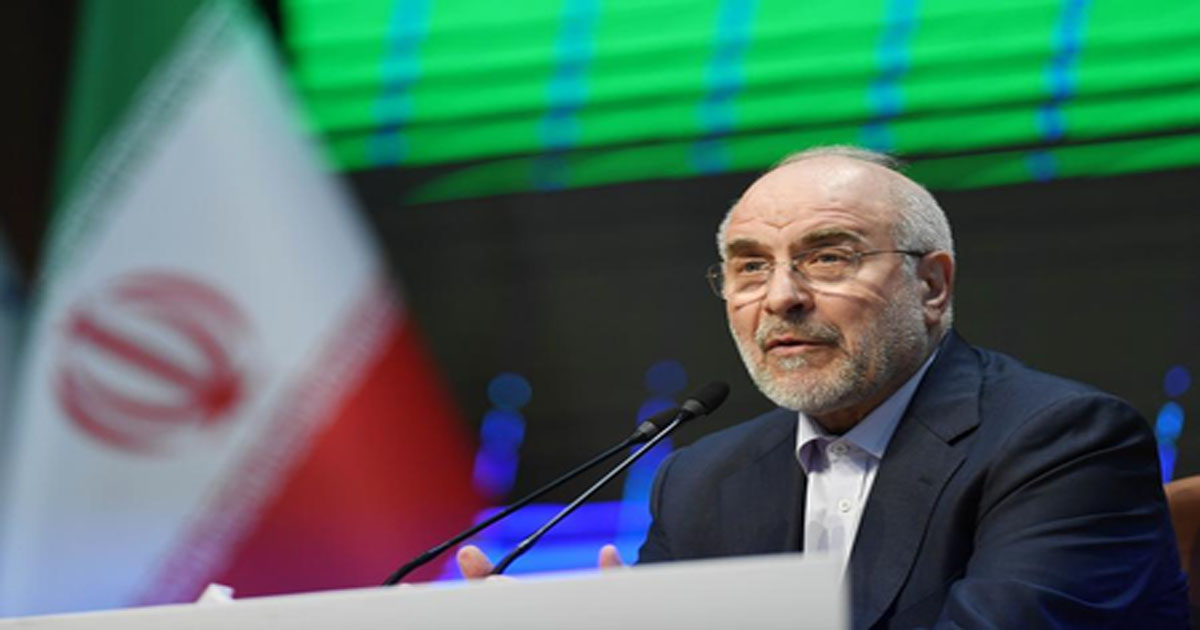
Tehran, April 19: Iran has indicated that there has been “progress” in its ongoing discussions with the United States, though it stressed that a final agreement is still a long way off, with the current two-week ceasefire due to expire on April 22, according to local media reports on Sunday.
Mohammad Bagher Ghalibaf, Speaker of the Iranian Parliament, said in a televised address on Saturday (local time) that significant differences continue to persist between the two sides.
“There are many gaps and some fundamental points remain,” Ghalibaf said, underlining that negotiations have yet to reach a decisive stage.
“We are still far from the final discussion,” he added, signalling that while dialogue is ongoing, a comprehensive settlement has not yet been achieved.
Ghalibaf also asserted that Iran had maintained an upper hand during the recent weeks of conflict and suggested that Tehran agreed to the temporary ceasefire only after its conditions were acknowledged by Washington.
“If we accepted the ceasefire, it was because they accepted our demands,” he said, referring to the United States.
Emphasising Iran’s strategic position, he said the US had failed to accomplish its objectives, while Iran continued to exercise control over the crucial Strait of Hormuz, a key maritime route for global energy supplies.
“The enemy’s every effort was to impose its demands on us, and it is important that we register our rights, so this is where negotiation is a method of struggle,” Ghalibaf said.
Meanwhile, Iran’s Supreme National Security Council (SNSC) said that the country is determined to exercise control and supervision over traffic through the Strait of Hormuz until the war is definitively ended and a lasting peace is achieved in the region.
The statement, reported by Iranian media, came after Iran’s main military command, Khatam al-Anbiya Central Headquarters, announced earlier on Saturday the resumption of strict control over the Strait of Hormuz, citing the continuation of US naval blockade against Iran.
The SNSC said it will control the strait by demanding vessel information, issuing passage permits, charging fees for security and environmental services, and directing traffic according to its regulations and wartime protocols, Xinhua news agency reported.
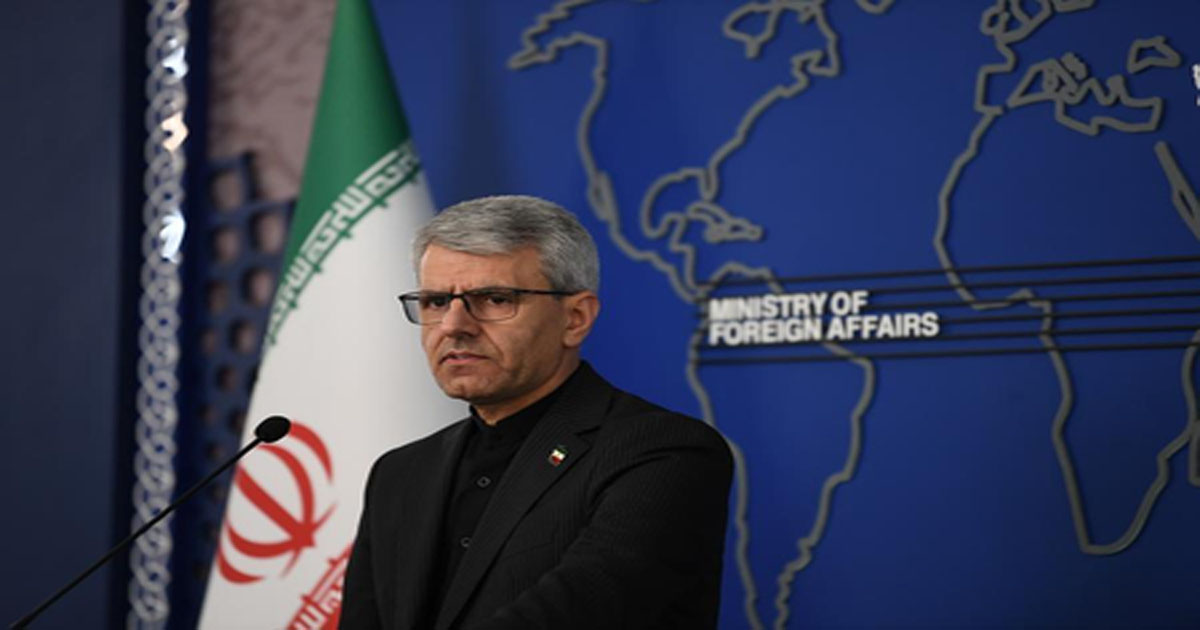
Tehran, April 18: Iran will not transfer its enriched uranium to a foreign country, and sending it to the United States has never been under consideration, Iranian Foreign Ministry spokesman Esmaeil Baghaei said.
Baghaei, speaking on state-run IRIB television, said that recent public statements by Foreign Minister Seyed Abbas Araghchi were made within the framework of the ceasefire between Iran and the United States announced on April 8, not as signals of a new diplomatic opening.
Earlier on Friday, Araghchi said the Strait of Hormuz would remain “completely open” to commercial shipping for the duration of the current truce between Iran and the United States, Xinhua news agency reported.
Baghaei moved to clarify the foreign minister’s position, saying that following a ceasefire in Lebanon on Friday, Tehran chose to apply safe-passage conditions outlined in its agreement with Washington to vessels transiting the strait.
“We have reached no new agreement,” he said. “The ceasefire agreement is the one announced on April 8.”
He accused the United States of failing, from the outset of the truce, to honor a commitment to extend its terms to Lebanon, a provision Iran insists was included in the April 8 agreement. Washington and Jerusalem have rejected that characterization.
Baghaei also warned that Iran would take “countermeasures” if a United States naval blockade of the Strait of Hormuz persisted. He said no talks on extending the ceasefire had taken place, and that mediation efforts led by Pakistan remained focused on ending the conflict and protecting Iran’s interests.
Iran tightened its grip on the strait beginning February 28, when it barred safe passage to vessels belonging to or affiliated with Israel and the United States following joint strikes on Iranian territory. The United States subsequently imposed its own blockade, preventing ships traveling to and from Iranian ports from transiting the waterway after peace negotiations in Islamabad collapsed over the weekend.
Axios reported Friday, citing people familiar with the talks, that a second round of United States-Iran negotiations is expected to take place in Pakistan this weekend, most likely on Sunday.
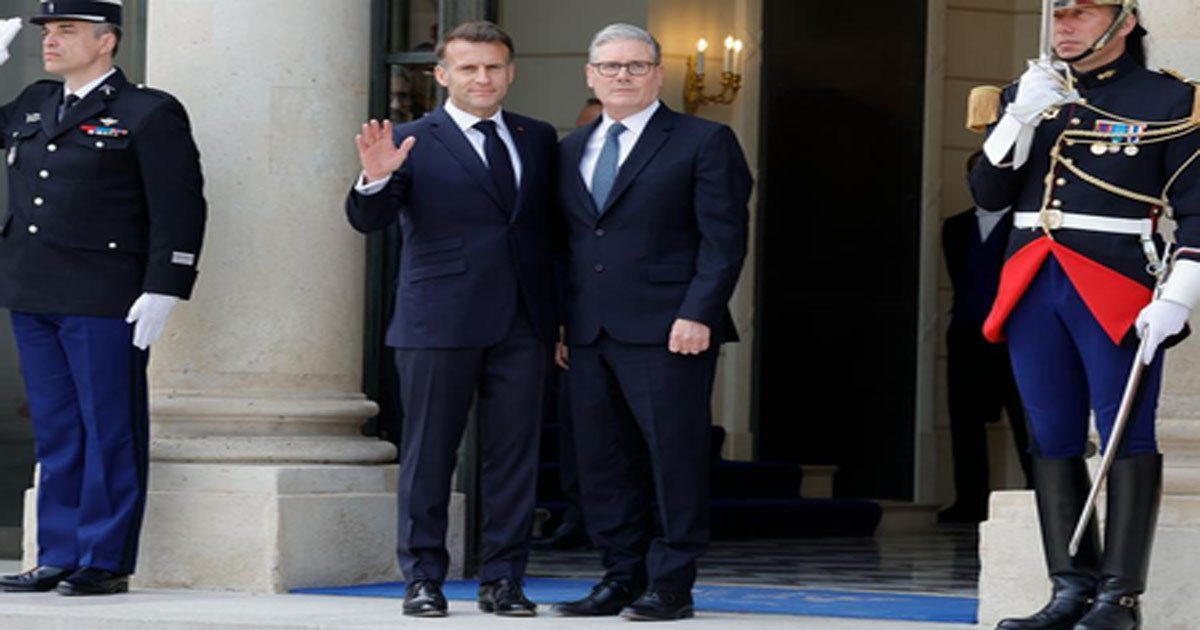
Paris, April 18: French President Emmanuel Macron said that Iran’s announcement of reopening the Strait of Hormuz goes in the right direction.
Macron made the remarks in a joint declaration following a conference co-hosted by France and Britain in Paris on Friday (local time), which brought together 49 countries to discuss securing freedom of navigation in the Strait of Hormuz.
British Prime Minister Keir Starmer, German Chancellor Friedrich Merz and Italian Prime Minister Giorgia Meloni attended the meeting, while officials from across Europe, Asia, Latin America and the Middle East joined by video conference, reports Xinhua news agency.
Macron welcomed the ceasefire in Iran and Lebanon, describing it as a positive development. However, he stressed that it’s necessary to remain vigilant.
“We all oppose any restriction, any agreement regime that would effectively amount to an attempt to privatise the strait, and obviously any toll system,” he said.
He also announced that a neutral, independent mission would be set up to ensure the openness of the Strait of Hormuz, noting that a planning meeting was scheduled for the following week in London.
Starmer, for his part, expressed the hope that talks would resume and a lasting agreement would be reached.
He said France and Britain will lead a multinational mission to safeguard shipping as soon as conditions allow, noting that the mission will be strictly defensive and intended to reassure shipping and support mine-clearing operations.
Around a dozen countries were ready to contribute assets to the defensive mission, Starmer noted.
Meloni said that it was necessary to ensure the absence of mines and guarantee the safety of vessels transiting through the strait in order to reassure the maritime shipping sector, adding that Italy stood ready to deploy its naval units in a strictly defensive posture.
Germany “will participate in the ongoing military planning discussions” and “we would welcome, if possible, participation from the United States,” Merz said.

Mumbai Police Anti-Narcotics Cell Seizes Drugs Worth ₹2.21 Crore; Nigerian National Arrested In Khar

Mumbai Local Train Chaos! Mega Block Disrupts Central Line; Passengers Seen Walking On Tracks At Kopar, Thakurli

Iran says ‘progress’ in US talks, but ‘far from final discussion’

NESCO Concert Drug Deaths Case: Mumbai Police Arrests Nigerian National, Seizes Cocaine & MDMA Worth Crores In Khar Raid

Massive Fire Breaks Out At Mumbai’s Crawford Market Shop, No Injuries Reported

Dhurandhar 2 Box Office Collection Day 9: Ranveer Singh Starrer Earns ₹41.55 Crore On Its Second Friday; Enters ₹700 Crore Club

Bharti Airtel Receives ₹1,74,000 Penalty Notice From DoT For Subscriber Verification Lapses

Mumbai: 28-Year-Old Ghatkopar Woman Killed By Speeding Tanker While Crossing Road, Driver Arrested

Thane Horror: Man Slashed With Chopper In Naupada For Refusing ‘Vargani’, Caught On Camera

Chilling Highway SCAM In Maharashtra! Mumbai Man Cornered By Fake Recovery Agents Claiming ₹10 Lakh Dues Near Lonavala
-

 Crime4 years ago
Class 10 student jumps to death in Jaipur
-

 Maharashtra2 years ago
Mumbai Local Train Update: Central Railway’s New Timetable Comes Into Effect; Check Full List Of Revised Timings & Stations
-

 Maharashtra2 years ago
Mumbai To Go Toll-Free Tonight! Maharashtra Govt Announces Complete Toll Waiver For Light Motor Vehicles At All 5 Entry Points Of City
-

 Maharashtra2 years ago
False photo of Imtiaz Jaleel’s rally, exposing the fooling conspiracy
-

 National News2 years ago
Ministry of Railways rolls out Special Drive 4.0 with focus on digitisation, cleanliness, inclusiveness and grievance redressal
-

 Maharashtra1 year ago
Maharashtra Elections 2024: Mumbai Metro & BEST Services Extended Till Midnight On Voting Day
-

 National News2 years ago
J&K: 4 Jawans Killed, 28 Injured After Bus Carrying BSF Personnel For Poll Duty Falls Into Gorge In Budgam; Terrifying Visuals Surface
-

 Crime2 years ago
Baba Siddique Murder: Mumbai Police Unable To Get Lawrence Bishnoi Custody Due To Home Ministry Order, Says Report