
International News
Russia storing weapons in nuclear plant

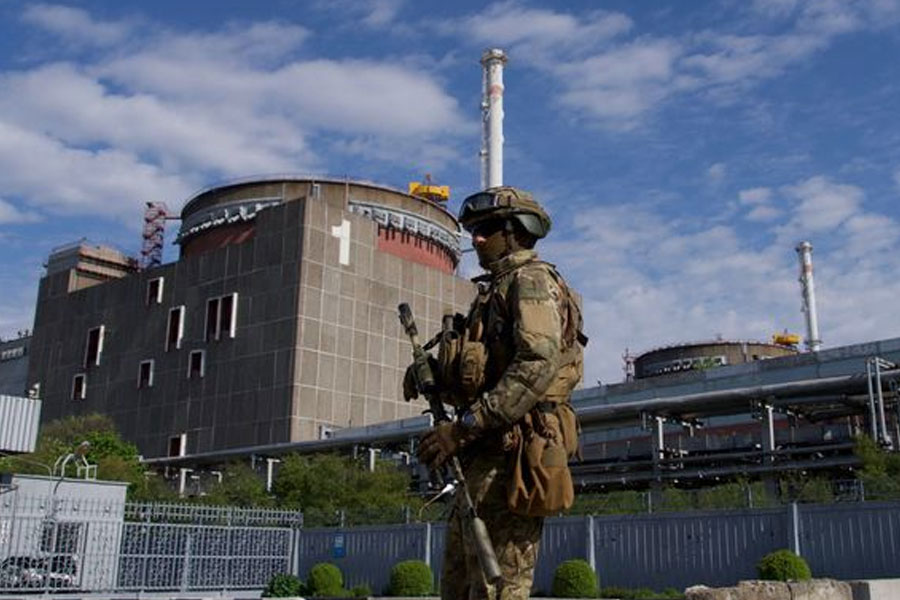
Russia has deployed multiple missile systems on the territory of the Zaporizhzhia Nuclear Power Plant, as per Ukrainian officials, media reports said.
Russian forces are using these weapons to fire at the area around the city of Nikopol, Ukrainska Pravda reported.
“As for the Zaporizhzhia NPP the situation there is very difficult, and every day it is becoming more so,” Petro Kotin, President of Energoatom (National Atomic Power Generation Company) was quoted by Interfax Ukraine.
“The invaders are deploying their military equipment there � in particular, their missile systems, which they are already using to launch attacks on the other side of the Dnipro (River), the area around the city of Nikopol.”
Kotin said that there are still up to 500 Russian soldiers ensuring the security of the perimeter of the Zaporizhzhia NPP. Moreover, Russian heavy military equipment, weapons and explosives are also stored at the power plant.
On 4 March, Russian forces seized the territory of the Zaporizhzhia NPP. They are controlling the administrative buildings and the entry to the station.
In mid-March, Russians detonated ammunition at the Zaporizhzhia NPP, near the destroyed training centre and power unit No.1.
Around 500 Russian military personnel remain at the Zaporizhzhia NPP, as well as a large amount of Russian military equipment and explosives. As a result, Ukraine cannot entirely fulfil the safety guarantees given to its own citizens and the world, although it still maintains control over the work of the Zaporizhzhia NPP, Ukrainska Pravda reported.


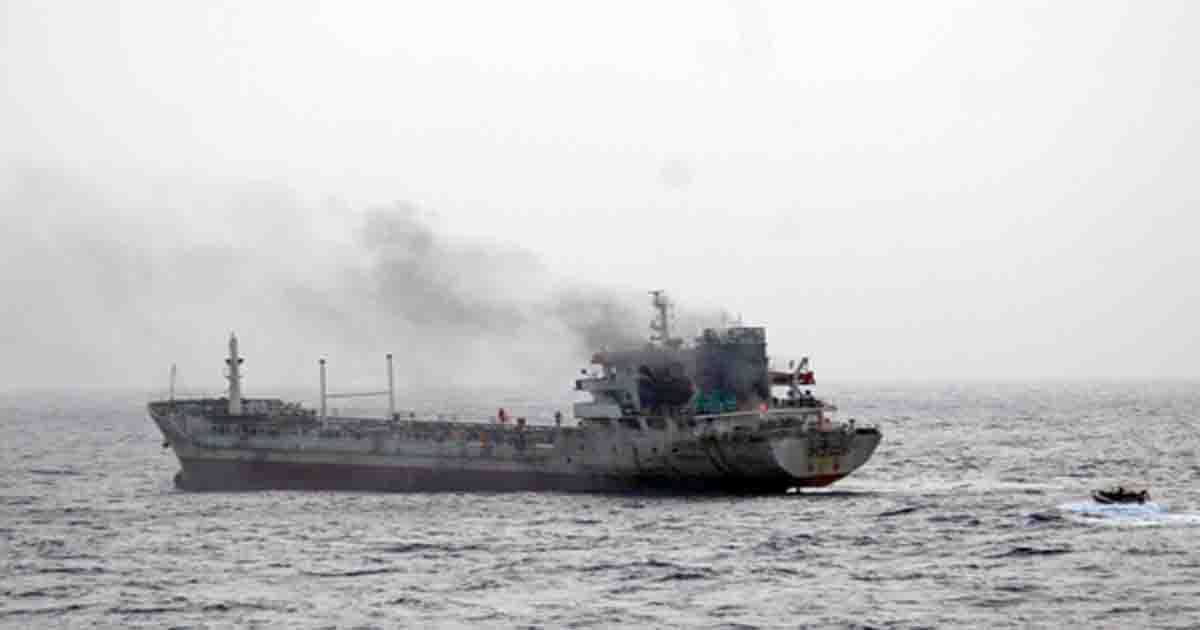
London, Oct 17: A tanker has reportedly been attacked 78 nautical miles northeast of Al Jubail, Saudi Arabia, the United Kingdom Maritime Trade Operations (UKMTO) said on Saturday.
The master of the tanker reported being attacked by a rocket-propelled grenade from a small boat, resulting in damage to the aft port quarter, according to the UKMTO.
Crew are accounted for and reported safe, and a complete damage assessment and environmental impact are unknown, said the UKMTO.
Earlier this week, Yemen’s Houthi group said that it had launched a large-scale missile and drone attack targeting an airport and oil facilities in Saudi Arabia. It also vowed to continue strikes against Saudi targets in the coming days.
In a statement broadcast by Houthi-run al-Masirah TV, Houthi military spokesperson Yahya Sarea said the group targeted Saudi energy giant Aramco in Dhahran in the Eastern Province, as well as King Khalid International Airport and an Aramco refinery in Riyadh.
According to Sarea, the operation involved “a large number of ballistic and cruise missiles and drones,” which accurately hit their targets, causing damage and fires.
The Houthi spokesperson said the operation was carried out in retaliation for Saudi Arabia-led strikes on the Houthi-held capital of Sanaa and other areas under the group’s control. He said Saudi-led forces had carried out 2,281 air and missile strikes since the latest escalation began, Xinhua news agency reported.
Sarea vowed that the group’s attacks “deep inside Saudi Arabia” would continue in the coming days, targeting airports and oil facilities. He also renewed a warning to international airlines, civilians and employees to stay away from airports and oil facilities in Saudi Arabia that the group had designated as targets.
The Houthi claim came after the Saudi-led coalition in Yemen said it intercepted six Houthi missiles and three drones heading towards Saudi Arabia on Tuesday. An Aramco administrative building in Dhahran was targeted Tuesday evening, sparking a limited fire, while debris from two cruise missiles intercepted over Riyadh injured four people and damaged 15 homes, Saudi authorities said Wednesday.
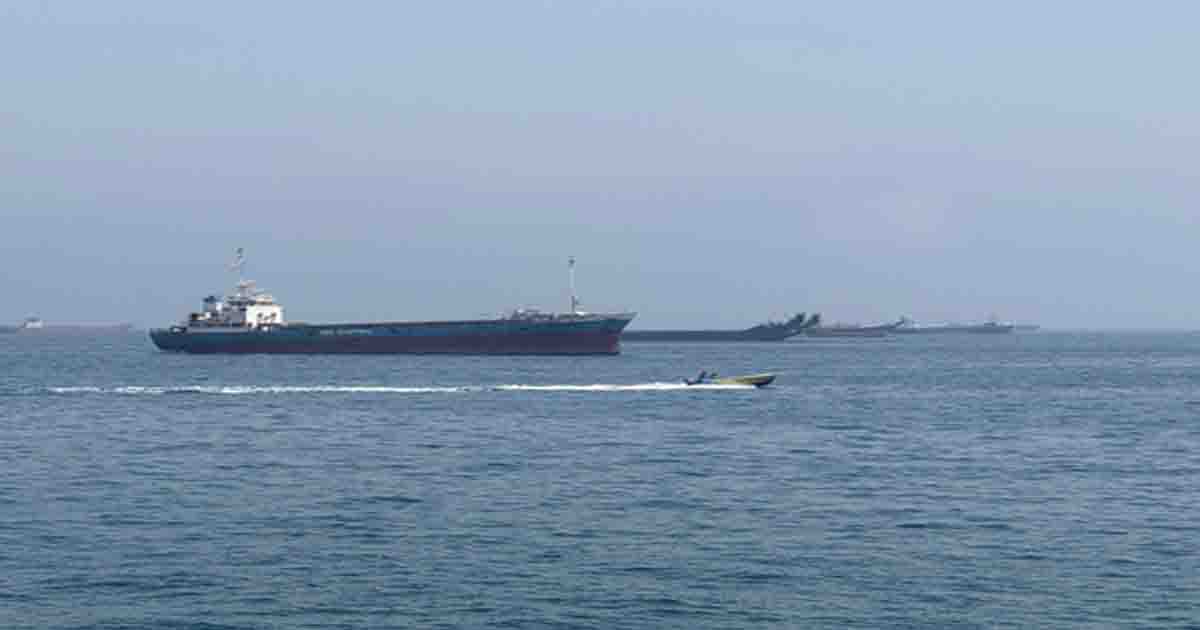
The navy of Iran’s Islamic Revolutionary Guard Corps (IRGC) said on Saturday that a “violating” supertanker that sought to cross the Strait of Hormuz through an “unauthorised” route within the preceding hours suffered a “huge” explosion after hitting a naval mine.
The explosion resulted in a “massive” fire on the oil tanker, which had turned off its GPS and radar systems, the navy said in a statement published by the IRGC’s official news outlet, Sepah News.
Carrying more than two million barrels of crude oil, the vessel sought “unauthorised” passage through the strait with the US. military’s support, Sepah News reported, adding that the waterway has been closed, Xinhua News Agency reported.
On Wednesday, the IRGC Navy said a “violating” container ship attempting to pass through the Strait of Hormuz via an “unauthorised and high-risk” route sank earlier in the day after hitting a naval mine south of the waterway.
Speaking to state-run IRIB TV on Tuesday, IRGC Navy Commander Ali Azmaei said his troops are controlling the Persian Gulf and the Strait of Hormuz “round the clock,” while the Gulf of Oman is under the control and supervision of Iran’s navy.
He warned that those violating shipping rules under US “deception or provocation” would face a decisive response from Iran.
Meanwhile, Iran’s President Masoud Pezeshkian on Friday reiterated that his country does not seek to develop nuclear weapons, dismissing anti-Tehran propaganda claiming otherwise as a “lie.”
Pezeshkian made the remarks during a meeting with Georgian Prime Minister Irakli Kobakhidze on the sidelines of the 17th Conference of the Parties (COP17) to the Convention on Biological Diversity in the Armenian capital, Yerevan, according to a statement on his office’s website.
“Iran does not seek to develop nuclear weapons, and we consider the destructive propaganda against our country as a lie,” he said, citing the clear positions of Iran’s late Supreme Leader Ali Khamenei regarding the prohibition of developing nuclear weapons.
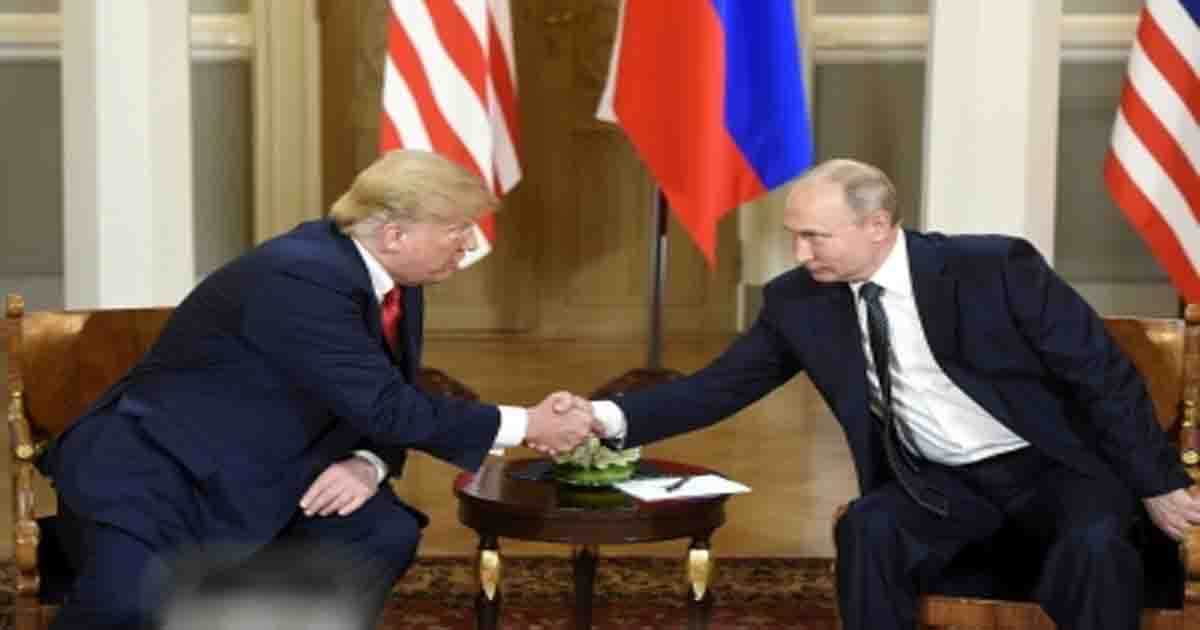
Washington, Oct 17: President Donald Trump said Russia had asked to be represented at the G20 meetings the United States is hosting this year, and that he would welcome Russian President Vladimir Putin.
Asked by reporters at the White House before departing on Marine One whether Putin was coming to the G20, Trump said, “No, no, they asked to be represented. I don’t know if he’s coming. Certainly would love to have him,” he said.
Trump raised the G20 himself while answering a question about fuel prices. “And one more, because on the G20 meetings, you had Russian representatives go to those meetings,” he said.
The United States holds the G20 presidency in 2026. Secretary of State Marco Rubio will host the G20 Foreign Ministers’ Meeting in Atlanta, Georgia, on October 30 and 31, according to the State Department. Trump will host the Leaders’ Summit on December 14 and 15 at Trump National Doral in Miami, Florida, the State Department has said.
Russia and India are both members of the G20. India hosted the grouping’s summit in New Delhi in September 2023.
Trump also said he would like to reach a nuclear deal with China and Russia but is not counting on it happening this year.
On the war in Ukraine, Trump was asked whether he had forgotten that it was Putin who started the war. “Well, you know, I know the details, okay? And at some point I’ll release the details. But I don’t care anything except for one. I want that war ended,” he said.
“25,000 soldiers on average a month are being killed. Last month was 32,000 soldiers,” Trump said. “I deal with both of them. I think they want that war ended there, and I think it’s going to end. That’s all I care about. I want that war to end.”
Asked about restrictions on Ukraine’s use of Starshield, Trump said, “No, we didn’t do that at all.”

Samajwadi Party, education two banks of river who can’t meet: UP CM Yogi Adityanath

Tanker attacked northeast of Saudi Arabia: UKMTO

MP: Mild earthquake tremors felt in Singrauli

Maha CM calls emerging technologies key to India’s youth

Iran IRGC says supertanker exploded after hitting mine in Hormuz Strait

Rahul, Cong ecosystem want to force regime change: BJP after Neha Bora praises B’desh Gen-Z protest

BJP pays tribute to ex-President Abdul Kalam, recalls his enduring influence on generations of India’s youth

INDIA bloc begins protest march against ECI

Maha Congress stages agitation against Gyanesh Kumar

Complaint against Netflix & Mukesh Chhabra for inappropriate language on ‘India’s Got Latent 2’
-

 Crime4 years ago
Class 10 student jumps to death in Jaipur
-

 Maharashtra2 years ago
Mumbai Local Train Update: Central Railway’s New Timetable Comes Into Effect; Check Full List Of Revised Timings & Stations
-

 Maharashtra2 years ago
Mumbai To Go Toll-Free Tonight! Maharashtra Govt Announces Complete Toll Waiver For Light Motor Vehicles At All 5 Entry Points Of City
-

 Maharashtra2 years ago
False photo of Imtiaz Jaleel’s rally, exposing the fooling conspiracy
-

 National News2 years ago
Ministry of Railways rolls out Special Drive 4.0 with focus on digitisation, cleanliness, inclusiveness and grievance redressal
-

 Maharashtra2 years ago
Maharashtra Elections 2024: Mumbai Metro & BEST Services Extended Till Midnight On Voting Day
-

 National News2 years ago
J&K: 4 Jawans Killed, 28 Injured After Bus Carrying BSF Personnel For Poll Duty Falls Into Gorge In Budgam; Terrifying Visuals Surface
-

 Crime2 years ago
Baba Siddique Murder: Mumbai Police Unable To Get Lawrence Bishnoi Custody Due To Home Ministry Order, Says Report