
Maharashtra
Nawab Malik, who dares to snoop on NCB super-sleuth!

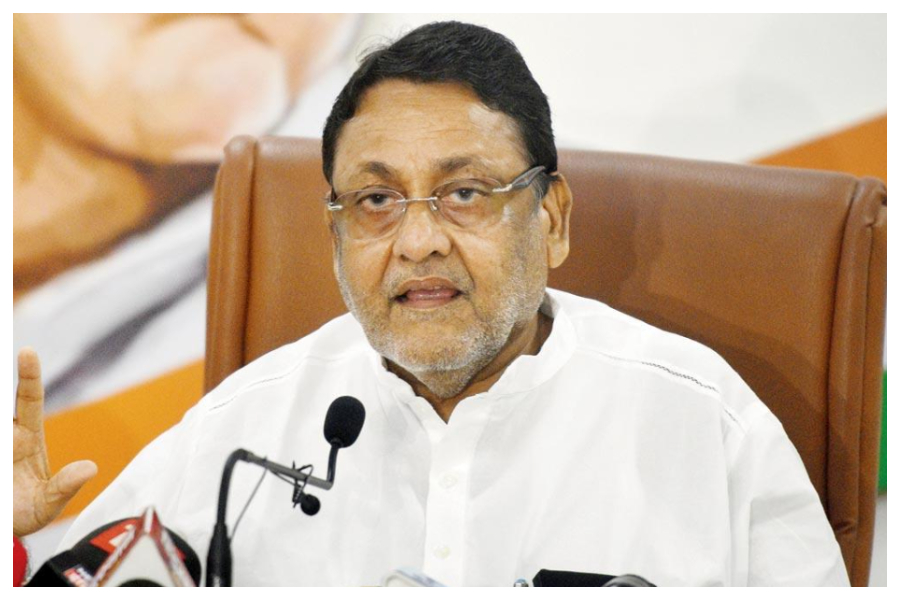
As far as snoops go, Maharahstra Minister Nawab Malik presents an unlikely picture as he takes on the shaken might of the Narcotics Control Bureau Zonal Director Sameer Wankhede.
Compared with cocky original 007, the bespectacled, bearded Malik presents a rather homely, fatherly figure, mostly in comfy kurtas who has taken upon himself to right the alleged wrongs of the Super Sleuth Wankhede.
As the stunned NCB and the national polity gaped, the Malik-Wankhede war – which started after the agency’s swoop on a luxury cruise ship in which one of those caught was Bollywood megastar Shah Rukh Khan’s son, Aryan Khan – became the top TRP catcher.
The besieged and worried Wankhede is fighting it out in different fora and pulling all possible strings to keep the muck raked by Malik from sticking to him, with the latter vowing in public that it will all end with the officer (Wankhede) getting the sack and going to jail.
Last month (October 2021), in an unprecedented step, Malik launched an expose campaign against Wankhede and his activities, raising a big question mark on the officer’s credentials and the NCB’s credibility.
His latest serial exposure has not only rattled Wankhede, but raised uncomfortable questions on how the NCB, other central agencies like ED, ITD, CBI, NIA, etc, are being deployed to harass Opposition-parties ruled states by the BJP at the Centre.
“I have first-hand knowledge of how injustice is being meted out by these agencies to innocents. I decided somehow, someone has to do the cleaning up… I have no personal motives… Only Truth I am putting out before people,” Malik smiled with confidence.
On his prime target, Malik contends that the charge of extortion already established, soon the fake caste certificate matter will also be officially proved, and the “crusade for truth will continue till Wankhede is dismissed and dumped in jail”.
His regular media briefings are reminiscent of the Vikram-Betaal tales when he hurls agonising questions at the dazed Wankhede, who scurries from pillar-to-post for dear help.
Born in 1959 in the small Dhuswa village of Utraula Tehsil, Balrampur district in eastern Uttar Pradesh, close to India-Nepal border, despite his name suggesting ‘nobility’, Malik was an ordinary village lad till the family migrated to Mumbai for better prospects in 1970.
Dhuswa folks say that his father Mohammed Islam Malik initially started a small business in ‘chindi’ (rags) in Dongri, south Mumbai, and later shifted to north-east suburban Kurla.
In Kurla, Malik helped his father launch a scrap buying-selling business – the reason why some people now snobbishly try to run him down as a ‘kabadiwala’.
“So… What’s wrong in being a ‘kabadiwala’? We are doing a service to the nation, converting waste into wealth, which is also good for the environment,” Malik told IANS.
After dabbling in local social activities, he forayed into politics first with the ‘Sanjay Vichar Manch’ party launched by Maneka Gandhi – after the death of her husband Sanjay Gandhi – along with his close aides like Akbar ‘Dumpy’ Ahmed, Sanjay Singh, J.N. Mishra, Kalpnath Sonkar, etc.
Malik first contested Lok Sabha elections in 1984 against the Congress stalwart, the late Gurudas Kamat but barely got around 2,500 votes.
Later, he flirted with the Congress briefly before switching over to the Samajwadi Party (SP), won a bypoll to become an MLA and was promptely rewarded with a Minister of State position in the then Congress-Nationalist Congress Party alliance government in 1999.
Following political wrangles with the SP State President Abu Asim Azmi, Malik left and joined the NCP led by Sharad Pawar, and became a MoS and later a Cabinet Minister.
In 2005, he was targeted for alleged corruption by a social crusader Kisan Baburao alias Anna Hazare and had to quit the cabinet along with 4 other ministers.
Though Malik vehemently rubbished all charges against him, he was plucky enough to launch a counter-campaign against Hazare and also continued to work for the NCP, slowly earning the confidence of the party top brass, including the Pawar clan.
In November 2019, when the Shiv Sena-NCP-Congress Maha Vikas Aghadi took office, Malik catapulted to the cabinet but encountered a setback when his son-in-law Sameer Khan was nabbed by the NCB and finally released on bail after over 8 months.
His former colleagues including ex-ministers (on condition of anonymity) describe Nawab Malik as “a meticulous worker, who handles any issue studiously, a tad arrogant occasionally, a fierce ‘family-man’, a gutsy leader who dares to barge in where angels fear to tread, and has the gall to call a spade a spade”, etc.


Maharashtra
‘The poll panel mutiny’: Shiv Sena(UBT) questions ECI’s claim of unanimous decision-making

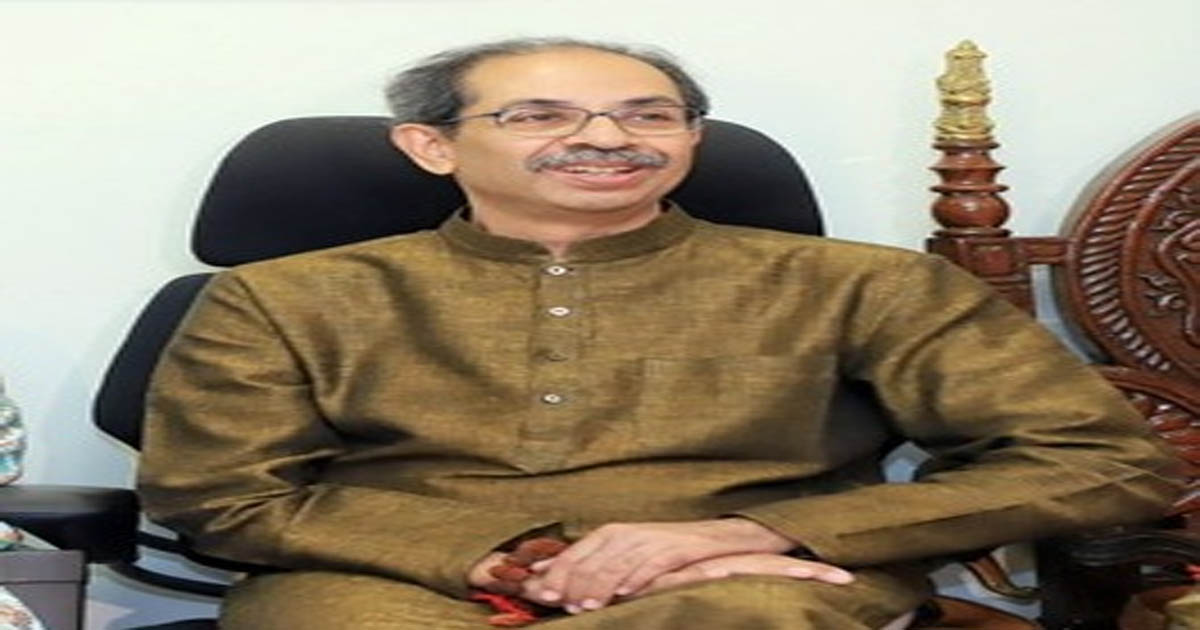
Mumbai, Sep 24: The Shiv Sena Uddhav Balasaheb Thackeray (UBT) on Thursday launched a blistering attack on the Election Commission of India (ECI) and Union Home Minister Amit Shah, accusing the electoral body of functioning like a “domestic servant” and eroding public faith in constitutional institutions.
Citing media investigative reports, the Thackeray camp, in an editorial in the party’s mouthpiece, ‘Saamana’, highlighted severe internal dissension within the Election Commission. It revealed that fellow Election Commissioners Sukhbir Sandhu and Vivek Joshi had formally raised objections at least 14 times over the last ten months against Chief Election Commissioner (CEC) Gyanesh Kumar’s arbitrary and “mafia-like” style of functioning.
The editorial alleged that CEC Gyanesh Kumar repeatedly ignored these objections and continued to unilaterally add or delete voters’ names to benefit the ruling Bharatiya Janata Party (BJP). Left with no alternative, the two dissenting commissioners reportedly escalated the matter directly to the Cabinet Secretariat, thereby alerting the Prime Minister’s Office (PMO) about the internal crisis within the poll body.
The editorial levelled serious allegations regarding the Special Summary Revision (SSR) process, terming it a systemic scam. “Approximately 13 crore voters have reportedly been disenfranchised across India under the guise of the SSR process, including prominent citizens and notable personalities. Over two crore voter names were allegedly removed from Maharashtra’s electoral rolls.
The editorial further pointed out an abrupt increase of 42 lakh votes during the recent Maharashtra Assembly elections, which facilitated a clear path for the BJP-led alliance’s victory,” claimed the editorial.
The editorial further stated that similar targeted deletions of lakhs of voters were allegedly carried out during the Assembly elections in West Bengal and Bihar. Directly targeting the Union Home Minister, the Uddhav Thackeray-led Shiv Sena described Amit Shah as the principal “mastermind” behind the constitutional degradation, while labelling former CEC Rajiv Kumar and current CEC Gyanesh Kumar as “constitutional mafias” and “executioners of democracy”.
It further accused the ECI leadership of undermining democracy by facilitating party splits and handing over original party names and symbols to breakaway factions.
The editorial asserted that the public has completely lost faith in constitutional bodies like the Supreme Court and the Election Commission.
Demanding immediate intervention from Prime Minister Narendra Modi, the editorial stated, “As long as individuals like Amit Shah and Gyanesh Kumar remain in power, the Constitution of India holds no meaning. The Prime Minister must sack them immediately – only then can the country be saved. Since Shah and Kumar will not resign on their own, removing them is the only choice left before PM Modi,” it remarked.
The editorial praised opposition leaders like Rahul Gandhi, Mamata Banerjee, Uddhav Thackeray, and Tejashwi Yadav for consistently speaking out against electoral irregularities, while hailing Commissioners Sandhu and Joshi for bringing internal wrongdoing to light.
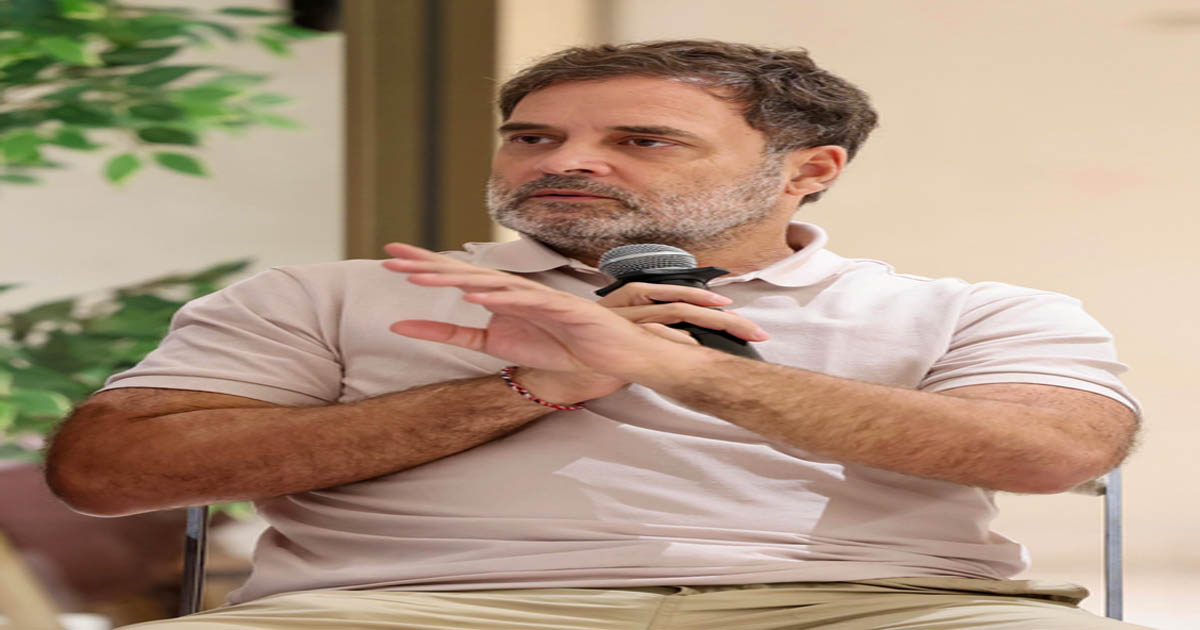
Mumbai, Sep 24: Leader of Opposition in the Lok Sabha Rahul Gandhi spoke to the family of IIT Bombay student Sahil Wakode over the phone and assured them of his support in their pursuit of justice, Maharashtra Congress said on Thursday.
According to the Maharashtra Congress, Gandhi expressed solidarity with the family and assured them of all possible support in seeking justice for Sahil.
Following Sahil’s death, his family has levelled serious allegations against the IIT Bombay administration and certain officials. The Mumbai Police Crime Branch is currently investigating the case.
The Youth Congress is also scheduled to hold a press conference on Thursday afternoon regarding the matter. The organisation is expected to announce its future strategy and the next course of action concerning the case.
Meanwhile, regular classes resumed at IIT Bombay on Wednesday, days after the death of the second-year student triggered protests on the campus, sources said.
The Mumbai Police on Wednesday said the investigation into Sahil’s death was being conducted impartially and that all possible angles were being examined. The police also appealed to people to refrain from spreading misinformation about the case.
“Following the unfortunate demise of Sahil Ravindra Wakode (20), a student of IIT Bombay, a case was registered at Powai Police Station. The case has subsequently been transferred to the Crime Branch, Mumbai, as DCB CID C.R. No. 124/2026,” officials said.
“The investigation has been entrusted to an ACP-rank officer and is being closely supervised by DCP Detection-I, Crime Branch,” they added.
Meanwhile, IIT Bombay professor Suryanarayana Doolla, who has been named in connection with Sahil’s death, was sent on leave amid the ongoing investigation, sources said on Wednesday.
Sahil’s parents have demanded the immediate arrest of Doolla. A case has been registered against him on allegations including abetment to suicide and caste-based discrimination following the student’s death.
Wakode, a second-year B.Tech student in the Department of Energy Science and Engineering, was found hanging in his hostel room on the Powai campus on the evening of September 18. The incident took place hours after he was allegedly caught using a mobile phone during a mid-semester examination.
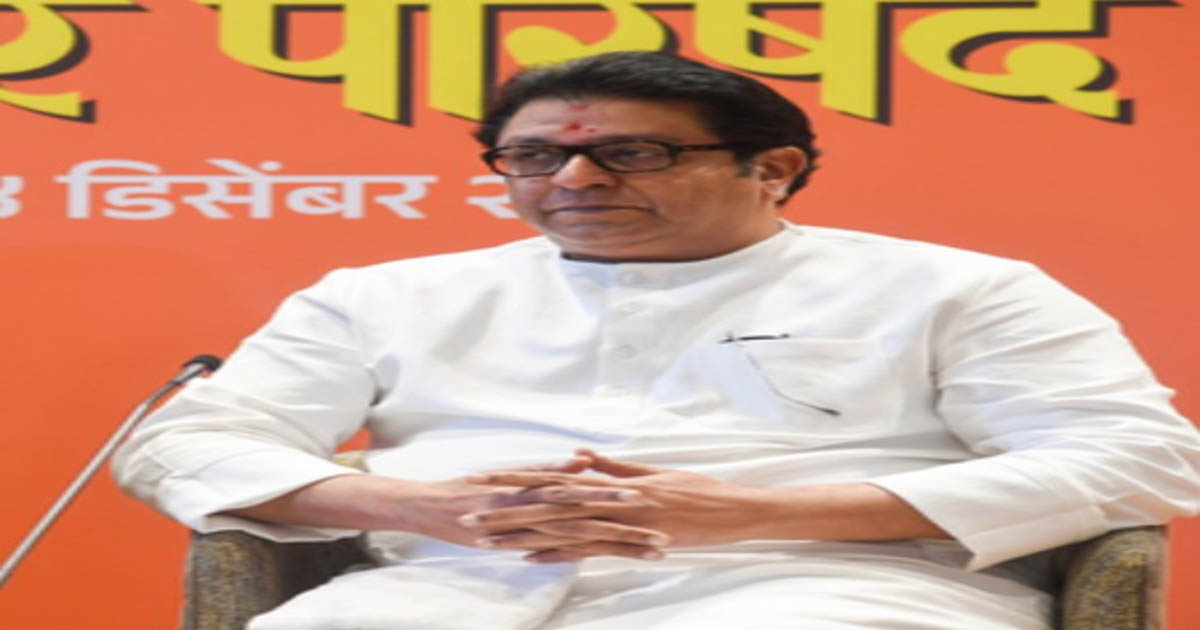
Mumbai, Sep 24: The Maharashtra Navnirman Sena (MNS) chief Raj Thackeray on Thursday launched a scathing attack on the Election Commission of India (ECI), asserting that recent media revelations have conclusively exposed the complete erosion of the poll body’s constitutional autonomy.
Citing an investigative media report, which revealed that Election Commissioners Sukhbir Singh Sandhu and Vivek Joshi recorded written dissent on at least 14 occasions over 10 months against steps taken by Chief Election Commissioner (CEC) Gyanesh Kumar, Thackeray stated that the findings validate what opposition parties in Maharashtra have been alleging all along.
Thackeray, in his long post on X, alleged that the CEC did not act independently but was “compelled” to take arbitrary decisions to suit the ruling Bharatiya Janata Party (BJP).
He argued that the concept of an autonomous poll panel now exists solely in textbooks, alleging that under the current political dispensation, “autonomy” is defined as complete subservience to the ruling party. “The objections raised by Election Commissioners Sandhu and Joshi are too severe to be swept under the carpet. When two out of three commissioners are kept in the dark and sidelined, it proves that electoral rolls were manipulated at will,” remarked Thackeray.
Highlighting specific instances from the report, Thackeray questioned how key directives regarding voter list software, modification of statutory forms, and mass legal appeals — such as the 1.61 million appeals filed in West Bengal — could be issued without the approval of the full commission. He also cited technical glitches in Goa that led to the disenfranchisement of 97 verified voters as evidence of deliberate centralisation and systemic manipulation.
Commending the two dissenting Election Commissioners for recording their objections on file, Thackeray urged all opposition parties across India to unite for a larger struggle. He declared that the battle against electoral irregularities must now expand into a nationwide movement demanding a return to paper ballots.
The MNS Chief has demanded an immediate resignation of Chief Election Commissioner Gyanesh Kumar, a high-level independent probe into the alleged “masterminds” directing ECI decisions, resignation of the current government on grounds of compromised election integrity and scraping of the Electronic Voting Machines (EVMs) in favour of traditional paper ballots for all upcoming elections.
“The Chief Election Commissioner ought to resign, certainly, but the government that came to power by leveraging such a spineless Election Commission should also step down. The fact that there were no celebrations on the streets following the election of a government claiming a majority mandate speaks volumes. This is precisely what I have been saying all along. Therefore, everyone must realise the ultimate truth that only if the Election Commission becomes truly autonomous, as it ought to be, can the ruling dispensation be brought down to earth; otherwise, this battle will be endless,” he commented.
Responding to queries often posed by political commentators regarding high turnout at his rallies not translating into seats, Thackeray remarked that internal disclosures from within the ECI provide the definitive answer to “who steals the votes and how”. He concluded with a warning that unless the Election Commission’s neutrality is restored, democratic contests in the country will remain fundamentally compromised.

Greater Noida bus fire: Passengers warned of burning smell, driver ignored them, says FIR

‘The poll panel mutiny’: Shiv Sena(UBT) questions ECI’s claim of unanimous decision-making

Three burnt alive, two critical as vehicle hits pole in Assam Nagaon

Gogi gang-linked shooter arrested after police encounter in North Delhi

After Jamui, another girl harassed in Bihar; five detained in Samastipur after video goes viral

Four more Indian nationals rescued in Nepal, 120 cross safely from China: MEA

Gift to President Putin part of PM Modi bid to globally display India’s heritage

Nepal floods: First batch of 106 stranded Maharashtra tourists reaches India; 84 more expected today (Ld)

Maharashtra: 17-year-old boy dies by suicide on Raksha Bandhan after emotional social media posts

PM Modi’s warm camaraderie with Putin, Xi on full display at BRICS Summit
-

 Crime4 years ago
Class 10 student jumps to death in Jaipur
-

 Maharashtra2 years ago
Mumbai Local Train Update: Central Railway’s New Timetable Comes Into Effect; Check Full List Of Revised Timings & Stations
-

 Maharashtra2 years ago
Mumbai To Go Toll-Free Tonight! Maharashtra Govt Announces Complete Toll Waiver For Light Motor Vehicles At All 5 Entry Points Of City
-

 Maharashtra2 years ago
False photo of Imtiaz Jaleel’s rally, exposing the fooling conspiracy
-

 National News2 years ago
Ministry of Railways rolls out Special Drive 4.0 with focus on digitisation, cleanliness, inclusiveness and grievance redressal
-

 Maharashtra2 years ago
Maharashtra Elections 2024: Mumbai Metro & BEST Services Extended Till Midnight On Voting Day
-

 National News2 years ago
J&K: 4 Jawans Killed, 28 Injured After Bus Carrying BSF Personnel For Poll Duty Falls Into Gorge In Budgam; Terrifying Visuals Surface
-

 Crime2 years ago
Baba Siddique Murder: Mumbai Police Unable To Get Lawrence Bishnoi Custody Due To Home Ministry Order, Says Report