
Maharashtra
Attention Residence Of Mira-Bhayandar! MBMC Announces 24 Hour Water Cut – Check Details Here

Mira-Bhayandar, April 10: Residents of Mira-Bhayandar are likely to face disruption in water supply over the weekend as the STEM Authority has scheduled essential maintenance and repair work, leading to a temporary shutdown of its services.
According to an Instagram post by the official ‘MBMConline’ page, the shutdown will be in effect for a 24-hour period starting from 9:00 AM on Saturday, April 11, 2026, and will continue until 9:00 AM on Sunday, April 12, 2026. During this time, the water supply from the STEM Authority to the two regions will remain completely suspended.
The post clarified that while the primary supply from STEM will be halted, water supply from the Maharashtra Industrial Development Corporation (MIDC) will continue as usual. However, given that a significant portion of the city’s water needs is met through STEM, residents are expected to experience low water pressure and possible delays in supply during the shutdown period.
Authorities have cautioned that the reduced inflow may impact distribution across several parts of Mira Road and Bhayandar, especially in areas that are already dependent on staggered or limited water supply schedules. In view of this, citizens have been advised to store adequate water in advance and plan their usage accordingly to avoid any further inconvenience.
The Municipal Corporation has appealed to residents to use water judiciously during the period of disruption and extend their cooperation to ensure smooth completion of the maintenance work. The temporary shutdown is necessary to carry out critical repairs and upkeep of the infrastructure, which is expected to improve overall water supply efficiency in the long run.

Maharashtra
Over three decades of rebellions and defections: Shiv Sena’s turbulent political journey

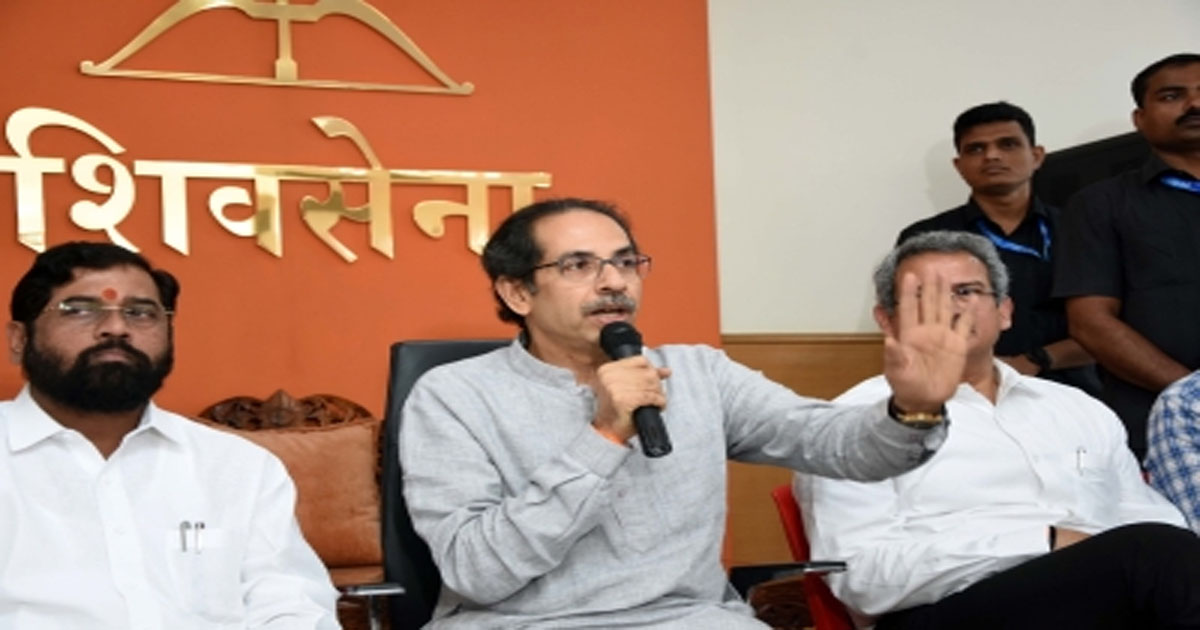
Mumbai, June 18: As the Uddhav Thackeray-led Shiv Sena (Uddhav Balasaheb Thackeray) stares at the prospect of a fresh rebellion within its Lok Sabha ranks, political observers point out that internal revolts have been a recurring feature of the party’s history.
Established by Balasaheb Thackeray on June 19, 1966, on the twin pillars of Marathi identity and Hindutva politics, the Shiv Sena has weathered several major splits over the past three and a half decades. From the first major defection in 1991 to the dramatic rupture of 2022, almost every decade has witnessed a prominent leader breaking away from the organisation.
The first serious challenge to Balasaheb Thackeray’s authority emerged in 1991 when senior Other Backward Classes (OBC) leader Chhagan Bhujbal rebelled against the party leadership. Disenchanted with internal functioning and his position within the organisation, Bhujbal walked out with 17 MLAs and joined Sharad Pawar’s camp. He later went on to serve as a minister and Deputy Chief Minister in Congress-Nationalist Congress Party (NCP) governments. The episode marked the first major legislative revolt against the Shiv Sena leadership.
Another significant departure followed in 1999 when Navi Mumbai strongman Ganesh Naik severed ties with the party and joined the newly formed NCP. Naik, who wielded considerable influence in the Navi Mumbai region, remained a key NCP leader for nearly two decades before switching to the Bharatiya Janata Party (BJP) in 2019, while retaining his political dominance in the area.
The next major setback came in 2005 with the exit of former Maharashtra Chief Minister Narayan Rane. Growing differences with the emerging leadership of Uddhav Thackeray led to a bitter fallout and eventual expulsion from the party. Rane joined the Congress, later floated the Maharashtra Swabhiman Paksha, and eventually aligned with the BJP, where he continues to be an influential figure in the Konkan region.
A year later, the Shiv Sena suffered what many regarded as its most emotional split. Raj Thackeray, Balasaheb Thackeray’s nephew, parted ways with the Shiv Sena, citing marginalisation within the organisation and disagreements over Uddhav Thackeray’s style of functioning. In 2006, he launched the Maharashtra Navnirman Sena (MNS). The party made an impressive debut, winning 13 Assembly seats in 2009, but gradually lost political ground and now has only a limited electoral presence.
Unlike previous rebellions in which leaders simply left to form or join other parties, Eknath Shinde’s revolt in 2022 fundamentally altered the Shiv Sena itself. Leading a rebellion by 40 MLAs and a majority of the party’s MPs, Shinde challenged Uddhav Thackeray’s leadership and claimed to represent the party’s original ideology.
With support from the BJP, he not only split the organisation but also secured control of the official Shiv Sena name and its iconic bow and arrow symbol through legal and constitutional processes. The development forced Uddhav Thackeray’s faction to function under the Shiv Sena (UBT) banner.
Now, amid speculation surrounding “Operation Tiger” and reports that six of the nine Shiv Sena (UBT) Lok Sabha MPs could cross over to the Shinde camp, the party once again finds itself confronting familiar political turbulence. Should the defection materialise, it would become the latest chapter in a long history of internal revolts that have repeatedly reshaped both the Shiv Sena and Maharashtra’s political landscape.
Maharashtra
Rebel Shiv Sena-UBT MPs have betrayed not just Uddhav Thackeray but entire MVA, Congress: Harshwardhan Sapkal
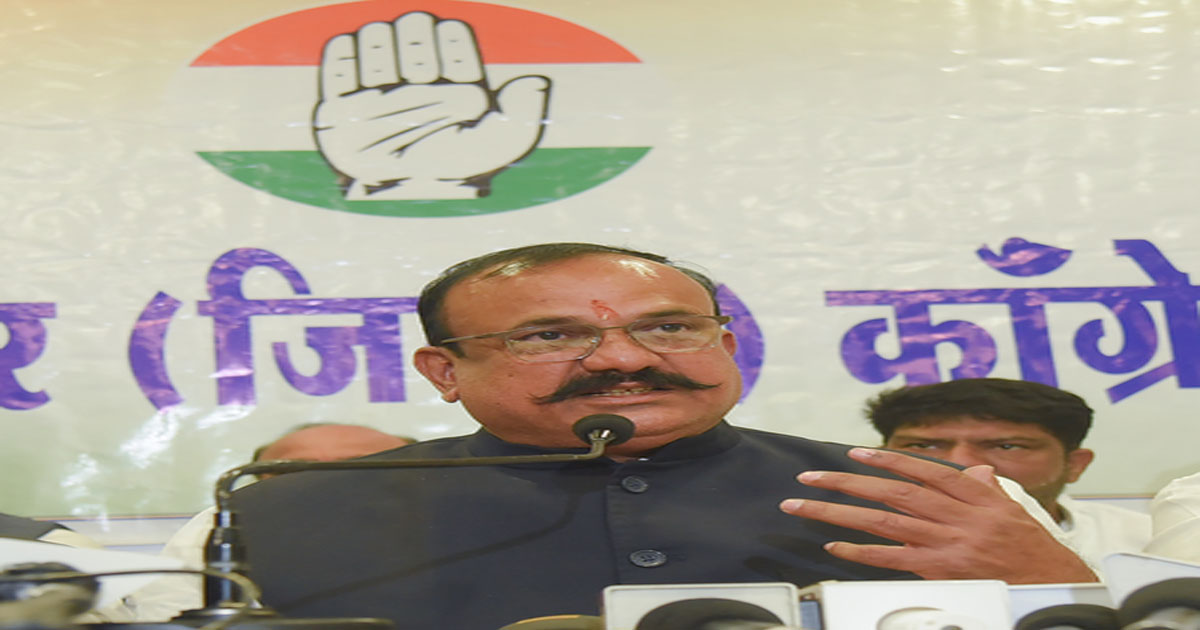
Mumbai, June 18: Maharashtra Pradesh Congress Committee President Harshvardhan Sapkal has said that the rebellion by six Members of Parliament (MPs) from the Shiv Sena-UBT faction is not merely a betrayal of Uddhav Thackeray and his party, but also a betrayal of the Congress-led Maha Vikas Aghadi (MVA).
He told reporters on Wednesday that the people elected them by voting against the ruling MahaYuti alliance, and this act amounts to a breach of the public’s trust.
He warmed that “such traitors will ultimately be taught a lesson by the people themselves”.
Sapkal said that the six MPs who rebelled and left the Shiv Sena-UBT were elected as candidates of the Maha Vikas Aghadi.
“During the 2024 Lok Sabha elections, workers of the Congress, Nationalist Congress Party, and Shiv Sena campaigned for these candidates, disregarding threats and refusing to succumb to any inducements. The people placed their faith in them. This rebellion is an insult to all those workers and voters, and these six MPs have betrayed each one of them,” he added.
“These individuals, who have become subservient to money, can never truly serve the people. Their only concern is wealth. Those who can be bought with money ultimately belong to no one,” Sapkal said.
He also alleged that the Bharatiya Janata Party (BJP) has been trampling upon democratic and Constitutional values and has adopted an autocratic style of governance based on the principle of “whatever we do becomes the law”.
According to Sapkal, the BJP’s sole objective is power, and over the past few years elections have been reduced to a money game.
“If they fail to win an election, they attempt to buy victorious candidates with money; if that does not work, they use the Election Commission to get nominations cancelled. Such a distorted system is now in operation. These developments pose a serious threat to democracy,” he said.
Sapkal also remarked that the most unfortunate aspect is that justice is not available in any institution — whether in the Legislature, Parliament, or the courts.
“The BJP has captured all institutions, and governance is being run through fear and intimidation,” the State Congress President alleged.
Maharashtra
Municipal Commissioner directed to complete work on Bhandup Water Purification Project to ensure safe water supply to Mumbai
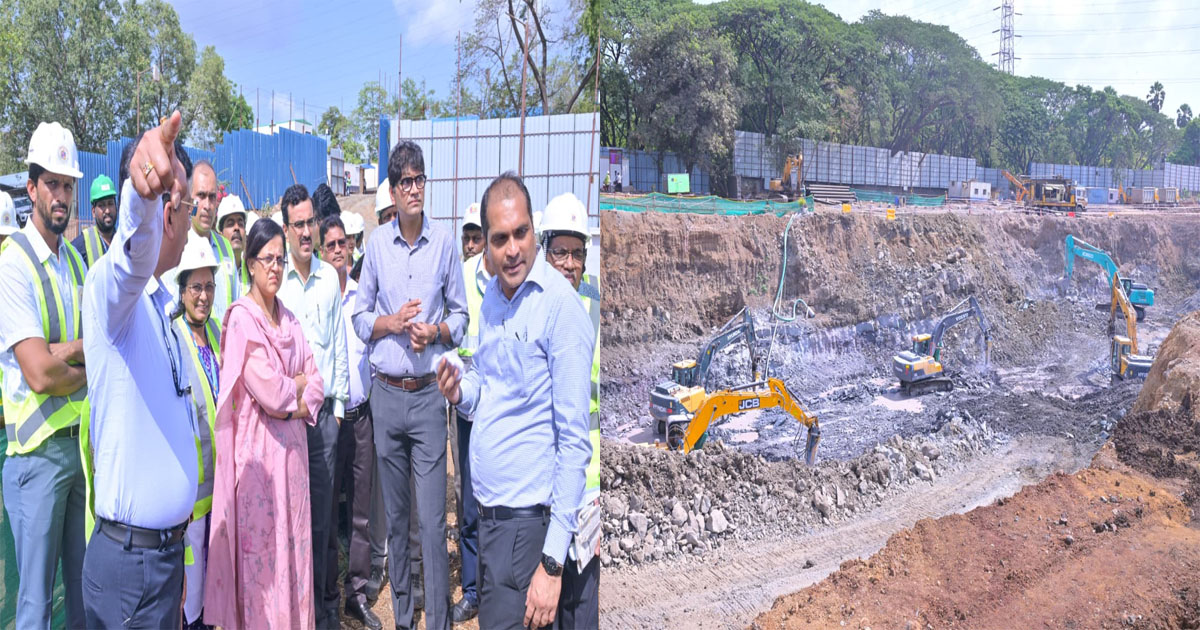
The state-of-the-art 2,000 million litres per day (MLPD) water treatment plant to be set up at the Bhandup Complex will significantly enhance the efficiency, transparency and resilience of the Mumbai Metropolitan Region’s water supply system. The project will help Mumbaikars get better quality, safe and sustainable drinking water as per national and international standards. Considering the growing population of the Mumbai Metropolitan Region, the pace of urbanisation, the growth of the industrial and commercial sector, as well as the increasing demand for water in the future, it is a key infrastructure project for Mumbai’s long-term water security. Municipal Commissioner Ashwini Bhide has directed that all necessary steps be taken to expedite all civil, structural, electrical, mechanical and process engineering works related to this water treatment project and complete the project ahead of schedule. A state-of-the-art Water Treatment Plant (WTP) with a capacity of 2,000 million litres per day (MLD) is being set up by the Mumbai Municipal Corporation (BMC) at Bhandup Complex. The water treatment project is expected to be completed by July 2028. Municipal Commissioner Ashwini Bhide visited the site of the water treatment project today (June 17, 2026) and inspected it. He also reviewed the progress.
Additional Municipal Commissioner (Project) Abhijit Bangar, Deputy Commissioner (Municipal Commissioner’s Office) Prashant Gaikwad, Deputy Commissioner (Special Engineering) Parshottam Malwade, Deputy Commissioner (Engineering) Shri. Shashank Bhoor, Chief Engineer (Water Supply Project) Chandrakant Choudhary, Chief Engineer (Mumbai Sewerage Project) Ashok Mengade, Chief Engineer (Bridges) Rajesh Mulla along with concerned engineers and officers were present on the occasion. There are two main systems for supplying water to Mumbai. From one of them, through the Tansa-Vitarna system, water from Tansa, Modak Sagar, Madhya Vitrna and Upper Vitrna dams is brought to the Bhandup Complex by gravity through water channels. This water is purified at the water purification centre in the Bhandup Complex. About 2500 million litres of water is supplied to the people of Mumbai daily through water reservoirs located at various locations. The 1910 million litres per day water purification project in the Bhandup Complex was built about 43 years ago. As the project has become structurally weak, a new water treatment project is being set up with a capacity of 2,000 million litres per day (MLD). The new water treatment project will process 2,000 million litres per day (MLD) of water. This water treatment project is crucial to increasing the capacity of the Bhandup Complex, which supplies water to the western and eastern suburbs of Mumbai.
Municipal Commissioner Ashwini Bhide said that the new water treatment project on 7.4 hectares of land in the Bhandup Complex will replace the existing project, which is the largest in Asia. It will help provide clean water to Mumbai. Its main objective is to meet the growing demand for water and replace the old project, which has reached the end of its life. Currently, soil testing, excavation, site clearance, relocation of power lines, tree planting, etc. are in full swing. Along with the construction works, mechanical, electrical and instrumentation work has also been started in parallel. The project works should be completed expeditiously by making additional manpower and machinery available. Instructions have been given to plan for excavation, radar transportation. Overall, the Brihanmumbai Municipal Corporation is committed to bridging the gap between the demand and supply of water for Mumbaikars. Bhandup Sewage Treatment Plant to be functional by October 2026.
The work of the 215 million litres per day (MLD) capacity sewage treatment plant project in Bhandup is in the final stages. Municipal Commissioner Ashwini Bhide inspected the work today (June 17, 2026). Bhide directed that the project be fully implemented by October 2026.
In view of environmental protection in Mumbai, the Brihanmumbai Municipal Corporation is setting up sewage treatment plants at a total of 7 locations. Under this, the work of Sewage Treatment Plant project is underway in Bhandup. Under this, the construction work of Primary Treatment Unit, Primary Clarifier, Continuous Sequencing Batch Reactor Tank, Air Blower Building and Digesters etc. has been completed. Mrs. Bhide inspected all the works and took detailed information.
Municipal Commissioner Ashwini Bhide said that the state-of-the-art Sewage Treatment Plant with a capacity of 215 million litres per day in Bhandup will be an important milestone for the Mumbai Metropolitan Region.

Cleric arrested in forced conversion case involving Air Force officer’s wife

Over three decades of rebellions and defections: Shiv Sena’s turbulent political journey

16 lakh NEET candidates download admit cards: NTA ahead of re-exam

G7 Summit: PM Modi, Prez Trump discussed West Asia, India-US trade deal & bilateral cooperation across sectors: MEA

CM Fadnavis directs Maha admin to form ‘State CSR’ cell to ensure effective funds utilisation for local self-govt institutions

Trump, Netanyahu hold phone talks after Iranian missile fire: Israeli state media

Virar Citizens Protest Demolition Drive In Arnala; Police Block Lal Bawta March, Sit-in Held On Road

Indian equity markets trade higher as Iran-Israel tensions ease

Israel captures strategic Beaufort Castle in southern Lebanon

Rubio says Hamas disarmament key to Gaza rebuild
-

 Crime4 years ago
Class 10 student jumps to death in Jaipur
-

 Maharashtra2 years ago
Mumbai Local Train Update: Central Railway’s New Timetable Comes Into Effect; Check Full List Of Revised Timings & Stations
-

 Maharashtra2 years ago
Mumbai To Go Toll-Free Tonight! Maharashtra Govt Announces Complete Toll Waiver For Light Motor Vehicles At All 5 Entry Points Of City
-

 Maharashtra2 years ago
False photo of Imtiaz Jaleel’s rally, exposing the fooling conspiracy
-

 National News2 years ago
Ministry of Railways rolls out Special Drive 4.0 with focus on digitisation, cleanliness, inclusiveness and grievance redressal
-

 Maharashtra2 years ago
Maharashtra Elections 2024: Mumbai Metro & BEST Services Extended Till Midnight On Voting Day
-

 National News2 years ago
J&K: 4 Jawans Killed, 28 Injured After Bus Carrying BSF Personnel For Poll Duty Falls Into Gorge In Budgam; Terrifying Visuals Surface
-

 Crime2 years ago
Baba Siddique Murder: Mumbai Police Unable To Get Lawrence Bishnoi Custody Due To Home Ministry Order, Says Report