
National News
‘It shows toolkit mindset’, BJP blasts Cong, Rahul over organising stir ahead of NEET re-exams

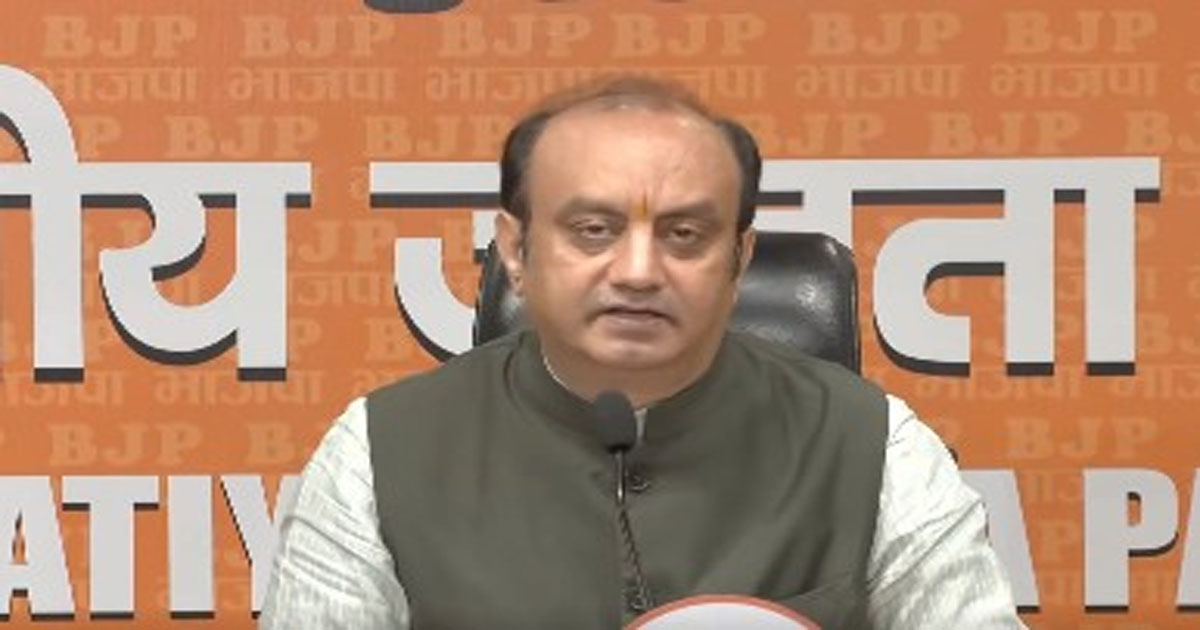
New Delhi, June 17: The Bharatiya Janata Party (BJP) on Wednesday launched a scathing critique of Congress and Rahul Gandhi over its proposed nationwide campaign on NEET paper leaks, just days ahead of re-examinations and said that such ‘irresponsible and insensitive’ conduct smacks of a “toolkit mindset”.
The NEET (UG) retest is slated for June 21, following the cancellation of May 3 exams over paper leaks.
The Congress party has announced nationwide student conventions, starting from Rajasthan’s Kota on Wednesday, to protest the government’s ‘inability’ to conduct fair examinations.
During a press conference at party HQ, BJP national spokesperson Sudhanshu Trivedi lambasted the Congress party and Rahul Gandhi for timing their stir just ahead of NEET re-exams, questioning their real intentions and ‘machinations’. He also accused them of misusing and exploiting students’ sentiments for furthering their own political ambitions.
“There are many opportunities to do politics, you can do it after June 21, when the examinations are over. I want to ask you, why have you chosen this moment only? The pupils whom you are taking along for the student convention show that you just want to fulfil your political ambition,” he said.
Trivedi further pointed out that the government is being considerate and sensitive to students’ concerns and has made elaborate efforts to conduct the retest in all fairness, but the Opposition is acting with utmost insensitivity and resorting to “cunning tactics”.
“When the students are engrossed in their studies, are in the final stages of preparation for the impending exams, why does Rahul Gandhi want to stoke apprehension and fear in the minds of wards regarding NEET re-exams?” he asked.
Further taking potshots at Rahul, the BJP leader said that you have failed as a student, as a working professional, you failed in your entrepreneurial stint and made yourself a disaster in politics, but why do you want to play with the lives and future of students?
Sudhanshu Trivedi posed four-pointed questions at the Congress party, demanding why the party chose Kota in the first place, given the huge number of students preparing for competitive examinations here.
“Why do you want to distract students, divert their attention from crucial examinations. Do you want to imperil their career and dreams?” he asked.
Trivedi further said that during the Congress government in Rajasthan, 19 paper leaks happened, but when the BJP came to power, it not only ensured zero paper leaks but also cracked down on more than 400 suspects.
He also claimed that Kota’s coaching institutes and PG guest houses owners were being “intimidated” and “forced” to send their students to participate in the Congress’s student convention.
“This shows the toolkit mindset of Congress; it is a planned and plotted campaign by the Congress party to spread anarchy and chaos,” the BJP leader asserted.
He also said that the protest over paper leaks is nothing but Congress’s toolkit strategy to stoke anarchy, as per the party’s established designs in the past and attempts to derail the process.
Notably, Rahul’s student convention in Kota against NEET paper leaks is slated for later this evening, at Shri Ram Rangmanch in Dussehra Ground. The proposed stir has already triggered political confrontation, with the Congress accusing the Modi govt of crushing the aspirations of millions of young students.


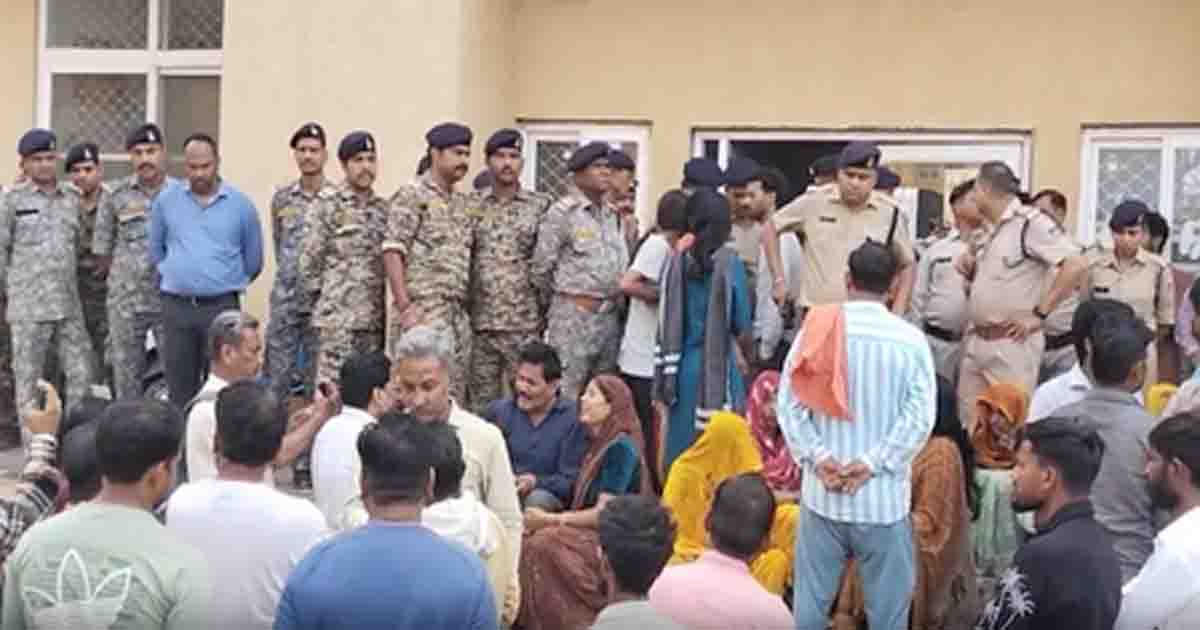
Leader of Opposition in the Lok Sabha Rahul Gandhi on Sunday expressed grief over the loss of lives in the road accident near Shitla Mata Temple in Madhya Pradesh’s Gwalior and extended deepest condolences to the grieving families.
Fourteen people were killed, while 27 were injured after a truck rammed into shops near Shitla Mata Temple early on Sunday. The incident occurred at around 1:30 a.m. on Sunday when the truck lost control while descending a slope near the historic Shitla Mata Temple, located 18 kilometres from the district headquarters.
Taking to X, Gandhi said, “The news of the deaths of several devotees in a horrific accident caused by an out-of-control truck near the Sheetla Mata Temple in Gwalior, Madhya Pradesh, is extremely heartbreaking.”
“I express my deepest condolences to the grieving families who have lost their loved ones in this accident. I stand with them in this hour of sorrow. I hope for the swift recovery of the injured,” he added.
Meanwhile, families of those killed in the tragic road accident gathered outside the post-mortem house on Sunday and expressed outrage over what they alleged was the administration’s failure to ensure proper traffic management during the heavy rush of devotees amid the Navratri festival.
They assembled outside the post-mortem house in large numbers, raising questions over the district administration’s arrangements and demanding accountability for the tragedy.
The incident has triggered widespread anger among residents. Questions are being raised over the police administration’s handling of traffic regulation and public safety during the festival. People have demanded strict action against those found responsible for the lapses that allegedly led to the accident.
The tragedy occurred during the auspicious festival of Navratri, when hundreds of thousands of devotees visit the historic Shitla Mata Temple. Typically, the route passing by the temple is closed to large vehicles during this period; hence, an investigation is underway to determine who allowed the truck to enter.
Officials have stated that they are probing who authorised the truck’s entry and whose negligence led to this incident.
The victims’ families have questioned how the movement of a truck wasn’t prohibited in the vicinity of the Shitla Mata Temple.

A couple died on the spot, and their three minor daughters were left battling for life after a speeding car hit their motorcycle in Madhya Pradesh’s Pandhurna while they were returning home after darshan.
The deceased have been identified as Vasudev Uike (40) and his wife Sunita Uike (35). Their three daughters — Vaishnavy (3), Sonu (7) and Rakhi (5) — sustained injuries in the accident and are undergoing treatment.
The youngest, Vaishnavy, suffered a fracture and has been referred to Nagpur for advanced medical care, while Sonu and Rakhi are being treated at the Pandhurna Civil Hospital.
According to police, the family was travelling on a motorcycle and was crossing the Tigaon four-lane highway when a speeding car hit their bike with great force. The impact was so severe that both Vasudev and Sunita died on the spot. Passers-by and local residents rushed the injured children to a hospital.
The accident took place late at night when traffic on the highway was relatively low. Eyewitnesses said the car was travelling at high speed and did not stop after the collision. The driver of the car fled from the scene, leaving the family lying on the road.
Police teams reached the spot soon after receiving information and launched a search for the absconding vehicle and its driver. Senior officers said efforts are underway to trace the car through CCTV footage and other leads available on the highway.
The motorcycle involved in the accident has been seized, and a case has been registered. Local administration and hospital authorities are monitoring the condition of the three injured girls.
Doctors treating them at Pandhurna Civil Hospital said Sonu and Rakhi are stable but under observation, while Vaishnavy requires specialised treatment in Nagpur.
Residents of the area have demanded strict action against the absconding driver and better safety measures on the Tigaon four-lane highway, which has witnessed several accidents in the past.
Police said further investigation is in progress to ascertain the exact sequence of events and establish the identity of the car involved in the accident.

Salespersons at ration shops run by cooperative societies will receive an incentive of Rs 2 for every kilogram of onions sold under an initiative aimed at controlling retail prices and ensuring access to quality produce at reasonable rates.
The incentive was announced in a procedural order issued by Registrar of Cooperative Societies, Latha. It recognises the additional responsibilities undertaken by salespersons handling onion distribution alongside their regular ration shop duties.
According to the order, onions were procured in three phases from the National Agricultural Cooperative Marketing Federation of India (NAFED) and the National Cooperative Consumers’ Federation of India (NCCF). The procurement was undertaken to help check rising onion prices in the open market. The onions are being sold to the public through ration shops operated by cooperative societies.
The arrangement is intended to make quality onions available at fair prices while using the existing cooperative distribution network to reach consumers.
Under the order, the incentive payable to each salesperson will depend on the quantity of onions sold. The prescribed rate is Rs 2 per kilogram, linking payment directly to the volume handled through sales at the participating shops.
The Registrar’s order lists several additional tasks associated with the initiative. These include receiving onion consignments, storing the produce, sorting it, weighing quantities for customers, conducting sales and maintaining the related sales accounts. These responsibilities involve work beyond the routine distribution of ration commodities.
The incentive is intended to encourage salespersons to undertake the additional duties required to carry out onion sales through cooperative outlets. The amount due to eligible salespersons will be credited directly to their bank accounts through the Electronic Clearing Service (ECS), according to the order.
Payments will therefore be made through bank transfers based on the quantity sold. The measure combines consumer relief with an incentive for the staff responsible for implementing the sales programme.
While the procurement and distribution arrangement seeks to contain the impact of higher market prices, the additional payment acknowledges the work involved at the retail level. The order specifies a uniform incentive rate for onion sales conducted through the participating cooperative ration shops.

Delhi protests put business worth Rs 400 crore at daily risk, exposure may reach Rs 4,000 crore in 10 days: CAIT

Extremely heartbreaking: Rahul Gandhi on MP road accident

Couple killed, 3 minor daughters critical as speeding car hits bike in MP’s Pandhurna

Ranbir Kapoor showcases singing talent, croons ‘Kabira’ at Durga Puja pandal during Navratri

TN announces Rs 2 per kg incentive for cooperative ration shop onion sales

Rahul, Cong ecosystem want to force regime change: BJP after Neha Bora praises B’desh Gen-Z protest

BJP pays tribute to ex-President Abdul Kalam, recalls his enduring influence on generations of India’s youth

Attack on democratic rights: INDIA Bloc leaders on detentions of anti-ECI protestors

INDIA bloc begins protest march against ECI

Maha Congress stages agitation against Gyanesh Kumar
-

 Crime4 years ago
Class 10 student jumps to death in Jaipur
-

 Maharashtra2 years ago
Mumbai Local Train Update: Central Railway’s New Timetable Comes Into Effect; Check Full List Of Revised Timings & Stations
-

 Maharashtra2 years ago
Mumbai To Go Toll-Free Tonight! Maharashtra Govt Announces Complete Toll Waiver For Light Motor Vehicles At All 5 Entry Points Of City
-

 Maharashtra2 years ago
False photo of Imtiaz Jaleel’s rally, exposing the fooling conspiracy
-

 National News2 years ago
Ministry of Railways rolls out Special Drive 4.0 with focus on digitisation, cleanliness, inclusiveness and grievance redressal
-

 Maharashtra2 years ago
Maharashtra Elections 2024: Mumbai Metro & BEST Services Extended Till Midnight On Voting Day
-

 National News2 years ago
J&K: 4 Jawans Killed, 28 Injured After Bus Carrying BSF Personnel For Poll Duty Falls Into Gorge In Budgam; Terrifying Visuals Surface
-

 Crime2 years ago
Baba Siddique Murder: Mumbai Police Unable To Get Lawrence Bishnoi Custody Due To Home Ministry Order, Says Report