
International News
G7 leaders reaffirm Ukraine support, call US-Iran deal an ‘historic opportunity’


Evian, June 17: Leaders of the Group of Seven (G7) on Wednesday issued a joint statement on key geopolitical issues, reaffirming their support for Ukraine, welcoming a breakthrough agreement between the United States and Iran, and underscoring their commitment to a free and open Indo-Pacific.
On Ukraine, the G7 leaders said they remain united in their support for Kyiv amid its ongoing conflict with Russia. “We, the Leaders of the G7, stand united in our unwavering support for Ukraine in defending its freedom, sovereignty, and territorial integrity,” the statement said.
The leaders pledged to step up military assistance, including the delivery of additional air defence systems, interceptors and long-range capabilities. They also signalled readiness to support increased military production in Ukraine through licensing arrangements.
Highlighting what they described as a “new momentum” in the conflict, the G7 committed to increasing pressure on Russia through stronger sanctions, particularly targeting the oil and gas sectors. The statement noted that leaders considered it “the right moment to proceed with additional measures” following a deal supported by US President Donald Trump that led to the reopening of the Strait of Hormuz.
On the Middle East, the G7 welcomed a newly announced agreement between the United States and Iran. The leaders described the deal as providing “an historic opportunity to prevent Iran from acquiring any nuclear weapon and tackling the threats related to its regional and ballistic activities.”
The statement reaffirmed the group’s position that “Iran will never obtain a nuclear weapon” and expressed support for a broader diplomatic framework aimed at securing long-term peace and stability in the region.
The G7 also endorsed efforts led by France and the United Kingdom to restore confidence in maritime security in the Strait of Hormuz and facilitate the resumption of commercial shipping. Leaders reiterated that unrestricted transit passage remains “the bedrock of international trade.”
Addressing regional conflicts, the group called for an immediate ceasefire in Lebanon and backed efforts to disarm Hezbollah. In Gaza, the leaders pledged to accelerate humanitarian assistance and reconstruction efforts while calling for an end to violence in the West Bank.
Turning to the Indo-Pacific, the G7 stressed the importance of maintaining a rules-based order and opposed unilateral attempts to alter the status quo through force or coercion.
“We reaffirm our opposition to any unilateral attempts to change the status quo, in particular by force or coercion, in the East and South China Seas and across the Taiwan Strait, which should only be resolved peacefully through dialogue,” the statement said.
The leaders also expressed deep concern over North Korea’s nuclear and ballistic missile programmes, reiterating their commitment to the complete denuclearisation of the Korean Peninsula in accordance with United Nations Security Council resolutions. They also called for coordinated action against North Korean cryptocurrency theft and cybercrime.
The statement concluded by supporting international efforts to address global economic imbalances and welcomed China’s participation in the Global Convergence for Growth Summit hosted by French President Emmanuel Macron earlier this month.


International News
Iran to pursue US seizure of commercial ship during truce in international courts: official

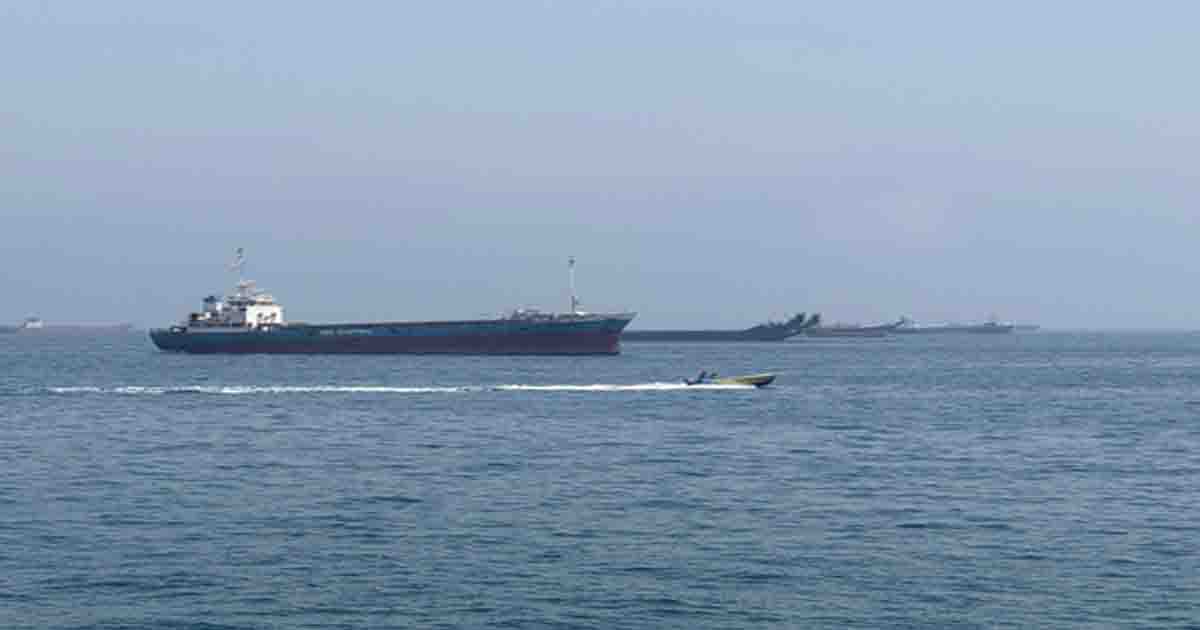
Tehran, Oct 3: A senior Iranian shipping official has said the country will pursue in international courts the US attack on and seizure of one of its container ships, which took place in April during the ceasefire between Tehran and Washington, the official news agency IRNA reported Saturday.
Mohammad-Reza Modarres Khiabani, CEO of the Islamic Republic of Iran Shipping Lines, made the remarks at a meeting in Tehran while describing as a “war crime” the US forces’ boarding and seizure of the Iranian-flagged vessel Touska off the coast of Iran’s southeastern Chabahar port in the Gulf of Oman on April 19, said the report.
He said the ship was carrying medicines related to the Iranian Red Crescent Society and dialysis patients, noting that attacking a commercial ship during the ceasefire constitutes a “war crime and violation of the truce,” Xinhua News Agency reported.
He also said that the imposition of any form of naval blockade violated international law and constituted a “hostile” act, alleging that the US Navy struck Touska’s engine room and took 28 crew members hostage.
Meanwhile, US President Donald Trump declined to reveal his next move on Iran, saying the situation was “working out very well” and predicting that the conflict would not last long.
Trump made the remarks while speaking to reporters at the White House before departing aboard Marine One.
Asked what his next step regarding Iran would be, Trump initially suggested that disclosing it would make major news.
“That’s very, oh, it’s — well, if I told you, you’d have a major story, right? But you’ll see. Working out very well. Iran is not doing well,” Trump said.
The President did not elaborate on what action his administration was considering or provide a timetable.
But later in the same exchange with reporters, Trump again referred to Iran while discussing global energy supplies and his efforts to get Europe to put more diesel into the market.
International News
Capt Smit Machchhar under excellent medical care, recovering well: Indian Embassy in UAE
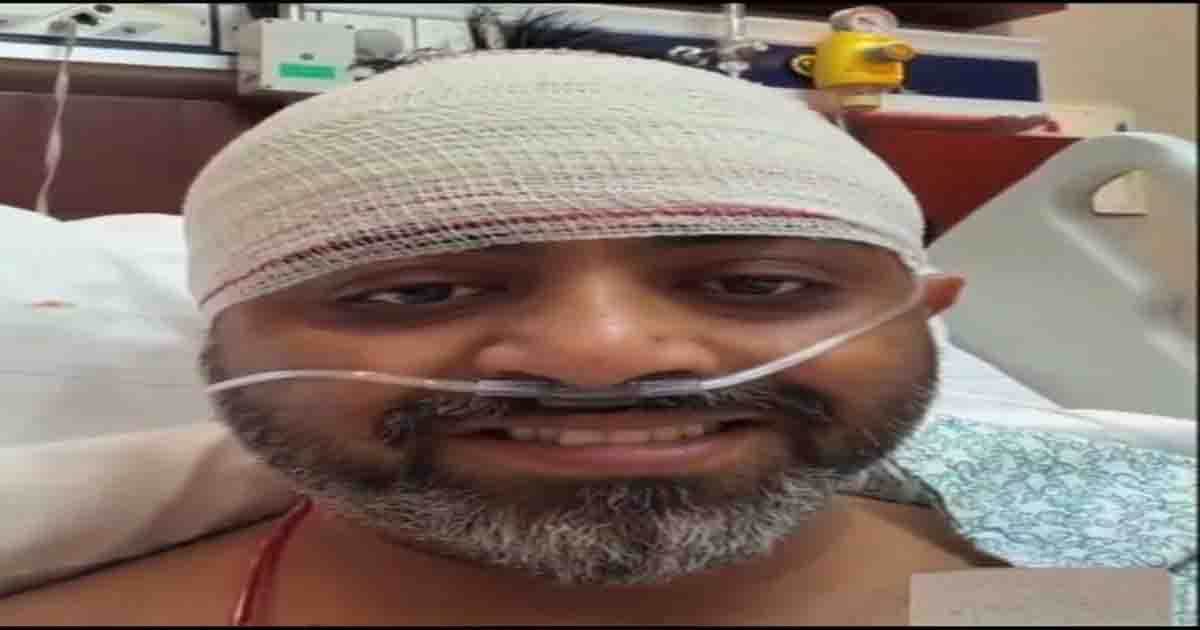
Abu Dhabi, Oct 3: Captain Smit Machchhar, the brave Indian pilot of flydubai flight FZ1073, is responding well to treatment and continues to receive medical attention, the Indian Embassy in the UAE said on Saturday.
The mission said it was coordinating with his family and local authorities. It also thanked the UAE government for the care being extended to him.
“Indian braveheart Capt. Smit remains under excellent medical care & is recovering well. We are in touch with his family & local authorities, extending support for a speedy recovery. Our thanks to UAE gov. for their care. We join well-wishers in praying for his good health,” the Indian mission posted on X.
Captain Machchhar was injured while preventing a mid-air attack on Wednesday aboard the flydubai flight from Dubai to Israel.
During the incident, another pilot stabbed Captain Machchhar and the aircraft began to plummet.
The Indian pilot fought the assailant bravely and opened the cockpit door, following which passengers rushed to assist, entered the cockpit and overpowered the attacker.
Once the attacker was subdued, the seriously wounded Indian pilot was stabilised until the aircraft made an emergency landing in Saudi Arabia.
Prime Minister Narendra Modi on Friday spoke with Captain Machchhar over a video call, praising his courage, presence of mind and composure during the mid-air incident in which he helped save the lives of passengers and crew members.
During the conversation, PM Modi said the country could proudly say that Indians are not those who take lives, but those who are willing to risk their own lives to save others.
PM Modi began the conversation by asking about Captain Machchhar’s health and said the entire country was praying for his speedy recovery.
“The whole country is praying for you. Maha Mrityunjaya Jaap is being performed for you and your health. Your courage, presence of mind and composure saved many lives. The country can proudly say that Indians are not those who take lives, but those who are willing to risk their lives to save others,” PM Modi said.
Captain Machchhar nodded and responded, “Yes, sir.”
The Indian pilot has also received recognition from across the world, with leaders and people lauding his bravery and actions that helped save hundreds of lives during the mid-air attack.
International News
Dubai Crown Prince visits Captain Machchhar, says brave Indian pilot embodies ‘highest degrees of courage’
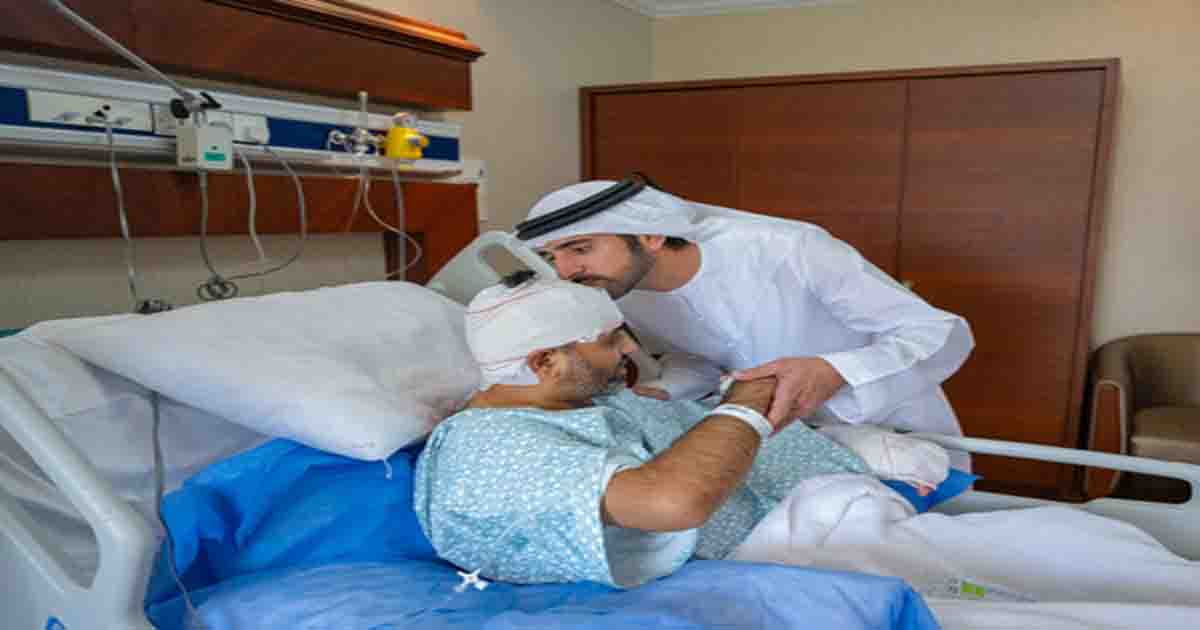
Abu Dhabi, Oct 3: Hamdan bin Mohammed, Crown Prince of Dubai and the Deputy Prime Minister of the United Arab Emirates (UAE), on Saturday visited the brave Indian pilot of flydubai flight FZ1073, Smit Machchhar, in the hospital and praised his courage.
“During a visit to Captain Smit Machchhar… the flydubai pilot who embodied the highest degrees of courage, responsibility, and care for human life. From us, and from the leadership of the nation, he has our full appreciation and praise. We are proud that he is part of our team… part of the story of our nation… and part of what the UAE stands for… a nation of compassion… a nation of peace… and a nation of life,” Hamdan bin Mohammed, who is also UAE’s Minister of Defence and Chairman of The Executive Council of Dubai, wrote on X after the meeting.
Earlier, the Indian Embassy in the UAE said Captain Machchhar is responding well to treatment and continues to receive medical attention.
The mission said it was coordinating with his family and local authorities. It also thanked the UAE government for the care being extended to him.
“Indian braveheart Capt. Smit remains under excellent medical care & is recovering well. We are in touch with his family & local authorities, extending support for a speedy recovery. Our thanks to the UAE gov. for their care. We join well-wishers in praying for his good health,” the Indian mission posted on X.
Captain Machchhar was injured while preventing a mid-air attack on Wednesday aboard the flydubai flight from Dubai to Israel.
During the incident, another pilot stabbed Captain Machchhar and the aircraft began to plummet.
The Indian pilot fought the assailant bravely and opened the cockpit door, following which passengers rushed to assist, entered the cockpit and overpowered the attacker.
Once the attacker was subdued, the seriously wounded Indian pilot was stabilised until the aircraft made an emergency landing in Saudi Arabia.
Prime Minister Narendra Modi on Friday spoke with Captain Machchhar over a video call, praising his courage, presence of mind and composure during the mid-air incident in which he helped save the lives of passengers and crew members.

Eknath Shinde lauds Capt Smit Machchhar, calls his bravery a rare feat in entire world

Dharmendra Pradhan calls for mass participation in Sambalpur cleanliness drive

SIR, an Election Commission process to remove dead, false voters: Telangana BJP chief

Delhi Police bust two fake job placement call centres near Shadipur metro station; 11 held

Delhi Police arrests five in Rs 19.50 Lakh robbery case; recovers Rs 9 Lakh cash, iPhone

Gift to President Putin part of PM Modi bid to globally display India’s heritage

PM Modi’s warm camaraderie with Putin, Xi on full display at BRICS Summit

Corporators of all parties in trouble! Corporators of all major parties including Shiv Sena (UBT), BJP and Congress are facing legal challenges.

Complaint against Netflix & Mukesh Chhabra for inappropriate language on ‘India’s Got Latent 2’

Maha Congress stages agitation against Gyanesh Kumar
-

 Crime4 years ago
Class 10 student jumps to death in Jaipur
-

 Maharashtra2 years ago
Mumbai Local Train Update: Central Railway’s New Timetable Comes Into Effect; Check Full List Of Revised Timings & Stations
-

 Maharashtra2 years ago
Mumbai To Go Toll-Free Tonight! Maharashtra Govt Announces Complete Toll Waiver For Light Motor Vehicles At All 5 Entry Points Of City
-

 Maharashtra2 years ago
False photo of Imtiaz Jaleel’s rally, exposing the fooling conspiracy
-

 National News2 years ago
Ministry of Railways rolls out Special Drive 4.0 with focus on digitisation, cleanliness, inclusiveness and grievance redressal
-

 Maharashtra2 years ago
Maharashtra Elections 2024: Mumbai Metro & BEST Services Extended Till Midnight On Voting Day
-

 National News2 years ago
J&K: 4 Jawans Killed, 28 Injured After Bus Carrying BSF Personnel For Poll Duty Falls Into Gorge In Budgam; Terrifying Visuals Surface
-

 Crime2 years ago
Baba Siddique Murder: Mumbai Police Unable To Get Lawrence Bishnoi Custody Due To Home Ministry Order, Says Report