
Maharashtra
Over three decades of rebellions and defections: Shiv Sena’s turbulent political journey

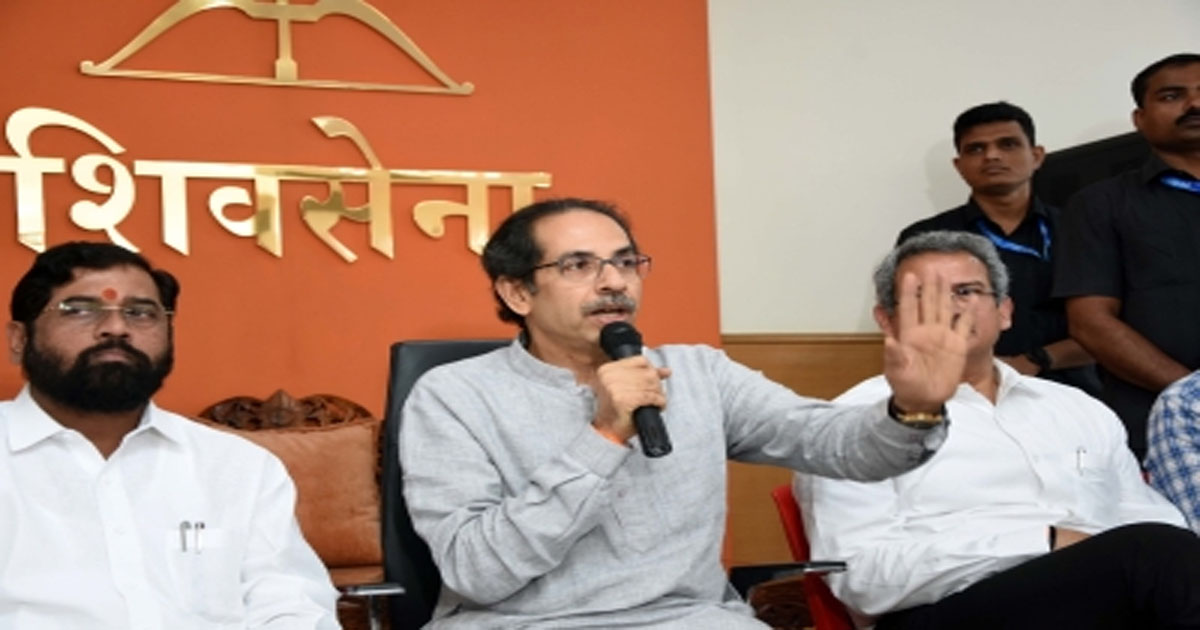
Mumbai, June 18: As the Uddhav Thackeray-led Shiv Sena (Uddhav Balasaheb Thackeray) stares at the prospect of a fresh rebellion within its Lok Sabha ranks, political observers point out that internal revolts have been a recurring feature of the party’s history.
Established by Balasaheb Thackeray on June 19, 1966, on the twin pillars of Marathi identity and Hindutva politics, the Shiv Sena has weathered several major splits over the past three and a half decades. From the first major defection in 1991 to the dramatic rupture of 2022, almost every decade has witnessed a prominent leader breaking away from the organisation.
The first serious challenge to Balasaheb Thackeray’s authority emerged in 1991 when senior Other Backward Classes (OBC) leader Chhagan Bhujbal rebelled against the party leadership. Disenchanted with internal functioning and his position within the organisation, Bhujbal walked out with 17 MLAs and joined Sharad Pawar’s camp. He later went on to serve as a minister and Deputy Chief Minister in Congress-Nationalist Congress Party (NCP) governments. The episode marked the first major legislative revolt against the Shiv Sena leadership.
Another significant departure followed in 1999 when Navi Mumbai strongman Ganesh Naik severed ties with the party and joined the newly formed NCP. Naik, who wielded considerable influence in the Navi Mumbai region, remained a key NCP leader for nearly two decades before switching to the Bharatiya Janata Party (BJP) in 2019, while retaining his political dominance in the area.
The next major setback came in 2005 with the exit of former Maharashtra Chief Minister Narayan Rane. Growing differences with the emerging leadership of Uddhav Thackeray led to a bitter fallout and eventual expulsion from the party. Rane joined the Congress, later floated the Maharashtra Swabhiman Paksha, and eventually aligned with the BJP, where he continues to be an influential figure in the Konkan region.
A year later, the Shiv Sena suffered what many regarded as its most emotional split. Raj Thackeray, Balasaheb Thackeray’s nephew, parted ways with the Shiv Sena, citing marginalisation within the organisation and disagreements over Uddhav Thackeray’s style of functioning. In 2006, he launched the Maharashtra Navnirman Sena (MNS). The party made an impressive debut, winning 13 Assembly seats in 2009, but gradually lost political ground and now has only a limited electoral presence.
Unlike previous rebellions in which leaders simply left to form or join other parties, Eknath Shinde’s revolt in 2022 fundamentally altered the Shiv Sena itself. Leading a rebellion by 40 MLAs and a majority of the party’s MPs, Shinde challenged Uddhav Thackeray’s leadership and claimed to represent the party’s original ideology.
With support from the BJP, he not only split the organisation but also secured control of the official Shiv Sena name and its iconic bow and arrow symbol through legal and constitutional processes. The development forced Uddhav Thackeray’s faction to function under the Shiv Sena (UBT) banner.
Now, amid speculation surrounding “Operation Tiger” and reports that six of the nine Shiv Sena (UBT) Lok Sabha MPs could cross over to the Shinde camp, the party once again finds itself confronting familiar political turbulence. Should the defection materialise, it would become the latest chapter in a long history of internal revolts that have repeatedly reshaped both the Shiv Sena and Maharashtra’s political landscape.


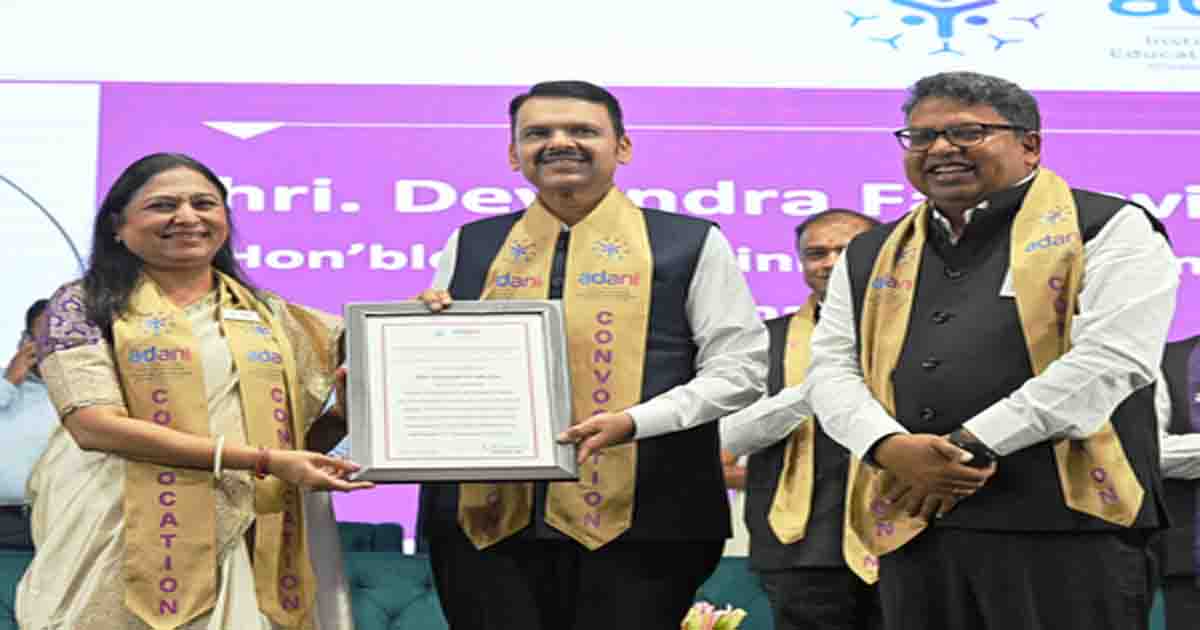
Wardha, Oct 17: Emphasising the transformative potential of modern higher education, Maharashtra Chief Minister Devendra Fadnavis on Saturday delivered a compelling address at the 17th Ceremonial Convocation of the Adani Institute of Higher Education and Research (AIHER) in Sawangi (Meghe).
Speaking to a gathering of distinguished academicians, institutional leaders, and graduating students, CM Fadnavis outlined a vision for strengthening Maharashtra’s knowledge economy through multidisciplinary learning, strategic innovation, and targeted medical research.
CM Fadnavis highlighted key emerging technologies—specifically Artificial Intelligence (AI), Semiconductors, and Quantum Computing—as primary catalysts that will redefine every sphere of modern life. He stressed that institutions of higher learning must evolve continuously to keep pace with global technological advancements.
“Universities and educational institutions must fully embrace innovation until they become true hubs of cutting-edge research,” CM Fadnavis stated, calling for public-private partnerships to strengthen the state’s educational infrastructure and academic output.
Turning his attention to the healthcare sector, CM Fadnavis underscored the urgent need for medical research and innovation to combat the global rise of non-communicable diseases.
He made a strong case for targeted research on Cancer and Diabetes while focusing on the integration of advanced medical technologies and the cultivation of empathy and compassion in care.
He identified the surge in diabetes and cancer cases as a major public health challenge. While asserting that scientific breakthroughs are vital for developing effective cures, he reminded medical graduates that technical prowess must be complemented by empathy and human compassion in patient care.
Highlighting a milestone for the institution, CM Fadnavis praised the academic achievements of the graduating cohort, noting that female students secured nearly 80 per cent of the convocation medals.
Describing this accomplishment as noteworthy, he stated that women’s leadership and excellence will serve as a cornerstone in achieving the nation’s Viksit Bharat 2047 vision.
The high-profile convocation marked a historic chapter for AIHER. During the ceremony, CM Fadnavis was formally conferred with an honorary Doctor of Letters (D.Litt.) degree in recognition of his public service and governance.
CM Fadnavis commended AIHER for its legacy of extending high-quality education, medical research, and professional opportunities from rural Vidarbha to the national stage.
Mumbai, Oct 17: In fresh action against an online betting/gaming and cyber fraud syndicate, the Enforcement Directorate (ED) conducted search operations at 20 premises located in Mumbai, Pune, Mehsana, Surat and Hyderabad, ED officials said on Saturday.
During the search operations on October 13, the ED’s Mumbai Zone-2 seized various incriminating documents, digital devices and other material evidence relating to the layering and diversion of proceeds of crime, the official said in a statement.
In addition, multiple bank accounts of the concerned entities and persons have been ordered frozen under the provisions of the Prevention of Money Laundering Act (PMLA), 2002, the statement said.
In the case, the ED had earlier conducted searches at multiple places in Pune, Mumbai and Bengaluru and also arrested Ram U. Ramdhani, founder of Edsom Fintech Private Limited, who remains in judicial custody, it added.
The investigation stems from two predicate offences pertaining to the online gaming and betting platform “All Panel Exchange” (allpanelexch.com) and MGM91 wherein the complainants were induced to deposit funds and were subsequently cheated, the ED said.
The central agency’s investigation under PMLA established that funds collected from victims of both betting platforms were routed and ultimately received in the bank accounts of a Pune-based entity established by Ram U. Ramdhani.
“Edsom had developed and operated an in-house payment intermediary platform called “iPaisa”, through which it onboarded more than 200 shell/front entities — referred to internally as “merchants” — on behalf of online gaming, betting, and cyber fraud operators and their agents, referred to as “Channel Partners/Carry and Forward Agents”,” the ED said.
“Investigation revealed that funds collected from victims of online gaming/betting/cyber fraud platforms were routed through a vast network of mule bank accounts and the controllers of these betting platforms, along with the shell entities used for routing the proceeds of crime, have been identified,” the ED added.
It also emerged that a significant number of persons involved in operating these online betting/gaming platforms were being directed from Dubai based persons, the probe agency said.
The syndicate was further aided by certain cooperative banks, whose infrastructure was used to collect and further layer the illicit proceeds, it added.
“Investigation has also established that the proceeds of crime generated through online betting/gaming and cyber fraud activities were siphoned out through three principal routes: One, by way of remittances disguised as trade transactions through over invoicing; and other, by cash withdrawals from mule accounts opened under the guise of APMC units; and another, by conversion of funds into cryptocurrency for siphoning off the proceeds of crime outside India,” the ED said.
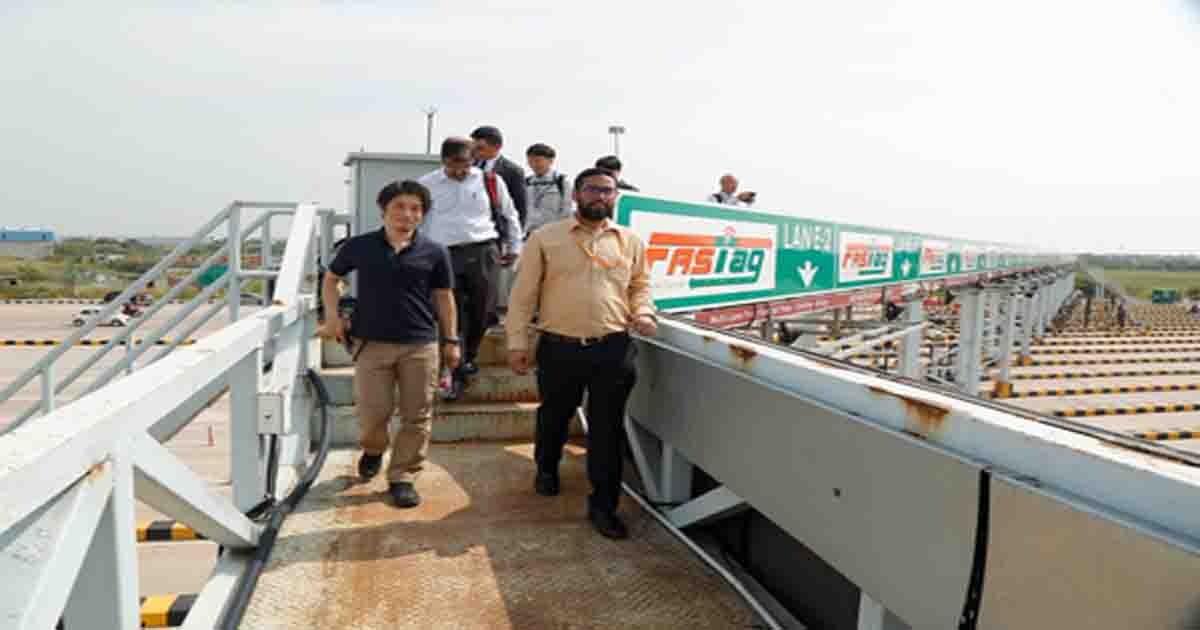
A Japanese delegation visited the Multi-Lane Free Flow (MLFF) tolling system in Mundka-Bakkarwala on Friday on the sidelines of the 12th India–Japan Joint Working Group Meeting on Roads and Road Transportation.
The MLFF system provided insights into India’s technology-driven initiatives for seamless and efficient highway travel.
At the MLFFs, the National Highways Authority of India (NHAI) uses a combination of RFID-based FASTag electronic toll collection, automatic number plate recognition (ANPR) and AI analytics to allow vehicles to pass through charging points without stopping, slowing down or remaining in a designated lane.
MLFFs have already been installed at Choryasi in Gujarat, Mundka in Delhi, Gharaunda in Haryana and Daulatpura and Manoharpura in Rajasthan.
While 12 further locations have been awarded for conversion, tenders have also been launched covering an additional 104 toll plazas around the country.
The MLFF at Choryasi on the Surat–Bharuch section of NH-48 was the first to become operational.
The one at Mundka on Delhi’s Urban Extension Road-II was the second.
The expansion plan represents a significant shift from India’s traditional barrier-based toll plazas.
Rather than moving immediately to satellite-based toll collection, the Indian government has opted to build on the country’s established FASTag system and combine it with ANPR and AI.
Expert committees had recommended further consideration of GPS-based barrier-free tolling because of security, privacy and operational control issues, the Ministry of Road Transport and Highways has indicated.
FASTag and ANPR/AI was thus selected as the technology for the current MLFF programme.
The session of the India–Japan Joint Working Group on Roads and Road Transportation Sector was successfully held at Bharat Mandapam in New Delhi.
Discussions focused on advanced construction technologies, bridge and tunnel engineering, sustainable infrastructure and digital innovations, fostering the exchange of technical expertise and best practices.
“The meeting reaffirmed both nations’ commitment to safe, sustainable and technology-driven road infrastructure, aligned with the vision of Viksit Bharat @ 2047,” the Ministry said in a statement.

Samajwadi Party, education two banks of river who can’t meet: UP CM Yogi Adityanath

Tanker attacked northeast of Saudi Arabia: UKMTO

MP: Mild earthquake tremors felt in Singrauli

Maha CM calls emerging technologies key to India’s youth

Iran IRGC says supertanker exploded after hitting mine in Hormuz Strait

Rahul, Cong ecosystem want to force regime change: BJP after Neha Bora praises B’desh Gen-Z protest

BJP pays tribute to ex-President Abdul Kalam, recalls his enduring influence on generations of India’s youth

INDIA bloc begins protest march against ECI

Maha Congress stages agitation against Gyanesh Kumar

Complaint against Netflix & Mukesh Chhabra for inappropriate language on ‘India’s Got Latent 2’
-

 Crime4 years ago
Class 10 student jumps to death in Jaipur
-

 Maharashtra2 years ago
Mumbai Local Train Update: Central Railway’s New Timetable Comes Into Effect; Check Full List Of Revised Timings & Stations
-

 Maharashtra2 years ago
Mumbai To Go Toll-Free Tonight! Maharashtra Govt Announces Complete Toll Waiver For Light Motor Vehicles At All 5 Entry Points Of City
-

 Maharashtra2 years ago
False photo of Imtiaz Jaleel’s rally, exposing the fooling conspiracy
-

 National News2 years ago
Ministry of Railways rolls out Special Drive 4.0 with focus on digitisation, cleanliness, inclusiveness and grievance redressal
-

 Maharashtra2 years ago
Maharashtra Elections 2024: Mumbai Metro & BEST Services Extended Till Midnight On Voting Day
-

 National News2 years ago
J&K: 4 Jawans Killed, 28 Injured After Bus Carrying BSF Personnel For Poll Duty Falls Into Gorge In Budgam; Terrifying Visuals Surface
-

 Crime2 years ago
Baba Siddique Murder: Mumbai Police Unable To Get Lawrence Bishnoi Custody Due To Home Ministry Order, Says Report