
Maharashtra
Municipal Commissioner directed to complete work on Bhandup Water Purification Project to ensure safe water supply to Mumbai

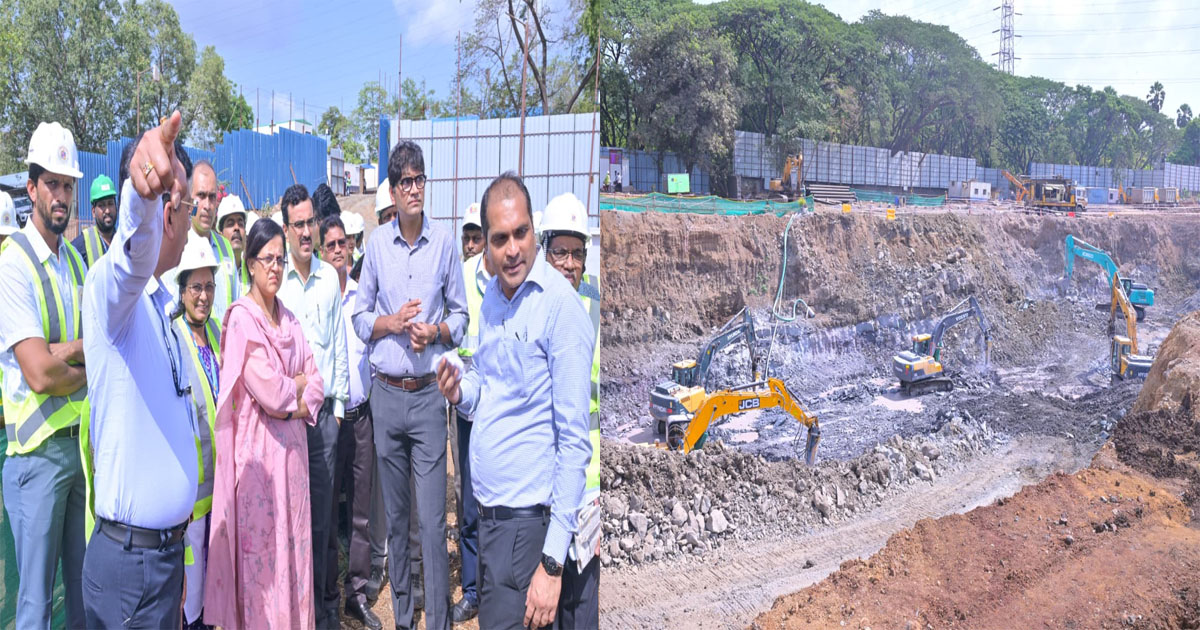
The state-of-the-art 2,000 million litres per day (MLPD) water treatment plant to be set up at the Bhandup Complex will significantly enhance the efficiency, transparency and resilience of the Mumbai Metropolitan Region’s water supply system. The project will help Mumbaikars get better quality, safe and sustainable drinking water as per national and international standards. Considering the growing population of the Mumbai Metropolitan Region, the pace of urbanisation, the growth of the industrial and commercial sector, as well as the increasing demand for water in the future, it is a key infrastructure project for Mumbai’s long-term water security. Municipal Commissioner Ashwini Bhide has directed that all necessary steps be taken to expedite all civil, structural, electrical, mechanical and process engineering works related to this water treatment project and complete the project ahead of schedule. A state-of-the-art Water Treatment Plant (WTP) with a capacity of 2,000 million litres per day (MLD) is being set up by the Mumbai Municipal Corporation (BMC) at Bhandup Complex. The water treatment project is expected to be completed by July 2028. Municipal Commissioner Ashwini Bhide visited the site of the water treatment project today (June 17, 2026) and inspected it. He also reviewed the progress.
Additional Municipal Commissioner (Project) Abhijit Bangar, Deputy Commissioner (Municipal Commissioner’s Office) Prashant Gaikwad, Deputy Commissioner (Special Engineering) Parshottam Malwade, Deputy Commissioner (Engineering) Shri. Shashank Bhoor, Chief Engineer (Water Supply Project) Chandrakant Choudhary, Chief Engineer (Mumbai Sewerage Project) Ashok Mengade, Chief Engineer (Bridges) Rajesh Mulla along with concerned engineers and officers were present on the occasion. There are two main systems for supplying water to Mumbai. From one of them, through the Tansa-Vitarna system, water from Tansa, Modak Sagar, Madhya Vitrna and Upper Vitrna dams is brought to the Bhandup Complex by gravity through water channels. This water is purified at the water purification centre in the Bhandup Complex. About 2500 million litres of water is supplied to the people of Mumbai daily through water reservoirs located at various locations. The 1910 million litres per day water purification project in the Bhandup Complex was built about 43 years ago. As the project has become structurally weak, a new water treatment project is being set up with a capacity of 2,000 million litres per day (MLD). The new water treatment project will process 2,000 million litres per day (MLD) of water. This water treatment project is crucial to increasing the capacity of the Bhandup Complex, which supplies water to the western and eastern suburbs of Mumbai.
Municipal Commissioner Ashwini Bhide said that the new water treatment project on 7.4 hectares of land in the Bhandup Complex will replace the existing project, which is the largest in Asia. It will help provide clean water to Mumbai. Its main objective is to meet the growing demand for water and replace the old project, which has reached the end of its life. Currently, soil testing, excavation, site clearance, relocation of power lines, tree planting, etc. are in full swing. Along with the construction works, mechanical, electrical and instrumentation work has also been started in parallel. The project works should be completed expeditiously by making additional manpower and machinery available. Instructions have been given to plan for excavation, radar transportation. Overall, the Brihanmumbai Municipal Corporation is committed to bridging the gap between the demand and supply of water for Mumbaikars. Bhandup Sewage Treatment Plant to be functional by October 2026.
The work of the 215 million litres per day (MLD) capacity sewage treatment plant project in Bhandup is in the final stages. Municipal Commissioner Ashwini Bhide inspected the work today (June 17, 2026). Bhide directed that the project be fully implemented by October 2026.
In view of environmental protection in Mumbai, the Brihanmumbai Municipal Corporation is setting up sewage treatment plants at a total of 7 locations. Under this, the work of Sewage Treatment Plant project is underway in Bhandup. Under this, the construction work of Primary Treatment Unit, Primary Clarifier, Continuous Sequencing Batch Reactor Tank, Air Blower Building and Digesters etc. has been completed. Mrs. Bhide inspected all the works and took detailed information.
Municipal Commissioner Ashwini Bhide said that the state-of-the-art Sewage Treatment Plant with a capacity of 215 million litres per day in Bhandup will be an important milestone for the Mumbai Metropolitan Region.


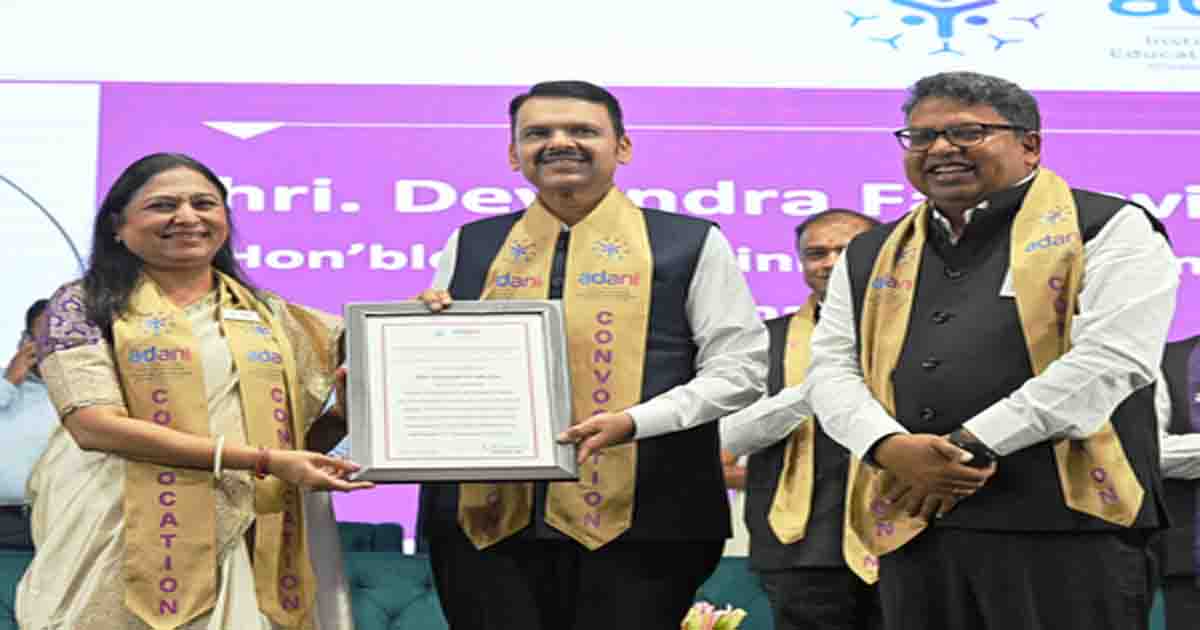
Wardha, Oct 17: Emphasising the transformative potential of modern higher education, Maharashtra Chief Minister Devendra Fadnavis on Saturday delivered a compelling address at the 17th Ceremonial Convocation of the Adani Institute of Higher Education and Research (AIHER) in Sawangi (Meghe).
Speaking to a gathering of distinguished academicians, institutional leaders, and graduating students, CM Fadnavis outlined a vision for strengthening Maharashtra’s knowledge economy through multidisciplinary learning, strategic innovation, and targeted medical research.
CM Fadnavis highlighted key emerging technologies—specifically Artificial Intelligence (AI), Semiconductors, and Quantum Computing—as primary catalysts that will redefine every sphere of modern life. He stressed that institutions of higher learning must evolve continuously to keep pace with global technological advancements.
“Universities and educational institutions must fully embrace innovation until they become true hubs of cutting-edge research,” CM Fadnavis stated, calling for public-private partnerships to strengthen the state’s educational infrastructure and academic output.
Turning his attention to the healthcare sector, CM Fadnavis underscored the urgent need for medical research and innovation to combat the global rise of non-communicable diseases.
He made a strong case for targeted research on Cancer and Diabetes while focusing on the integration of advanced medical technologies and the cultivation of empathy and compassion in care.
He identified the surge in diabetes and cancer cases as a major public health challenge. While asserting that scientific breakthroughs are vital for developing effective cures, he reminded medical graduates that technical prowess must be complemented by empathy and human compassion in patient care.
Highlighting a milestone for the institution, CM Fadnavis praised the academic achievements of the graduating cohort, noting that female students secured nearly 80 per cent of the convocation medals.
Describing this accomplishment as noteworthy, he stated that women’s leadership and excellence will serve as a cornerstone in achieving the nation’s Viksit Bharat 2047 vision.
The high-profile convocation marked a historic chapter for AIHER. During the ceremony, CM Fadnavis was formally conferred with an honorary Doctor of Letters (D.Litt.) degree in recognition of his public service and governance.
CM Fadnavis commended AIHER for its legacy of extending high-quality education, medical research, and professional opportunities from rural Vidarbha to the national stage.
Mumbai, Oct 17: In fresh action against an online betting/gaming and cyber fraud syndicate, the Enforcement Directorate (ED) conducted search operations at 20 premises located in Mumbai, Pune, Mehsana, Surat and Hyderabad, ED officials said on Saturday.
During the search operations on October 13, the ED’s Mumbai Zone-2 seized various incriminating documents, digital devices and other material evidence relating to the layering and diversion of proceeds of crime, the official said in a statement.
In addition, multiple bank accounts of the concerned entities and persons have been ordered frozen under the provisions of the Prevention of Money Laundering Act (PMLA), 2002, the statement said.
In the case, the ED had earlier conducted searches at multiple places in Pune, Mumbai and Bengaluru and also arrested Ram U. Ramdhani, founder of Edsom Fintech Private Limited, who remains in judicial custody, it added.
The investigation stems from two predicate offences pertaining to the online gaming and betting platform “All Panel Exchange” (allpanelexch.com) and MGM91 wherein the complainants were induced to deposit funds and were subsequently cheated, the ED said.
The central agency’s investigation under PMLA established that funds collected from victims of both betting platforms were routed and ultimately received in the bank accounts of a Pune-based entity established by Ram U. Ramdhani.
“Edsom had developed and operated an in-house payment intermediary platform called “iPaisa”, through which it onboarded more than 200 shell/front entities — referred to internally as “merchants” — on behalf of online gaming, betting, and cyber fraud operators and their agents, referred to as “Channel Partners/Carry and Forward Agents”,” the ED said.
“Investigation revealed that funds collected from victims of online gaming/betting/cyber fraud platforms were routed through a vast network of mule bank accounts and the controllers of these betting platforms, along with the shell entities used for routing the proceeds of crime, have been identified,” the ED added.
It also emerged that a significant number of persons involved in operating these online betting/gaming platforms were being directed from Dubai based persons, the probe agency said.
The syndicate was further aided by certain cooperative banks, whose infrastructure was used to collect and further layer the illicit proceeds, it added.
“Investigation has also established that the proceeds of crime generated through online betting/gaming and cyber fraud activities were siphoned out through three principal routes: One, by way of remittances disguised as trade transactions through over invoicing; and other, by cash withdrawals from mule accounts opened under the guise of APMC units; and another, by conversion of funds into cryptocurrency for siphoning off the proceeds of crime outside India,” the ED said.
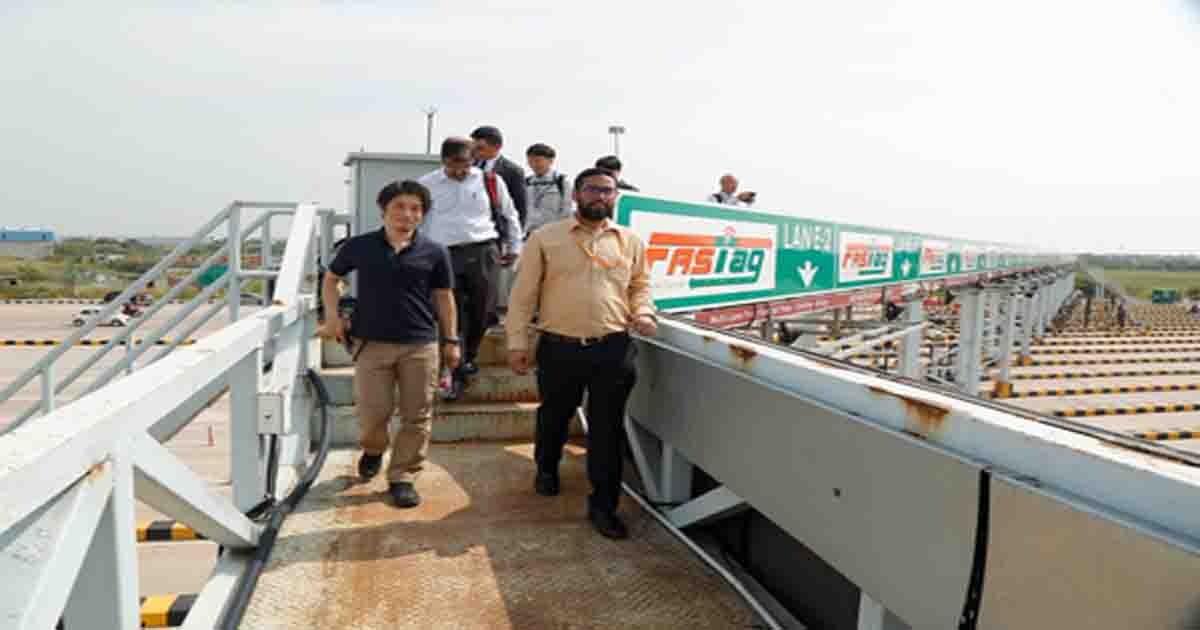
A Japanese delegation visited the Multi-Lane Free Flow (MLFF) tolling system in Mundka-Bakkarwala on Friday on the sidelines of the 12th India–Japan Joint Working Group Meeting on Roads and Road Transportation.
The MLFF system provided insights into India’s technology-driven initiatives for seamless and efficient highway travel.
At the MLFFs, the National Highways Authority of India (NHAI) uses a combination of RFID-based FASTag electronic toll collection, automatic number plate recognition (ANPR) and AI analytics to allow vehicles to pass through charging points without stopping, slowing down or remaining in a designated lane.
MLFFs have already been installed at Choryasi in Gujarat, Mundka in Delhi, Gharaunda in Haryana and Daulatpura and Manoharpura in Rajasthan.
While 12 further locations have been awarded for conversion, tenders have also been launched covering an additional 104 toll plazas around the country.
The MLFF at Choryasi on the Surat–Bharuch section of NH-48 was the first to become operational.
The one at Mundka on Delhi’s Urban Extension Road-II was the second.
The expansion plan represents a significant shift from India’s traditional barrier-based toll plazas.
Rather than moving immediately to satellite-based toll collection, the Indian government has opted to build on the country’s established FASTag system and combine it with ANPR and AI.
Expert committees had recommended further consideration of GPS-based barrier-free tolling because of security, privacy and operational control issues, the Ministry of Road Transport and Highways has indicated.
FASTag and ANPR/AI was thus selected as the technology for the current MLFF programme.
The session of the India–Japan Joint Working Group on Roads and Road Transportation Sector was successfully held at Bharat Mandapam in New Delhi.
Discussions focused on advanced construction technologies, bridge and tunnel engineering, sustainable infrastructure and digital innovations, fostering the exchange of technical expertise and best practices.
“The meeting reaffirmed both nations’ commitment to safe, sustainable and technology-driven road infrastructure, aligned with the vision of Viksit Bharat @ 2047,” the Ministry said in a statement.

Samajwadi Party, education two banks of river who can’t meet: UP CM Yogi Adityanath

Tanker attacked northeast of Saudi Arabia: UKMTO

MP: Mild earthquake tremors felt in Singrauli

Maha CM calls emerging technologies key to India’s youth

Iran IRGC says supertanker exploded after hitting mine in Hormuz Strait

Rahul, Cong ecosystem want to force regime change: BJP after Neha Bora praises B’desh Gen-Z protest

BJP pays tribute to ex-President Abdul Kalam, recalls his enduring influence on generations of India’s youth

Attack on democratic rights: INDIA Bloc leaders on detentions of anti-ECI protestors

INDIA bloc begins protest march against ECI

Maha Congress stages agitation against Gyanesh Kumar
-

 Crime4 years ago
Class 10 student jumps to death in Jaipur
-

 Maharashtra2 years ago
Mumbai Local Train Update: Central Railway’s New Timetable Comes Into Effect; Check Full List Of Revised Timings & Stations
-

 Maharashtra2 years ago
Mumbai To Go Toll-Free Tonight! Maharashtra Govt Announces Complete Toll Waiver For Light Motor Vehicles At All 5 Entry Points Of City
-

 Maharashtra2 years ago
False photo of Imtiaz Jaleel’s rally, exposing the fooling conspiracy
-

 National News2 years ago
Ministry of Railways rolls out Special Drive 4.0 with focus on digitisation, cleanliness, inclusiveness and grievance redressal
-

 Maharashtra2 years ago
Maharashtra Elections 2024: Mumbai Metro & BEST Services Extended Till Midnight On Voting Day
-

 National News2 years ago
J&K: 4 Jawans Killed, 28 Injured After Bus Carrying BSF Personnel For Poll Duty Falls Into Gorge In Budgam; Terrifying Visuals Surface
-

 Crime2 years ago
Baba Siddique Murder: Mumbai Police Unable To Get Lawrence Bishnoi Custody Due To Home Ministry Order, Says Report