
Politics
Yogi to prepare youth for calamity management

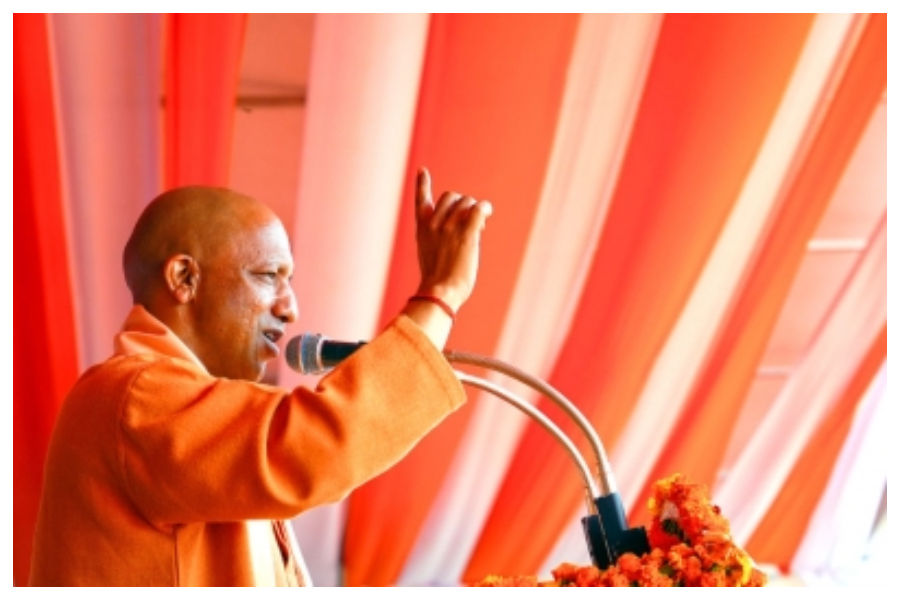
The Yogi Adityanath government in Uttar Pradesh is planning to prepare the youth to deal with natural calamities.
The government is preparing a robust system in Uttar Pradesh to prevent damage and help people during rain, hailstorm and floods.
The state government, in collaboration with the State Disaster Management Authority, is all set to expand its ‘Aapda Mitra’ and ‘Aapda Sakhi’ schemes to 25 districts of the state.
Under the scheme, the volunteers in the age group of 18-40 who have experience in civil defence, home guard, community service, swimming, prior experience in Disaster Response Operations, and retired soldiers from the women’s army will be given preference.
‘Aapda Mitra’ and ‘Aapda Sakhi’ will be provided flood protection equipment, safety kits, and training to deal with any disaster.
Under the scheme, people will be provided assistance to deal with natural calamities such as rain, cloudburst, hailstorm, among others.
With help from the Revenue Department, the authorities are working expeditiously on this action plan for relief and disaster management.
According to the official spokesman, under this scheme, 10 lakh women of Self-Help Groups will be given training in disaster management.
The Disaster Management Helpline 1070 will also be integrated with 112 helpline.
It is worth noting that to take the State Disaster Management Plan forward, the government is planning to implement the Lightning Safety Program for celestial power in the next six months. Simultaneously, an action plan is also being prepared to strengthen the district-level emergency operation centres.
The Yogi government is also in the process of strengthening the river monitoring system including a digital elevation model for all river basins to ensure better flood management.
In the last five years, with the efforts of the Yogi government, a state-level emergency centre and relief helpline 1070 were established under the supervision of the Relief Commissioner’s office. Nearly 15 call centres are also operating in the state.


National News
Rahul Gandhi’s family real ‘naam chor’: Telangana BJP chief hits back at ‘vote chori’ claims

RAHUL GANDI
Telangana : Telangana BJP State President N. Ramchander Rao on Monday launched a sharp attack on Leader of Opposition (LoP) in the Lok Sabha and senior Congress leader Rahul Gandhi over his repeated allegations of “vote chori”, accusing him of misleading the public despite clarifications from the Election Commission of India (ECI) and the Supreme Court.
Reacting to Gandhi’s recent remarks targeting Prime Minister Narendra Modi, Union Home Minister Amit Shah and Chief Election Commissioner (CEC) Gyanesh Kumar, Rao questioned the Congress leader’s credibility and alleged that he had repeatedly made misleading statements.
“Again and again, Rahul Gandhi is misleading the people with regard to vote chori and says that PM Modi, Shah, and Gyanesh will have to pay a price for it. The Gandhi family, Rahul Gandhi’s family, first of all, they are the chor; they are naam chor. They have stolen the name of Gandhi. And these people are now speaking about vote chori. This is nothing but misleading the people, in spite of several clarifications by the Election Commission and the court, the Supreme Court itself. Rahul Gandhi shamelessly goes around the country and speaks of vote chori,” Rao told Media.
Rao also asserted that India would not witness the kind of violence seen in neighbouring countries, alleging that some political leaders were attempting to promote unrest in pursuit of “regime change”.
“What has happened in Nepal and Bangladesh cannot be repeated or happen in India. Though the CJP leaders, and the Congress leaders, and people like Prashant Bhushan may say that they are fighting for regime change by creating violence, India will never accept violence. India is a democratic country; people have a democratic temperament. And today, what has happened even in France, which we have seen, the violence has been escalated there, violence has been sponsored there, and it is the foreign powers who are sponsoring all these people. India can never play to the foreign powers’ tune,” he said.
Earlier on Sunday, describing the Congress as “guardian of the Constitution”, Rahul Gandhi launched a fresh attack on the government and CEC Gyanesh Kumar for what he called “vote chori”, promising to bring the culprits to book.
Addressing a party rally at Margao in Goa, Gandhi said, “Vote chori is an attack on the Constitution and the Congress party’s dharma as the party is the guardian of the statute.”
“Gyanesh Kumar and others will face the law and pay a price for what they have done,” said Gandhi, challenging the government to file a case against him for his repeated claims about vote theft.
“I already have 45 cases, including defamation, against me, and I challenge them to file a new case for my vote chori claims. I know they will not do this as filing a case against me on this issue will make the matter legal and expose them,” he said.
Gandhi said those who have indulged in vote theft are experiencing sleepless nights in Delhi as they know that they will have to face the Congress someday.
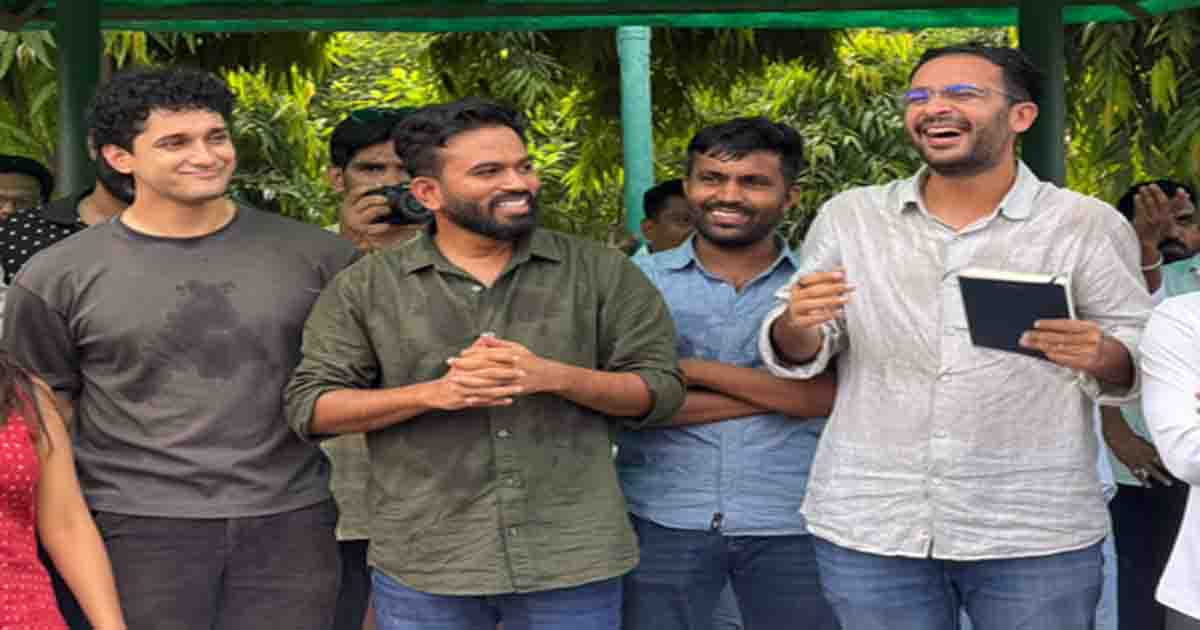
When American singer Mary Millben made an explosive claim about the Delhi protests, alleging that the Cockroach Janata Party (CJP) was being funded by “select US donors”, it did not come entirely as a surprise to those who had already been questioning the source of money behind the protests.
Questions have been raised for some time about the funding of these activities. The scale of the arrangements at some protests has also drawn attention. From frequent air travel and expensive cars to food, ice cream, cakes and drinks being served in abundance during the July Jantar Mantar protest, the expenditure appeared substantial. At one point, the crowds being served numbered in the hundreds. There have also been reports of parties at expensive hotels.
All this raises a basic question: who is paying for these activities, and where is the money coming from?
The CJP maintains that it is self-funded by its founding team and does not accept political donations. Its founder, Abhijeet Dipke, has faced questions about the funding. At a press meet in Mumbai on October 1, he dismissed the relevance of such queries, asking what disclosing the funding would have to do with alleged irregularities in the Election Commission.
He also declared that he wore shoes worth Rs 30,000 and was not ashamed of it because he could afford them.
There is nothing wrong with wearing expensive shoes if one can afford them. But that is not the point. Personal spending and financing an organisation are two different matters. The question is not about the price of Dipke’s shoes, but about the money being spent on organising protests and running political campaigns.
If the funding is transparent, a clear explanation should help settle the matter. An aggressive response or a counter-question does not answer it. Questions about money should not automatically be seen as an attempt to silence dissent.
Millben’s remarks have added another dimension to this debate. She is not an elected politician, but an American singer and actor who has performed for five US presidents — George W. Bush, Barack Obama, Donald Trump during his first term, Joe Biden, and Trump during his second term.
In a video message addressed to young Indians, she named billionaire George Soros, alleging that he and his network were funding protests across the world, particularly in countries led by conservative leaders.
“It’s the same person or same group of people, certainly coming from America, that’s funding a lot of these protests across the world, particularly when you have a conservative leader at the top of the ticket or running the government. The name is George Soros, and that whole machine of people are constantly funding a lot of these protests and chaos that’s breaking out across the world,” she said.
Millben, however, has not provided evidence to substantiate this allegation. In an earlier post on X, she described what she believed was a pattern followed by certain US-based donors: targeting conservative leaders, identifying educated people from those countries, radicalising them and funding activities that create chaos.
The CJP was quick to hit back. But the larger question remains. Are protest movements receiving money from sources that are not being disclosed? If so, is that funding lawful, and are the relevant rules being followed?
Senior advocate and former Solicitor General of India Harish Salve has also raised concerns about foreign funding and external interference. In an interview with media, he alleged that some foreign countries, particularly the United States, were unhappy with India and suggested that developments in Nepal, Sri Lanka and Bangladesh pointed to a pattern of external interference.
“I believe that foreign funding is being provided for these efforts and that they are being instigated from abroad. This is my allegation. Some foreign countries, particularly the United States, are not happy with India,” Salve said.
He also questioned the funding of protest activities, referring to YouTubers, Dipke, Saurav Das and people living overseas. Organising protests, he argued, required money, and the source of that money needed to be examined.
These are serious allegations. They should neither be accepted as facts nor dismissed without examination. If there is evidence of unlawful foreign funding or external interference, the government must investigate it.
The protests are taking place at a difficult time for India. The US-Israel attack on Iran and the closure of the Strait of Hormuz have created major economic and strategic challenges. The government has had to deal with the international fallout while attempting to protect the country from its economic consequences. Despite the uncertainties created by US President Donald Trump’s unpredictable policies, India has continued to pursue economic partnerships with other countries and protect its strategic interests.
At such a time, a battle is being fought with the government through social media narratives, protests and confrontations with the police. A few reels of protesters shouting slogans, clashing with police personnel or using abusive language against the Prime Minister may attract millions of views. But online attention is not the same as public support.
India has an electoral system in which governments can be challenged and changed through votes. That is the test which political parties and movements ultimately have to face. Opposing the government is a basic democratic right. Peaceful protests are an essential part of democracy. But the right to protest does not place any organisation beyond questions about its finances. The CJP and other groups should answer legitimate questions about their funding.
Attempts to build narratives and generate chaos may grab headlines and attract attention on social media, but they cannot by themselves bring about regime change in India. More than those who may be operating from foreign countries to influence opinion here, it is those who take the money and carry out such activities who must answer questions.
If any wrongdoing is established, those responsible should be held accountable. Dissent is a democratic right, but it cannot become a licence to mislead.
National News
Elephant seriously injures mahout, creates panic in Varanasi Ramnagar; over 200 police personnel deployed
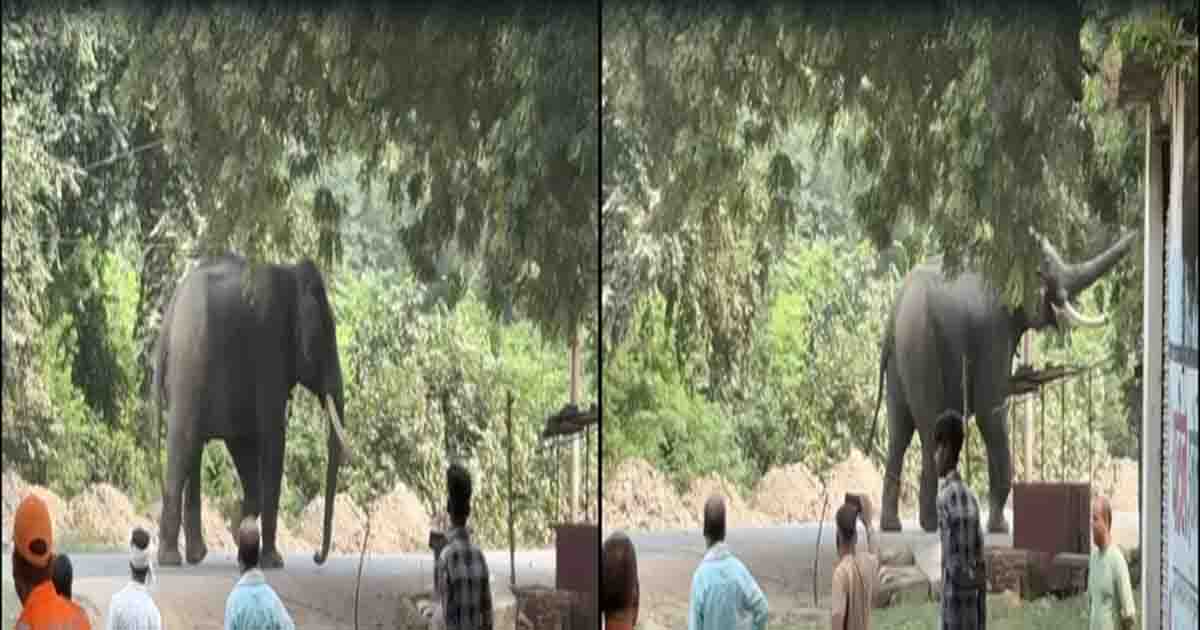
Panic gripped the Panchvati area in Varanasi Ramnagar police station limits on Sunday after an elephant went berserk and triggered chaos in the locality, leaving its mahout seriously injured in an attack.
According to preliminary information shared with the media by officials, the incident occurred in the Panchvati area, where the elephant reportedly became uncontrollable, creating panic among residents and passersby. The situation turned tense as people rushed to safety amid fears of further attacks, said officials.
Soon after receiving information about the incident, teams from the police administration, the National Disaster Response Force (NDRF), and the Forest Department rushed to the spot to contain the situation and prevent any further danger.
More than 200 police personnel, along with administrative officials, were deployed in the area as part of the operation to bring the elephant under control. The teams faced considerable difficulty in managing the animal, given the potential threat to people in the densely populated locality.
After sustained efforts, the teams finally managed to bring the elephant under control and move it towards the forest area. Officials said the situation was currently under control, although security arrangements remained in place to prevent any untoward incident.
As a precautionary measure, residents and other people in the vicinity were being moved away from the spot to ensure their safety. Police personnel and Forest Department officials continued to monitor the situation and remained on alert to respond to any emergency.
The incident triggered considerable concern among the residents, with security personnel maintaining a close watch on the area following the operation.
The condition of the injured mahout and further details about the circumstances that led to the elephant becoming uncontrollable were not immediately available.

Rahul Gandhi’s family real ‘naam chor’: Telangana BJP chief hits back at ‘vote chori’ claims

FairPoint: The protests are loud, but where is the money coming from?

Elephant seriously injures mahout, creates panic in Varanasi Ramnagar; over 200 police personnel deployed

CM Adhikari to meet families of Kolkata stampede victims on October 20-21

CBI questions Urmila Sanawar in connection with Ankita Bhandari murder case

Rahul, Cong ecosystem want to force regime change: BJP after Neha Bora praises B’desh Gen-Z protest

BJP pays tribute to ex-President Abdul Kalam, recalls his enduring influence on generations of India’s youth

Attack on democratic rights: INDIA Bloc leaders on detentions of anti-ECI protestors

INDIA bloc begins protest march against ECI

Maha Congress stages agitation against Gyanesh Kumar
-

 Crime4 years ago
Class 10 student jumps to death in Jaipur
-

 Maharashtra2 years ago
Mumbai Local Train Update: Central Railway’s New Timetable Comes Into Effect; Check Full List Of Revised Timings & Stations
-

 Maharashtra2 years ago
Mumbai To Go Toll-Free Tonight! Maharashtra Govt Announces Complete Toll Waiver For Light Motor Vehicles At All 5 Entry Points Of City
-

 Maharashtra2 years ago
False photo of Imtiaz Jaleel’s rally, exposing the fooling conspiracy
-

 National News2 years ago
Ministry of Railways rolls out Special Drive 4.0 with focus on digitisation, cleanliness, inclusiveness and grievance redressal
-

 Maharashtra2 years ago
Maharashtra Elections 2024: Mumbai Metro & BEST Services Extended Till Midnight On Voting Day
-

 National News2 years ago
J&K: 4 Jawans Killed, 28 Injured After Bus Carrying BSF Personnel For Poll Duty Falls Into Gorge In Budgam; Terrifying Visuals Surface
-

 Crime2 years ago
Baba Siddique Murder: Mumbai Police Unable To Get Lawrence Bishnoi Custody Due To Home Ministry Order, Says Report