
disaster
As death toll nears 1300, Nepal seeks international assistance for recovery and reconstruction

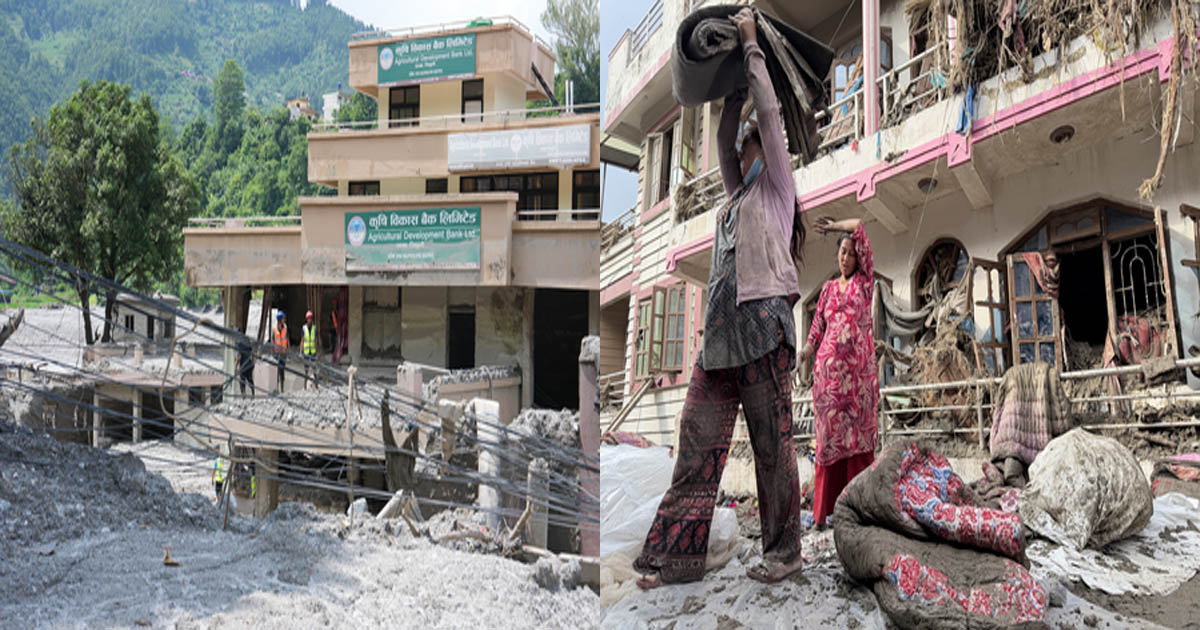
Kathmandu, Sep 3: The Nepali government on Thursday informed the foreign diplomatic community in Nepal that the Himalayan nation would seek further international assistance for the recovery and reconstruction of infrastructure damaged by the recent Bhote Koshi floods.
The death toll from the Rasuwa flood disaster had reached 1,252 by Thursday noon, with 4,216 people remaining out of contact, according to the latest data released by the National Disaster Risk Reduction and Management Authority (NDRRMA).
The deadly floods also caused massive damage to infrastructure, including roads, bridges, public and private buildings, and hydropower projects along the Bhote Koshi and Trishuli river corridors.
The Nepali government is currently seeking domestic and international support for the rescue and relief of people affected by the floods, including those who remain out of contact, many of whom are believed to be inside tunnels of hydropower projects.
However, the extensive damage to infrastructure caused by the floods will require significant additional resources for reconstruction. It is the second major incident to cause significant loss of life and infrastructure damage since the Gen-Z movement last year, during which 77 people were killed and property worth more than NPR 84 billion was destroyed, according to the government statistics.
“The Nepali government will seek international assistance for the recovery and reconstruction of infrastructure damaged by the Bhote Koshi flood after completing a Post-Disaster Needs Assessment (PDNA),” Foreign Minister Shishir Khanal said on Thursday during a briefing to the diplomatic community in Kathmandu on the Bhote Koshi flood disaster.
Ambassadors, heads and representatives of diplomatic missions, and representatives of international organisations, including the World Bank, Asian Development Bank and the United Nations, attended the diplomatic briefing held at the Ministry of Foreign Affairs on Thursday, the minister’s secretariat said in a statement.
During the briefing, Minister Khanal said a preliminary assessment was underway to determine the damage caused to houses, roads, bridges, hydropower projects and other critical infrastructure by the devastating flood. The PDNA will establish the full extent of the damage and identify the resources required for recovery and reconstruction, he said.
“Preliminary estimates indicate that a significant amount of resources will be required to reconstruct the infrastructure damaged by the Bhote Koshi flood,” Khanal said. “Once the detailed assessment is completed, the government will formally inform international partners about the resources required and request assistance for recovery and reconstruction.”
He also committed that the government would manage international assistance with transparency, accountability and clearly defined priorities. Earlier this week, he said the government was in discussions about holding an international donor conference to seek support for the rehabilitation and reconstruction of damaged infrastructure.
Nepal had earlier organised an international conference to seek international support following the devastating earthquake in 2015. The donor community pledged as much as US$ 4.1 billion at the conference.
As rescue efforts continue, Foreign Minister Khanal made clear that the safety and welfare of foreign nationals remained a top priority of the Government of Nepal. As many as 583 foreign nationals remain out of contact, according to the NDRRMA.
“The Foreign Ministry has been continuously coordinating with the NDRRMA, Nepal Police, Nepal Tourism Board, Nepali diplomatic missions abroad and the families of foreign nationals reported missing,” Khanal said.
He said the Emergency Control Room established at the Ministry of Foreign Affairs and Nepali diplomatic missions abroad were helping provide verified information to the families of missing foreign nationals, facilitate the identification process and arrange repatriation when necessary.
Thanking diplomatic missions for providing information about their nationals who had been reported missing, Minister Khanal said such information was proving important in search, verification and identification efforts.
Describing the floods as a “Himalayan tsunami”, Khanal said the Nepali government was studying the causes and development of the disaster and was receiving assistance from relevant technical experts.
Minister Khanal said the Bhote Koshi disaster should not be viewed only as an immediate humanitarian crisis but also in the context of increasing climate risks in the Himalayan region.
“Although Nepal makes a negligible contribution to global emissions, the people of Nepal are bearing a disproportionate and heavy burden of the impacts of a warming Himalaya,” Minister Khanal said.
He stressed the need to translate climate justice, effective early warning systems, disaster preparedness and resilient reconstruction from paper commitments into practice.
“In this context, Nepal has already written to the co-chairs of the Loss and Damage Fund Board under the United Nations requesting immediate assistance,” Khanal said.

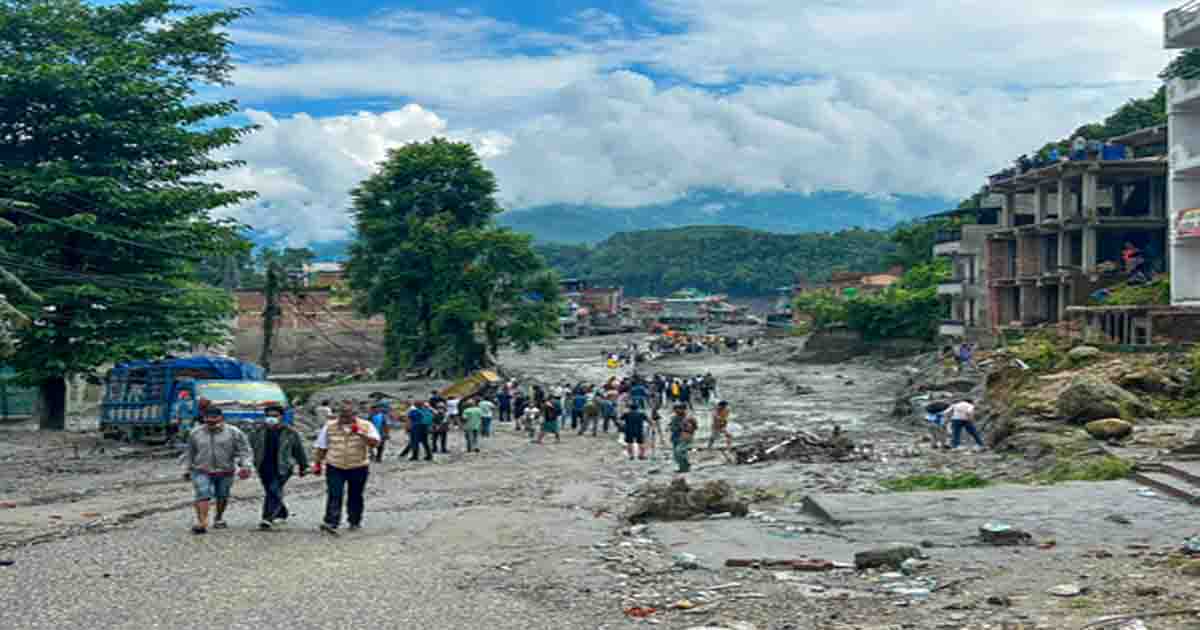
Kathmandu, Oct 15: Nepal and the International Bank for Reconstruction and Development (IBRD), part of the World Bank Group, have signed a mandate agreement to explore the development of a catastrophe bond that could help the Himalayan nation secure rapid access to funds in the event of a major natural disaster.
The agreement marks the beginning of a collaboration to assess the feasibility and potential structure of a catastrophe bond, under which Nepal could transfer part of its disaster risk to international capital markets and strengthen its financial preparedness for natural disasters, the World Bank said in a statement.
Under the agreement, the World Bank Group Treasury will work with the Nepal government and market participants to evaluate the proposed transaction.
The initiative comes as Nepal seeks to strengthen its capacity to prepare for, withstand and recover from natural disasters in the wake of devastating floods in the Bhotekoshi and downstream Trishuli river basins on August 26. The floods have killed nearly 1,500 people, while more than 5,000 remain unaccounted for, according to the National Disaster Risk Reduction and Management Authority.
Triggered by an avalanche near the Nepal-China border that blocked the river’s flow, the floods swept away several human settlements, a dozen hydropower projects, a solar plant, and several roads and bridges. Physical damage is estimated at 1.66 billion US dollars, according to the World Bank’s Global Rapid Post-Disaster Damage Estimation report.
According to the World Bank, Nepal is highly vulnerable to earthquakes, floods, landslides and other climate-related hazards, which can cause extensive damage to infrastructure, disrupt economic activities and place considerable pressure on public finances.
A catastrophe bond is a financial instrument that allows governments or other entities to transfer specific disaster risks to investors. Depending on the terms of the bond, investors may lose some or all of their principal if a specified disaster occurs, allowing the funds to be used to support the affected entity.
“Such instruments can provide an alternative source of disaster financing, potentially enabling governments to access funds more quickly than relying solely on budget reallocations or post-disaster assistance,” the World Bank said.
The initiative is part of the World Bank Group’s established catastrophe bond programme, which has helped countries access international capital markets to transfer disaster risks and secure financial protection against natural hazards.
The World Bank helps countries increase their financial resilience to disasters by supporting disaster risk financing programmes and offering contingent financing and insurance solutions.
It also assists countries in designing, developing and implementing comprehensive disaster risk financing strategies.
“A risk financing strategy helps clients determine a balance between retaining risk, for example, through a contingent financing product, and transferring risk, for example, through an insurance product,” the World Bank said.
A range of financial products can be used to address the financial risks of disasters, and the optimal mix of approaches depends on the types of risks faced by a country and the frequency and severity of disaster events, it said.
Developing countries are particularly vulnerable to the economic and fiscal consequences of disasters because of factors such as gaps in insurance coverage, inadequate infrastructure resilience, and the concentration of populations and economic activities in exposed areas.
“Following a major disaster, governments often have to redirect budgetary resources towards emergency response, relief and reconstruction, potentially affecting other development priorities,” the World Bank said.
disaster
Bihar tragedy: 13 children die as boat capsizes in Ganga River in Vaishali; search on for missing passengers


Patna, Oct 14: In a major tragedy, at least 13 children drowned after a boat carrying passengers capsized in the Ganga River near Rampur Shyamchand village under the Raghopur police station area of Bihar’s Vaishali district on Tuesday evening. The search is on for missing passengers.
Even more heartbreaking is the fact that seven of the deceased children belonged to the same family, turning the incident into a huge tragedy for the family and the village.
According to preliminary reports, around 20 to 30 people were travelling by boat to attend a feast in a neighbouring village.
The boat reportedly lost equilibrium after reaching the main current of the Ganga and overturned, throwing passengers into the water.
The accident triggered panic in the area, as cries for help were heard from the river.
Local residents rushed to the spot and began rescue efforts before the district administration, police and State Disaster Response Force (SDRF) teams joined the operation. Local divers also assisted in the search.
Seven of the deceased children were reportedly from the family of Rampravesh Rai, alias Raja, a resident of Rampur Shyamchand village.
The deaths have left the affected families and the wider village in deep mourning.
The group was travelling to a neighbouring village, crossing the river and a nearby low-lying waterlogged area locally known as a dhab.
Several children were aboard the boat, while the total number of passengers was estimated at between 20 and 30.
Authorities have been working to establish the exact number of people on board and determine whether anyone remains missing.
Angry residents protested against the district administration following the tragedy.
Villagers alleged that the boat was old and in poor condition and claimed that requests for its replacement had been submitted earlier, but no action was taken by the authorities.
There are also suspicions that the boat may have been carrying more passengers than its holding capacity.
However, the exact cause of the accident and the boat’s condition remain subject to investigation.
Union Minister Chirag Paswan expressed grief over the deaths, describing the incident in Raghopur Diyara, which falls within his parliamentary constituency, as deeply distressing.
Paswan said he had spoken to the District Magistrate to seek details about the rescue operation and discuss assistance for the affected families through the Bihar and central governments.
Paswan also announced that he would visit the accident site to meet the bereaved families and enquire about the condition of the injured.
He added that injured passengers had been sent to NMCH for further treatment.
The Bihar Congress also expressed deep sorrow over the deaths of the children and conveyed condolences to the bereaved families.
The party prayed for peace for the souls of the departed children and strength for their families to cope with the loss.
Further details regarding the final casualty count, the number of missing passengers and the circumstances leading to the capsizing are awaited.
disaster
Landslide triggering Budhi Gandaki River floods in Nepal unleashed energy equivalent to 3.5-magnitude quake: Report
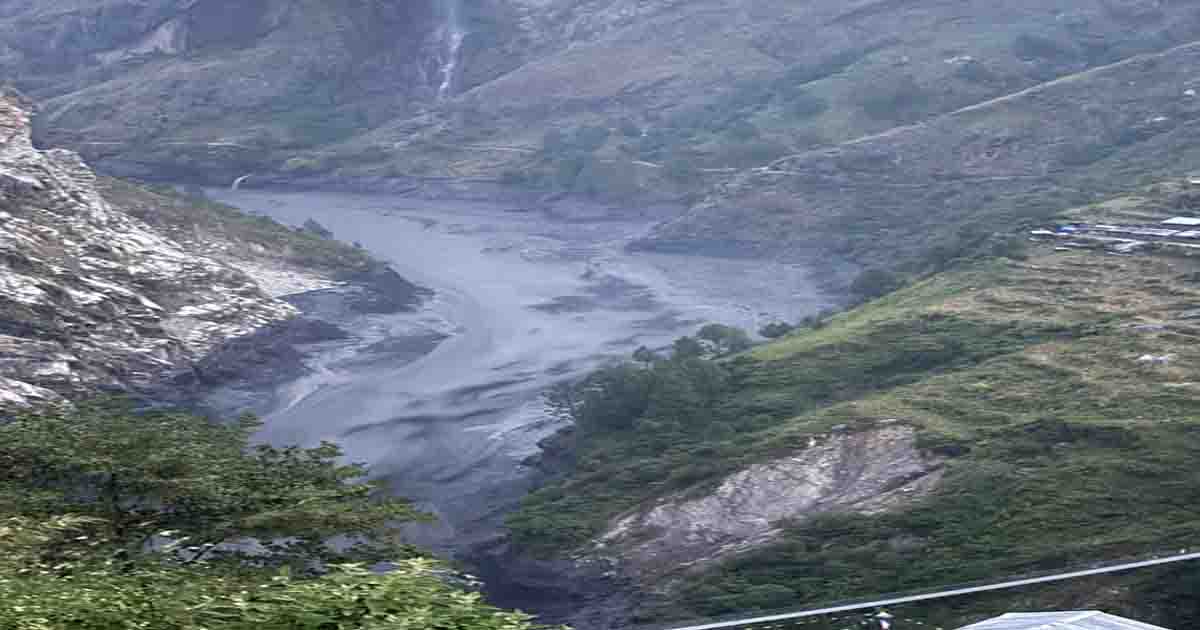
Kathamandu, Oct 14: A massive landslide in the high Himalayas of Nepal Gorkha district on October 11, which triggered devastating floods in the Budhi Gandaki River, generated energy equivalent to that of a 3.5-magnitude earthquake, according to a preliminary assessment by the Department of Mines and Geology.
The landslide occurred in the upper reaches of the Ungdilung Khola, a tributary of the Budhi Gandaki River, triggering destructive flood surges after a large volume of debris blocked and subsequently released river flows, the technical report said.
The report provides an initial explanation of how the high-altitude landslide and the repeated blockage and release of river flows contributed to the flooding downstream.
The National Disaster Risk Reduction and Management Authority (NDRRMA) said in a social media post, citing the department’s report, that the Budhi Gandaki River experienced repeated flood surges in a single day following the massive landslide involving snow, water and glacial debris in the high Himalayas.
The latest disaster left at least five people missing and destroyed several hydropower projects, roads and bridges, according to the NDRRMA.
The October 11 flooding was the second major flooding disaster, which occurred around one and a half months after devastating floods struck the Bhote Koshi and Trishuli rivers on August 26, which killed nearly 1,500 people and left more than 5,000 missing while devastating communities, houses, hydropower plants, roads and bridges along the affected rivers, the authority said.
Citing the department’s technical report, the NDRRMA said the largest of the repeated flood surges reached an estimated height of 20 to 25 metres.
The incident occurred at around 4:20 a.m. in the upper reaches of the Ungdilung Khola, between Chamar Himal and Syerangi Himal, in Chumnubri Rural Municipality, which borders China.
According to the report, an avalanche originated at an altitude of approximately 6,000 metres in the Tibetan Tethys Himalaya, an area characterised by relatively weak rock formations, and a landslide occurred at around 5,500 metres.
“The massive landslide, comprising a mixture of snow, water and debris, flowed southward along the Ungdilung Khola, depositing a large volume of debris at the narrow confluence of the Ungdilung Khola and Syar Khola, another tributary of the Budhi Gandaki River, at an altitude of around 2,000 metres,” the authority said in its social media post.
The debris repeatedly blocked and released the flow of the Syar Khola, potentially generating successive flood surges. A similar process may also have occurred at the confluence of the Syar Khola and the Budhi Gandaki River, contributing to repeated flooding downstream, it said.
However, the report suggests that the enormous volume of debris carried by the Ungdilung Khola played a more significant role in generating the largest flood surge than the water accumulated behind the blockage of the Syar Khola.
The first mud-laden flood reached the Salleri area at around 4:30 a.m., where a camp for the 341-MW Budhi Gandaki Hydroelectric Project was located.
“The largest surge arrived at the hydropower camp in Salleri at around 6:30 a.m., reaching an estimated height of 20 to 25 metres before sweeping away the camp,” the report said.
The powerful surge caused major damage downstream, particularly in the Jagat area along the Budhi Gandaki River, where several buildings were affected. Permanent bridges over the Soti Khola and the Budhi Gandaki River were also among the damaged structures, the report said.
Field observations further indicated that the flow of the Syar Khola had stopped following the landslide approximately one hour before the largest flood surge arrived.
“Water had accumulated over a stretch of around 1.5 kilometres in the upper reaches of the river. Smaller flood surges continued even after the largest surge had passed,” the report said.

Building collapses in Varanasi due to firecracker explosion, two rescued

Take child sexual abuse material circulation on social media seriously, SC tells Centre

Kerala: 5,991 road accident deaths occurred on national highways in three years

SC refers Rajpal Yadav cheque bounce cases to mediation for amicable settlement

NEET-PG 2026: SC issues notice on plea seeking candidate-wise disclosure of questions, options, and answers

Rahul, Cong ecosystem want to force regime change: BJP after Neha Bora praises B’desh Gen-Z protest

BJP pays tribute to ex-President Abdul Kalam, recalls his enduring influence on generations of India’s youth

Mumbai Cyber Cell arrests 6 members of organized gang in major operation; Beware of cyber fraudsters; Digital arrest has no legal status; DCP Bajrang Bansode

INDIA bloc begins protest march against ECI

Maha Congress stages agitation against Gyanesh Kumar
-

 Crime4 years ago
Class 10 student jumps to death in Jaipur
-

 Maharashtra2 years ago
Mumbai Local Train Update: Central Railway’s New Timetable Comes Into Effect; Check Full List Of Revised Timings & Stations
-

 Maharashtra2 years ago
Mumbai To Go Toll-Free Tonight! Maharashtra Govt Announces Complete Toll Waiver For Light Motor Vehicles At All 5 Entry Points Of City
-

 Maharashtra2 years ago
False photo of Imtiaz Jaleel’s rally, exposing the fooling conspiracy
-

 National News2 years ago
Ministry of Railways rolls out Special Drive 4.0 with focus on digitisation, cleanliness, inclusiveness and grievance redressal
-

 Maharashtra2 years ago
Maharashtra Elections 2024: Mumbai Metro & BEST Services Extended Till Midnight On Voting Day
-

 National News2 years ago
J&K: 4 Jawans Killed, 28 Injured After Bus Carrying BSF Personnel For Poll Duty Falls Into Gorge In Budgam; Terrifying Visuals Surface
-

 Crime2 years ago
Baba Siddique Murder: Mumbai Police Unable To Get Lawrence Bishnoi Custody Due To Home Ministry Order, Says Report