
Politics
Planting of stories by CBI reflects the lowest ebb in political discourse: Congress

The Congress has come out in strong defence of P. Chidambaram after
the CBI conducted searches at multiple premises belonging to him and his MP son Karti Chidambaram on Tuesday in connection with a fresh case of Chinese visa issued for illegal gratification.
Taking to Twitter, Congress General Secretary Randeep Surjewala said: “Mr. @PChidambaram_IN is a Nationalist & a Patriot, whose commitment to the country is unquestionable.”
He alleged that CBI is planting story to malign him. “To plant source based preposterous allegations against a former Home Minister & Finance Minister by CBI reflects the lowest ebb in political discourse.”
Reacting to the raids, Karti Chidambaram slammed the agency saying that he has lost count of the number of searches, adding “must be record”.
“I have lost count, how many times has it been? Must be a record.” he tweeted.
The Central Bureau of Investigation (CBI) is conducting raids at nine locations belonging to Congress leader Karti Chidambaram and his father and former union minister P. Chidambaram in connection with a fresh case of Chinese visa issued for illegal gratification.
According to information, the federal probe agency is conducting raids at Odisha, Mumbai, Karnataka, Delhi and Chennai in a fresh case of Chinese visa issued for illegal gratification.
“The new case in which raids are being conducted is related to foreign remittance and companies, was registered a few days back. The dealing took place in 2010-2014. During this period funds were received and sent abroad by or at the instruction of Chidambaram,” said a source.


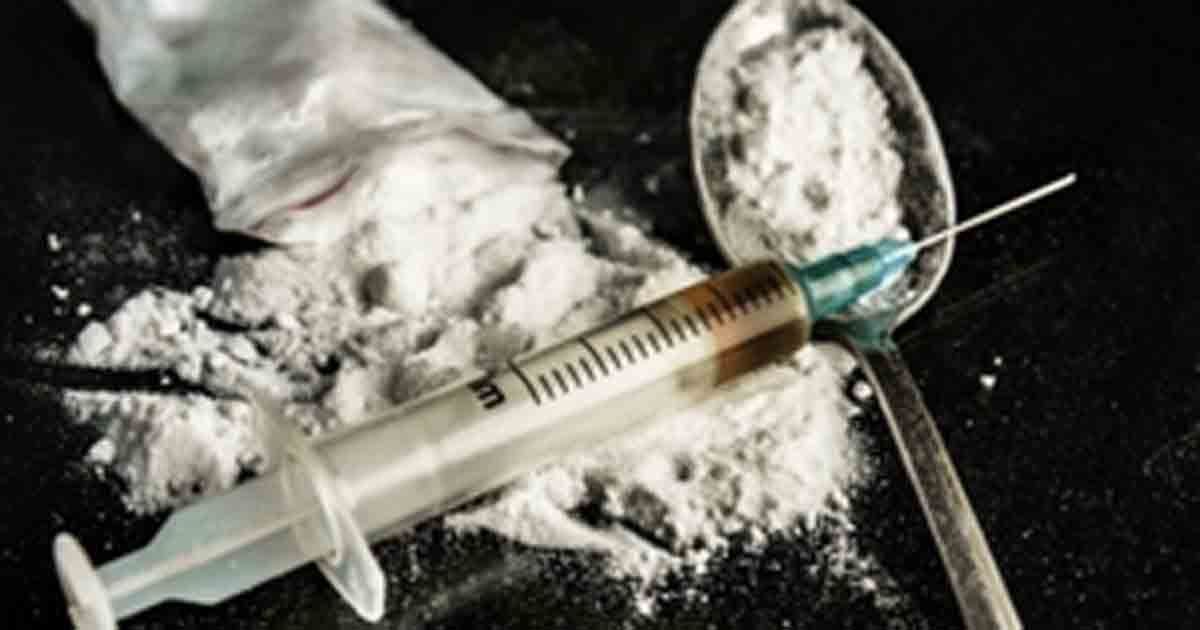
Bihar’s prohibition policy has coincided with a sharp rise in narcotics-related cases registered under the Narcotic Drugs and Psychotropic Substances (NDPS) Act, with cases increasing from 697 in 2019 to 1,905 in early 2026, according to a recent investigative report in a leading daily.
Seizures of drug pills have reportedly increased 30-fold, while heroin use is also on the rise, according to an investigative report published by The Indian Express.
The investigation has highlighted the emergence of a new drug, locally known as ‘kota’, which is reportedly smuggled into Bihar from Nepal and the Northeast. The substance is transported in everyday items such as soap boxes and clothing before reaching consumers, including those in rural areas.
At the same time, de-addiction centres are struggling to cope with demand, with some facilities reportedly serving up to 20 times their intended number of patients, the report shows.
According to the report, although police seize thousands of litres of illicit liquor every day, the narcotics trade has continued to expand across the state. The growing availability of drugs has also raised concerns about increasing substance use among juveniles, highlighting a possible shift from alcohol consumption towards more dangerous intoxicating substances.
The report points out that the spread of drugs has received less attention than the movement of illicit liquor. Beyond smuggled bottles, a parallel network of intoxicants is taking shape, involving pocket-sized packets, strips of tablets, heroin, the distinctive variant known as ‘kota’, small vials and drugs concealed in soap boxes or even folds of clothing such as petticoats.
Experts cited in the investigation have also pointed to a change in the profile of people seeking treatment for substance dependence.
The concern, they said, is not limited to the growing number of patients, as the types of substances being consumed are changing as well. Earlier, a larger proportion of users depended on cannabis and other plant-based substances; this is now shifting rapidly towards semi-synthetic and synthetic drugs, with an increasing number of patients reportedly seeking help for heroin dependence.
The investigation further underlines the significant role played by geography in shaping Bihar’s narcotics trade, with the state’s location making it vulnerable to drug trafficking routes from neighbouring countries and the Northeast.
Describing the network as a ‘Death Triangle’, the report examines how heroin, the raw-heroin variant ‘kota’ and synthetic drugs enter Bihar through the Northeast, while also tracing the routes through which ganja and poppy husk reach the state, based on information provided by police.
The ‘Death Triangle’ refers to the Golden Triangle region of Myanmar, Laos, and Thailand, which has increasingly shifted its illegal production from traditional opium and heroin toward synthetic drugs like methamphetamine and a raw heroin variant known locally as ‘kota’, according to the report.
It notes that clandestine laboratories in Myanmar manufacture methamphetamine. Boxes containing ‘kota’ are reportedly transported from Myanmar in ready-made form.
It further shows that high-grade heroin, methamphetamine and ‘kota’ enter India through porous stretches of the borders adjoining Mizoram and Manipur. From there, consignments are transported along the Champhai-Aizawl-Silchar route into Assam. A relatively new supply route, reportedly running from Changlang to Tinsukia, is also believed to help traffickers bypass existing checks.
According to the report, carriers travel to the Northeast, collect boxes containing drugs and return by train. Some consignments are routed through districts in Bihar, including East Champaran, Kishanganj, Vaishali and Bhojpur. Once inside the state, the substances are distributed through tea shops, paan and cigarette outlets, as well as roadside sellers.
The investigation reveals that ganja enters Bihar through multiple routes, including Nepal, Tripura, Odisha and Andhra Pradesh; poppy husk is sourced from Nepal, Jharkhand and locations within Bihar itself, and charas is reportedly sourced mainly from Nepal and largely transported onwards rather than retained within Bihar.
Within this expanding trade, police officers and social workers have identified ‘kota’ as a new substance appearing in Bihar’s drug market. The report quoted a narcotics officer explaining how the term may have originated and gradually become associated with the substance itself.
“The name appears to have originated from the word ‘dose’. In local parlance, addicts and peddlers refer to a drug dose as a ‘quota’, and over time, the substance itself came to be known among users as ‘kota’,” the officer was quoted as saying.
The police are particularly concerned about the spread of inexpensive drugs among economically disadvantaged communities, especially juveniles. Social workers who work with street children in Patna have repeatedly raised concerns about the growing accessibility of intoxicating substances to vulnerable young people, according to the report.
The investigation also highlighted that a national survey cited in a 2023 report of the Parliamentary Standing Committee on Social Justice and Empowerment provides one of the closest broad estimates of substance use among juveniles in Bihar. The survey estimated that around 99,000 children aged between 10 and 17 years in the state used cannabis, while approximately 40,000 used opioids and 29,000 used inhalants. It also estimated that about 8,000 children in the same age group used sedatives.
The Opposition raised concerns over the reported spread of narcotics in Bihar and questioned the lack of attention given to drug-related problems in Bihar.
Tagging Union Home Minister Amit Shah, Rashtriya Janata Dal (RJD) MP Manoj Jha took to X to react to the development, writing, “Don’t stop talking about Punjab but look at Bihar too.”
Speaking to IANS, Jha said, “An entire generation has been ruined. This is what happens when the government has no control. The situation here is completely out of control. The government here has lost control of the situation.”
“I want people to give undivided attention to this issue. This problem is wiping out an entire generation of the state. That is why I tagged HM Shah in my post and urged him to give attention to Bihar also,” he added.
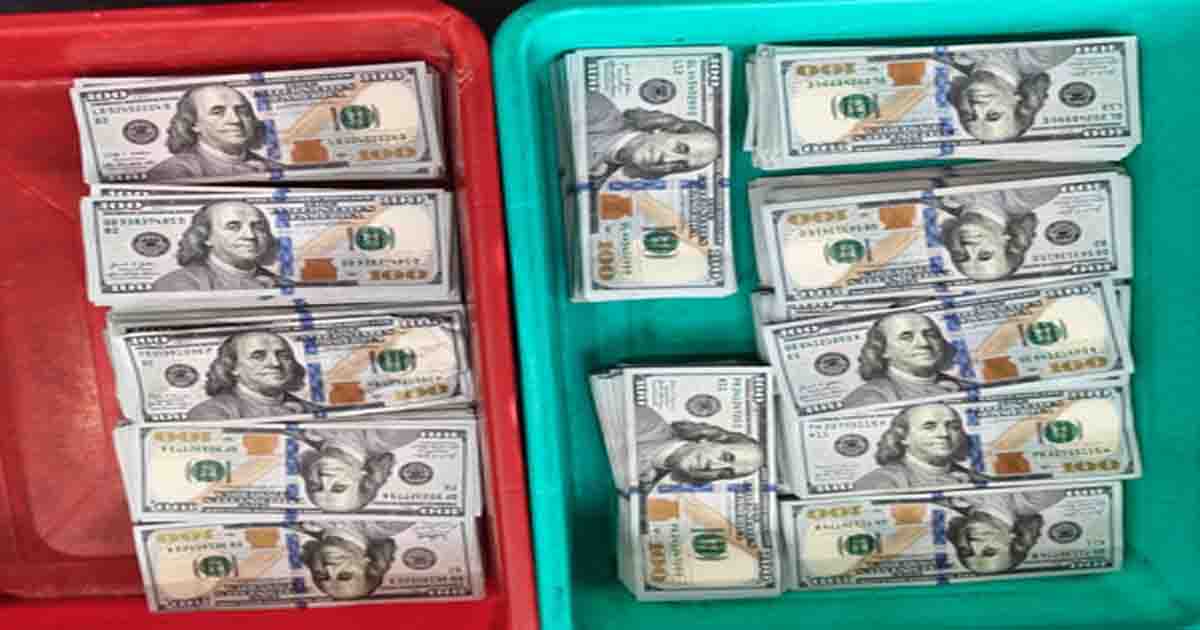
Alert personnel of the Central Industrial Security Force (CISF) detected foreign currency worth approximately Rs 1.14 crore concealed in the hand baggage of two passengers bound for Bangkok at Netaji Subhas Chandra Bose International Airport, Kolkata.
The detection took place around 10:20 a.m. on October 19 during routine security screening at the International Terminal Security Hold Area. A CISF screener noticed suspicious images in the X-ray scans of the hand baggage carried by the two passengers scheduled to travel to Bangkok on Bhutan Airlines flight B3700. The bags were subsequently referred for physical examination.
During the inspection, CISF personnel recovered USD 1,19,900, equivalent to approximately Rs 1,13,64,002, concealed inside false bottoms of the two bags. The foreign currency had been wrapped in newspaper in an apparent attempt to conceal it from security personnel.
Of the total amount recovered, USD 74,900 was found in the hand baggage of one passenger, while USD 45,000 was recovered from the other passenger’s bag.
Following the prescribed formalities, both passengers, along with the seized currency, were handed over to the Air Intelligence Unit (AIU) of Customs for further investigation and necessary legal action.
On October 20, the passenger from whose baggage USD 74,900 was recovered was taken by AIU/Customs officials to the District and Sessions Court for further legal proceedings following the investigation and seizure. The second passenger was released by Customs after the issuance of a detention receipt for the USD 45,000 recovered from the passenger’s baggage.
CISF in a release reiterated its commitment to maintaining aviation security through effective screening procedures, alert surveillance and professional conduct by its personnel. According to officials, the detection stresses the importance of coordinated action between airport security personnel and Customs authorities in addressing suspected financial and currency-related violations.
International News
First Russian tanker carrying 40,000 tonnes of diesel to depart in 2-3 days: Putin


The first tanker carrying 40,000 tonnes of Russian diesel fuel will depart in two to three days, Russian President Vladimir Putin said Wednesday.
Russia is currently preparing shipments of several tankers carrying diesel fuel, Putin said during his meeting with US special envoy Steve Witkoff at the Konstantinovsky Palace in St. Petersburg.
The fuel is for the global and US markets, Xinhua news agency reported.
Putin held a telephone conversation with US President Donald Trump on October 9, during which considerable attention was paid to prospects for resolving the Ukraine crisis, the Kremlin said.
On global energy developments, Russia reaffirmed its readiness to supply oil and petroleum products to US and global markets, according to the Kremlin.
On Tuesday, Ukrainian President Volodymyr Zelensky discussed proposals for various ceasefire formats with Witkoff in Oslo, Norway, Ukraine’s state-run Ukrinform news agency reported.
The meeting was also attended by Norwegian Prime Minister Jonas Gahr Store and Finnish President Alexander Stubb.
Speaking after the meeting, Zelensky said the talks also covered security guarantees for Ukraine and the country’s recovery.
Following the meeting, Witkoff travelled to St. Petersburg in Russia, where he met Russian leadership to discuss peace efforts.
Global energy markets have faced sustained pressure since the outbreak of hostilities in the Middle East earlier this year. The conflict has triggered what the International Energy Agency termed the “largest supply disruption” in the history of global fuel markets.
Last week, US President Donald Trump said that “massive” oil, gas and mineral exploration is “getting ready” to begin in Greenland.
Writing on his Truth Social platform, Trump suggested that experts believe the Arctic island owns an amount of “easily available oil” which is “far greater than that of almost any land, anywhere in the world.”
He did not provide any specific estimates or elaborate on the exploration plans.
Trump also said any future attack on the United States would “have to come across Greenland, where our Defence will routinely knock down drones, missiles, or any other form of weapon not yet even conceived.”
Trump’s remarks followed a wide-ranging deal signed in late September by the United States, Denmark and Greenland to expand the US military presence on the island.
The deal came after months of pressure from Trump, who repeatedly called for acquiring the autonomous Danish territory and did not rule out the use of military or economic means. The proposal has drawn strong opposition from NATO allies and Greenlanders.

Sensex, Nifty open lower as Asian markets tumble, crude oil climbs

Bihar’s prohibition fails to curb narcotics as ‘kota’ spreads to rural areas: Report

CISF seizes foreign currency worth Rs 1.13 crore at Kolkata airport

First Russian tanker carrying 40,000 tonnes of diesel to depart in 2-3 days: Putin

Gujarat: Man held after 0.77 grams of mephedrone found in ‘porter’ delivery parcel

Rahul, Cong ecosystem want to force regime change: BJP after Neha Bora praises B’desh Gen-Z protest

Attack on democratic rights: INDIA Bloc leaders on detentions of anti-ECI protestors

BJP pays tribute to ex-President Abdul Kalam, recalls his enduring influence on generations of India’s youth

INDIA bloc begins protest march against ECI

Maha Congress stages agitation against Gyanesh Kumar
-

 Crime4 years ago
Class 10 student jumps to death in Jaipur
-

 Maharashtra2 years ago
Mumbai Local Train Update: Central Railway’s New Timetable Comes Into Effect; Check Full List Of Revised Timings & Stations
-

 Maharashtra2 years ago
Mumbai To Go Toll-Free Tonight! Maharashtra Govt Announces Complete Toll Waiver For Light Motor Vehicles At All 5 Entry Points Of City
-

 Maharashtra2 years ago
False photo of Imtiaz Jaleel’s rally, exposing the fooling conspiracy
-

 National News2 years ago
Ministry of Railways rolls out Special Drive 4.0 with focus on digitisation, cleanliness, inclusiveness and grievance redressal
-

 Maharashtra2 years ago
Maharashtra Elections 2024: Mumbai Metro & BEST Services Extended Till Midnight On Voting Day
-

 National News2 years ago
J&K: 4 Jawans Killed, 28 Injured After Bus Carrying BSF Personnel For Poll Duty Falls Into Gorge In Budgam; Terrifying Visuals Surface
-

 Crime2 years ago
Baba Siddique Murder: Mumbai Police Unable To Get Lawrence Bishnoi Custody Due To Home Ministry Order, Says Report