
Business
Sensex ends 1,000 points up, Nifty closes above 16,900

Benchmark indices ended higher for the second consecutive day on Thursday with Sensex ending 1,000 points up and Nifty ending above 16,900 on back of positive cues from global market after US Fed policy outcome, good earnings in large cap space, partly short-covering and partly investment buying in some segments.
At the close, Sensex was up 1,041.47 points, or 1.87 per cent, at 56,857.79, and the Nifty 50 was up 287.80 points or 1.73 per cent at 16,929.60. A total of 1,904 shares have advanced, 1,427 shares declined, and 148 shares were unchanged. Bajaj Finance, Bajaj Finserve, Kotak Mahindra Bank, and IndusInd Bank were major gainers on the Nifty.
“Positive cues from global markets following the Fed policy outcome, as well as domestic large caps’ upbeat earnings, drove the market rally. The Fed’s decision was as expected, while their positive comment dismissing the possibility of a recession and hinting at a slower pace of rate hikes in the coming months boosted global sentiments,” said Vinod Nair, Head of Research at Geojit Financial Services.
Mid cap and small cap stocks ended on a strong note as Nifty mid cap and small rose 0.84 per cent and 0.85 per cent, respectively. Nifty IT and Financials outperformed on the National Stock Exchange.
Apart from this, Asian and European stocks also rose on Thursday on positive comments in Fed’s decision and hint of slower pace of rate hikes in the coming months. All Asian markets and Tokyo stocks closed higher.
On Wednesday, Federal Reserve officials raised interest rates by 75 basis points. Talking on the recession, Fed Chair Jerome Powell said: “I don’t think the US is currently in a recession and the reason is there are too many areas of the economy are performing well.”
“The market is taking cues from the Fed chief’s statement that ‘I don’t think we are in a recession now, the labour market continues to be tight’. Data – unemployment at 50-year lows and job vacancies at historical highs – supports the Fed chief’s view. In brief, the market is responding to the possibility of a soft landing for the US and the global economy,” said Dr. V.K. Vijayakumar, Chief Investment Strategist at Geojit Financial Services.



India’s information technology (IT) services sector delivered Q2 FY27 results that were modestly ahead of subdued expectations, but the broader recovery in demand is increasingly being pushed into FY28 as companies contend with pricing pressure and AI-driven disruption, a report said on Friday.
The report from BNP Paribas India said investors responded positively to better-than-expected earnings after analysing quarterly results from 15 Indian IT services companies, including five large-cap and 10 mid-cap firms.
Shares of the covered companies rose by a median 5 per cent following the results after having declined about 23 per cent year-to-date in 2026.
The market rewarded better-than-feared revenue, margin expansion and strong deal momentum, while penalising margin pressure and weak deal wins. Demand remains steady but narrow, with the financial services vertical as the bright spot.
“While FY27 headline revenue growth guidance cuts seemed modest, the organic cut was sharper, implying that FY27 organic revenue is likely to trail FY26, with acquisitions filling in the gap partly,” the report said.
“AI-led work continues to grow even as clients demand pass-back of the productivity gains, shrinking the legacy books and pushing down pricing pressure. With seasonally weak H2FY27, companies now expect recovery in FY28, supported by large deal ramp-ups,” the report noted.
Collectively, 60 per cent of the firms beat on revenue and 53 per cent beat on EBIT margin expectations, while 27 per cent missed on revenue growth and 40 per cent missed EBIT margin expectations.
Deal Total Contract Value (TCV) inched up modestly annually in Q2FY27, underpinned by strong wins of three companies. Headcount increased slightly sequentially, while attrition and utilisations improved modestly.
Another recent report said that management commentary across nearly all major Indian IT companies during Q1 FY27 earnings season showed that clients demanded measurable outcomes, governance frameworks and stronger data foundations before committing to large-scale AI rollouts.

India, as Chair of the Kimberley Process (KP) for 2026, has flagged key priorities concerning the global diamond industry, including responsible rough diamond sourcing as part of its outreach ahead of the KP Plenary to be held in Delhi from November 30 to December 4, according to a statement issued by the Commerce Ministry on Thursday.
The issue was discussed at a stakeholder consultation in Angola’s Luanda on Tuesday, chaired by Additional Secretary Yashvir Singh on India’s behalf, which brought together the Chairs and Vice-Chairs of KP Working Groups and Committees (KP Working Bodies), the KP Vice-Chair (of Ghana), and the former KP Chair (of the United Arab Emirates). Representatives of observers and partner organisations, including the World Diamond Council and the African Diamond Producers’ Association (ADPA), also participated in the discussion, the statement said.
India has observer status in the ADPA, providing an institutional platform for engagement with African diamond-producing countries. This offers opportunities for cooperation in securing rough diamond supply chains, technical knowledge exchange, value addition, market access and the promotion of ethical and sustainable practices.
The 13th Extraordinary Meeting of the ADPA Council of Ministers, held alongside the 20th anniversary celebrations, approved a Memorandum of Understanding (MoU) between the Gem & Jewellery Export Promotion Council (GJEPC), India, and the ADPA. The MoU seeks to strengthen cooperation between the Indian gem and jewellery industry and African diamond-producing countries, including through capacity building and skills development in diamond sorting, valuation and manufacturing, exchange of technical expertise, and the promotion of trade and investment linkages across the diamond value chain, the statement said.
Yashvir Singh said: “India’s chairship places emphasis on confidence, compliance and credibility. The consultation in Luanda provided an opportunity to engage directly with the leadership of the KP working bodies, the KP Vice-Chair and observers on issues that are important to the future of the Process and the diamond industry. Our endeavour is to build a shared understanding of the issues before the New Delhi Plenary and to advance practical outcomes through constructive dialogue and consensus-based decision-making.”
Discussions covered the sustainability of diamond-producing countries and communities, sustainable funding and continuity of the KP Secretariat, digitalisation of certification and statistical processes, and strengthening compliance with the Kimberley Process Certification Scheme.
Participants also exchanged views on the reform of the conflict diamond definition, responsible sourcing, artisanal and alluvial diamond production, consumer confidence and the importance of effective reporting and peer-review mechanisms.
The ADPA, established in 2006 in Luanda, seeks to enhance cooperation among African diamond-producing nations. It effectively comprises 15 member countries and 8 observers, including two non-African observers, namely Russia and India. Its member countries collectively account for over 60 per cent of global diamond production.
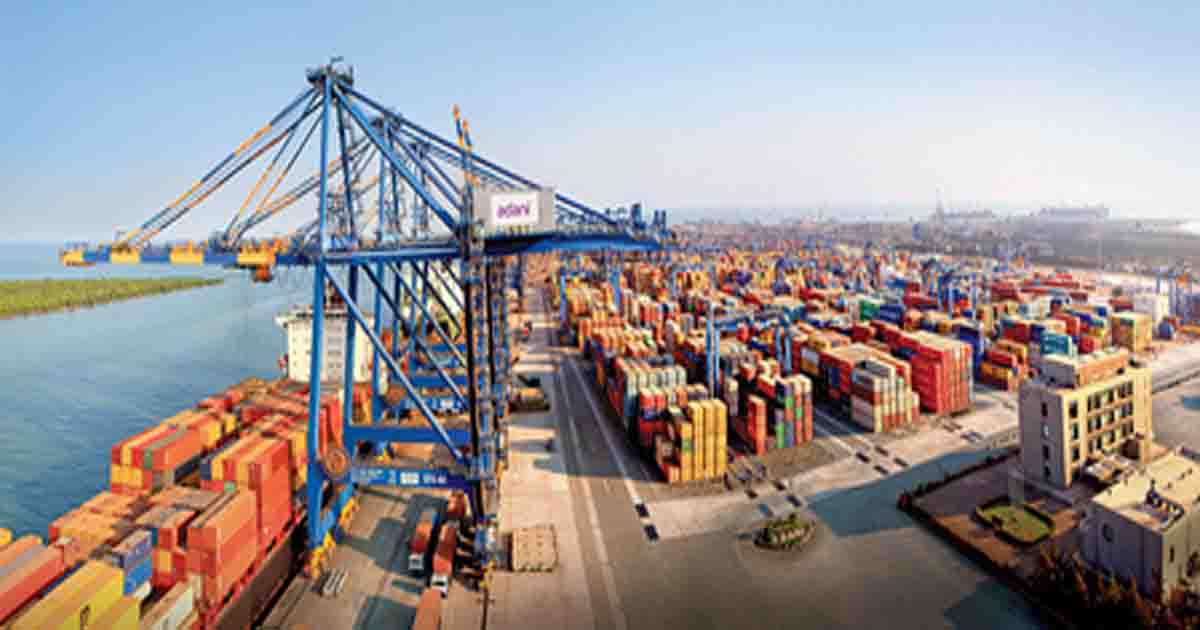
Adani Ports and Special Economic Zone Limited (APSEZ) on Thursday announced the acquisition of Netherlands-based Evos B.V., Europe’s second-largest independent liquid storage operator, in an all-cash transaction valued at an enterprise value of 2.56 billion euros.
Under the agreement, APSEZ will acquire a 100 per cent stake in Evos from Igneo Infrastructure Partners.
The deal values Evos at an equity value of 1.18 billion euros and implies an acquisition multiple of 11.7 times CY25 EV/EBITDA.
The transaction will be funded through debt and remains subject to regulatory approvals and works council consultation.
“APSEZ, India’s largest and one of the world’s fastest growing Integrated Transport Operator, agrees to acquire 100 per cent stake in Netherlands-headquartered Evos B.V. (Evos) from Igneo Infrastructure Partners. The proposed transaction is an all-cash deal at an enterprise value of 2.56 bn euros,” the official statement said.
For calendar year 2025, Evos reported revenue of 392 million euros and EBITDA of 219 million euros, translating into a robust EBITDA margin of 56 per cent.
Following the acquisition, the combined entity’s pro forma net debt-to-EBITDA ratio is expected to stand at 2.76 times and decline to around 2.5 times by FY27.
Commenting on the deal, Karan Adani, Managing Director of APSEZ, said the acquisition marks a significant milestone in the company’s journey toward handling one billion tonnes of cargo and building a truly global integrated transport platform.
“Evos marks an important milestone in APSEZ’s trajectory towards handling 1 billion tons of cargo and building a truly global, integrated transport platform. We are delighted to welcome Evos into our portfolio, giving us significant presence across key global liquid storage and energy hubs,” Karan Adani noted.
“We look forward to partnering with Europe, supporting its sustainable energy transition and creating enduring value while maintaining the financial prudence that underpins our growth,” he added.
Headquartered in the Netherlands, Evos operates 6.3 million cubic metres of storage capacity across eight strategically located port-based terminals in the Netherlands, Germany, Spain, Belgium and Malta.
The company has a presence in major energy and industrial hubs, including the Amsterdam-Rotterdam-Antwerp region, Hamburg and the Mediterranean.

Lawrence Bishnoi gang member Hari Boxer detained in US; process to bring him to India underway

Nitin Nabin’s remarks on Rahul Gandhi, Akhilesh Yadav trigger political slugfest; BJP, Oppn trade charges

Shruti Haasan tells dad Kamal Haasan on his birthday: You are just the rarest of the rare Appa!

Alia Bhatt, Ranbir Kapoor’s ‘little unicorn ’ Raha turns four, actress shares fun pics from her Bluey-themed party

Man steals gold chain from Mumbai jewellery shop posing as customer, arrested in Delhi; stolen item recovered.

Rahul, Cong ecosystem want to force regime change: BJP after Neha Bora praises B’desh Gen-Z protest

BJP pays tribute to ex-President Abdul Kalam, recalls his enduring influence on generations of India’s youth

Attack on democratic rights: INDIA Bloc leaders on detentions of anti-ECI protestors

Congress trying to protect 3 crore Bangladeshi infiltrators in voter list: HM Shah

Online betting: ED conducts searches at 20 premises in Mumbai, Pune, Hyderabad
-

 Crime4 years ago
Class 10 student jumps to death in Jaipur
-

 Maharashtra2 years ago
Mumbai Local Train Update: Central Railway’s New Timetable Comes Into Effect; Check Full List Of Revised Timings & Stations
-

 Maharashtra2 years ago
Mumbai To Go Toll-Free Tonight! Maharashtra Govt Announces Complete Toll Waiver For Light Motor Vehicles At All 5 Entry Points Of City
-

 Maharashtra2 years ago
False photo of Imtiaz Jaleel’s rally, exposing the fooling conspiracy
-

 National News2 years ago
Ministry of Railways rolls out Special Drive 4.0 with focus on digitisation, cleanliness, inclusiveness and grievance redressal
-

 Maharashtra2 years ago
Maharashtra Elections 2024: Mumbai Metro & BEST Services Extended Till Midnight On Voting Day
-

 National News2 years ago
J&K: 4 Jawans Killed, 28 Injured After Bus Carrying BSF Personnel For Poll Duty Falls Into Gorge In Budgam; Terrifying Visuals Surface
-

 Crime2 years ago
Baba Siddique Murder: Mumbai Police Unable To Get Lawrence Bishnoi Custody Due To Home Ministry Order, Says Report