
Business
India, New Zealand set to sign FTA for improved market access on April 27

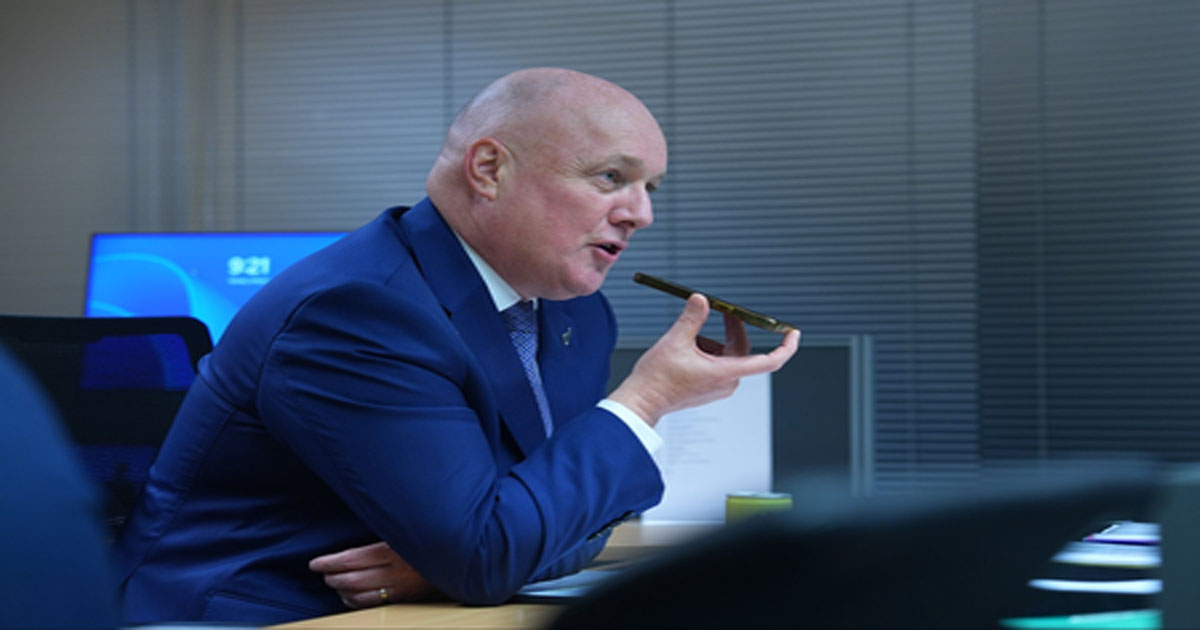
New Delhi, April 24: As India and New Zealand prepare to sign a Free Trade Agreement (FTA) on Monday, both sides are expected to benefit from expanded trade ties and improved market access, New Zealand Prime Minister Christopher Luxon has said.
Taking to the social media platform X, Luxon said, “We will sign a Free Trade Agreement with India on Monday.”
In a video message, Luxon said the agreement would improve market access for New Zealand exporters, particularly manufacturers of marine jet systems used in boats and exported to over 70 countries.
He added that the deal would help reduce trade barriers and strengthen commercial engagement between the two countries.
He also noted that certain exporters currently face tariffs while accessing the Indian market, and said the agreement would gradually ease such duties, improving competitiveness and supporting higher trade flows.
Luxon said the FTA would support increased business activity, employment opportunities and economic growth in New Zealand, while also strengthening bilateral trade linkages with India.
He added that the agreement would bring ‘more jobs, higher wages and more opportunities,’ highlighting the broader economic impact of the deal.
Once signed, the FTA is expected to expand trade and investment ties between the two countries and enhance export opportunities on both sides in a large and growing global market environment.
Earlier this month, legal verification of the New Zealand-India FTA was completed, with both countries agreeing to sign the pact on April 27 in the presence of a large contingent of business representatives, New Zealand Trade and Investment Minister Todd McClay said.
In a statement, McClay described the agreement as a “once-in-a-generation opportunity,” saying it would strengthen bilateral trade relations and provide improved access to each other’s markets.
He said that amid global economic and geopolitical uncertainty, strengthening trade partnerships remains important for long-term economic stability.
McClay added that signing the FTA would allow New Zealand to formally initiate parliamentary treaty examination, enabling public scrutiny of the agreement.



The Indian unit of Elon Musk-backed electric vehicle (EV) maker Tesla — Tesla India Motors and Energy — has reported revenue of Rs 247.31 crore and a net profit of Rs 5.16 crore for FY26.
According to regulatory filing, revenue from operations surged nearly 12-fold from Rs 20.83 crore in FY25.
The carmaker’s net profit increased from Rs 55.49 lakh as the company expanded its presence in the Indian market following the launch of its first showroom in Mumbai in 2025. However, FY26 was the first year in which vehicle sales contributed to Tesla India’s reported revenue.
In the previous financial year, the company’s turnover had come entirely from services-related operations.
Vehicle sales generated Rs 214.69 crore during FY26, accounting for nearly 87 per cent of total revenue, while services contributed Rs 32.40 crore.
The performance came despite a relatively small sales base as the company recorded 346 vehicle registrations in India between September 2025 and March 2026.
Meanwhile, registrations accelerated to 650 units during April-September FY27, surpassing the entire previous year’s tally within the first six months of the fiscal year.
Average monthly registrations rose from around 49 units during the initial launch phase to about 108 units.
Apart from that, the company strengthened its balance sheet through fresh capital infusion.
Filings showed Tesla injected about Rs 86 crore into its Indian subsidiary during FY26.
In addition, cash expenditure on property, plant and equipment and capital work-in-progress climbed to Rs 62.54 crore in FY26 which was higher than Rs 1.16 crore in the previous year.
Earlier in October, CEO Musk showcased a new version of its Roadster sports car — a prototype that briefly lifted off the ground during a demonstration at a SpaceX facility in Texas.
He highlighted that the vehicle navigated an elevated curved track before becoming airborne for a short distance and landing safely, drawing comparisons to the concept of a flying car.

Shares of non-banking financial company Shriram Finance on Monday traded more than 6 per cent lower, hitting an 11-month low and emerged as the top Nifty loser.
The NBFC stock declined as much as 6.55 per cent to 810.20, recording an intraday low on the BSE in morning trade.
It was trading at Rs 829.20, a decrease of 4.36 per cent by 10:57 am.
The selling pressure in the stock came after the NBFC firm cut its loan growth forecast and flagged higher credit costs, overshadowing better-than-expected Q2 profit.
Moreover, the company cut its assets under management (AUM) growth guidance for FY27 to 15-17 per cent from 18 per cent, citing weak monsoon and geopolitical uncertainty and pressure on borrowers in drought-hit regions.
Meanwhile, analysts flagged asset quality concerns with reducing share price targets.
Analysts at global brokerage Jefferies said credit costs could stay elevated for one to two more quarters due to stress in Maharashtra, Karnataka and Telangana.
According to domestic brokerage Motilal Oswal, higher slippages and write-offs reflected drought-like conditions in several states, though overall asset quality remained broadly stable.
“SHFL delivered a mixed quarter, with PPoP beating estimates on higher NIM and lower opex, while earnings were in line due to higher credit costs. AUM growth at 17 per cent YoY was stronger than estimated,” it said.
Similarly, JM Financial said rising early delinquencies and rural stress remain key concerns. The brokerage also stated, “Deteriorating asset quality indicators amid drought-like conditions remain a concern.” However, the stock has corrected 14 per cent over the past month. Recent equity infusion and rating upgrades to AAA should cushion margins.
On the aforesaid exchange, the NBFC stock has recorded a 52-week high of Rs 1,153.65 and a 52-week low of Rs 710.40.

As long as Brent crude remains above $100 a barrel, there will be pressures on the economy and the foreign portfolio investors (FPIs) are likely to sell the dip, analysts said on Sunday.
The total FPI selling in October stands at Rs 53,337 crore so far, and the net FPI investment through the IPO market during this period stands at Rs 5,281 crore.
“The total FPI selling through the exchanges for this year stood at Rs 3,69,164 crore,” said Dr VK Vijayakumar, Chief Investment Strategist, Geojit Investments Ltd.
On the flows front, FIIs remained net sellers for the 10th straight week. For the week ended October 23, FIIs significantly reduced their selling and even turned buyers on two days.
The moderation in US bond yields with the 10-year yield declining from 5.36 per cent to around 5 per cent, appreciation in the rupee to 94.94 to the dollar and the low valuations, particularly of the large-caps, contributed to the moderation in FII selling.
Going ahead, the steady moderation in FII selling offers some comfort, though elevated crude and sharp broader-market weakness keep the downside risk alive.
A significant market trend during the week was the sharp correction in the mid-and small-caps.
The Nifty Mid-cap 100 plunged 5.6 per cent and the Nifty Small-cap 100 crashed 7.3 per cent during the week while the Nifty 50 was relatively resilient with a cut of only 2.35 per cent.
Forced liquidation in the margin-funded long positions in the broader market is rumoured to have triggered the crash in the broader market, said analysts.
The resilience of the large-caps is mainly due to the accumulation of the fairly valued large-caps by the DIIs which are flush with funds.
The high crude prices is acting as a strong headwind for the economy and market, said analysts.

HM Amit Shah defamation case: Complainant to challenge Rahul Gandhi’s acquittal

Father, son die after building slabs collapse in Delhi Harsh Vihar

Sanjay Raut demands ED, police probe into Manoj Jarange Patil’s Rs 500 crore payout claims

Shiv Sena(UBT)’s questions border security amid ITBP chief’s remarks in ‘Saamana’

Tesla India posts Rs 247 crore revenue in first fiscal of vehicle sales

Rahul, Cong ecosystem want to force regime change: BJP after Neha Bora praises B’desh Gen-Z protest

Attack on democratic rights: INDIA Bloc leaders on detentions of anti-ECI protestors

BJP pays tribute to ex-President Abdul Kalam, recalls his enduring influence on generations of India’s youth

INDIA bloc begins protest march against ECI

Maha Congress stages agitation against Gyanesh Kumar
-

 Crime4 years ago
Class 10 student jumps to death in Jaipur
-

 Maharashtra2 years ago
Mumbai Local Train Update: Central Railway’s New Timetable Comes Into Effect; Check Full List Of Revised Timings & Stations
-

 Maharashtra2 years ago
Mumbai To Go Toll-Free Tonight! Maharashtra Govt Announces Complete Toll Waiver For Light Motor Vehicles At All 5 Entry Points Of City
-

 Maharashtra2 years ago
False photo of Imtiaz Jaleel’s rally, exposing the fooling conspiracy
-

 National News2 years ago
Ministry of Railways rolls out Special Drive 4.0 with focus on digitisation, cleanliness, inclusiveness and grievance redressal
-

 Maharashtra2 years ago
Maharashtra Elections 2024: Mumbai Metro & BEST Services Extended Till Midnight On Voting Day
-

 National News2 years ago
J&K: 4 Jawans Killed, 28 Injured After Bus Carrying BSF Personnel For Poll Duty Falls Into Gorge In Budgam; Terrifying Visuals Surface
-

 Crime2 years ago
Baba Siddique Murder: Mumbai Police Unable To Get Lawrence Bishnoi Custody Due To Home Ministry Order, Says Report