
Business
Sanjiv Puri’s ‘Next’ strategy drives ITC into future-ready lane with smart innovation in FMCG, Hotels, Agri


Diversified consumer goods conglomerate ITC appears to be closing in on turning its fast-moving-consumer-goods (FMCG), agriculture and hotel segments as its main growth drivers, with chairman Sanjiv Puri shepherding the ‘Next’ strategy for its next horizon of growth through bold acquisitions, and disruptive digital innovation.
This new strategy is aimed at ensuring that the ITC remains future-oriented, consumer-centric, and nimble to create enduring value for stakeholders, something that the financial results are mirroring with FMCG and agriculture contributing nearly half of its total revenues in the April-June quarter.
The FMCG segment has been driven by higher demand for hygiene products, fragrances, spices, snacks, agarbattis and dairy products, with Salvon standing out as a growth engine of sorts.
ITC acquired Savlon from Johnson & Johnson in 2015, foraying into the disinfectant and antiseptic products market. Savlon crossed Rs 1,200 crore in consumer spends in 2020-21, growing more than 13 times since acquisition, making it the largest brand in the company’s personal care products portfolio, overtaking Vivel.
ITC has launched over 120 new products over the last one year, with product innovations in hygiene, nutrition and convenience segments. These include Savlon’s foray into surface and cloth disinfectant sprays, ‘neem’ based cleaning solutions Nimwash and Nimeasy, convenience-focused products such as ITC Master Chef Frozen Snacks, and scale up nascent categories and products such like B Natural juices, Fabelle chocolates amongst others.
In four years from 2016-17 to 2020-21, the FMCG segment’s earnings before interest, taxes, depreciation and amortisation (EBITDA) margins have improved by 640 bps.
FMCG on fast lane
The company today is one of the largest incubators of world-class Indian brands. ITC FMCG business has garnered consumer spends of over Rs 22,000 crore and delighting more than 150 million households.
Scaling up and fortification of existing growth platforms consisting of megabrands is an essential cog in the wheel of ITC’s next strategy. The company has expanded its purpose-led brands like Savlon, Aashirvaad, and Sunfeast into adjacent categories with remarkable success. These brands have immense headroom to grow given the relatively lower household penetration and rising per capita income. ITC is exploring more value accretive inorganic opportunities as an additional pillar of growth.
Puri’s strategy to make ITC future-ready manifests in Life Sciences and Technology Centre (LSTC). LSTC helped ITC to launch 120 products amid the pandemic to meet emerging preferences. Towards this goal, the company has launched 9 state-of-the-art integrated consumer goods manufacturing facilities (ICML) to create structural advantages and drive enhanced competitiveness is also worth mentioning.
The new-age consumer is a digital native with extensive engagement in social and e-commerce platforms. Recognizing this, ITC is identifying emerging trends in real-time through its Marketing Command Centres called ‘Sixth Sense’ to speedily launch differentiated products as also creatively engage with consumers.
Under the ‘Next’ strategy, Puri has clearly sought to explore opportunities to craft disruptive business models anchored at the intersection of digital and sustainability. It is deploying a smart ecosystem with an integrated real-time operations platform across the organization to enable next-generation supply chains and smart manufacturing with digitally enabled factories.
The company has adopted multi-dimensional digital interventions for smart sourcing, smart logistics across businesses, and Industry 4.0 implementation in manufacturing. This is in addition to customized apps to facilitate digital ordering and trade engagement.
It has fast-tracked its journey in e-commerce, to meet the growing preference for ‘contactless shopping’. This is besides strengthening the direct-to-consumer platform, ‘ITC e-Store’ to reach consumers in newer geographies and introducing more ‘digital first’ brands to leverage the growing e-commerce space.
ITC under Puri’s stewardship is unwavering in its resolve to build a formidable FMCG business. Revenues from its FMCG business during the quarter stood at Rs 3726 crore, accounting for 25 per cent of the quarterly revenues. The agriculture segment turned in revenues of Rs 4,091 crore, accounting for 28 per cent of the company’s total quarterly revenues of Rs 14,649 crore before netting out inter-segment revenues of Rs 1,764 crore.
Big data, AI in agri
ITC’s decades-old agri business, powered by the e-choupal network, also appears to be coming of age.
Once the legal framework is in place that allows farmers to sell their produce outside their areas of cultivation, there is a clear opportunity in agri-business, similar to what ITC e-choupal in India and Pinduoduo in China have done successfully with scale.
Both are examples of using big data, technology network and artificial intelligence (AI) in farming to offer a better deal to peasants, make agriculture a rewarding vocation and bring them closer to the global markets by building digital platforms linking retailers with products consumers.
These will enable aggregation from farmers, incentivise creation of warehousing networks along highways, village storage schemes and the digitised app-based system for direct marketing by farmers, a model that ITC e-choupal has broadly demonstrated over the years.
Baareh Mahine Hariyali, an ITC e-Choupal initiative, which has combined multiple initiatives of cropping intensity (wheat, rice and summer moong), productivity enhancement and market linkages.
As reported by ITC, over 2 lakh farmers have already benefited from the interventions under the ‘Baareh MahineHariyali’ programme — over 35,000 farmers who have adopted the package of practices reported doubling of income and those who have implemented the programme partially reported increase in their incomes by 30 per cent to 75 per cent.
ITC, under Puri, is now implementing e-Choupal 4.0 at scale to bring the benefits of the digital revolution to agriculture. Envisaged as a ‘phygital’ system, the e-Choupal 4.0 is designed as a crop agnostic integrated solution framework that will synergistically aggregate technologies like remote sensing, precision farming, drone-based services, quality assaying and e-marketplace.
ITC e-Choupal 4.0 aims to strengthen agricultural entrepreneurship and agri-tech startups through agri services aggregator models, thereby empowering farmers with next generation agricultural practices. The aim of the model is to sharpen personalisation of agri services driven by data and analytics.
This may well be the right time for ITC’s integrated agribusiness enterprises with significant presence across crop development, procurement, supply chain, processing and marketing to decisively shift gears through a tech-driven matrix mounted on apps, blockchain, warehousing, AI and big data.
With the launch of Super App ‘ITC-MAARS’ that will bring the next phase of transformation in its agri-business and support the e-choupal through strength and scale under Puri.
Hotels and more
ITC’s hotel business has acquired scale and market standing over time. It is now set for a turnaround with the management decision to pursue asset right strategy while simultaneously leveraging ITC’s world-class properties.
Against this backdrop, the move to refresh ‘Welcomhotel’ is a long-awaited development as it will help the company to generate leads and pipeline for management contracts. Also, the launch of a new boutique brand christened ‘The Storii’ to offer the new-age traveller curated nature experiences will help the company make inroads into the emerging segment.


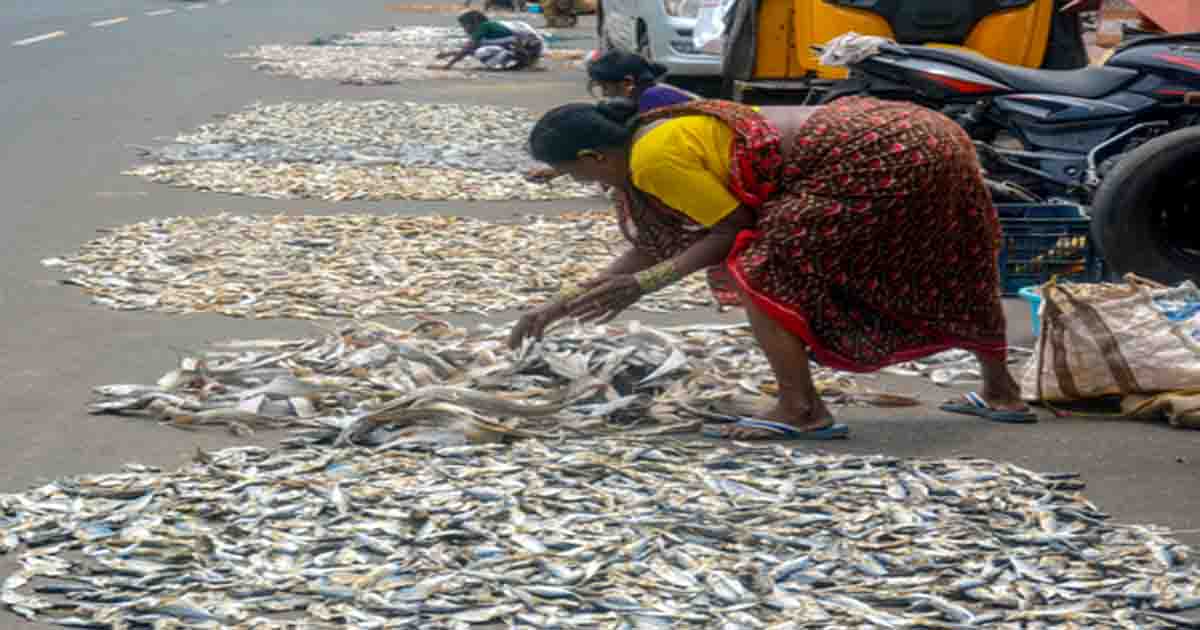
New Delhi, Oct 8: India’s decision to ratify Phase 1 of the World Trade Organization’s Agreement on Fisheries Subsidies is a pragmatic step to curb illegal, unreported and unregulated fishing while preserving its policy space on issues that directly affect small-scale and artisanal fishers, an official statement said on Thursday.
The statement from the Ministry of Fisheries, Animal Husbandry & Dairying said India deposited its Instrument of Acceptance on July 20, 2026, and that the ratified phase targets IUU fishing, overfished stocks and unregulated high‑seas fishing.
“It does not cover the more difficult questions of overcapacity and overfishing, including subsidies for fuel, gear, ice, vessel construction and modernisation,”
“Those issues belong to Phase 2, where India continues to seek fair and differentiated treatment for developing countries,” the statement said citing views of Dr. M. Krishnan, former Principal Scientist & Head, ICAR – CIFE and Dr. P. Krishnan, Director, BOBP-IGO.
India supports measures aimed at the most harmful fishing practices but insists conservation rules must not reduce the development space of coastal communities that depend on marine fisheries for livelihoods.
“For India, the challenge is not whether to support conservation, but how to ensure that conservation does not come at the cost of equity,” the statement, calling the country’s position principled and practical.
India made clear that its ratification of Phase 1 does not weaken its demand for a longer transition period and more flexible treatment in Phase 2. The call for a 25-year transition period for developing countries within their exclusive economic zones remains part of the broader negotiating position.
India also insists that subsidy disciplines should be assessed using a per-fisher benchmark, rather than through comparisons that overlook vast differences in scale, capacity and state support.
Across the Bay of Bengal region, fisheries are a source of food security, employment and social stability for millions of small-scale fishers rather than merely an economic activity.
Hence, any multilateral discipline on subsidies must recognise the realities of artisanal and coastal fisheries in developing countries, where support is often aimed at livelihood protection rather than industrial expansion.
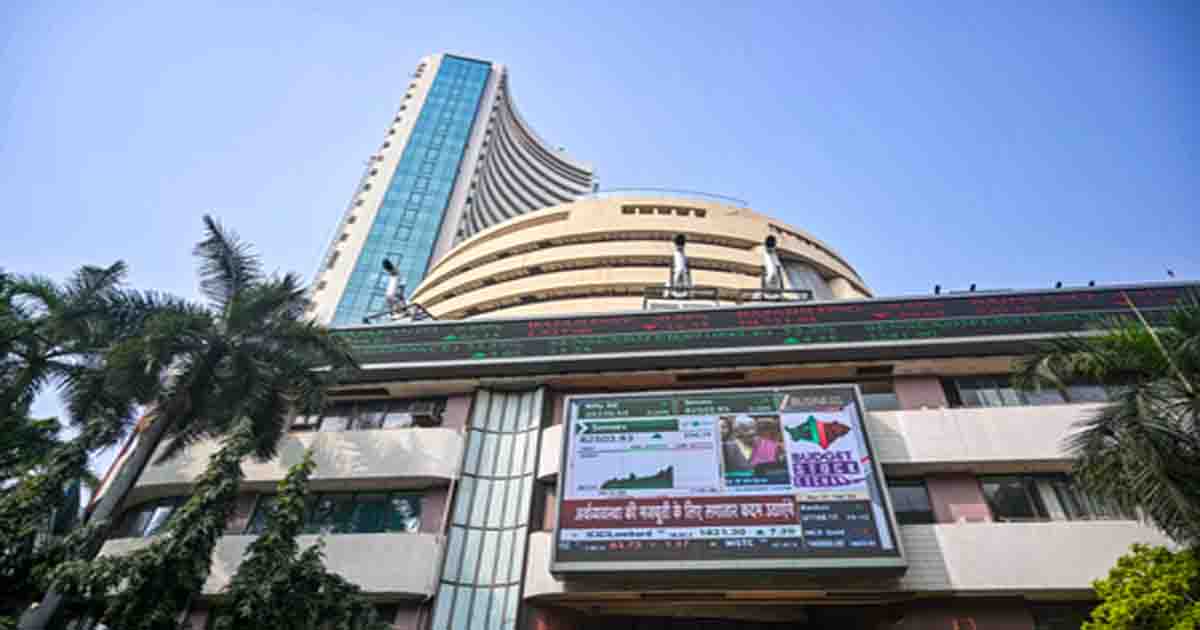
New Delhi, Oct 8: Domestic equity benchmarks opened largely flat on Thursday with Nifty opening around 22,600 mark as gains in IT and pharma stocks were offset by weakness across financial, FMCG and auto stocks.
Nifty opened at 22,599.05, down 4 points or 0.02 per cent.
Similarly, Sensex started at 72,668, up 29.30 points or 0.04 per cent.
Sector-wise, Nifty IT, Nifty MidSmall Healthcare, Nifty Pharma were top gainers with advancing up to 0.59 per cent.
Meanwhile, metal, consumer durables and chemicals also traded marginally higher.
On the other hand, Nifty Financial Services ex-Bank, Nifty FMCG slipped up to 0.38 per cent.
Market experts said the RBI’s calibrated tightening stance could put pressure on equity valuations as higher interest rates make fixed-income investments relatively more attractive.
They also expect investor preference to shift marginally towards relatively interest-inelastic sectors such as pharmaceuticals.
Experts noted that growth stocks have continued to attract investor interest despite high valuations, while value stocks have remained subdued.
“Sustained selling by foreign investors in large-cap stocks, coupled with the US 10-year Treasury yield staying above 5.3 per cent, could keep large-cap stocks under pressure,” they added.
“Yesterday’s multiple attacks at 22574 calls for an extended period of consolidation, before setting a direction. Though considerably weakened, the 23100-220 view is still in play, with downside marker at 22439,” according to them.
Experts added that a sustained reversal in the market trend would require foreign investors to turn buyers, while value stocks could offer opportunities over the longer term.
In addition, foreign institutional investors remained net sellers on Wednesday and offloaded equities worth more than Rs 6,121 crore.
While domestic institutional investors provided some support and purchased equities of around Rs 4,596 crore.
Moreover, market sentiment remained cautious amid concerns over elevated US Treasury yields and oil prices, while Asian markets traded on a cautious note following a softer session on Wall Street.
New Delhi, Oct 7: Meta on Wednesday announced a series of new AI-powered measures aimed at strengthening its fight against child sexual exploitation on Facebook and Instagram, as the company revealed it took action against 5.3 million pieces of child sexual exploitation content in India during the first six months of 2026.
The social media giant said more than 98 per cent of the violative content removed in India between January and June this year was proactively detected by its systems before being reported by users.
“Between January to June 2026, we actioned 5.3 million pieces of child sexual exploitation content on Facebook and Instagram in India, with over 98 per cent found and proactively addressed before anyone reported it,” the tech giant said.
Globally, Meta said it actioned 33.2 million pieces of child sexual exploitation content across Facebook and Instagram during the same period, with over 97 per cent identified proactively.
“Globally between January to June 2026, we actioned 33.2 million pieces of child sexual exploitation content from Facebook and Instagram, over 97 per cent found and proactively addressed before anyone reported it,” it added.
According to the company, online predators are increasingly using sophisticated tactics to evade detection, including advertisements that appear harmless but covertly direct users to illegal content hosted outside Meta’s platforms.
In response, the company has upgraded its ad review systems and deployed additional artificial intelligence tools to identify such activity more effectively.
Meta said the new safeguards include large language model (LLM)-based detection systems designed to identify “signposting” content that may appear benign but is suspected of directing users to child sexual exploitation material or related harmful activities.
The company has also enhanced its ability to assess the destination of advertisements, enabling it to block links leading to violative content and take action against the accounts responsible.
“Once a link is blocked, we search for and then delete other content – such as ads, posts or comments – that contain the link. We take steps to prevent people from posting content containing a blocked link on Facebook, Instagram and Threads, and ads containing blocked links would be rejected at upload,” Meta said in its official statement.

Key shooter in Punjab influencer Mad Sandhu murder held by Gujarat Police

Delhi Police busts illegal stocking of illicit foreign cigarettes, one held

‘My role was limited to unknowingly promoting a few brands…’: Shefali Bagga on alleged role in betting app case

28 structures affected by the Ghatkopar road widening project demolished.

Delhi HC issues summons on Kangana Ranaut’s plea seeking protection of personality rights

Gift to President Putin part of PM Modi bid to globally display India’s heritage

PM Modi’s warm camaraderie with Putin, Xi on full display at BRICS Summit

Complaint against Netflix & Mukesh Chhabra for inappropriate language on ‘India’s Got Latent 2’

INDIA bloc begins protest march against ECI

Maha Congress stages agitation against Gyanesh Kumar
-

 Crime4 years ago
Class 10 student jumps to death in Jaipur
-

 Maharashtra2 years ago
Mumbai Local Train Update: Central Railway’s New Timetable Comes Into Effect; Check Full List Of Revised Timings & Stations
-

 Maharashtra2 years ago
Mumbai To Go Toll-Free Tonight! Maharashtra Govt Announces Complete Toll Waiver For Light Motor Vehicles At All 5 Entry Points Of City
-

 Maharashtra2 years ago
False photo of Imtiaz Jaleel’s rally, exposing the fooling conspiracy
-

 National News2 years ago
Ministry of Railways rolls out Special Drive 4.0 with focus on digitisation, cleanliness, inclusiveness and grievance redressal
-

 Maharashtra2 years ago
Maharashtra Elections 2024: Mumbai Metro & BEST Services Extended Till Midnight On Voting Day
-

 National News2 years ago
J&K: 4 Jawans Killed, 28 Injured After Bus Carrying BSF Personnel For Poll Duty Falls Into Gorge In Budgam; Terrifying Visuals Surface
-

 Crime2 years ago
Baba Siddique Murder: Mumbai Police Unable To Get Lawrence Bishnoi Custody Due To Home Ministry Order, Says Report