
Business
Pakistan, Bangladesh face mounting economic risks as prolonged US-Iran conflict fuels oil price surge


New Delhi, Aug 2: Pakistan and Bangladesh are among the Asian economies most exposed to the fallout from the prolonged US-Iran conflict, as surging global oil prices threaten to push up inflation, strain public finances and intensify pressure on already fragile economies, according to economists and research firms.
Both countries depend heavily on imported fuel, making them particularly vulnerable to sustained increases in crude oil and diesel prices, according to a report by South China Morning Post.
Analysts warn that limited fuel inventories and weak economic buffers could allow higher global energy costs to feed quickly into domestic prices, raising the cost of transport, electricity and food for millions of households, the report said.
Jamus Lim, Associate Professor of Economics at ESSEC Business School Asia-Pacific cited by the report, said Pakistan and Bangladesh are likely to face significant inflationary pressures in the near term.
He noted that limited inventory buffers mean the impact of higher oil prices would be transmitted relatively quickly through their economies.
Oil markets have already reflected growing concerns over the conflict. Brent crude has climbed sharply over the past month, while US benchmark West Texas Intermediate (WTI) has recorded similar gains.
Diesel and other refined fuel products have also posted double-digit increases, adding to concerns over rising energy costs worldwide.
The risks have extended beyond the Gulf region after a drone strike targeted gas vessels at Egypt’s Mediterranean port of Damietta, heightening concerns over shipping routes linked to the Suez Canal, one of the key pathways for Saudi oil exports.
For Pakistan and Bangladesh, another energy-price shock could place renewed pressure on currencies, fiscal balances and government subsidy programmes.
Both countries are implementing International Monetary Fund (IMF)-supported economic reform programmes that emphasise fiscal discipline, limiting their ability to cushion consumers from higher fuel prices through subsidies.
The conflict, now in its fifth month, has added to uncertainty after US President Donald Trump weighed further military action following Iranian attacks on American military assets in Jordan, Kuwait and Bahrain.
Oxford Economics has warned that several emerging markets, including Pakistan, Egypt, Mozambique, Nigeria and Kenya, face a combination of geopolitical risks, political uncertainty and rising debt-servicing costs.
According to the research firm, countries such as Pakistan, Mozambique, Kenya, Ghana and Tunisia, which have relatively thin foreign exchange reserve buffers, could experience the sharpest deterioration if the conflict intensifies.


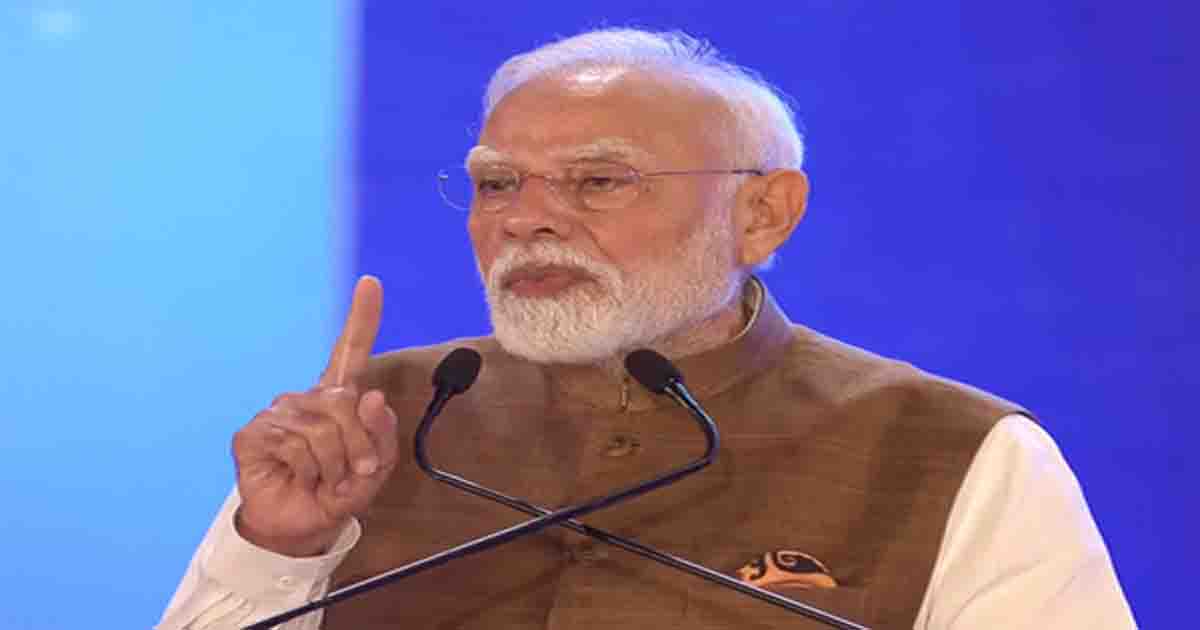
Prime Minister Narendra Modi on Tuesday said that the true success of science is achieved when innovations move beyond laboratories and create a tangible impact in people’s lives, asserting that India views science and technology as tools for serving humanity rather than instruments of power or conflict.
Addressing the Emerging Science, Technology and Innovation Conclave (ESTIC) 2026 in the national capital, the Prime Minister said that while the requirements of various technology-driven sectors differ, they all reflect a common message that India is rapidly building its technological strength and self-reliance.
“There has been a persistent challenge in how science and technology are viewed, often seen merely as tools of power or conflict. However, India firmly believes that science and technology are instruments for serving humanity,” PM Modi noted.
“The true success of science is realised when it moves from the lab to the land, directly improving the lives of ordinary citizens,” the Prime Minister stated.
Emphasising the societal role of innovation, PM Modi said science and technology should be judged not merely by their sophistication but by their ability to solve real-world problems and improve people’s lives.
The Prime Minister noted that science and technology have often been viewed globally through the lens of power and conflict, but India believes they should be harnessed for the welfare of humanity.
“The success of a technology is not determined solely by how advanced it is. Its true strength lies in how effectively it solves major problems and how many people’s lives it transforms,” PM Modi noted.
Highlighting India’s long scientific tradition, the Prime Minister said the country’s culture has been rooted in knowledge and discovery, citing contributions ranging from the discovery of zero and the development of the number system to advances in astronomy.
“India is moving forward by evaluating itself against this very benchmark. We all know that a country’s technology and its ability to create technology depend on its research. Research is the force that enables a country to find solutions to its problems and become self-reliant in critical technologies,” PM Modi mentioned.

Domestic equity benchmarks opened lower on Tuesday amid mixed cues from global markets, elevated crude oil prices and West Asia conflict.
Sensex started at 73,484.38, down 122.37 points or 0.17 per cent. Similarly, Nifty began the trading session at 22,708.80, down 44.40 points or 0.20 per cent.
In early deals, selling was seen in IT, cement and oil & gas counters, while buying was seen in pharma, healthcare and PSU banks.
Nifty IT declined more than 1 per cent, while Nifty Cement decreased by 0.98 per cent and Nifty Oil & Gas slipped 0.53 per cent.
From Nifty, Infosys, Asian Paints, Tata Consultancy Services (TCS), JSW Steel and HCL Tech were among top losers in early trade, declining up to 2.78 per cent.
On the other hand, Nifty PSU Bank gained 0.68 per cent, Nifty Pharma was up 0.44 per cent and Nifty Healthcare was trading 0.39 per cent higher.
Market experts said Brent crude remaining above $114 per barrel and the US 10-year bond yield hovering around 4.97 per cent continue to be near-term headwinds.
“FIIs will remain in a risk-off mode in this adverse macro setting. However, improving fundamentals of the corporate sector as reflected in Q2 earnings and robust domestic fund inflows will continue to support the market,” the analysts said.
The experts further said, “Both the recovery attempts and the easing on approach to 22690 are on anticipated lines. As long as dips are contained above 22630, we will remain interested in an upside play aiming for 23000 or even 23500 with volatility expectations once inside the 22800-900 region.”
Alternatively, inability to float above 22630 could expose 22250-22000, but a collapse is less expected, they added.
In addition, FIIs remained net sellers on Monday and offloaded equities worth Rs 1,462 crore. In contrast, DIIs extended their buying streak to 10 consecutive sessions with net purchases of Rs 2,609 crore.
Globally, US markets closed higher overnight with the S&P 500 up 0.7 per cent and the Nasdaq up 0.82 per cent, while Asian equities showed mixed performance in early trade.
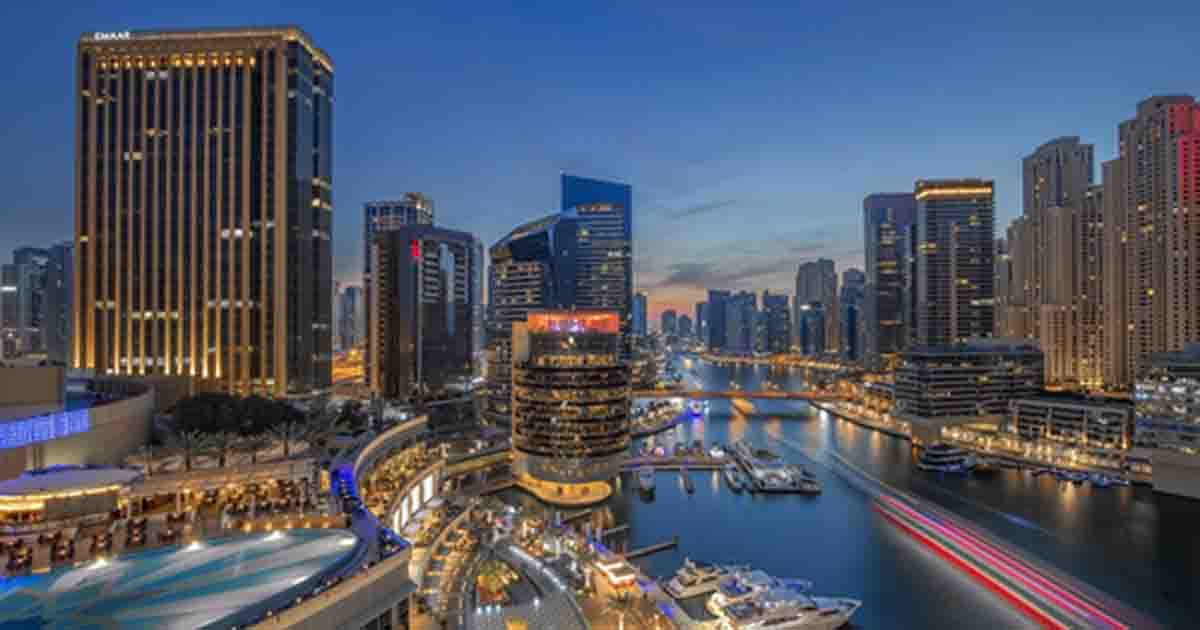
The Income Tax Department has recently nudged select taxpayers who have invested in residential and commercial properties in the UAE to avail of the Foreign Assets of Small Taxpayers – Disclosure Scheme, 2026 (FAST-DS), offering a one-time opportunity to declare these overseas assets which have been undisclosed so far, according to Finance Ministry sources.
The scheme provides a time-bound window to regularise eligible disclosures by paying 30 per cent tax on the fair market value and an equal amount of penalty in addition to tax. A crucial feature of the scheme is that it is fully online, trust-based, and self-declaratory.
A valid declaration brings immunity from further assessment, penalty and prosecution under the Black Money (Undisclosed Foreign Income and Assets) and Imposition of Tax Act, 2015 (Black Money Act). The scheme further provides an opportunity to taxpayers to report unaccounted assets and income on payment of a Rs 1 lakh fee to avoid a penalty of Rs 10 lakh each year prescribed in the Black Money Act.
Till now, approximately 1,100 taxpayers have filed applications under the scheme, which is open till December 31, 2026, sources said.
The Central government has launched the Foreign Assets of Small Taxpayers – Disclosure Scheme, 2026 (FAST-DS), offering a one-time opportunity to disclose foreign assets and income that have been undisclosed so far.
To facilitate taxpayers, the Department has created a facility in the e-filing portal where a taxpayer can see information with respect to assets reported on their PANs by the foreign jurisdictions under Automatic Exchange of Information (AEOI), popularly known as CRS/FATCA. Taxpayers can log in to the e-filing portal and download this information for the three-year period 2022-2024.
Sources informed that the information received under AEOI from the signatories of CRS/FATCA frameworks has only been displayed in the e-filing portal. Department receives information under other multilateral frameworks which has not been displayed in the portal due to various risk factors or non-disclosure commitments. Further, the Income Tax Department collects information from other sources as well. The Department decided, in a high-level meeting on October 23, that such information may also be shared with relevant taxpayers, wherever possible, to enable them to take advantage of the scheme.
The Income Tax Department has also planned outreach programmes to create awareness among taxpayers, corporates as employers, educational institutes, professional bodies and industry associations. The Central Board of Direct Taxes (CBDT), which is the apex body that heads the Income Tax Department, has also made a Committee in each region under the Principal Chief Commissioner to help taxpayers resolve their queries and concerns.

True success of science lies in taking innovation from lab to land: PM Modi

Another Class 12 student found dead in Delhi; suicide suspected

ECI’s affidavit on SIR deceptive: Jairam Ramesh

Maha CM defends pumped storage project in Karjat amid environmental backlash

Waqf Property Report Pending for Three Years: Rais Shaikh Accuses NCP of Ignoring Muslim Community’s Issues

Rahul, Cong ecosystem want to force regime change: BJP after Neha Bora praises B’desh Gen-Z protest

Attack on democratic rights: INDIA Bloc leaders on detentions of anti-ECI protestors

BJP pays tribute to ex-President Abdul Kalam, recalls his enduring influence on generations of India’s youth

INDIA bloc begins protest march against ECI

Maha Congress stages agitation against Gyanesh Kumar
-

 Crime4 years ago
Class 10 student jumps to death in Jaipur
-

 Maharashtra2 years ago
Mumbai Local Train Update: Central Railway’s New Timetable Comes Into Effect; Check Full List Of Revised Timings & Stations
-

 Maharashtra2 years ago
Mumbai To Go Toll-Free Tonight! Maharashtra Govt Announces Complete Toll Waiver For Light Motor Vehicles At All 5 Entry Points Of City
-

 Maharashtra2 years ago
False photo of Imtiaz Jaleel’s rally, exposing the fooling conspiracy
-

 National News2 years ago
Ministry of Railways rolls out Special Drive 4.0 with focus on digitisation, cleanliness, inclusiveness and grievance redressal
-

 Maharashtra2 years ago
Maharashtra Elections 2024: Mumbai Metro & BEST Services Extended Till Midnight On Voting Day
-

 National News2 years ago
J&K: 4 Jawans Killed, 28 Injured After Bus Carrying BSF Personnel For Poll Duty Falls Into Gorge In Budgam; Terrifying Visuals Surface
-

 Crime2 years ago
Baba Siddique Murder: Mumbai Police Unable To Get Lawrence Bishnoi Custody Due To Home Ministry Order, Says Report