
Politics
Reform, perform, transform define today’s governance: PM Modi

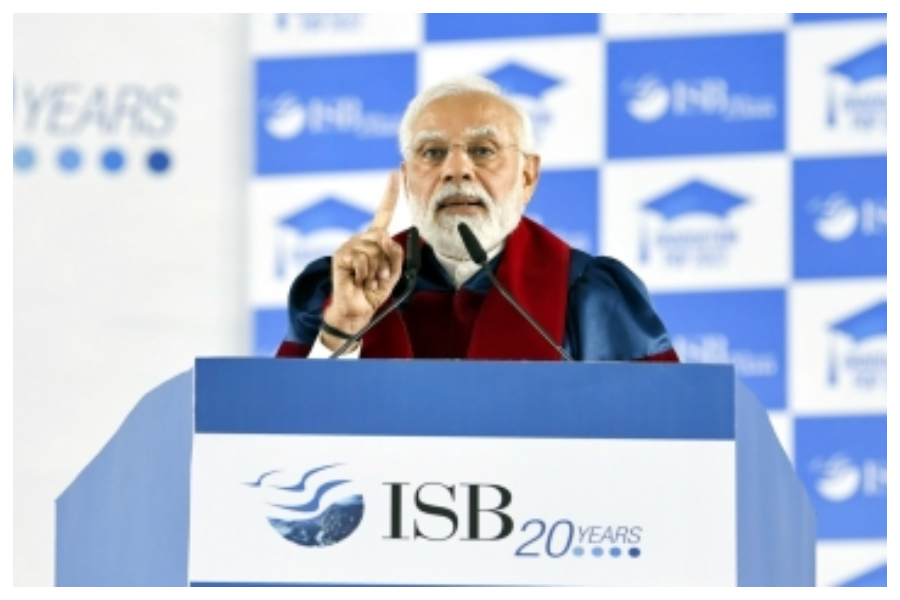
Prime Minister Narendra Modi on Thursday said reform, perform and transform mantra define today’s governance in the country.
He said during the last eight years, the government with the political willpower brought reforms and they yielded results on the ground due to people’s participation.
He said this while addressing 20th anniversary celebrations and graduation ceremony of the Post Graduate Programme of Class of 2022 at the Indian School of Business (ISB) here.
Addressing students of both Hyderabad and Mohali campuses of the ISB, he said that while the need for reform was always felt in the country, there was always a lack of political willpower.
“Due to the continuous political instability in the last three decades, the country has seen a lack of political willpower for a long time. Because of this the country stayed away from reforms and from taking big decisions. Since 2014, our country is seeing political will and also, reforms are being done continuously. We have shown public support and popular support is assured when reforms are undertaken with determination and political will,” he said.
He cited the example of adoption of digital payments among people. He said in a country where banking was considered a privilege, fintech has changed the life of the common man. He pointed out that today 40 per cent of the world’s digital transactions are happening in India.
The Prime Minister noted that today, India is the fastest growing economy in the group of G20 countries. In the case of smartphone data consumers, India is at number one. India is second in the world in terms of the number of Internet users. India is also second in the world in the Global Retail Index. The world’s third largest start-up ecosystem is in India. The world’s third largest consumer market is in India.
He claimed that even amid Covid pandemic, India proved its resilience. The century’s biggest health crisis disrupted the global supply chain and the war added to the problem.
“Despite all this India is emerging as a major centre of growth today. Last year, the highest ever recorded FDI came into India. Today the world is realising that India means business.”
Modi said it was not the success of the government alone but business schools like ISB, professionals who passed out from such institutes and youth played a big role.
“Be it start-ups or traditional business, manufacturing or service sector, India youth proving they can lead the world. Today, the world is looking at India’s youth with confidence and respect,” he said.
The Prime Minister pointed out that Indian solutions are being implemented globally. “Today on this important day, I would like to ask you to link your personal goals with the goals of the country,” he told the business graduates.
Modi said that resilience and strength of the health sector was proved during the pandemic. He recalled that there were no PPE manufacturers but the country produced 1,100 manufacturers and the Covid infrastructure in no time. There were only a couple of labs for testing but the number went up to 2,500.
“Regarding the Covid vaccines, concerns were being raised here whether foreign vaccines would be available or not. But India developed its own vaccines. In India more than 190 crore doses have been administered. India has also sent vaccines to more than 100 countries of the world,” he said.
Referring to the expansion of medical education in the last eight years, he said the number of medical colleges increased from 380 to over 600 while the number of graduate and post-graduate medical seats went up from 90,000 to over 1.50 lakh.
The Prime Minister stated that bureaucracy has also made firm contributions in the reform process.
“System is the same but results are encouraging. People are coming forward to increase the pace of reforms. When people cooperate, quick and better results are assured. In the system now, the government brings reforms, bureaucracy performs and people’s participation leads to transformation,” he said, and advised the ISB students to study this mechanism of reform, perform and transform as a case study and show it to the world.
He also cited the sport ecosystem transformation. He said after 2014 there has been phenomenal performance in every sport due to the confidence of athletes.
“Confidence comes when the right talent is discovered, when there is handholding of talent, when there is a transparent selection and a better infrastructure is available for training, competition. We can see transformation in sports due to reforms like Khelo India and Olympic Podium Scheme.”
He also cited the Aspirational District Programme as a great example of transformation. He said districts which were once branded as backward were performing better than the districts which were once considered as progressive.
The Prime Minister said that the definition of business is changing and its landscape is widening. Formal, informal, small and large businesses are expanding their horizons and giving employment to lakhs and crores of people.
He stressed the need to give more opportunities for growth to small businesses. He said students passing out of business schools can help them in connecting with the new local and global markets and with technology.
Earlier, Modi paid tributes to those who have contributed to take the institute to its current glory. He recalled that former Prime Minister Atal Bihari Vajpayee dedicated this institution to the country in 2001.
Since then, about 50,000 executives have passed out from ISB. Today, ISB is among the top business schools of Asia.
Professionals passed out from ISB are helming top companies and giving momentum to the county’s business. Students from here have created many start-ups and played a role in creating several unicorns.
“This is an achievement of ISB and a cause of pride for the entire country,” he said.


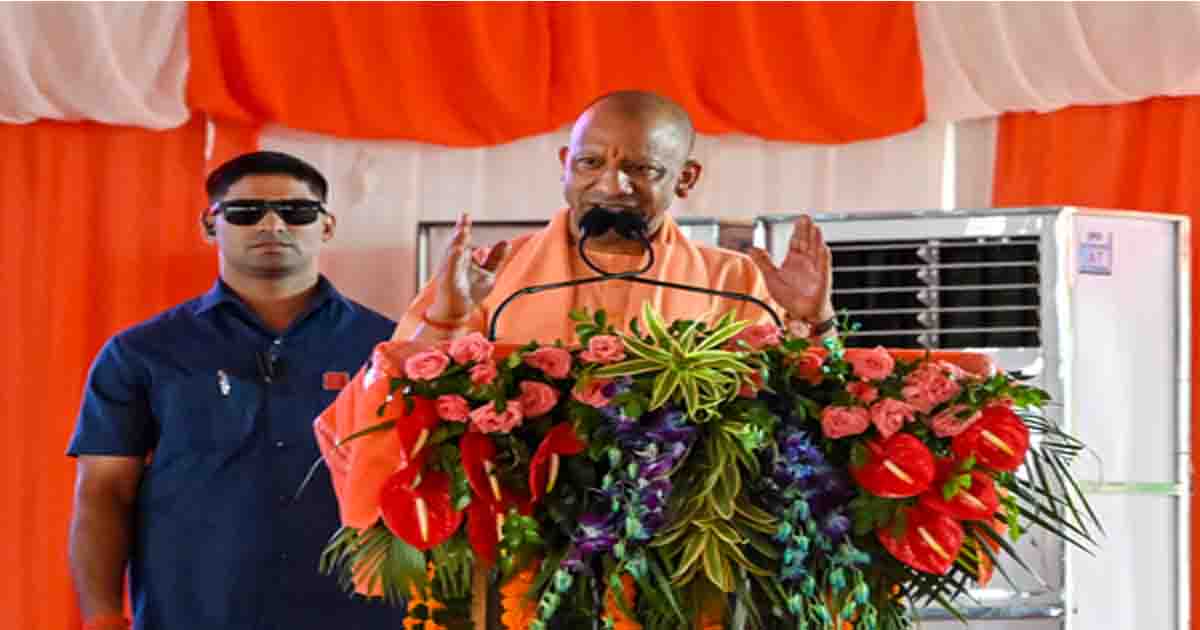
Lucknow, Oct 17: Uttar Pradesh Chief Minister Yogi Adityanath on Saturday took a jibe at the previous Samajwadi Party (SP) government in the state, saying that the SP and education are like the “two banks of a river who can never meet”.
The Chief Minister was addressing the Teachers’ and Graduates’ Conference in Lucknow.
Attacking the Akhilesh Yadav-led Samajwadi Party, CM Adityanath said: “The ‘Saifai Syndicate’ used to undermine the recruitment process and create an identity crisis (for the youth). People from Uttar Pradesh were even refused rooms in hotels for being associated with the state.”
“During the ongoing Sharadiya Navratri, various events are taking place. Durga Pujas are being organised, Ramlilas are being performed, and there is an atmosphere of celebration today, but before 2017 there used to be chaos and unrest,” he alleged.
Alleging that curfew and riots had become a part of the state, CM Adityanath said mothers used to be concerned about their daughters’ safety till they returned home from school.
“Today, there is celebration, not unrest. Daughters are safe; and should anyone dare to compromise their safety, the police have the perfect ‘remedy’ waiting at the very next street corner,” he remarked.
“An atmosphere of security has paved the way for investment, which consequently led to employment opportunities. We have provided government jobs to 9.5 lakh youths, while another 65 lakh youths have secured employment through investments in the private sector,” he added.
The Uttar Pradesh CM asserted that no one can raise a question about a single recruitment that has taken place in the past nine-and-a-half years, under the Bharatiya Janata Party-led double-engine government.
“There is complete transparency, fairness and honesty. A spirit of honouring the talent of Uttar Pradesh’s youth is evident,” he said.
CM Adityanath remarked: “The Samajwadi Party and education are like the two banks of a river—they can never meet!”
Likening the SP to that of a crocodile, the Chief Minister said: “If they (SP) claim they want to do something for education, it is akin to a crocodile coming to the riverbank and saying, ‘Climb onto my back; I will carry you safely to the other side’. That is precisely the situation with the ‘Samajwadis’—they are enemies of education who cannot be trusted.”
“They (SP) are the ones who created an identity crisis for the youth and have wreaked havoc on the education system,” he said while emphasising that crisis in the education sector means crisis for the society and the country.
“SP’s goons used to take over the educational institutions. The (SP government) did nothing for the benefit of teachers, since education and youth were never on their agenda. In contrast, we have provided free cashless medical treatment of up to Rs 5 lakh per family every year to teachers and education staff (in Uttar Pradesh),” CM Adityanath added.
The Chief Minister also asserted: “Today, Uttar Pradesh is not in need of identity, instead those who created an identity crisis for the state are the very ones now struggling for an identity of their own.”
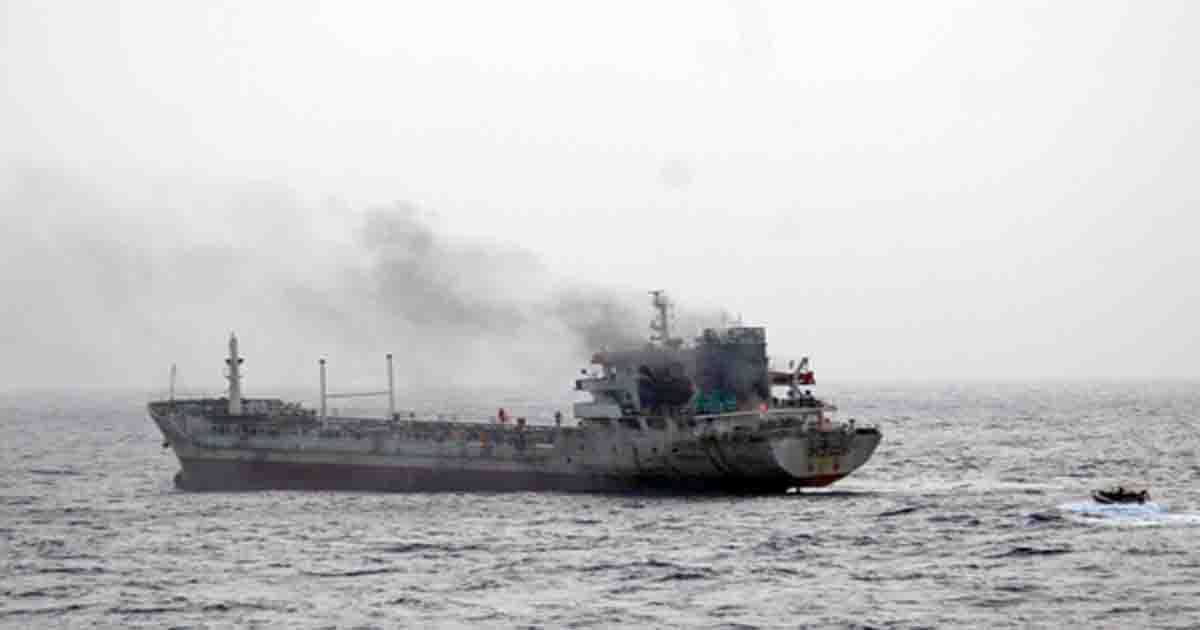
London, Oct 17: A tanker has reportedly been attacked 78 nautical miles northeast of Al Jubail, Saudi Arabia, the United Kingdom Maritime Trade Operations (UKMTO) said on Saturday.
The master of the tanker reported being attacked by a rocket-propelled grenade from a small boat, resulting in damage to the aft port quarter, according to the UKMTO.
Crew are accounted for and reported safe, and a complete damage assessment and environmental impact are unknown, said the UKMTO.
Earlier this week, Yemen’s Houthi group said that it had launched a large-scale missile and drone attack targeting an airport and oil facilities in Saudi Arabia. It also vowed to continue strikes against Saudi targets in the coming days.
In a statement broadcast by Houthi-run al-Masirah TV, Houthi military spokesperson Yahya Sarea said the group targeted Saudi energy giant Aramco in Dhahran in the Eastern Province, as well as King Khalid International Airport and an Aramco refinery in Riyadh.
According to Sarea, the operation involved “a large number of ballistic and cruise missiles and drones,” which accurately hit their targets, causing damage and fires.
The Houthi spokesperson said the operation was carried out in retaliation for Saudi Arabia-led strikes on the Houthi-held capital of Sanaa and other areas under the group’s control. He said Saudi-led forces had carried out 2,281 air and missile strikes since the latest escalation began, Xinhua news agency reported.
Sarea vowed that the group’s attacks “deep inside Saudi Arabia” would continue in the coming days, targeting airports and oil facilities. He also renewed a warning to international airlines, civilians and employees to stay away from airports and oil facilities in Saudi Arabia that the group had designated as targets.
The Houthi claim came after the Saudi-led coalition in Yemen said it intercepted six Houthi missiles and three drones heading towards Saudi Arabia on Tuesday. An Aramco administrative building in Dhahran was targeted Tuesday evening, sparking a limited fire, while debris from two cruise missiles intercepted over Riyadh injured four people and damaged 15 homes, Saudi authorities said Wednesday.

Singrauli, Oct 17: Mild earthquake tremors were felt in the Singrauli district of Madhya Pradesh on Saturday, India Meteorological Department (IMD) officials said.
According to preliminary data, the intensity of the earthquake was measured at 3.5 on the Richter scale.
The epicentre was located at a depth of around 10 km below the surface, officials added.
The tremor was recorded on Saturday at 2:12 p.m.
Officials monitoring seismic activity confirmed that the quake had an intensity of 3.5, with the focus situated around 10 km beneath the earth’s surface.
The information is based on initial readings and remains subject to further verification by scientific agencies.
Residents in parts of Singrauli reported feeling the mild shaking during the afternoon hours.
While the intensity was relatively low, the sudden tremor caused momentary concern among people in the affected areas.
No immediate reports of damage to buildings or injuries have been received so far.
Earthquake monitoring agencies are examining the preliminary data to determine the exact location of the epicentre and assess any aftershock possibilities.
A magnitude of 3.5 is generally classified as a light earthquake, which is often felt by people nearby but rarely causes significant structural damage, especially when the focus is at a moderate depth of around 10 km.
Authorities in Singrauli have advised the public to remain calm and follow standard safety guidelines in case of any further seismic activity.
Local administration is closely tracking the situation and is in coordination with relevant scientific bodies for updated information.
This is not the first time the region has experienced mild seismic activity, though such events of low intensity usually pass without major incident.
Experts note that earthquakes of this magnitude are relatively common in various parts of the country and typically do not pose a serious threat when the depth is around 10 km.
Further details are awaited as agencies continue to analyse the complete data set.

Samajwadi Party, education two banks of river who can’t meet: UP CM Yogi Adityanath

Tanker attacked northeast of Saudi Arabia: UKMTO

MP: Mild earthquake tremors felt in Singrauli

Maha CM calls emerging technologies key to India’s youth

Iran IRGC says supertanker exploded after hitting mine in Hormuz Strait

Rahul, Cong ecosystem want to force regime change: BJP after Neha Bora praises B’desh Gen-Z protest

BJP pays tribute to ex-President Abdul Kalam, recalls his enduring influence on generations of India’s youth

INDIA bloc begins protest march against ECI

Maha Congress stages agitation against Gyanesh Kumar

Complaint against Netflix & Mukesh Chhabra for inappropriate language on ‘India’s Got Latent 2’
-

 Crime4 years ago
Class 10 student jumps to death in Jaipur
-

 Maharashtra2 years ago
Mumbai Local Train Update: Central Railway’s New Timetable Comes Into Effect; Check Full List Of Revised Timings & Stations
-

 Maharashtra2 years ago
Mumbai To Go Toll-Free Tonight! Maharashtra Govt Announces Complete Toll Waiver For Light Motor Vehicles At All 5 Entry Points Of City
-

 Maharashtra2 years ago
False photo of Imtiaz Jaleel’s rally, exposing the fooling conspiracy
-

 National News2 years ago
Ministry of Railways rolls out Special Drive 4.0 with focus on digitisation, cleanliness, inclusiveness and grievance redressal
-

 Maharashtra2 years ago
Maharashtra Elections 2024: Mumbai Metro & BEST Services Extended Till Midnight On Voting Day
-

 National News2 years ago
J&K: 4 Jawans Killed, 28 Injured After Bus Carrying BSF Personnel For Poll Duty Falls Into Gorge In Budgam; Terrifying Visuals Surface
-

 Crime2 years ago
Baba Siddique Murder: Mumbai Police Unable To Get Lawrence Bishnoi Custody Due To Home Ministry Order, Says Report