
Maharashtra
Maha Minister Malik claims Wankhede warned him of ‘dire consequences’

In a shocking revelation, Maharashtra Minister Nawab Malik on Sunday alleged that Narcotics Control Bureau officer Sameer Wankhede had threatened him with “dire consequences” several months ago.
The incident happened, Malik said, when he learnt of the NCB Zonal Director’s allegedly fake caste certificate and some Mumbai reporters conveyed the message that “Wankhede is very upset with you… there could be dire consequences of all this.”
“It was after this incident that he arrested my son-in-law in a fake drugs case and kept him inside jail for over eight months. The intention was that even if I raised the matter of his forged caste papers, nobody would take it seriously and label it as vendetta,” Malik told media persons.
However, the Nationalist Congress Party leader said he made it clear to Wankhede’s messengers that he would make an all-out expose on all his wrongs and place it before the people.
“During the recent action and arrest of Aryan Khan, his father Shah Rukh Khan was told that because I (Malik) am pursuing the matter, his (Aryan’s) release was getting delayed. Officials and acquaintances tried to build indirect pressures vide the superstar,” Malik alleged.
Moreover, attempts were made to brainwash and pressurise him even through his own family members, including a lawyer-son, who pleaded with him to drop the Wankhede matter.
“Many officials and other known persons cautioned me that the narcotic business is very big with huge stakes, and I could even be killed for it. I said I will die when I have to, but will not be deterred from unravelling the truth,” Malik said.
He added that Wankhede had met Union MoS for Social Justice Ramdas Athawale and other Dalit party leaders in the past as he was “so unnerved” by the fake caste certificate matter.
On Sunday, Wankhede’s father Dnyandev and wife Kranti called on Athawale and dismissed Malik’s allegations of conversion as an outcome of vendetta, while the Minister threw his weight behind the Wankhede family.
“Malik says we deprived a Dalit of his rights… We are also Dalits. If you have anything to say, go to the court. My son or I have never converted,” said Dnyandev Wankhede.
Malik had alleged that the process began from 2015 and Dawood became Dnyandev, Yasmeen became Jasmine and she divorced her Muslim husband who is not settled in Europe, plus Sameer Wankhede and his sister Jasmine did not convert because they born Muslim as their father had converted.
“I have repeatedly stated that this is not about caste-religion but about a fake Scheduled Caste certificate on the basis of which Sameer Wankhede has snatched the job of a deserving Dalit boy or girl. I will fight till the end,” he declared.
He hit out at the National Commission for Scheduled Castes (NCSC) Vice Chairman Arun Halder, who had said that Sameer Wankhede had not converted.
“Halder may be a BJP leader but he is appointed to a Constitutional post and he must uphold its dignity. He must first conduct a probe into the matter, and submit his report to Parliament, instead of giving comments to the media,” he said.


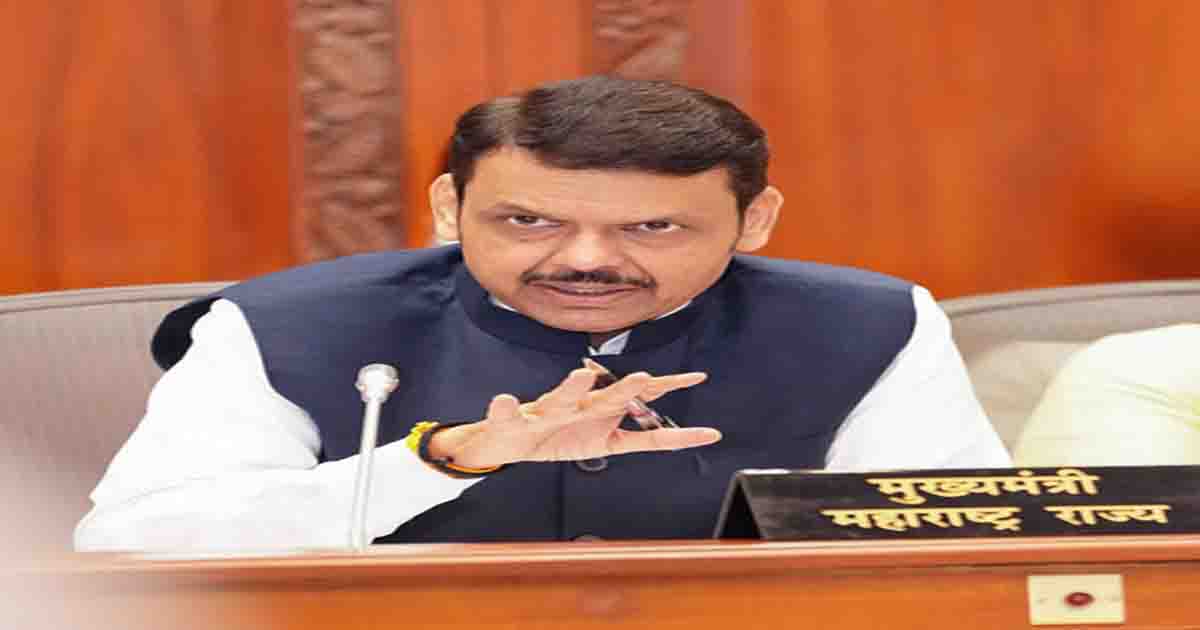
Responding to opposition pushback against the proposed Pumped Storage Hydro Project in Karjat in Raigad district, Chief Minister Fadnavis on Tuesday firmly defended the infrastructure initiative as eco-friendly and crucial for Maharashtra’s power grid stability.
While solar and wind power generate clean energy, they cannot operate 24/7. Pumped storage provides a non-polluting solution to balance renewable sources and guarantee round-the-clock uninterrupted power supply, he said.
CM’s defence comes as the project has sparked severe political friction and concern among environmentalists due to extensive tree-felling clearance required in the region.
Addressing the controversy, CM Fadnavis asserted that the opposition is politicising a vital green energy initiative without a proper understanding of the technical requirements.
CM Fadnavis said that the 3,000 MW project offsets thermal power generation that would otherwise require planting 28 crore trees to offset coal pollution.
As part of environmental mitigation, 90,000 trees will be planted by the forest department, alongside an additional 60,000 trees planted directly on the Karjat project site.
Acknowledging that some trees are being cleared, he stressed that this environmental impact is temporary. By establishing a clean energy storage system, the state is preventing thousands of times more environmental degradation in the future.
He noted that generating equivalent energy via traditional coal-based power plants would cause massive pollution—comparable to the emissions of 40 million vehicles.
Unlike conventional battery storage systems that last around 25 years, pumped storage infrastructure operates effectively for up to 80 years, protecting the environment for generations.
Explaining why solar and wind energy alone are insufficient (as they are not available 24/7 and destabilise the power grid), CM Fadnavis stated that pumped storage acts as an essential green grid-support mechanism.
He emphasised that pump-storage technology has an operational lifespan of around 80 years and is critical for securing clean power for future generations.
Refuting opposition claims, CM Fadnavis highlighted that China has developed over 60,000 MW of similar pumped storage infrastructure and emphasised that Karjat was selected through strict feasibility assessments.
Comparing the opposition’s stance to the past legal disputes surrounding the Aarey Car Shed project—which was eventually cleared by the Supreme Court—CM Fadnavis stated that the state government remains open to listening to genuine concerns, but criticised politicking around essential clean-energy infrastructure.
Addressing demands from critics to relocate the project to regions like Marathwada or Vidarbha, the Chief Minister clarified that pumped-storage infrastructure cannot be built just anywhere; it requires specific geographical terrain and topography, making Karjat an ideal site.
The state government maintains that the project is completely eco-friendly, situated outside the boundaries of the Bhimashankar Wildlife Sanctuary, and vital for Maharashtra’s sustainable energy transition.
Maharashtra
Waqf Property Report Pending for Three Years: Rais Shaikh Accuses NCP of Ignoring Muslim Community’s Issues

Mumbai – The report of a committee—formed to review the ‘7/12’ land record entries for ‘Waqf’ properties (valued at hundreds of billions of rupees) and to formulate a policy for the distribution of land acquisition compensation—has remained pending for over three years. Rais Shaikh, a Samajwadi Party Member of the Legislative Assembly (MLA) from Bhiwandi East, has expressed concern that the Minority Development Department and the ruling Nationalist Congress Party (NCP) have failed to address the issues faced by the Muslim community with the necessary seriousness. In a letter addressed to the Deputy Chief Minister and Minister for Minority Development, Supriya Pawar, MLA Rais Shaikh has demanded immediate action on this matter.
There are 23,566 registered ‘Waqf’ properties in the state, spanning an area of approximately 92,247 acres. These properties are subject to large-scale encroachment, and many private individuals claim ownership over them. On September 21, 2023, a meeting was held under the chairmanship of the then-Deputy Chief Minister, Ajit Pawar. The meeting addressed several key issues: reviewing the ‘7/12’ land record entries, formulating a policy for the distribution of land acquisition compensation, removing the names of private individuals from these records, and ensuring that the names of ‘Waqf’ institutions and the ‘Waqf Board’ are officially recorded.
Following this meeting, the Minority Development Department constituted a four-member committee on October 17, 2023, with instructions to submit its report within one month. However, the report has not been submitted, even long after the stipulated deadline has passed. MLA Rais Shaikh has raised the question: if reports are not submitted within the timeframe set by the government, then what is the purpose of forming committees and issuing administrative orders?
This delay in the report concerning ‘Waqf’ properties cannot be dismissed as mere administrative lethargy. MLA Rais Shaikh has demanded that the relevant department clarify the reasons for this delay and fix responsibility in the matter. Progress on issues related to ‘Waqf’ properties—which were brought to the fore through the initiative of the then-Deputy Chief Minister Ajit Pawar—should have continued even after he left his post. Yet, many issues faced by the Muslim community remain unresolved. In light of this, MLA Rais Shaikh has questioned, via a letter, whether the ruling Nationalist Congress Party (NCP) and the state government are according appropriate priority to the concerns of the Muslim community.
Matters such as the registration of ‘Waqf’ properties and the payment of compensation for land acquisition directly affect the property rights and financial interests of the concerned institutions. It is imperative to resolve the uncertainty surrounding these issues and reach a definitive conclusion. Rather than relying on mere verbal assurances, concrete decisions must be taken and effectively implemented.
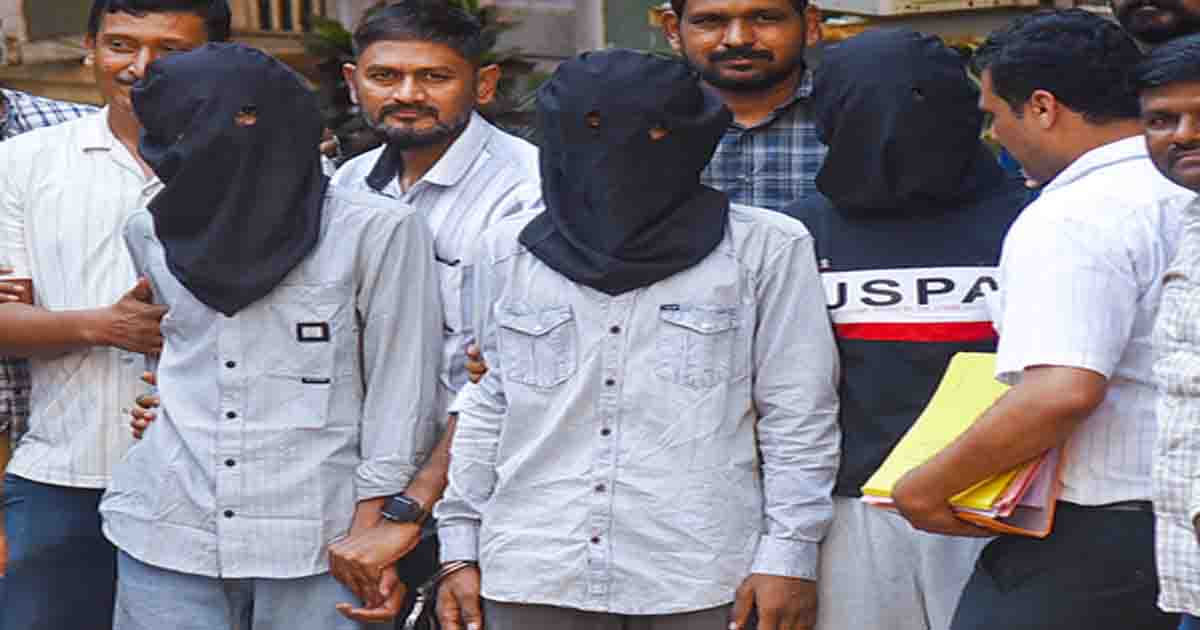
The Mumbai Police on Tuesday invoked stringent sections of the Maharashtra Control of Organised Crime Act (MCOCA) against all the accused arrested in connection with the firing incident involving Bollywood actor Tiger Shroff.
An official statement said that provisions of the Maharashtra Control of Organised Crime Act (MCOCA), 1999 have been invoked in DCB CID CR No. 143/26, registered on 19/10/26 u/Ss 109(1), 3(5) of BNS r/w sections 3, 25 of Arms Act; with permission of the competent authority under Section 23(1)(a) of the said Act dated 27/10/26.
Accordingly, Sections 3(1)(ii), 3(2) and 3(4) of MCOCA have been added to the case against all accused.
A case against the accused was registered by the Mumbai Police on October 19 under the Bharatiya Nyaya Sanhita (BNS) and the Arms Act.
Subsequently, the approval to invoke the MCOCA was granted on October 27. Police said that the investigation in the case has been expedited considering the organised crime background linked to it.
Further investigation into the case is currently underway.
Earlier, the Mumbai Crime Branch established the alleged motive behind the firing incident involving Tiger Shroff, stating that the attack was carried out with the objectives of extorting money, establishing the gang’s dominance and creating fear among the public.
According to the Crime Branch’s investigation, the accused allegedly involved in the firing incident have links to the Lawrence Bishnoi gang.
The police have alleged that the gang targeted Tiger Shroff as part of an attempt to strengthen its influence, intimidate people and secure financial gains through extortion.
The Mumbai Crime Branch has stated that the accused were allegedly operating as active members of an organised crime syndicate.
Investigators believe that the attack was not an isolated act but part of a planned criminal conspiracy intended to achieve financial benefits, assert the gang’s dominance and spread terror within society.
The accused carried out the attack using illegal and lethal weapons as part of a pre-planned conspiracy targeting the star.
The investigation has also revealed that the alleged conspiracy was coordinated through an inter-state network involving several locations, including Delhi and Mumbai.

True success of science lies in taking innovation from lab to land: PM Modi

Another Class 12 student found dead in Delhi; suicide suspected

ECI’s affidavit on SIR deceptive: Jairam Ramesh

Maha CM defends pumped storage project in Karjat amid environmental backlash

Waqf Property Report Pending for Three Years: Rais Shaikh Accuses NCP of Ignoring Muslim Community’s Issues

Rahul, Cong ecosystem want to force regime change: BJP after Neha Bora praises B’desh Gen-Z protest

Attack on democratic rights: INDIA Bloc leaders on detentions of anti-ECI protestors

BJP pays tribute to ex-President Abdul Kalam, recalls his enduring influence on generations of India’s youth

INDIA bloc begins protest march against ECI

Maha Congress stages agitation against Gyanesh Kumar
-

 Crime4 years ago
Class 10 student jumps to death in Jaipur
-

 Maharashtra2 years ago
Mumbai Local Train Update: Central Railway’s New Timetable Comes Into Effect; Check Full List Of Revised Timings & Stations
-

 Maharashtra2 years ago
Mumbai To Go Toll-Free Tonight! Maharashtra Govt Announces Complete Toll Waiver For Light Motor Vehicles At All 5 Entry Points Of City
-

 Maharashtra2 years ago
False photo of Imtiaz Jaleel’s rally, exposing the fooling conspiracy
-

 National News2 years ago
Ministry of Railways rolls out Special Drive 4.0 with focus on digitisation, cleanliness, inclusiveness and grievance redressal
-

 Maharashtra2 years ago
Maharashtra Elections 2024: Mumbai Metro & BEST Services Extended Till Midnight On Voting Day
-

 National News2 years ago
J&K: 4 Jawans Killed, 28 Injured After Bus Carrying BSF Personnel For Poll Duty Falls Into Gorge In Budgam; Terrifying Visuals Surface
-

 Crime2 years ago
Baba Siddique Murder: Mumbai Police Unable To Get Lawrence Bishnoi Custody Due To Home Ministry Order, Says Report