
Business
BofA turns bullish on Indian equities, sees Nifty at 26,200 by December 2026


Mumbai, Sep 14: The Nifty could climb to 26,200 by December 2026, implying an upside of around 12 per cent from current levels, as Bank of America (BofA) Securities has turned constructive on Indian equities after maintaining a cautious stance for nearly two years.
In its latest strategy report, BofA said it had remained cautious on Indian stocks since August 2024 and had identified eight key risks that could keep the market volatile. However, five of those risks have either already played out or have been largely priced into the market, prompting the brokerage to adopt a more positive stance.
BofA said the three remaining risks could create around 7 per cent downside for the Nifty 50 in its bear-case scenario. In its base case, however, the brokerage sees the index reaching 26,200 by December 2026.
According to BofA, the remaining risks are expected to peak by October 2026, potentially creating room for a sustained market recovery from November.
One of the key risks identified earlier was a sharp rise in crude oil prices above $100 a barrel, compared with BofA’s fourth-quarter 2026 estimate of $81 a barrel. The brokerage noted that crude prices have reversed from the $100-a-barrel level seven times over the past seven months.
The rupee was another concern, although BofA said recent inflows of around $136 billion should provide support to the currency and maintained an appreciation bias.
Weak monsoon conditions were also among the risks, with the current rainfall deficit at 13 per cent, close to the 15 per cent worst-case scenario previously projected by the brokerage.
BofA also expects limited further acceleration in aluminium and copper prices. On monetary policy, its economist expects the Reserve Bank of India to raise the policy rate by 25 basis points by December 2026, compared with around 45 basis points currently priced by swap markets.
The three remaining risks include a possible surge in primary market issuances, with around $30 billion expected between September and December and issuance activity likely to peak in October. Another risk is the possibility of 75 basis points of Federal Reserve rate hikes, compared with around 35 basis points currently priced by markets. Over the longer term, BofA also flagged the potential impact of artificial intelligence-led disruption on employment in India.


Tata Motors Passenger Vehicles Limited (TMPV) on Tuesday announced a price increase across its entire passenger vehicle portfolio, including both internal combustion engine (ICE) models and electric vehicles (EVs), effective from December 1, 2026.
The company said prices will be increased by an average of 0.5 per cent as it looks to partially offset the impact of rising input costs, which continue to remain elevated.
“Tata Motors Passenger Vehicles Ltd. (TMPV), India’s leading manufacturer of cars and SUVs, today announced a revision in the prices of its entire portfolio, covering both internal combustion engine (ICE) and electric vehicles (EVs),” the automaker said.
“The revision will result in an average price increase of 0.5 per cent and will come into effect from December 1, 2026,” it added.
TMPV said it has been absorbing a significant portion of the higher costs but has decided to pass on part of the burden to customers through a price revision.
“This revision is being undertaken to partially offset the impact of rise in input costs which continue to remain elevated,” it stated.
The extent of the increase will vary depending on the model and variant, the company said, adding that the revision will apply across its range of passenger cars and SUVs, including electric vehicles.
The automaker maintained that despite the price hike, its vehicles would continue to offer strong value to customers.
“While TMPV continues to absorb a significant portion of these increases, a part of the impact is being passed on to customers through this increase. The extent of price revision will vary across models and variants, ensuring that every vehicle continues to deliver meaningful value to customers,” the carmaker noted.
Meanwhile, earlier in the day, Hyundai Motor India Limited announced a price increase of up to Rs 8,000 across select models and variants in its vehicle portfolio, effective from December 1, 2026, citing rising input costs.
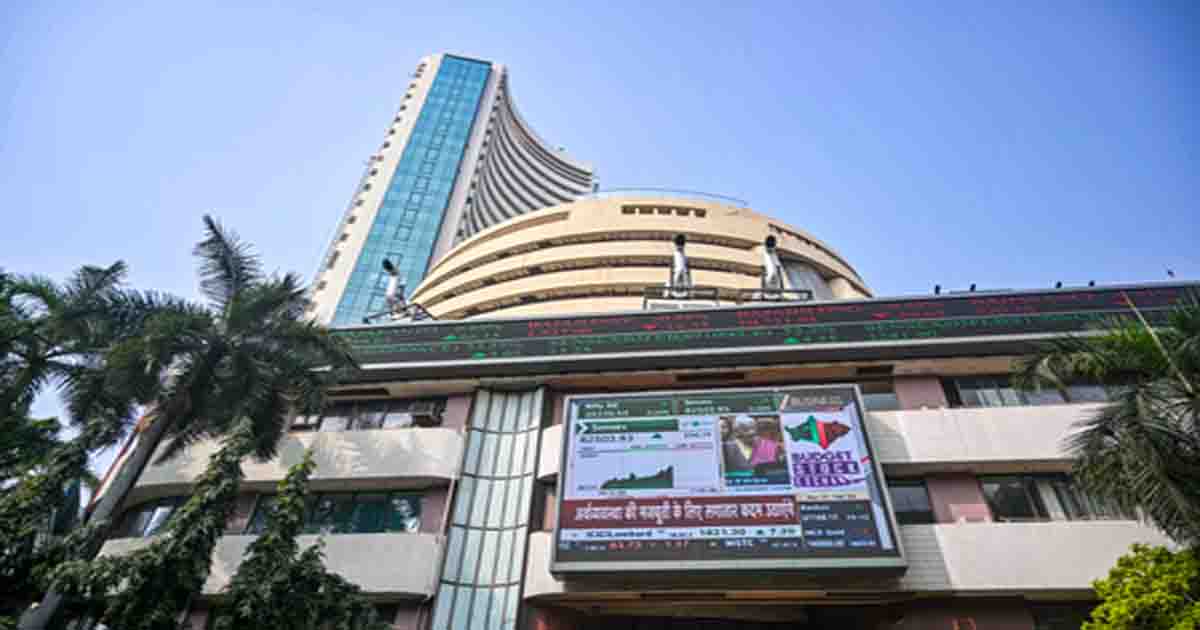
Indian equity markets will remain closed on Tuesday for Guru Nanak Jayanti — also known as Gurpurab — marking the birth anniversary of Guru Nanak Dev.
Both exchanges — the National Stock Exchange (NSE) and the BSE — will see no trading in equities or equity derivatives during the day.
In addition, the commodity market will function partially, as the Multi Commodity Exchange (MCX) will remain closed for the morning session and will open for the evening session from 5 pm onwards.
Gurpurab is the second-to-last market holiday of 2026. The next and last holiday of 2026 will be on December 25 for Christmas, when NSE, BSE, MCX and currency markets will remain shut.
However, markets will resume trading on Wednesday.
On Monday, benchmark indices fell sharply on profit-taking after a recent rally. Sensex settled 1,483.72 points or 1.77 per cent lower at 82,435.99.
Nifty tumbled 450.95 points or 1.75 per cent to close at 25,349.65.
Sectorally, the metal sector led the losses, declining 3.68 per cent, alongside heavy declines in banking, financial services and energy stocks. Nifty IT gained 1.69 per cent, supported by minor resilience in realty shares.
Additionally, investor wealth of over Rs 5 lakh crore was wiped out in Monday’s session with the market capitalisation of BSE-listed companies standing at Rs 5,08,98,444.87 crore after market closing.
According to analysts, the Nifty ended sharply lower as intense intraday selling pressure from the opening erased its initial gap-up gains.
“The daily chart displays a strong bearish engulfing candlestick formation, signalling aggressive profit booking and strong supply near the 26,000 mark,” they said.
“Immediate support for the Nifty is placed at 25,000-25,100, while resistance stands at 25,500-25,600,” analysts said. “RSI has cooled to 66.34, slipping below its average of 75.59, indicating a sharp loss of short-term upward momentum.”
Sustained holding above the 25,000-25,100 support zone will be crucial to prevent deeper corrective pressure, they added.

Mumbai has emerged as one of Asia-Pacific’s top 10 preferred destinations for cross-border real estate investment, reflecting growing global investor confidence in India’s long-term growth potential, a new report showed on Tuesday.
Apart from the office sector, major Indian cities continue to see broad-based investment activity, extending to residential, industrial and logistics, data centres, hospitality and other real estate sectors, according to a Colliers India report.
Strong occupier demand, a deep pool of investment-grade assets, improving infrastructure and expanding institutional participation are further strengthening investment appeal in India, especially Mumbai.
As India’s financial and commercial capital and a key gateway for global businesses, Mumbai benefits from a deep and diversified occupier base.
Ongoing infrastructure developments, including the Mumbai Trans Harbour Link and Navi Mumbai International Airport, are further enhancing regional connectivity and unlocking new growth corridors in the metropolitan region, reinforcing its appeal to domestic and global investors, said the report.
“Mumbai, among APAC’s preferred cross-border investment destinations, underscores the growing confidence of global investors in India’s established markets and their long-term growth potential. Looking ahead, we expect investment activity across the top Indian markets to remain robust, driven by strong occupier demand, increasing appetite for high-quality assets, and a greater focus on value creation,” said Badal Yagnik, CEO and Managing Director, Colliers India.
Asset repositioning, sustainability initiatives, operational enhancements, and AI-led transformation are expected to emerge as key investment themes in 2027, further strengthening India’s appeal to institutional capital, Yagnik added.
In India, Grade A office assets across Mumbai, Bengaluru, Delhi-NCR, Hyderabad, and Pune are expected to remain the preferred investment choice, supported by robust space uptake across demand segments including Global Capability Centres (GCCs).
While office assets remained the major driver of real estate investments in India, accounting for a 37 per cent share during the first nine months of 2026, investments in alternatives and hospitality assets rose 6-7 times each, compared to the corresponding period of 2025.
Within alternatives, data centres are witnessing renewed investor interest in cities like Mumbai, supported by growing hyperscale requirements, expanding enterprise data usage and supportive digital infrastructure policies, said the report.

Bihar to Uttar Pradesh: Seat-sharing battles reveal Congress’ shrinking leverage, dependence on others in Hindi heartland

UP: 134 kg of cannabis worth Rs 70 lakh seized on Yamuna Expressway; three arrested

Sharad Pawar unlikely to join NDA, may offer issue-based outside support: Chhagan Bhujbal

Path cleared for Mahim Causeway expansion as 10 structures obstructing the project are demolished.

NDA united to realise ‘Viksit Punjab’ resolve, make state drug-free: BJP chief Nitin Nabin

Congress trying to protect 3 crore Bangladeshi infiltrators in voter list: HM Shah

Red Fort car blast probe exposes blueprint for spread of terror modules across India

Trump flags Iran targets as talks continue

‘Conspiracy, not accident’: NCP on Ajit Pawar death

BJP, Shiv Sena slam Mallikarjun Kharge for terming Diwali ‘Khushiyon ka Eid’
-

 Crime4 years ago
Class 10 student jumps to death in Jaipur
-

 Maharashtra2 years ago
Mumbai Local Train Update: Central Railway’s New Timetable Comes Into Effect; Check Full List Of Revised Timings & Stations
-

 Maharashtra2 years ago
Mumbai To Go Toll-Free Tonight! Maharashtra Govt Announces Complete Toll Waiver For Light Motor Vehicles At All 5 Entry Points Of City
-

 Maharashtra2 years ago
False photo of Imtiaz Jaleel’s rally, exposing the fooling conspiracy
-

 National News2 years ago
Ministry of Railways rolls out Special Drive 4.0 with focus on digitisation, cleanliness, inclusiveness and grievance redressal
-

 Maharashtra2 years ago
Maharashtra Elections 2024: Mumbai Metro & BEST Services Extended Till Midnight On Voting Day
-

 National News2 years ago
J&K: 4 Jawans Killed, 28 Injured After Bus Carrying BSF Personnel For Poll Duty Falls Into Gorge In Budgam; Terrifying Visuals Surface
-

 Crime2 years ago
Baba Siddique Murder: Mumbai Police Unable To Get Lawrence Bishnoi Custody Due To Home Ministry Order, Says Report