
National News
Karnataka government to omit controversial religious texts from school books


The Karnataka government is all set to form a high-level committee to remove controversial lessons from the textbooks pertaining to religion from Class 1 to 10. It will also remove controversial texts blaming Vaidika dharma (Vedic way of life, Hinduism) for the rise of other religions such as Jainism and Buddhism in India.
The government will form a high-level committee to take a look at all such contentious issues in Class 1 to 10 textbooks, sources said.
The committee is being formed as objections came for the controversial text in the Social Science subject Part 1, prescribed for 6th standard students.
The contentious content talks about the birth of new religions, especially Buddhism and Jainism. The lesson says, during the Vedic period (1500 BC to 600 BC), the rituals like ‘homa’ and ‘havana’ (tradition of offering precious food items into the sacred fire to please gods), in which large quantities of foodgrains, milk, ghee led to food scarcity. The lesson also discussed rituals of the sacrifice of animals.
The lesson further said it was believed that such rituals are only to find solutions. Common people could not understand chants as they were in Sanskrit, whereas Buddhism and Jainism taught simple ways which led to their growth, it mentioned.
The Karnataka State Brahmin Development Board had met then Chief Minister B.S. Yediyurappa in February objecting to the parts of a chapter in social science textbooks. The Yediyurappa government issued a circular on February 17 instructing that the chapter should neither be taught nor used for evaluation.
Sources in the government said, it has already been decided to remove this controversial chapter from the next academic year. “It has been decided to form a committee under the chairmanship of Rohith Chakratheertha, a member of the Kannada Development Authority. The government will announce the formation of a committee soon,” the sources said.
It has also been decided to appoint 16 other members, including representatives from the Rashtrothana Parishat,, the frontier organisation of RSS, researchers from Mythic Society, folklore studies and from other reputed institutions. The committee will also include representatives of reputed educational institutions of the state.
The committee will take a relook at the content of the page numbers 82 and 83 under the title “Reasons for the emergence of new religions” in the Social Science Part -1 textbook prescribed for Class 6 students.
The content given in the first two paragraphs under the title and six beginning lines of page number 83 will also be discussed. Sources explain that the content claiming drawbacks of Vedic religion giving way for the emergence of new religions will be dropped from the academic year 2021-22.
The committee will also take a relook at contentious issues related to religion in textbooks of Social Science, Environmental Science and Languages from Class 1 – 10.
The government has already directed the Department of Public Instruction to form a committee of experts and academicians to find out any content hurting sentiments of any religion in the form of lessons prescribed for children from Class 1 to 10.
The government has also said a high-level committee will further deliberate on the report by the Department of Public Instruction. Sources explained that the government is expected to announce the committee soon.
The decision to exclude the chapter from teaching was earlier opposed by experts who maintained that the students will lose out on critical thinking. It is to be seen how the academicians respond to the recent decision to overhaul all the textbooks from Class 1 to 10 on contentious religious issues in the state.


disaster
Bihar tragedy: 13 children die as boat capsizes in Ganga River in Vaishali; search on for missing passengers

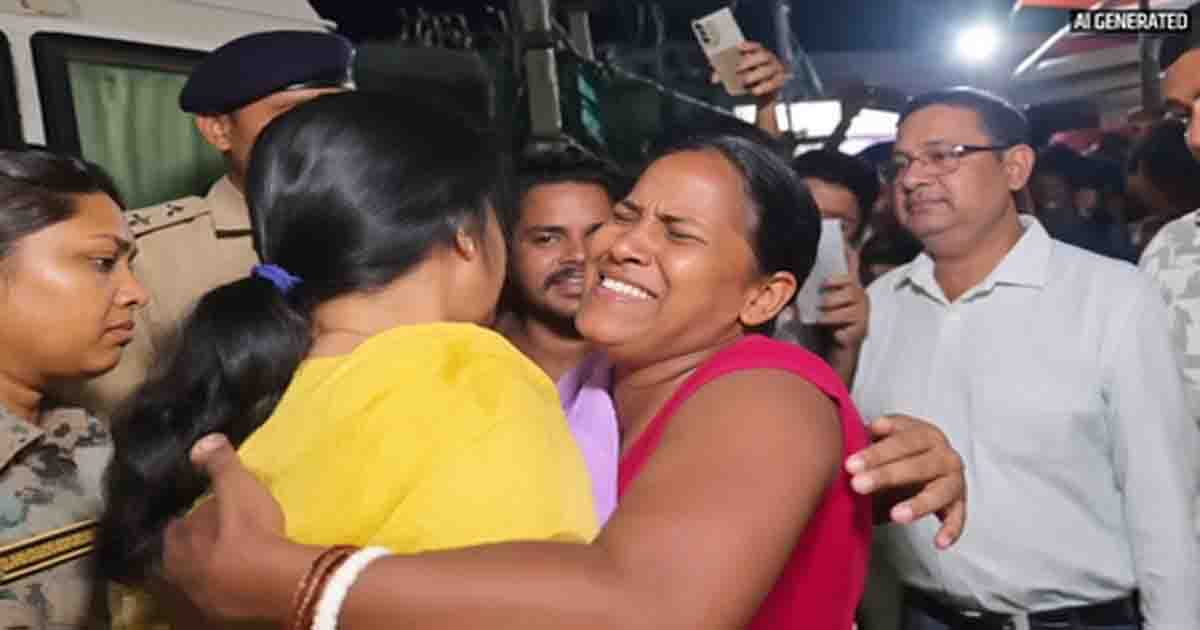
Patna, Oct 14: In a major tragedy, at least 13 children drowned after a boat carrying passengers capsized in the Ganga River near Rampur Shyamchand village under the Raghopur police station area of Bihar’s Vaishali district on Tuesday evening. The search is on for missing passengers.
Even more heartbreaking is the fact that seven of the deceased children belonged to the same family, turning the incident into a huge tragedy for the family and the village.
According to preliminary reports, around 20 to 30 people were travelling by boat to attend a feast in a neighbouring village.
The boat reportedly lost equilibrium after reaching the main current of the Ganga and overturned, throwing passengers into the water.
The accident triggered panic in the area, as cries for help were heard from the river.
Local residents rushed to the spot and began rescue efforts before the district administration, police and State Disaster Response Force (SDRF) teams joined the operation. Local divers also assisted in the search.
Seven of the deceased children were reportedly from the family of Rampravesh Rai, alias Raja, a resident of Rampur Shyamchand village.
The deaths have left the affected families and the wider village in deep mourning.
The group was travelling to a neighbouring village, crossing the river and a nearby low-lying waterlogged area locally known as a dhab.
Several children were aboard the boat, while the total number of passengers was estimated at between 20 and 30.
Authorities have been working to establish the exact number of people on board and determine whether anyone remains missing.
Angry residents protested against the district administration following the tragedy.
Villagers alleged that the boat was old and in poor condition and claimed that requests for its replacement had been submitted earlier, but no action was taken by the authorities.
There are also suspicions that the boat may have been carrying more passengers than its holding capacity.
However, the exact cause of the accident and the boat’s condition remain subject to investigation.
Union Minister Chirag Paswan expressed grief over the deaths, describing the incident in Raghopur Diyara, which falls within his parliamentary constituency, as deeply distressing.
Paswan said he had spoken to the District Magistrate to seek details about the rescue operation and discuss assistance for the affected families through the Bihar and central governments.
Paswan also announced that he would visit the accident site to meet the bereaved families and enquire about the condition of the injured.
He added that injured passengers had been sent to NMCH for further treatment.
The Bihar Congress also expressed deep sorrow over the deaths of the children and conveyed condolences to the bereaved families.
The party prayed for peace for the souls of the departed children and strength for their families to cope with the loss.
Further details regarding the final casualty count, the number of missing passengers and the circumstances leading to the capsizing are awaited.
Crime
Intent to undermine trust in India’s democratic institutions: Harvard community rejects alumni statement
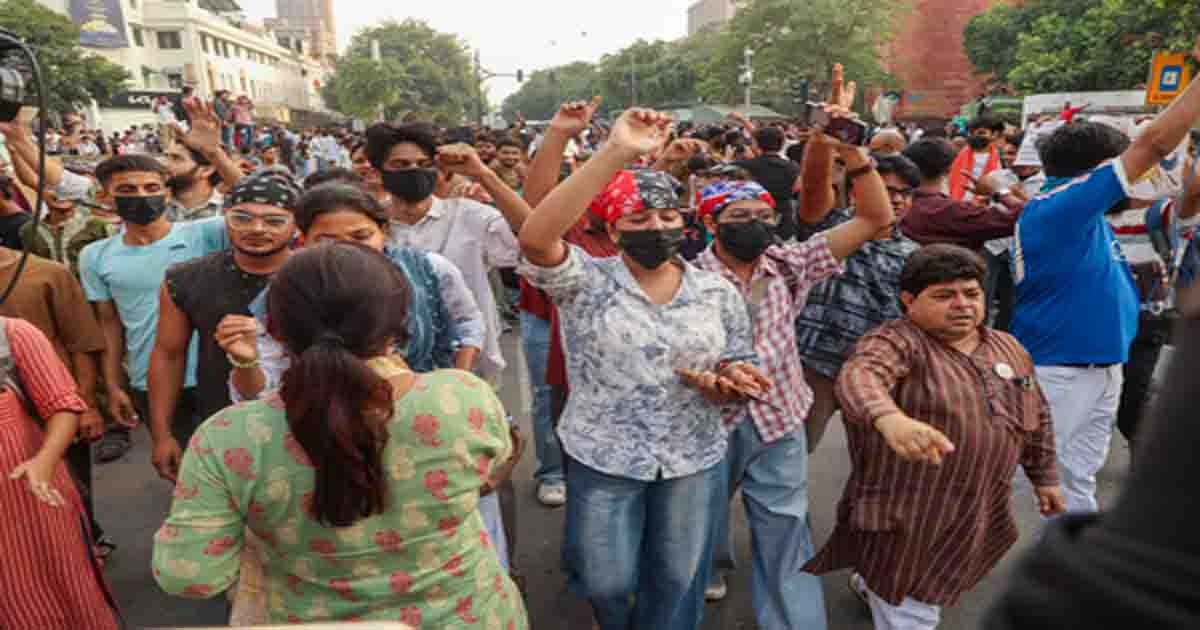
New Delhi, Oct 14: A wide cross-section of the Harvard community on Wednesday expressed concern over the ‘negative public discourse’ and ‘concerted campaign’ against India’s constitutional institutions, in light of the ongoing Delhi protests against the Election Commission and ‘vote chori’, and also dubbed the assertions by the university’s alumni as “alarming and troubling”.
The Harvard Community, including lawyers, policymakers, civil servants, scientists and academicians, has voiced strong opposition to alleged attempts at using Harvard University’s name to lend credibility to a political campaign without appropriate authorisation.
“In moments such as these, silence cannot be an excuse for indifference,” said many Indian citizens associated with Harvard and other famed Universities, who are signatories to this statement.
This comes a day after about 100 Harvard University alumni comprising students, faculty and staff members condemned the crackdown on the CJP-led protests in the national capital on October 10, while alleging police brutality and violation of constitutional rights.
The signatories to the Harvard community statement expressed deep concern over attempts to malign institutions, such as the Election Commission of India, the Supreme Court, the Chief Justice of India, and Parliament.
They also took strong exception to the language used to describe India as being under “siege” and to characterise constitutional authorities as “thieves” or “compromised”.
“This raises serious concerns about the intent to undermine public trust in democratic institutions,” the statement said.
It further said that the law enforcement agencies are expected to undergo fair scrutiny, but sweeping accusations and abusive rhetoric cannot be a substitute for evidence.
It also calls for respecting the Constitution, the rule of law, and civil liberties at all times, not just when it suits one’s interests.
“Our commitment must remain to the Constitution, not convenience; to justice, not selective outrage; and to democratic institutions, not the politics of accusation,” it said.
Notably, a day ago, the Harvard Club of India came out with a clarification that it did not endorse or issue any statement from the University regarding the ongoing protests in Delhi.
The club distanced itself from the reported Harvard alumni letter and said the statement did not represent the organisation’s official position, hinting that it was rather their personal opinion.
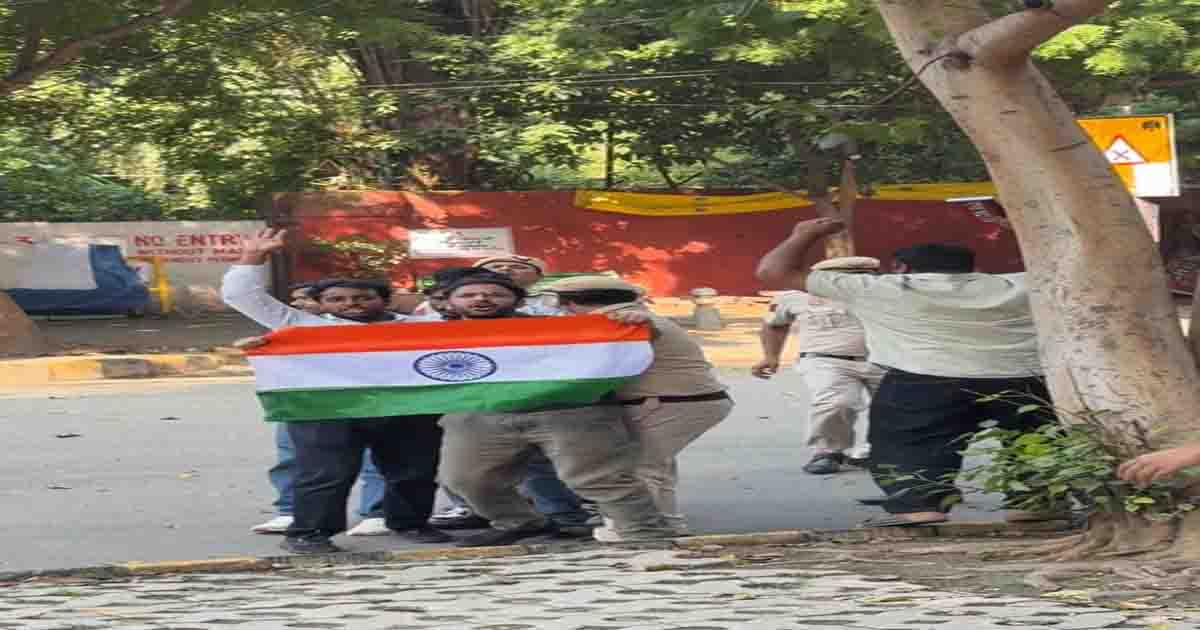
New Delhi, Oct 14: In connection with the Jantar Mantar trespassing case, Cockroach Janata Party (CJP) leaders Saurav Das and Ashutosh Ranka have been sent to five-day judicial custody on Wednesday, while Ajinkya Shinde was released on personal bond, CJP’s legal affairs head Ratna Singh announced.
The three CJP members were put on preventive arrest for trespassing at Jantar Mantar, which has been de-notified as the designated protest site. They were booked for “trespass, bond violation, obstruction of public official’s duty, etc”.
Das, Ranka and Shinde were produced before a magistrate at Mandir Marg in New Delhi on Wednesday morning.
“Saurav and Ashutosh sent to 5 days judicial custody. Ajinkya released on personal bond. Same grounds of arrest. Got to know that SEM has track record of punishing protesters,” Ratna Singh said in a post on X.
CJP founder Abhijeet Dipke, along with Das and Ranka, in a case related to the October 10 protest, were released after furnishing a bond of Rs 50,000 and on the condition that they will not be involved in any breach-of-peace cases for a year.
This time, Das and Ranka are booked for trespassing and violation of the bond conditions. They are being treated as repeat offenders.
The three CJP leaders were detained on Tuesday morning for crossing police barricades and entering Jantar Mantar, which has been de-notified as the designated protest site.
They were heading to protest against the Election Commission of India (ECI) over the alleged irregularities in the Special Intensive Review (SIR) of electoral rolls. They were seen raising slogans against Chief Election Commissioner (CEC) Gyanesh Kumar, while trying to breach the police barricades.
Following this, all three were detained.
On October 12, Jantar Mantar was de-notified as the “designated” protesting site, Delhi Police said. New guidelines for protests were issued under Delhi Police Standing Order No. L&O/48/2026.
According to the Delhi Police, the decision was taken based on the recommendations of a Home Ministry committee.
Three new locations in Delhi — Ramlila Ground, Burari Ground and East Delhi’s CBD Ground — have been designated for protests.

Man Arrested for Illegally Bringing Ganja from Odisha and Selling It in Mumbai.

Mayor Launches ‘Flex-Free Mumbai’ Campaign by Personally Removing Unauthorized Banners from His Electoral Constituency.

Salman Khan, KJo reveal ‘major production hiccup’ during ‘Kuch Kuch Hota Hai’ climax

Bihar tragedy: 13 children die as boat capsizes in Ganga River in Vaishali; search on for missing passengers

Intent to undermine trust in India’s democratic institutions: Harvard community rejects alumni statement

INDIA bloc begins protest march against ECI

Maha Congress stages agitation against Gyanesh Kumar

Complaint against Netflix & Mukesh Chhabra for inappropriate language on ‘India’s Got Latent 2’

Delhi court grants three-week interim bail to influencer Swatantra Bhardwaj

Bombay HC warns Vijay Mallya against posting court documents on social media
-

 Crime4 years ago
Class 10 student jumps to death in Jaipur
-

 Maharashtra2 years ago
Mumbai Local Train Update: Central Railway’s New Timetable Comes Into Effect; Check Full List Of Revised Timings & Stations
-

 Maharashtra2 years ago
Mumbai To Go Toll-Free Tonight! Maharashtra Govt Announces Complete Toll Waiver For Light Motor Vehicles At All 5 Entry Points Of City
-

 Maharashtra2 years ago
False photo of Imtiaz Jaleel’s rally, exposing the fooling conspiracy
-

 National News2 years ago
Ministry of Railways rolls out Special Drive 4.0 with focus on digitisation, cleanliness, inclusiveness and grievance redressal
-

 Maharashtra2 years ago
Maharashtra Elections 2024: Mumbai Metro & BEST Services Extended Till Midnight On Voting Day
-

 National News2 years ago
J&K: 4 Jawans Killed, 28 Injured After Bus Carrying BSF Personnel For Poll Duty Falls Into Gorge In Budgam; Terrifying Visuals Surface
-

 Crime2 years ago
Baba Siddique Murder: Mumbai Police Unable To Get Lawrence Bishnoi Custody Due To Home Ministry Order, Says Report