
National News
HC asks Delhi govt, MCD to act against illegal encroachments on Yamuna Pusta Road


New Delhi, April 18: The Delhi High Court has ordered the Municipal Corporation of Delhi and the city government to act against illegal encroachments prevailing along the Yamuna Pusta Road, which stretches from Wazirabad to Hiranki and serves as a crucial arterial route for residents and commuters.
A bench of Justice Sachin Datta directed on Thursday the concerned executive engineer of MCD to resolve the grievances highlighted in the petition within eight weeks in consultation with the members of the Yuva Samiti, a registered society committed to the welfare and development of Jagatpur Village and its adjoining areas.
Disposing of the plea filed under Article 226 of the Constitution, the Justice Datta-led Bench clarified that it has not gone into the merits of the matter, and all contentions and rights of the litigant, including the filing of a fresh petition, are kept open if the issues highlighted remain unaddressed.
As per the petition, the Yamuna Pusta Road is plagued by illegal encroachments in the form of unauthorised food stalls, parked vehicles, and roadside commercial storage, resulting in traffic congestion, deterioration of infrastructure, and further risking public safety.
“Additionally, the road is littered with unmarked natural obstructions like trees and overgrown shrubs, which were left behind during road construction due to the authorities’ failure to undertake proper transplantation or removal. These become particularly hazardous at night due to the absence of lighting,” said the petition filed through advocate Ashu Bidhuri.
Further, the plea complained that the streetlights installed along the entire stretch have remained non-functional, leaving the road in complete darkness during nighttime.
It said, “This lack of illumination has not only increased the risk of road accidents, especially at sharp curves, but has also created an environment conducive to criminal activities such as theft, chain snatching, and molestation, particularly endangering women, children, and elderly individuals.”
The petition said that the situation is exacerbated due to the indiscriminate placement of oversized and overflowing dustbins along the motorable portion of the road, obstructing traffic movement, contributing to environmental pollution, and attracting stray animals such as dogs, pigs, cows, and buffaloes.
The plea added that multiple representations and complaints were submitted before various authorities, including the Chief Minister, municipal engineers, and police officials, but no remedial action was taken.


National News
CM Yogi says govt job drive will continue, appointment letters to be distributed even in third term

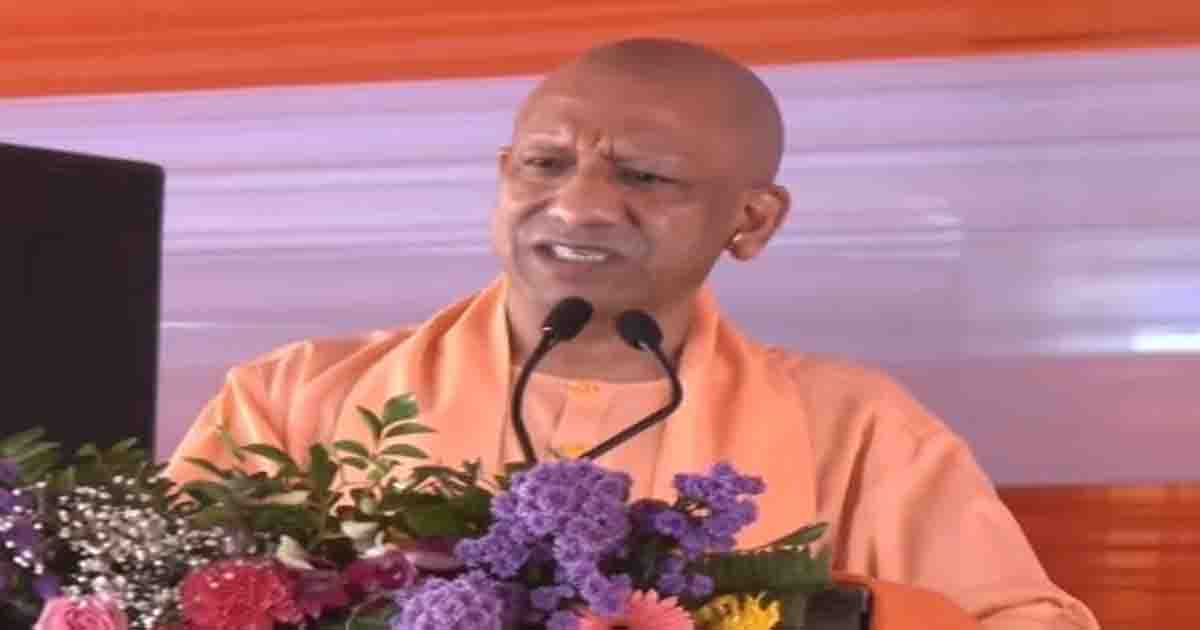
Lucknow : Uttar Pradesh Chief Minister Yogi Adityanath on Friday signalled that the state’s recruitment drive for government jobs would continue even after the government meets its target of one lakh additional appointments.
He said the administration had already completed around 9.5 lakh government recruitments and was close to fulfilling its promise of another one lakh jobs. However, the recruitment process would not end there, and some appointment letters would be kept pending and distributed when the government returns to power for a third term.
Addressing a function at the Reserve Police Lines in Lucknow, where appointment letters were handed over to 4,543 newly selected police sub-inspectors, CM Yogi interacted directly with the recruits and highlighted the transparency of the selection process. He asked whether any candidate had required political recommendations, faced demands for money, been offered bribes, or witnessed any attempts to secure jobs through influence. He asserted that such practices were no longer possible in present-day Uttar Pradesh.
The Chief Minister said the state’s recruitment system had undergone a complete transformation since 2017, with jobs now being awarded on merit rather than through recommendation, discrimination or corruption.
Taking aim at previous governments, he alleged that large-scale irregularities had occurred in recruitments between 2003 and 2017, including cases where applications were submitted by one individual while appointment letters were issued to another. He noted that several such matters were still pending before the courts.
CM Yogi expressed concern over the future of those appointed through disputed recruitment processes, saying a court order cancelling such appointments could adversely affect many young people. At the same time, he remarked that he would welcome action to confiscate the properties of those responsible for compromising the futures of job seekers through dishonest means.
He further alleged that government recruitment before 2017 was dominated by what he described as the “Saifai syndicate”, which deprived candidates from many regions of the state of fair opportunities. According to him, the situation has since changed, and young people from all parts of Uttar Pradesh now have equal access to government jobs.
Recalling the early days of his administration, CM Yogi said that when his government took office in 2017, even salary payments to employees were a challenge, and the condition of the police department was poor. He said police barracks were in a dilapidated state, and personnel faced significant hardships.
According to the Chief Minister, his government has overhauled the system and given it a new identity, though further improvements will require continued dedication and hard work.
He reiterated that the campaign to provide government employment would continue without interruption. “More than one lakh appointment letters have already been distributed,” he said, adding that recruitment of 25,000 teachers would also be taken forward in the coming period.
Finance and Parliamentary Affairs Minister Suresh Khanna congratulated the newly appointed sub-inspectors, saying they had earned an opportunity that many aspiring candidates dream of but are unable to secure.
He stressed that their selection was based on merit and hard work rather than recommendation or favouritism, and said the recruitment process sends a clear message that perseverance and dedication can help young people achieve their goals.
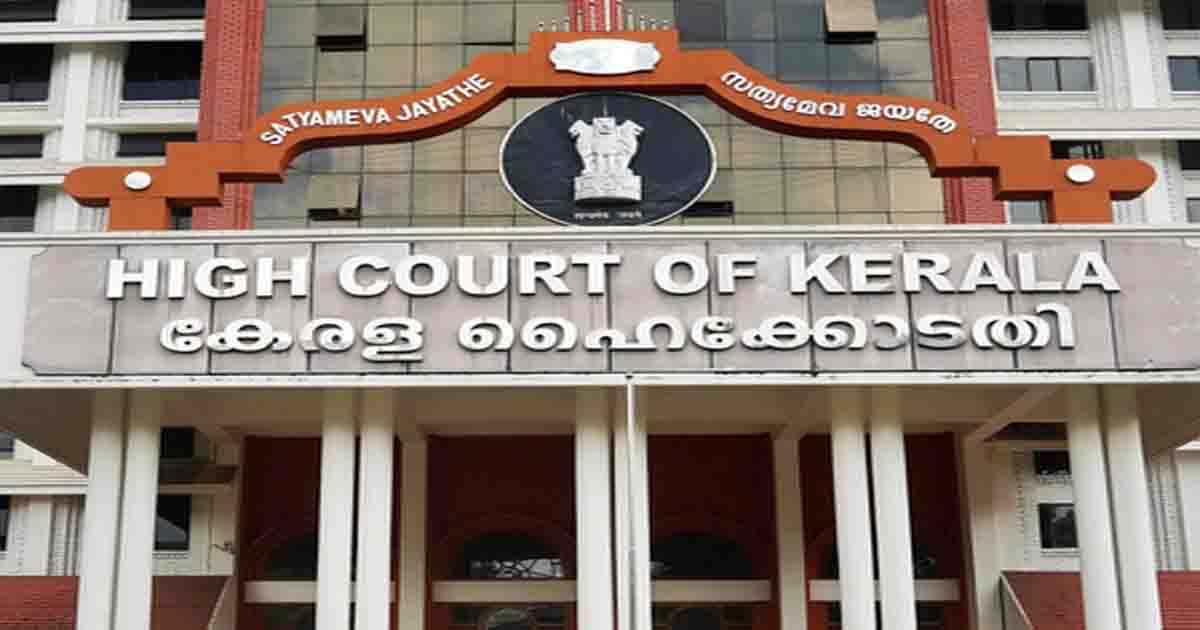
Kochi : The Kerala High Court on Friday came down heavily on retired Director General of Police Tomin J. Thachankary for seeking permission to travel abroad for a job after spending his entire period in custody at the jail hospital, warning that his bail could even be cancelled. Justice A. Badarudeen expressed strong reservations over the plea, pointing out that Thachankary had not spent even a single day in jail after his conviction in a disproportionate assets case in September. The court had examined his medical records, submitted by the Poojappura Central Jail Superintendent following an earlier direction.
The records showed that he had remained in hospital throughout his four weeks in custody. “He has been admitted to the hospital from the date of admission till the date of release. He has not been in jail even for a day. Nicely stayed in the hospital. There he has 1,000 ailments. Now, no ailments. Wants to go to Dubai and do a job. How can it be? Don’t repeat lies before the court,” the judge observed. The court questioned how a person who had cited serious health problems while in custody could now claim to be fit enough to take up employment abroad. “When he goes to jail, he goes and lies down in the hospital instead of staying in jail. Once he comes out, he is completely healthy.
All this cannot happen,” the court remarked. The judge also warned that the court could consider cancelling the bail granted to him, saying such conduct had to be viewed seriously. The matter was posted for further hearing on Thursday. Thachankary was sentenced to four years of rigorous imprisonment and fined Rs 30.84 lakh by the Kottayam Vigilance Court on September 17 after being convicted of amassing assets disproportionate to his known income between 2003 and 2007. The assets were valued at Rs 30.84 lakh, constituting 52.33 per cent of his known income. He was the first former police officer of DGP rank in Kerala to be sent to prison following a criminal conviction. The High Court suspended his sentence and granted him bail on October 15 pending the disposal of his appeal. He subsequently approached the court seeking relaxation of his bail conditions to travel abroad for employment.
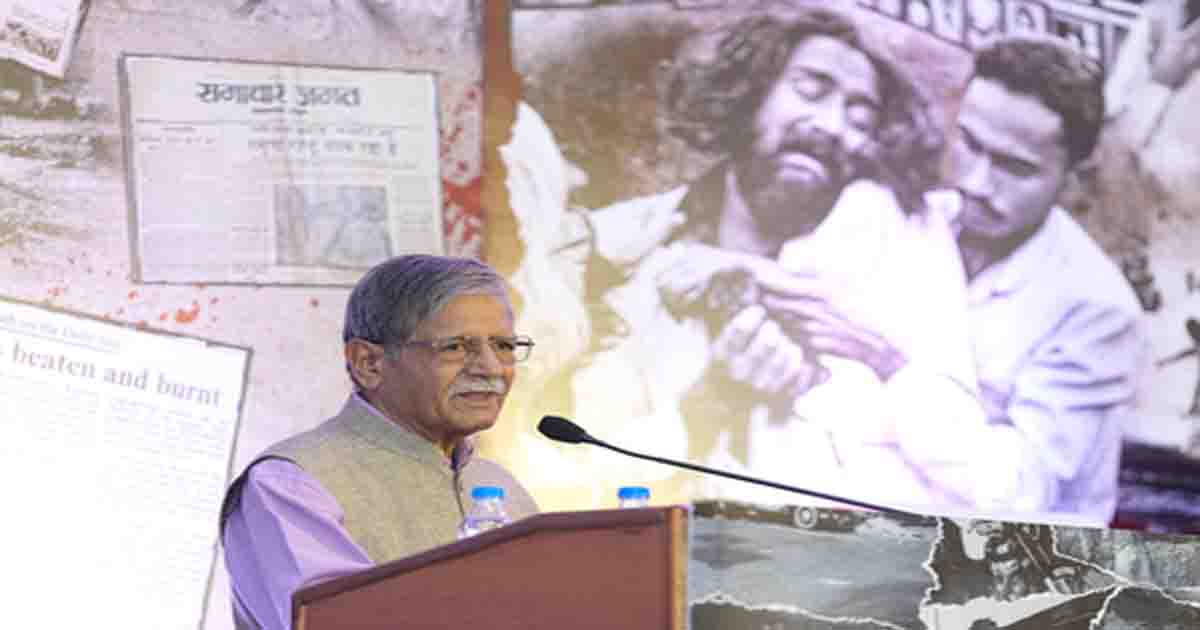
Chandigarh : Laying bare four decades of systemic subversion of the criminal justice system, former Delhi High Court judge Justice Shiv Narain Dhingra has said trials following the 1984 anti-Sikh massacre were conducted like an institutional “fraud” designed to shield influential political patrons.
Speaking at the session, “Murder of Justice”, at the BJP’s ‘Zakhm 84 De’ conclave here this week, Justice Dhingra, who also headed the Supreme Court-mandated Special Investigation Team (SIT) in 2018, gave a chilling account of how the police machinery, procedural technicalities, and political patronage converged to bury accountability.
“No riot takes place on its own; every communal riot is managed and patronised,” Justice Dhingra said.
“In 1984, crowds from resettlement colonies were mobilised, armed, and handed specific lists to target Sikh households. What followed in courtrooms was a mockery of justice,” he said.
Justice Dhingra added, “When our justice delivery system operates with a dismal six per cent conviction rate, does an acquittal after two decades represent justice? If the accused brought before the Bench didn’t commit the murder, then who did? The state had an obligation to find out, but the system simply rolled over.”
Drawing from his tenure as Additional Sessions Judge at the Karkardooma Special Court handling East Delhi cases, Justice Dhingra highlighted the procedural traps deployed by the then-administration.
In the Trilokpuri massacres, police bundled over 200 distinct murders into a single omnibus first information report (FIR). Knowing that criminal procedural law forbids trying more than three offences together, the prosecution let an application to separate the cases languish for years.
Justice Dhingra recalled retrieving the stalled plea, directing independent chargesheets for each murder, and breaking it down into 200 distinct trials, bringing key political figures like H.K.L. Bhagat and local councillors to stand trial.
Successive inquiry panels were rotated between 1984 and 1992 solely to prevent the registration of formal criminal cases.
When FIRs were finally registered eight years later on commission recommendations, state defence lawyers cynically cited the “unexplained eight-year delay” as primary grounds to secure acquittals in trial courts.
Recalling an attempt by the CBI to arrest Congress leader Sajjan Kumar, Justice Dhingra recounted that sleuths arriving at 7 a.m. were forced to wait outside while a mob encircled the residence within 15 minutes. While local police refused to intervene or assist the central agency, Kumar’s lawyers secured anticipatory bail before noon.
Justice Dhingra noted that the CBI subsequently submitted an affidavit on his court record revealing that the official police case file had landed in the physical custody of Kumar’s defence counsel.

IT Q2 results beat low expectations, but demand recovery pushed to FY28: Report

Major Gadchiroli Police Operation Against Maoists, Hidden Explosives Recovered

Female Drug Peddler Arrested in Kaju Pada, Kurla, Mumbai

CM Yogi says govt job drive will continue, appointment letters to be distributed even in third term

Kerala HC warns ex‑DGP Thachankary of bail cancellation over foreign job plea

Rahul, Cong ecosystem want to force regime change: BJP after Neha Bora praises B’desh Gen-Z protest

Attack on democratic rights: INDIA Bloc leaders on detentions of anti-ECI protestors

BJP pays tribute to ex-President Abdul Kalam, recalls his enduring influence on generations of India’s youth

Congress trying to protect 3 crore Bangladeshi infiltrators in voter list: HM Shah

Online betting: ED conducts searches at 20 premises in Mumbai, Pune, Hyderabad
-

 Crime4 years ago
Class 10 student jumps to death in Jaipur
-

 Maharashtra2 years ago
Mumbai Local Train Update: Central Railway’s New Timetable Comes Into Effect; Check Full List Of Revised Timings & Stations
-

 Maharashtra2 years ago
Mumbai To Go Toll-Free Tonight! Maharashtra Govt Announces Complete Toll Waiver For Light Motor Vehicles At All 5 Entry Points Of City
-

 Maharashtra2 years ago
False photo of Imtiaz Jaleel’s rally, exposing the fooling conspiracy
-

 National News2 years ago
Ministry of Railways rolls out Special Drive 4.0 with focus on digitisation, cleanliness, inclusiveness and grievance redressal
-

 Maharashtra2 years ago
Maharashtra Elections 2024: Mumbai Metro & BEST Services Extended Till Midnight On Voting Day
-

 National News2 years ago
J&K: 4 Jawans Killed, 28 Injured After Bus Carrying BSF Personnel For Poll Duty Falls Into Gorge In Budgam; Terrifying Visuals Surface
-

 Crime2 years ago
Baba Siddique Murder: Mumbai Police Unable To Get Lawrence Bishnoi Custody Due To Home Ministry Order, Says Report