
Business
Sensex eyes 75,200 on sustained recovery, Nifty needs 23,500 breakout: Analysts

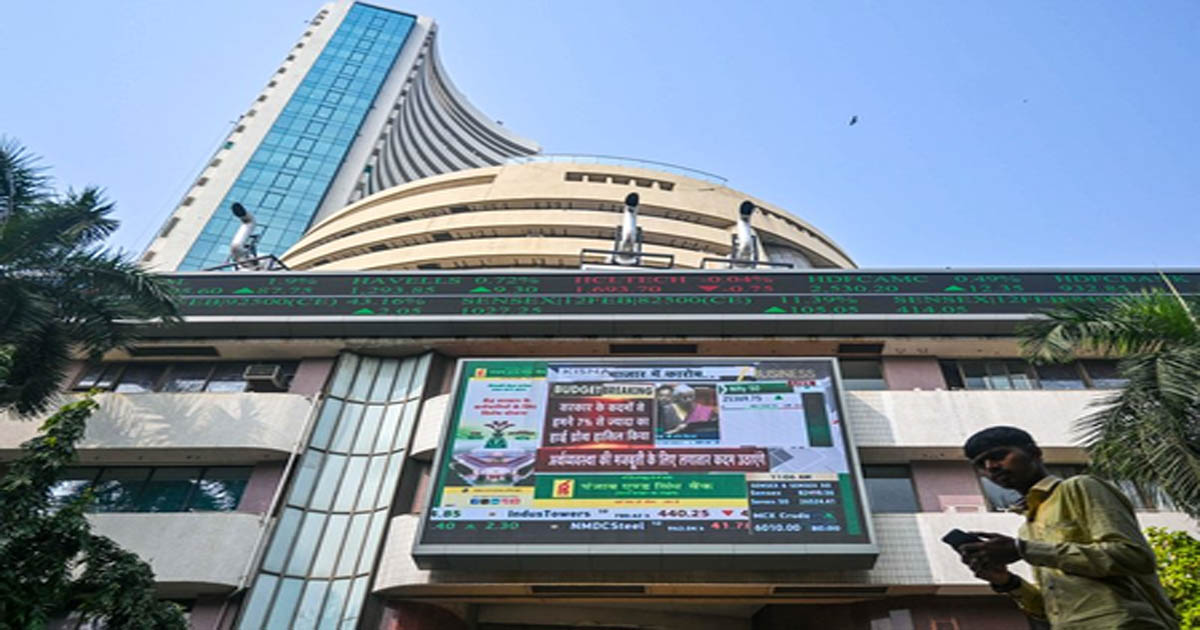
Mumbai, Sep 13: The Sensex is likely to consolidate between 74,000 and 75,200 in the near term, while the Nifty may face immediate resistance around 23,500 and could see further downside if it slips below last week’s low, analysts said on Sunday, as Indian equities enter a holiday-shortened week after five consecutive weeks of losses.
The Indian stock market will remain closed for trading on Monday, September 14, on account of Ganesh Chaturthi. Investors will return to the market on Tuesday after benchmark indices ended the previous week under pressure from elevated crude oil prices, rising global bond yields and concerns over persistent US inflation.
Looking ahead, analysts said the broader technical outlook for the Sensex remains sideways, with the index expected to consolidate in the 74,000–75,200 range in the near term. Holding the 74,000–74,160 support zone could keep the recovery attempt intact and allow the index to retest the 75,000–75,200 levels.
“A decisive breakout above the resistance zone would strengthen the outlook and open the door for further upside, while a break below 74,000 could bring renewed selling pressure. For now, the market remains cautious but shows signs of resilience after the sharp recovery from lower levels,” market experts said.
For the Nifty, analysts said a sustained move above 23,500 could signal a pullback towards the 23,650 level in the coming sessions. However, failure to reclaim 23,500 could keep the index in consolidation mode within the 23,230–23,500 range.
“Immediate bias in the index remains down and a follow-through weakness below last week’s low of 23,231 will open downside towards the short-term support placed around the June low of 23,070 levels in the coming week,” analysts said.
The Sensex declined 2.27 per cent over the week to close at 74,781.76, while the Nifty fell 2.09 per cent to settle at 23,398.10. The broader market also remained weak, with the Nifty Midcap index declining 1.40 per cent and the Smallcap index slipping 0.88 per cent.
On Friday, however, domestic equities recovered sharply from their intraday lows as crude oil prices eased following their recent rally. The moderation in oil prices triggered buying in oil-sensitive stocks, while the recent sell-off pushed benchmark indices into oversold territory, prompting value buying at lower levels.
The Nifty recovered 0.72 per cent from its intraday low before ending Friday 0.34 per cent lower at 23,398.10. The Sensex also staged a strong recovery from the day’s lows, although it finally closed 0.16 per cent down at around 74,780.
They added that the current downtrend would show signs of a pause only after the formation of a higher high and higher low on a sustained basis on the daily chart.


The Enforcement Directorate (ED) has provisionally attached an immovable property spread over approximately 14.51 acres in Kolkata valued at Rs 85.20 crore, in connection with a bank fraud and money laundering case involving M/s Unity Infraprojects Ltd. (UIL) and others, the agency said on Friday.
According to the ED, the attached land, located at Mouza Chakgaria in Kolkata, is held in the name of M/s Suburban Agriculture Dairy & Fisheries Pvt. Ltd. (SADAFPL). The attachment was made under the provisions of the Prevention of Money Laundering Act (PMLA), 2002.
The money laundering investigation stems from an FIR registered by the CBI’s Bank Securities & Fraud Branch in Mumbai on a complaint lodged by the State Bank of India.
The FIR alleges that UIL, in connivance with its promoters, directors and associated entities, defrauded a consortium of 23 banks by availing credit facilities of around Rs 3,200 crore. The total outstanding dues, including interest, are estimated at approximately Rs 3,800 crore.
According to investigators, the fraud involved fictitious transactions, round-tripping of funds, manipulation of financial records, and diversion of funds through shell entities.
The ED said its probe revealed that funds from UIL were routed through its wholly owned subsidiary, Unity Realty & Developers Ltd. (URDL), and subsequently used to acquire and hold assets through associated companies. SADAFPL was identified as a step-down subsidiary of UIL through URDL.
Further investigations established a trail linking the Chakgaria land parcel to funds originating from UIL and its group entities, indicating diversion and layering of proceeds generated from the scheduled offences. The property was attached under Section 5(1) of the PMLA to prevent its transfer or disposal pending confiscation proceedings.
The agency noted that in July 2025 it had conducted searches at residential and commercial premises, as well as bank lockers, linked to UIL, its former directors and their family members. During those operations, movable assets worth Rs 31.21 crore were seized or frozen.
The ED had also attached land parcels and flats valued at about Rs 1,493 crore through three separate provisional attachment orders, all of which were later confirmed by the Adjudicating Authority under the PMLA.
With the latest attachment, the total value of movable and immovable assets attached or frozen in the case has risen to about Rs 1,609 crore, the agency said.
The ED further informed that it filed a prosecution complaint before the Designated Special Court, City Civil and Sessions Court, Greater Bombay, Mumbai, on March 27, 2026.
Further investigation is underway.
Adani Power Ltd — India’s largest private thermal power generator — on Friday reported a 141.5 per cent year-on-year jump in consolidated profit after tax (PAT) to Rs 7,019.32 crore for the second quarter of FY27, compared to Rs 2,906.46 crore in Q2FY26.
Total reported revenue rose 39.4 per cent to Rs 19,950.60 crore from Rs 14,307.79 crore a year ago, while reported EBITDA jumped 45.7 per cent to Rs 8,743.22 crore.
On a continuing operations basis, revenue from operations grew 29.8 per cent to Rs 17,014.06 crore, while continuing EBITDA was up 18.5 per cent to Rs 6,320.97 crore.
Apart from that, PAT nearly doubled to Rs 11,885.92 crore from Rs 6,211.59 crore in H1 FY27, while reported revenue rose 36 per cent to Rs 39,272.90 crore.
Commenting on the results, CEO S B Khyalia said, “Adani Power continues to grow from strength to strength, achieving newer milestones in profitability and project execution. The primacy of domestic coal-based power in meeting India’s long-term power needs has become clearer every day.”
On industry trends, the company said India’s power demand grew 11.5 per cent to 502 BU in Q2 FY27, with coal and lignite-based generation accounting for 66 per cent of supply. Peak demand reached 270 GW, up 18 per cent year-on-year.
The company sold 26.4 billion units (BU) in Q2 FY27, up from 23.7 BU a year ago. Plant Load Factor (PLF) improved to 70.1 per cent from 62.8 per cent, while operating capacity stood at 18,150 MW.
Meanwhile, power sales under PPAs grew 29.7 per cent to 23.4 BU, with tariff realisation improving 12.7 per cent to Rs 6.4/kWh.
Merchant and short-term realisation improved 33.1 per cent to Rs 7.2/kWh, though volumes were 43 per cent lower due to incremental tie-ups of open capacity in medium-term contracts.
Business
Centre expects anti-cancer drug prices to fall 20-70 per cent under proposed trade margin cap


The Centre has told the Supreme Court that capping trade margins on anti-cancer medicines at 30 per cent of their maximum retail price (MRP) is expected to save patients around Rs 2,500 crore annually, with the proposed measure likely to reduce the MRP of such drugs by 20 to 70 per cent.
In an affidavit filed before the apex court in a pending plea seeking regulation of medicine prices, the Union government, through the Department of Pharmaceuticals, said it had decided to rationalise trade margins on anti-cancer drugs after extensive consultations with stakeholders and an assessment of the potential impact on the availability and affordability of medicines.
The proposed cap was intended to curb excessive trade mark-ups while retaining a reasonable margin for distributors and retailers, adding that an expert committee had been constituted to recommend the list of anti-cancer medicines to which the measure would apply, it said.
The Ministry of Health and Family Welfare constituted the committee on October 9 under the chairmanship of the Director General of Health Services, and it is expected to submit its report within 10 to 15 days.
“The trade margin is to be capped at 30 per cent of the MRP, on the same lines as was done in the TMR of 2019. The objective is to retain a reasonable trade margin while preventing excessive margins,” the affidavit stated.
The Centre said the list would cover drugs approved for the treatment of cancer, except inexpensive medicines, and could be periodically updated in view of market developments and public health considerations.
According to the affidavit, the National Pharmaceutical Pricing Authority (NPPA) would place the committee’s recommendations before its authority for deliberation and appropriate directions, following which it would issue a price notification and instructions to manufacturers to ensure that the benefits were passed on to patients.
The government said the proposed measure was expected to reduce out-of-pocket expenditure for cancer patients, improve affordability and accessibility of medicines, and bring greater transparency to the prices actually paid by consumers.
The affidavit was filed in response to a public interest litigation by Dr Sanjay Kulshrestha, which raises concerns over medicine pricing and the need for effective regulation of trade margins in the pharmaceutical sector.
The Centre maintained that a comprehensive statutory and policy framework was already in place to regulate drug prices, including the Drugs (Prices Control) Order, 2013, and that the government had been taking calibrated steps to address excessive margins without compromising the availability of essential medicines.
The government also referred to its earlier intervention in 2019, when the NPPA imposed a 30 per cent trade margin cap on 42 selected non-scheduled anti-cancer medicines.
According to the affidavit, the measure resulted in a reduction in the MRP of 526 brands and generated annual savings of approximately Rs 984 crore for patients, based on information provided by companies.
The Centre said the earlier intervention provided a policy precedent for extending trade margin rationalisation to a broader range of non-scheduled anti-cancer medicines.
However, it stressed that such interventions required careful consideration of their impact on different stakeholders, including small and medium pharmaceutical manufacturers, distributors and retailers, particularly those operating in remote areas.
The affidavit said some industry associations had expressed concerns that extending the cap could affect employment and medicine distribution in remote regions, given the dependence of smaller manufacturers on local traders and multiple distribution channels.
“Implementation of Trade Margin Rationalisation (hereinafter TMR) affects different stakeholders differently and, hence, requires extensive consultation with all stakeholders and a well-calibrated approach,” the affidavit stated.
The Centre said higher trade margins could sometimes be necessary for low-value medicines, drugs requiring specialised storage or handling, fragile products and medicines with low turnover, as retailers might otherwise find it commercially unviable to stock them.
It added that differences in distribution costs and market conditions had to be taken into account while framing a broader regulatory approach.
The government further referred to measures taken under its extraordinary powers under Paragraph 19 of the DPCO, 2013, including the capping of prices of certain diabetes and cardiovascular medicines, the fixation of ceiling prices for coronary stents and knee implants, and the regulation of trade margins on oxygen concentrators and other medical devices during the Covid-19 pandemic.
It also highlighted initiatives such as the Pradhan Mantri Bhartiya Janaushadhi Pariyojana, which provides generic medicines through around 19,000 Jan Aushadhi Kendras, and AMRIT pharmacies, which offer discounts on essential and life-saving medicines.
The affidavit said the government remained conscious of the need to balance affordability, accessibility and availability while regulating medicine prices.
“The Government has, in the public interest, been taking calibrated and consultative steps, including by invoking its extraordinary powers under Paragraph 19 of the DPCO, 2013, to curb excessive trade margins without compromising the availability of medicines,” it stated.

Action under the ‘Pedestrian First’ initiative by the ‘G-North’ ward of the Mumbai Municipal Corporation

ED files FIR, foils bid to trespass flat attached in extortion case against Dawood’s brother

ED attaches Rs 85.2 crore Kolkata land linked to Unity Infraprojects bank fraud case

Left parties, student groups march towards EC HQ, demand Gyanesh Kumar resignation

Maha: Raj Thackeray demands impartial probe in Rs 500 crore audio clip row

Rahul, Cong ecosystem want to force regime change: BJP after Neha Bora praises B’desh Gen-Z protest

BJP pays tribute to ex-President Abdul Kalam, recalls his enduring influence on generations of India’s youth

Attack on democratic rights: INDIA Bloc leaders on detentions of anti-ECI protestors

INDIA bloc begins protest march against ECI

Maha Congress stages agitation against Gyanesh Kumar
-

 Crime4 years ago
Class 10 student jumps to death in Jaipur
-

 Maharashtra2 years ago
Mumbai Local Train Update: Central Railway’s New Timetable Comes Into Effect; Check Full List Of Revised Timings & Stations
-

 Maharashtra2 years ago
Mumbai To Go Toll-Free Tonight! Maharashtra Govt Announces Complete Toll Waiver For Light Motor Vehicles At All 5 Entry Points Of City
-

 Maharashtra2 years ago
False photo of Imtiaz Jaleel’s rally, exposing the fooling conspiracy
-

 National News2 years ago
Ministry of Railways rolls out Special Drive 4.0 with focus on digitisation, cleanliness, inclusiveness and grievance redressal
-

 Maharashtra2 years ago
Maharashtra Elections 2024: Mumbai Metro & BEST Services Extended Till Midnight On Voting Day
-

 National News2 years ago
J&K: 4 Jawans Killed, 28 Injured After Bus Carrying BSF Personnel For Poll Duty Falls Into Gorge In Budgam; Terrifying Visuals Surface
-

 Crime2 years ago
Baba Siddique Murder: Mumbai Police Unable To Get Lawrence Bishnoi Custody Due To Home Ministry Order, Says Report