
International News
Five civilians killed in Russian shelling in Ukraine’s Donetsk Oblast

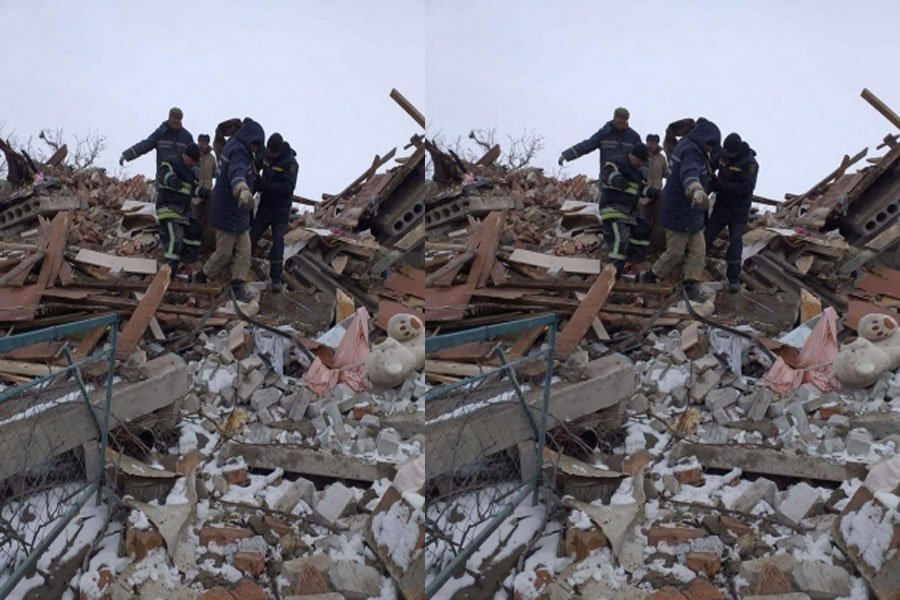
Five civilians were killed in shelling by Russian forces in Ukraine’s Donetsk Oblast.
“Russia continues to kill civilians! On 5 July, the Russians killed five civilian residents of Donetsk Oblast: two in Avdiivka, one in Sloviansk, one in Krasnohorivka, and one in Kurakhove,” Ukrayinska Pravda quoted
Donetsk governor Pavlo Kyrylenko as saying.
Twenty-one civilians sustained injuries in the Russian attacks.
At least 570 residents of Donetsk Oblast have been killed since Russia’s invasion of Ukraine.
The number of casualties and fatalities in Mariupol and Volnovakha could not be determined, Kyrylenko added.
On Monday, Russian President Vladimir Putin had declared victory in eastern Ukrainian region Luhansk after Ukrainian forces withdrew from their last stronghold in Lysychansk.


International News
Pakistan: Two police personnel killed, six others injured in suicide attack near Punjab-Khyber Pakhtunkhwa border

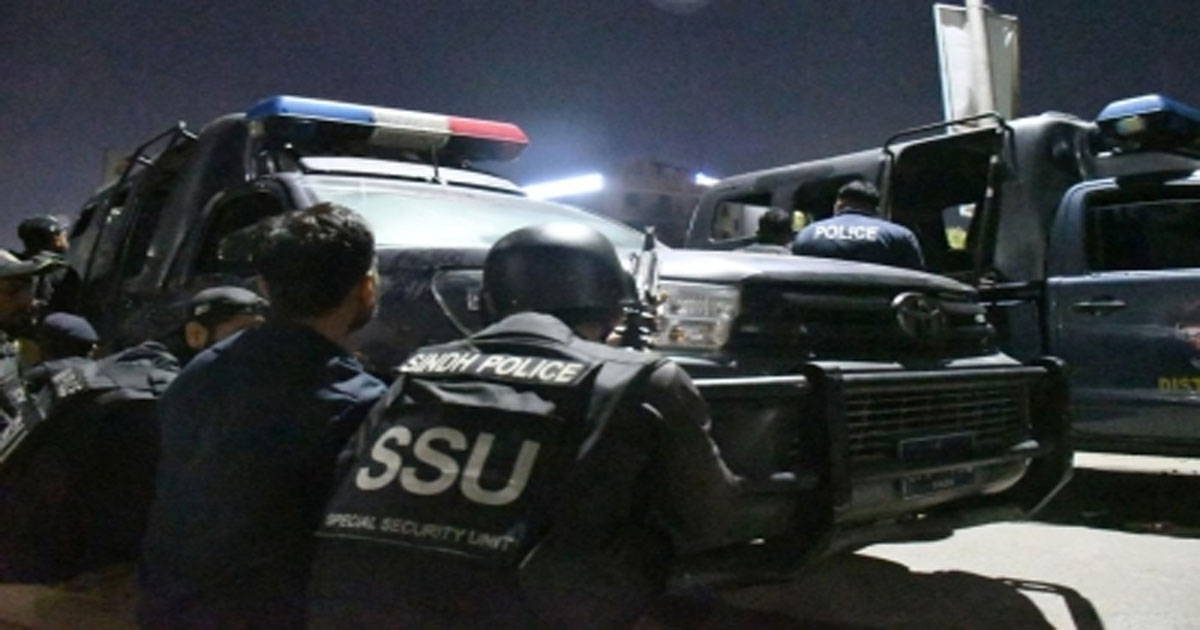
Islamabad, June 15: Two police personnel killed and six others injured after a suicide attack targeted a police check post in the Wahwa area near the Punjab-Khyber Pakhtunkhwa border in Pakistan, local media reported on Monday.
The police check post also suffered extensive damage due to the suicide attack. An explosion took place on Sunday after unidentified assailants rammed an explosives-laden vehicle into the main gate of the checkpost, according to officials, Pakistan’s daily The Express Tribune reported.
District Police Officer (DPO) Muhammad Sadiq Baloch stated that two police personnel succumbed to their injuries while six other police personnel were seriously injured in the attack. All the injured personnel were taken to the hospital for treatment.
Officials said the check post structure was completely destroyed in the blast. After the attack, heavy contingents of police and security forces rushed to the site of the incident. The area was cordoned off and a search operation was launched to gather evidence from the spot. The blast also led to the collapse of roofs and walls of several houses in the nearby area. Furthermore, more than a dozen local residents were injured in the attack.
Speaking to reporters, Sadiq Baloch said that the suicide bomber was also killed in the blast and further investigations have been launched into the attack, The Express Tribune reported.
Earlier, two police personnel killed after armed assailants opened fire on them in separate incidents in Bannu district of Pakistan’s Khyber Pakhtunkhwa province last week, local media reported quoting officials’ statement.
On June 12, a police constable was returning home after attending a gathering when he was attacked on Bannu-Miranshah Road. As per initial reports, unidentified armed assailants opened fire on him when he was returning home. He suffered critical injuries and died on the spot, Pakistan’s daily Dawn reported.
In a separate incident, police constable was shot dead by unidentified assailants outside his house. He was seriously injured and taken to a hospital, however, he succumbed to his injuries.
Earlier this month, the monthly security assessment released by the Pakistan Institute for Conflict and Security Studies (PICSS) revealed that the security situation in Pakistan deteriorated in May, particularly due to an increase in militant attacks in Khyber Pakhtunkhwa and Balochistan.
The latest findings by PICSS showed an increase in militant attacks during May after a brief period of relative decline, especially in Khyber Pakhtunkhwa and Balochistan, Dawn reported. The sharp rise in attacks, casualties, suicide bombings and kidnappings suggests that security challenges remain severe.
As many as 128 militant attacks occurred in May in comparison to 101 in April, showcasing a 27 per cent rise. As many as 71 people, 68 security personnel and six members of peace committees were killed, while 147 people, 35 security personnel and three peace committee members were injured in the violence in May.
Compared to April, civilian casualties rose from 37 to 71, showcasing a 92 per cent increase, while security personnel fatalities rose from 28 to 68, showcasing a 143 per cent increase. Pakistan witnessed six suicide attacks in May, causing the deaths of 34 security personnel and nine civilians, Dawn reported.
Balochistan was the most affected province of Pakistan in May as it recorded 71 militant attacks, in comparison to 34 in April, showcasing a 109 per cent rise. As many as 54 kidnappings occurred in Pakistan in May. Of them, 52 kidnappings took place in Balochistan alone.
International News
Iran, US agree on ceasefire on all fronts, lifting of naval blockade: Iranian deputy FM
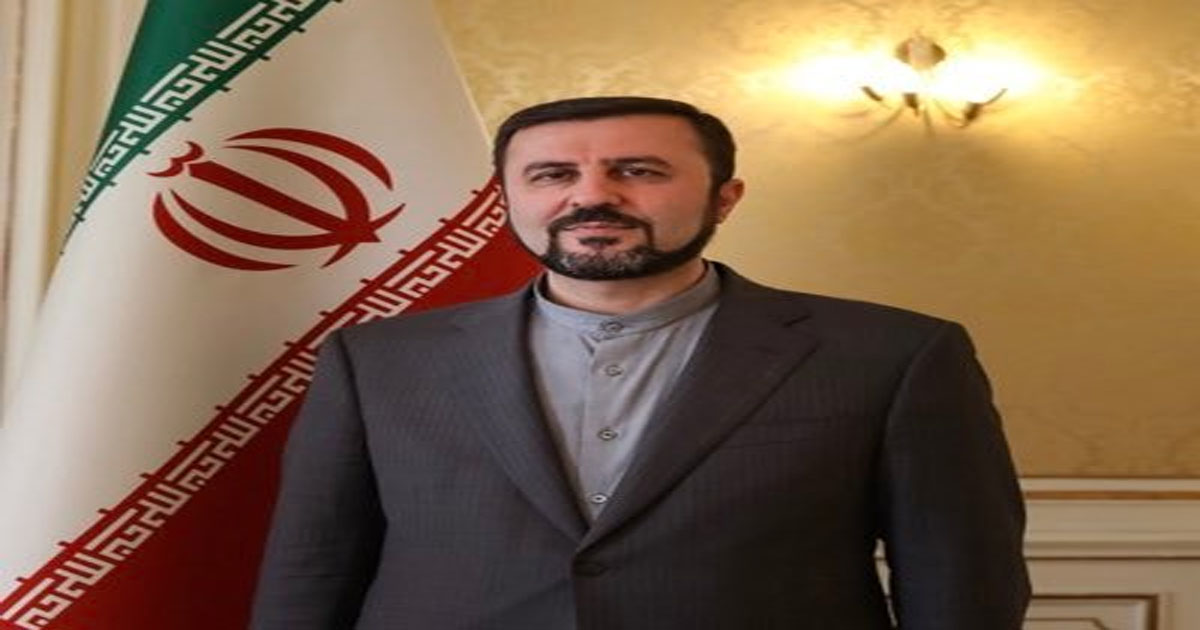
Tehran, June 15: The US naval blockade against Iran will be lifted as of tonight and the immediate and permanent end of the war and military operations on all fronts, including Lebanon, is announced, Iranian Deputy Foreign Minister for Legal and International Affairs Kazem Gharibabadi said early Monday.
Gharibabadi said Iran and the United States will sign the finalised draft of a peace memorandum of understanding (MoU) in Switzerland on June 19, Xinhua news agency reported quoting Iran’s semi-official Tasnim news agency.
Tasnim also cited a source as saying that the Strait of Hormuz will reopen following the signing ceremony in Switzerland.
Meanwhile, Iran’s state-run IRIB TV, also citing Gharibabadi, said Iran’s entry into a 60-day period of negotiations with the United States on its nuclear program and the removal of sanctions will hinge on the US fulfillment of its preliminary commitments, which will be verified by Tehran from now until the signing ceremony.
Earlier in the day, Pakistani Prime Minister Shehbaz Sharif announced on social media platform X that the United States and Iran had reached a peace agreement following intensive negotiations.
Sharif said that both sides had declared the “immediate and permanent termination of military operations on all fronts, including in Lebanon,” and that mediators will facilitate a series of meetings this week aimed at preparing for the implementation of the agreement.
Minutes later, US President Donald Trump wrote on his Truth Social that the US-Iran peace deal “is now complete” and he had authorised the toll-free opening of the Strait of Hormuz and the immediate removal of the US naval blockade against Iranian ports.
However, Israel’s Ma’ariv news site, citing Israel sources, reported early Monday that in a phone call between Israeli Prime Minister Benjamin Netanyahu and Trump, Netanyahu made it clear that Israel “does not consider itself committed to the Lebanese clause in the US-Iran agreement.”
The reaching of the MoU came as somewhat of a surprise, as Iran’s Supreme National Security Council (SNSC) warned Sunday evening of an imminent response to an earlier Israeli strike on Lebanon’s capital Beirut.
“Lebanon is our lifeblood, and any violation of Iran’s red lines will not be tolerated,” Mohammad Bagher Zolghadr, secretary of the SNSC, was quoted by IRIB TV as saying.
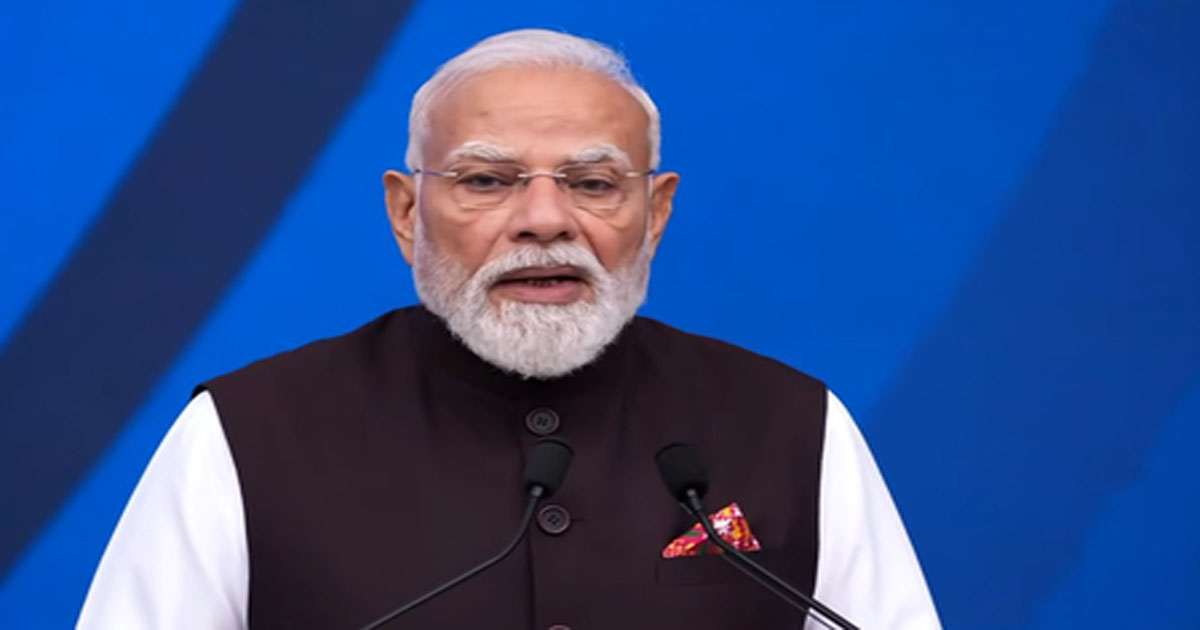
Nice/New Delhi, June 14: India has transformed from being a consumer of global solutions to a contributor of solutions for the world, Prime Minister Narendra Modi said on Sunday.
Speaking after inaugurating the ‘Bharat Innovates 2026’ event in Nice, France, PM Modi said India’s innovation ecosystem is rapidly expanding and increasingly playing a role in addressing global challenges through technology and entrepreneurship.
“India now acts as a solution contributor rather than a solution consumer,” the Prime Minister said.
The Prime Minister further stated that India is innovating at both speed and scale, with a focus on creating sustainable solutions that benefit not only its own citizens but also the global community.
“Bharat innovates with speed and scale. Bharat innovates for a sustainable future. Bharat innovates for the whole world,” PM Modi said while addressing the innovation-focused event, jointly inaugurated with French President Emmanuel Macron.
Emphasising India’s approach towards technological development, the Prime Minister said the country’s priority is “technology for humanity” and human-centric innovation.
He added that innovation is deeply embedded in India’s culture and way of thinking. “Innovation is in India’s DNA,” Prime Minister Modi explained.
The Prime Minister also praised the growing partnership between India and France, describing it as a relationship rooted in shared values, mutual trust and common interests.
He noted that cooperation between the two countries spans a wide range of sectors, from security and strategic affairs to sustainability and innovation.
“India-France partnership covers security to sustainability,” PM Modi said.
Macron, who shared the stage with PM Modi at the event, described the Prime Minister’s presence at ‘Bharat Innovates’ as a matter of great honour for France.
He also congratulated PM Modi on completing 12 years as India’s leader and praised his role in strengthening ties between the two countries.
The ‘Bharat Innovates’ event has brought together leading startups, venture capital funds, innovators and technology leaders from India, France and several other countries.

Railways okays Rs 201 crore Kavach project to enhance safety on 811 km route in Ambala division

AICWA demands high-level investigation into actor Sanchita Ugale’s suicide

OMC under-recoveries decline 83 pc to Rs 3 per litre on petrol

Pakistan: Two police personnel killed, six others injured in suicide attack near Punjab-Khyber Pakhtunkhwa border

Salim Dola built Rs 100 crore assets in Dubai, Turkey using drug money

Trump, Netanyahu hold phone talks after Iranian missile fire: Israeli state media

The Municipal Corporation and the Railway Administration should work together to make Mumbai flood-free, directs Standing Committee Chairman Prabhakar Shinde

Virar Citizens Protest Demolition Drive In Arnala; Police Block Lal Bawta March, Sit-in Held On Road

Indian equity markets trade higher as Iran-Israel tensions ease

Dangerous Love Triangle In Mira-Bhayandar: Youth Kidnapped, Brutally Beaten, & Burned With Cigarettes Over Affair With Same Girl
-

 Crime4 years ago
Class 10 student jumps to death in Jaipur
-

 Maharashtra2 years ago
Mumbai Local Train Update: Central Railway’s New Timetable Comes Into Effect; Check Full List Of Revised Timings & Stations
-

 Maharashtra2 years ago
Mumbai To Go Toll-Free Tonight! Maharashtra Govt Announces Complete Toll Waiver For Light Motor Vehicles At All 5 Entry Points Of City
-

 Maharashtra2 years ago
False photo of Imtiaz Jaleel’s rally, exposing the fooling conspiracy
-

 National News2 years ago
Ministry of Railways rolls out Special Drive 4.0 with focus on digitisation, cleanliness, inclusiveness and grievance redressal
-

 Maharashtra2 years ago
Maharashtra Elections 2024: Mumbai Metro & BEST Services Extended Till Midnight On Voting Day
-

 National News2 years ago
J&K: 4 Jawans Killed, 28 Injured After Bus Carrying BSF Personnel For Poll Duty Falls Into Gorge In Budgam; Terrifying Visuals Surface
-

 Crime2 years ago
Baba Siddique Murder: Mumbai Police Unable To Get Lawrence Bishnoi Custody Due To Home Ministry Order, Says Report