
Business
Elon Musk May Have To Battle Mukesh Ambani For Bringing Starlink To India

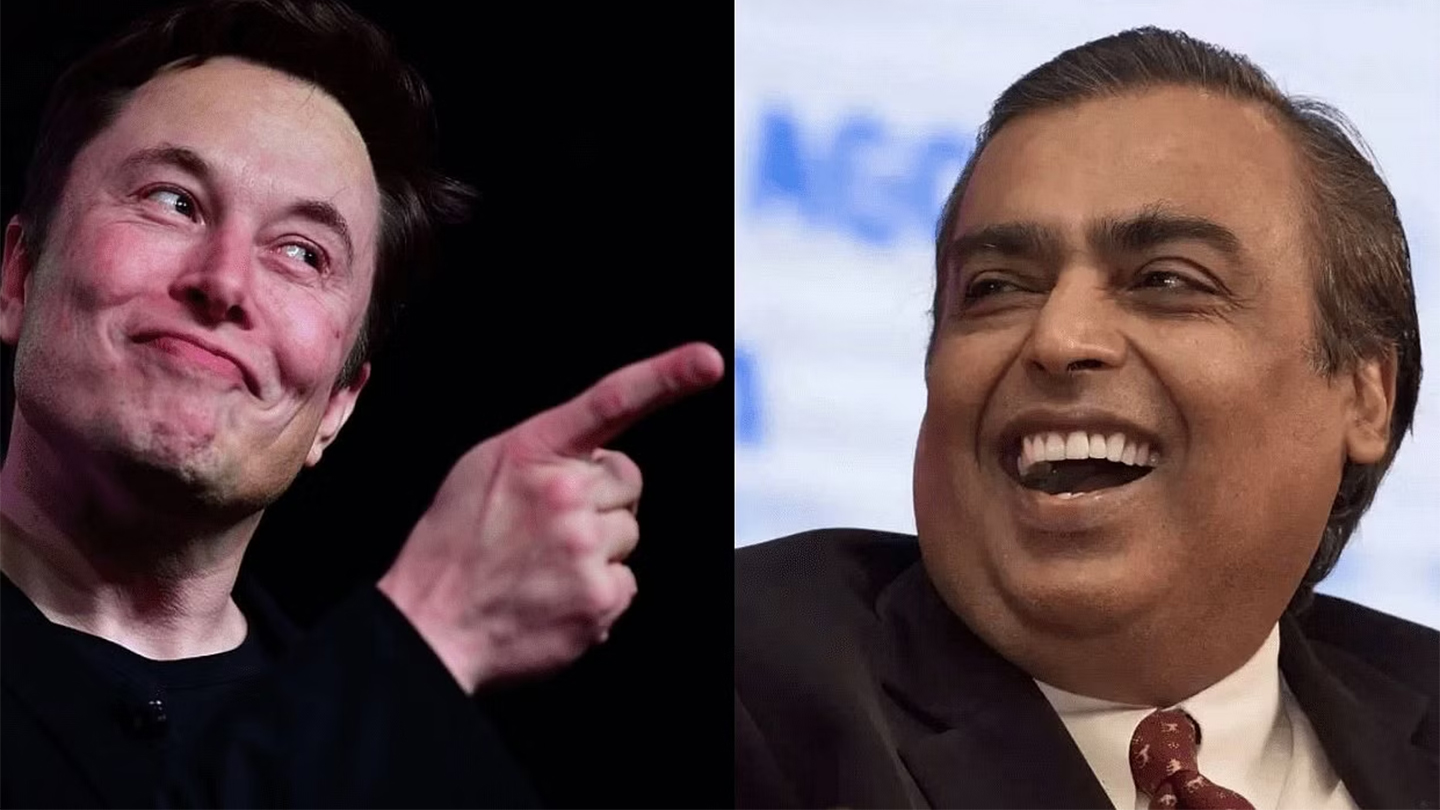
Elon Musk may be upbeat about fighting fellow tech tycoon Mark Zuckerberg in a cage, but he faces a challenge from an Indian billionaire before entering the market. The Indian government’s policy on import duty, which Musk wants it to modify, has already acted as a fence keeping Tesla out of the country.
Now the SpaceX founder and self-proclaimed fan of Prime Minister Modi seeks to change how India assigns satellite broadband licenses, but Mukesh Ambani’s Reliance disagrees.
Taking different paths
After his meeting with PM Modi, Musk also mentioned how he hopes to connect remote Indian villages to the world wide web, by beaming internet from Starlink satellites.
His firm wants the Indian government to follow the global trend and directly assign licenses, instead of an auction for allotment of the spectrum.
But Jio’s parent Reliance wants a public submission of bids, so that local telcos get a level playing field to compete with foreign firms that can offer voice and data services via satellites.
Will it disrupt duopoly?
Although neither Musk nor Ambani have directly engaged with each other, the battle to dominate the satellite broadband market in India, could put them on a collision course.
As Reliance Jio Space Tech has received clearance to provide broadband from space, its current rival Airtel One Web has already put 40 satellites in space, while it needs a constellation of 588.
On the other hand, Musk’s Starlink is available in almost 50 countries, but its entry into India was disrupted when its India head Sanjay Bhargava quit and later wrote that he didn’t have time for endless meetings to discuss regulations and procedures.


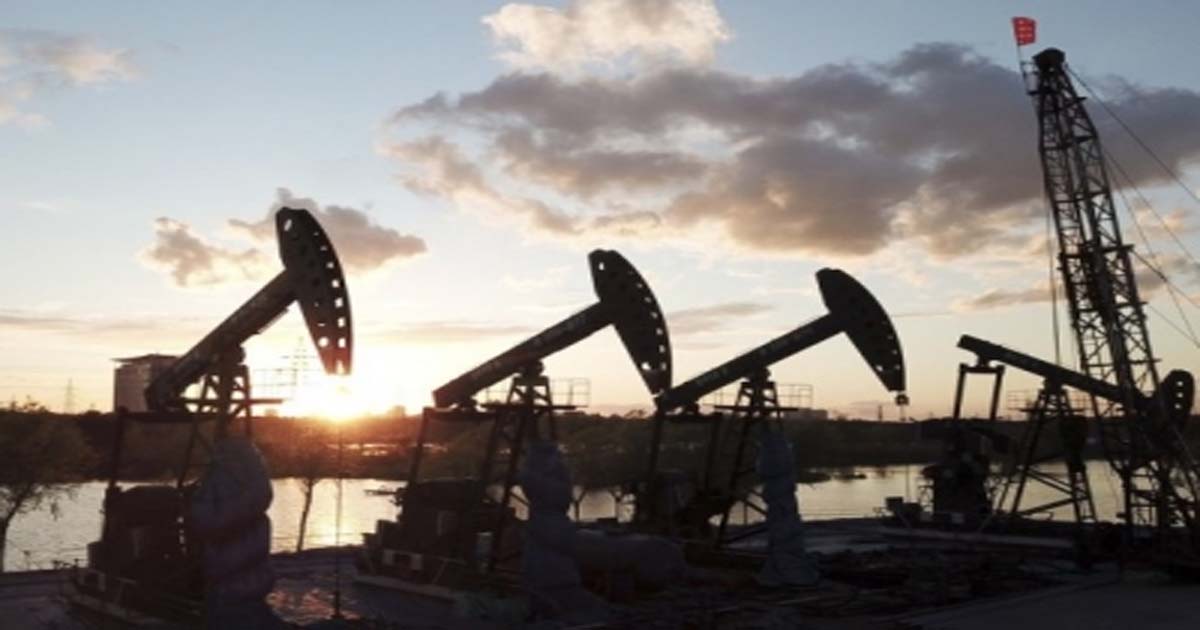
New Delhi, Crude oil prices rose on Friday as efforts to resolve the Iran crisis reached a stalemate, with Tehran continuing to block the Strait of Hormuz and Washington restricting Iranian crude exports.
Brent futures for July on Intercontinental Exchange gained $0.81, or 0.73 per cent, to $111.21 a barrel, while West Texas Intermediate rose 31 cents, or 0.30 per cent, to $105.37. Both benchmarks have posted gains for four consecutive months, analysts noted.
Brent crude oil had crossed $120 per barrel for the first time in 4 years, heightening inflation concerns and putting pressure on global markets.
Market participants flagged new supply concerns after Brent’s June contract, which expired on Thursday, hit $126.41 a barrel, its highest level since March 2022.
British and European central banks cautioned about rising inflation, while the United States is working towards a coalition of allied countries and shipping companies to ensure secure transit through Hormuz.
A ceasefire though in effect since April 8 felt shaky, as on Thursday evening, Iranian Foreign Ministry spokesperson Esmaeil Baghaei said it was unrealistic to expect quick outcomes from negotiations with the US, according to multiple reports.
Fed Chair Jerome Powell has warned that rising oil prices due to the Middle East conflict are boosting inflation and complicating policy. Asia faces greater economic risks from the energy shock, he added.
The price of a 19-kg commercial LPG cylinder has been increased by Rs 993, starting Friday, and after the revision, a 19-kg cylinder will now cost Rs 3,071.5 in Delhi.
However, there has been no change in the price of domestic LPG cylinders for 33 crore users, the Indian Oil Corporation (IOC) said in a statement.
This is the third time that the price of a 19-kg commercial LPG cylinder has been increased since February 28, when the US-Israel and Iran war began.
SHARE MARKET
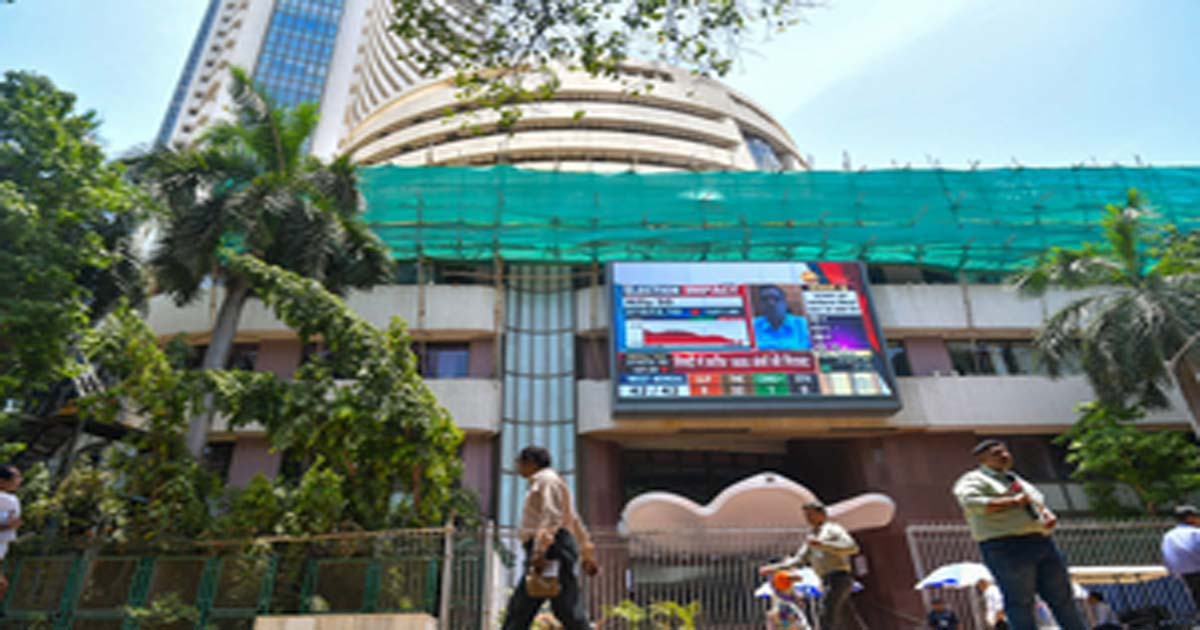
Mumbai, Indian equity benchmarks started Thursday’s session — the final trading day of the week — on a weaker note, with both indices declining nearly 1 per cent in early deals, as a sharp jump in crude oil prices dented sentiment and outweighed support from stock-specific earnings gains.
Sensex fell as much as 0.95 per cent or over 700 points to 76,759.37 in early trade, hitting an intraday low, while Nifty declined 0.96 per cent or more than 200 points to 23,943.45.
Selling pressure was broad-based, with auto, banking, realty, metal, consumer durables and FMCG stocks, falling up to 1 per cent. Eternal, Shriram Finance, IndiGo, M&M, Jio Financial Services, Tata Motors PV, Axis Bank, Grasim Industries, Asian Paints, ICICI Bank and HDFC Bank were among the top laggards.
While Nifty 100, Nifty Midcap, Nifty 200 and Nifty 500 indices declined by up to around 1 per cent. Meanwhile, the India VIX rose 2.7 per cent to 17.91, indicating heightened market volatility.
According to a market expert, two key headwinds could impact markets in the near term.
“Brent crude at around $120 threatens India’s macroeconomic stability. If prices remain elevated, it could pose downside risks to growth and push inflation higher,” the expert said.
“Secondly, stronger-than-expected results from AI majors in the US and South Korea may extend the ongoing AI trade, potentially leading to further portfolio outflows from India,” he added.
The Fed’s decision to hold rates was on expected lines and is unlikely to have a significant impact. However, the rise in US 10-year bond yields to 4.4 per cent could further incentivise capital outflows from India,” said Dr VK Vijayakumar, Chief Investment Strategist, Geojit Investments Limited.
Exit polls indicating consolidation of the ruling party’s position may offer some sentiment support but do not materially alter market fundamentals.
“Investors can focus on companies reporting better-than-expected Q4 results and strong outlooks, where opportunities remain,” he said.
Oil prices rallied after US President Donald Trump reportedly held talks with oil companies on steps to reduce the impact of a potential prolonged blockade of Iran’s ports, raising concerns over possible disruptions to global crude supplies.
Separately, the US Federal Reserve left interest rates unchanged, broadly in line with expectations, while cautioning about inflation risks stemming from the Iran conflict. Market participants have also pared back expectations of rate cuts in 2026.
Crude oil prices are approaching their 52-week highs of $114.81. Brent crude was trading at $113.18 per barrel, up 2.48 per cent from the previous close, while US West Texas Intermediate (WTI) stood at $109.64 per barrel, also higher on the day.
However, Brent crude hovered close to $120 per barrel after surging over 6 per cent on Wednesday to its highest level since June 2022.
In Asian markets, indices were mixed. Japan’s Nikkei and Hong Kong’s Hang Seng were down over 1 per cent, South Korea’s KOSPI declined 0.40 per cent, while Singapore’s Straits Times gained 0.65 per cent.
On Wall Street, US markets ended on a flat note, with the S&P 500 settling at 7,135.95, down 0.04 per cent, and the Nasdaq finishing at 24,673.24, up 0.04 per cent.
Notably, domestic equity markets will remain shut for trading on Friday, May 1, in observance of Maharashtra Day.

Mumbai, Gold and silver prices traded on a flat note on Monday amid a rise in crude oil prices and reports of a fresh proposal by Iran to end the conflict with the US, raising hopes of de-escalation in the Middle East.
On the Multi Commodity Exchange (MCX), gold futures (June 5 contract) were trading at Rs 1,52,410 per 10 grams, down 0.19 per cent or Rs 290 from the previous close of Rs 1,52,699.
By 11:00 A.M., the yellow metal touched an intraday high of Rs 1,53,008, up 0.20 per cent or Rs 309.
Meanwhile, silver futures (May 5 contract) were trading at Rs 2,43,200, down Rs 1,436 or 0.6 per cent.
The white metal touched an intraday high of Rs 2,45,473, up 0.34 per cent or Rs 837 from the previous close, and a low of Rs 2,43,009, down 0.66 per cent or Rs 1,627.
According to a commodity market expert, precious metals are trading with a cautious bias, with prices largely driven by key technical levels amid ongoing geopolitical uncertainty.
On COMEX, gold is holding above the $4,700–$4,680 support zone, with further downside possible below $4,650, while a sustained move above $4,750–$4,800 could revive momentum towards $4,900, the expert said.
On MCX, gold is hovering near Rs 1,52,500, with resistance seen around Rs 1,54,000 and support at Rs 1,50,000, the expert added.
The analyst also said that silver is also showing a cautious undertone, noting that volatility remains elevated due to geopolitical tensions, keeping the overall outlook range-bound in the near term.
In the international market, both metals were largely flat. On COMEX, gold was trading marginally higher by 0.02 per cent at $4,742 per ounce, while silver was down 0.05 per cent at $76 per ounce.
However, tensions in the Middle East remain elevated, although Iran has reportedly proposed a fresh peace initiative to the US aimed at reopening the Strait of Hormuz and ending the conflict.
Amid global uncertainty, gold and silver have delivered strong returns to investors over the past year. Gold has gained over 40 per cent in dollar terms over the past year and more than 18 per cent in six months.
Meanwhile, silver has more than doubled investors’ money over the past year and gained over 60 per cent in the last six months.
Additionally, Brent crude jumped over 2 per cent to $107.77, while US West Texas Intermediate (WTI) advanced to $96.68, an increase of 2.41 per cent.

Census 2027 campaign launched in Maharashtra, appeal to citizens to participate spontaneously in the national census: Devendra Fadnavis

Mumbai Kandivali shopkeeper attacked by gangster, attacker arrested, trying to create terror

Shock On Kasara Rail Line: Falling Rod From Hill Work Hits Moving Local, Passenger Dies; Officials Suspended

Navi Mumbai: NCB’s major operation, cocaine worth Rs 1745 crore seized, police arrest Ashwini from Titwala Padmavati Royals Society

Mumbai NCB freezes assets of kingpin and key associate of drug syndicate worth Rs 3.78 crore

Iran-Israel Conflict Hits India’s Real Estate: Supply Disruptions & Rising Costs Delay Project Possessions

‘Son Falsely Implicated, We Are Well-Educated’: Father Of Accused Tausif Attar Defends Son After Skullcap, Namaz Coercion Allegations Rock TCS Nashik

Mumbai: Pan-India Hawala Trail Exposes Chilling Conspiracy Behind Rohit Shetty House Firing Case

Asha Bhosle’s son says last respects to be paid at residence in Lower Parel, followed by last rites at Shivaji Park

Mumbai: 15th arrest in Rohit Shetty shooting case, shooter identified, arrested, more arrests possible
-

 Crime4 years ago
Class 10 student jumps to death in Jaipur
-

 Maharashtra2 years ago
Mumbai Local Train Update: Central Railway’s New Timetable Comes Into Effect; Check Full List Of Revised Timings & Stations
-

 Maharashtra2 years ago
Mumbai To Go Toll-Free Tonight! Maharashtra Govt Announces Complete Toll Waiver For Light Motor Vehicles At All 5 Entry Points Of City
-

 Maharashtra2 years ago
False photo of Imtiaz Jaleel’s rally, exposing the fooling conspiracy
-

 National News2 years ago
Ministry of Railways rolls out Special Drive 4.0 with focus on digitisation, cleanliness, inclusiveness and grievance redressal
-

 Maharashtra1 year ago
Maharashtra Elections 2024: Mumbai Metro & BEST Services Extended Till Midnight On Voting Day
-

 National News2 years ago
J&K: 4 Jawans Killed, 28 Injured After Bus Carrying BSF Personnel For Poll Duty Falls Into Gorge In Budgam; Terrifying Visuals Surface
-

 Crime2 years ago
Baba Siddique Murder: Mumbai Police Unable To Get Lawrence Bishnoi Custody Due To Home Ministry Order, Says Report