
Maharashtra
Mumbai: Water pipeline tunnel work from Amar Mahal to Wadala, Parel along with Trombay and Tarbhai high level reservoirs, water supply stopped

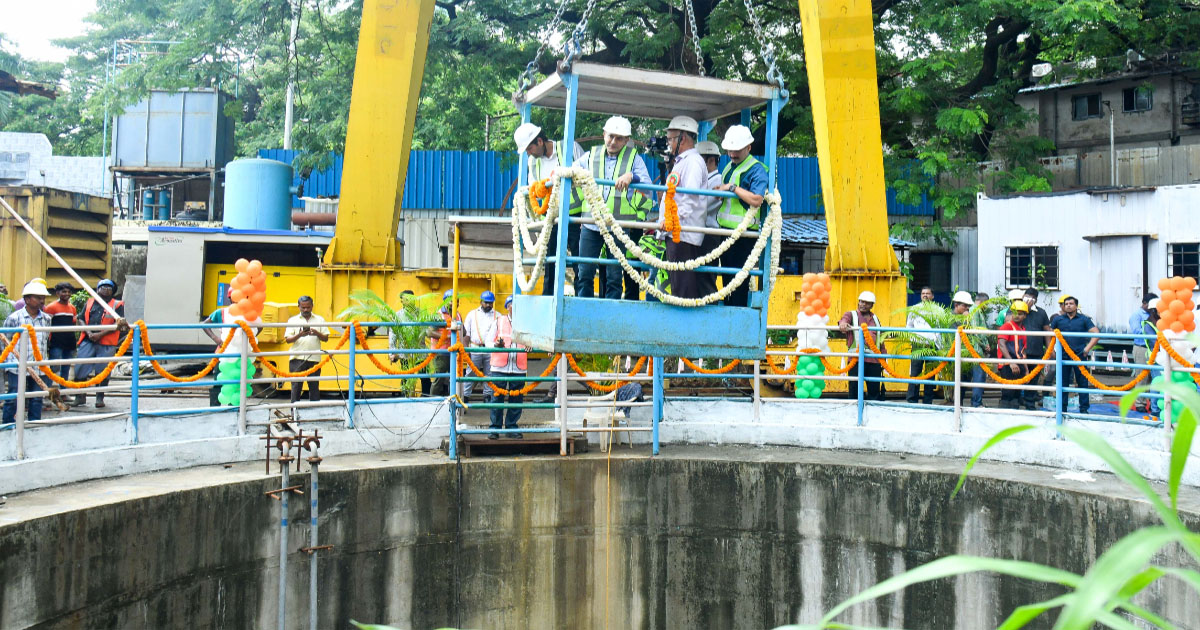
The Mumbai Municipal Corporation has started the work of connecting the water tunnel from Amar Mahal to Wadala, Parel as well as Trombay and Tarbhe high level reservoirs. Under this, connection of 1800 mm diameter water pipelines and other ancillary works will be carried out. For these works, the 1800 mm water pipe of Tarbhe high level reservoir and 1200 mm water pipe of Tarbhe low level reservoir will be temporarily closed. All the works related to water supply will be carried out from Tuesday, May 5, 2026, 10 am to Wednesday, May 6, 2026, 4 pm (total 30 hours). During this work, water supply will remain closed at some places in F North, F South and L, M East, M West and N sections of the city division and eastern suburbs. Water will be supplied at low pressure at some places. The Mumbai Municipal Corporation administration is appealing to the citizens of the concerned division to store the necessary water during the said period. They are requested to cooperate by using water sparingly.
The work of implementing the water tunnel from Amar Mahal (Hedgewar Udyan) to Wadala (Prateeksha Nagar) and thereafter to Parel (AMT-1) will be carried out by the Municipal Corporation, similarly from Amar Mahal to Trombay Reservoir (AMT-2) and thereafter to Turbhe High Level Reservoir will be carried out by the Municipal Corporation. Under this, the 1800 mm diameter water pipeline supplying water to Turbhe High Level Reservoir will be connected to another 1800 mm diameter water pipeline through the Water Supply Project Department. Other water works will also be carried out in this regard. In order to carry out water supply related works, the 1800 mm diameter water pipeline supplying water to the Tarbhe High Level Reservoir and the 1200 mm diameter water pipeline of the Tarbhe Low Level Reservoir will be closed. This operation will continue from 10 am on Tuesday, May 5, 2026 to 4 pm on Wednesday, May 6, 2026, i.e. for a total of 30 hours. Due to which water supply to F North, F South, L, M East, M West and N divisions will be affected.
Detailed details of affected areas
F North Division Pratiksha Nagar, Shastri Nagar, Sanjay Gandhi Nagar, Shanti Nagar, HM Marg, KD Gaikwad Nagar, Wadala Truck Terminus, New Cuffe Parade, Alameda Complex (Water supply will remain closed on Wednesday, May 6, 2026).
Chef (East) and Chef (West) (Water supply will be at low pressure on Wednesday, May 6, 2026)
F South Zone Dr. Babasaheb Ambedkar Marg, Dinshaw Pat Marg, SS Rao Marg, Dr. Ernest Borges Marg, Parmar Guruji Marg, Gokhale Marg, N.M.G.S. Marg, Dadasaheb Phalke Marg, Govindji Kenny Marg, Jarbai Marg, St. Bowker, Dev Marg. Marg, St. Xavier Marg, Khashaba Marg, Mahadev Palu Marg, Jiji Bhoy Lane, Acharya Donde Marg, Vitthal Chavan Marg, Jagannath Bhatinkar Marg, Batliwala Gali, Chamar Bagh Marg, I Mai Muranji Marg, Shrodkar Marg, Chioda Gali, Marg, Marg, Sang Company (Water supply will be closed on Wednesday, May 6, 2026) L-Section Sibal Nagar, Santoshi Mata Nagar, Kranti Nagar, Lokmanya Tilak Terminus, Naveen Tilak Nagar (Water supply will be closed on Wednesday, May 6, 2026). Qureshi Nagar (Butchery) (Water supply will be closed on Tuesday, May 5, 2026 and Wednesday, May 6, 2026). Hill Marg, Tadi Peeth, Mukta Devi Marg, Gawadevi Mandal, Dongar Paris, Patil Gali, Gulmohar Gali, Panchsheel Nagar (Water supply will remain closed on Tuesday, May 5, 2026). Nehru Nagar, Shivsruthi Marg, Nayak Nagar, Mother Dairy Marg, SG Barve Marg Kurla (East), Kedarnath Mandir Marg, Noor Bagh, Kamgar Nagar, Hanuman Nagar, Police Colony, Kurla Car Shed, Railway Colony, Taxila Nagar, Chafe Gali, Marupur Nagar, Rahul Nagar, Tri Nagar. N. Purav Marg, Umarwadi Marg, Ali Dada Street, Swadeshi Mill Rice, Chonbhati Phatak, MHADA Colony, Samarth Nagar (Water supply will remain closed on Tuesday, May 5, 2026). M. East Division Lallubhai Complex, Kamla Raman Nagar, Raman Mama Nagar, Shivaji Nagar, Lotus Colony, Gautam Nagar, Gaikwad Nagar, Ayodhya Nagar, Vashi Naka, Mankhord (Water supply will remain closed on Wednesday, May 6, 2026).
Beganwadi, Mankhord Bharat Nagar, MHADA Buildings, Chitta Camp, Sathe Nagar, Zakir Hussain Nagar, Deonar Village, Deonar Colony, New Bharat Nagar, Hashu Advani Nagar, Nattur Parekh Complex (Water supply will remain closed on Tuesday, May 5, 2026).
Sahyadri Nagar, Vidhali Village, BARC Colony, Kamala Raman Nagar, Raman Mama Nagar, Dumping Supply (water supply will be closed on Tuesday, May 5, 2026).
Rafiq Nagar, Mandla Village, New Mandla, Padma Nagar, Vishnu Nagar, LU Gadkari Marg, RNA Park, Kokreja Buildings, Vashi Naka, Chitta Camp, Maharashtra Nagar, MHADA Buildings, Indian Oil Nagar (water supply will be off on Tuesday May 2026).


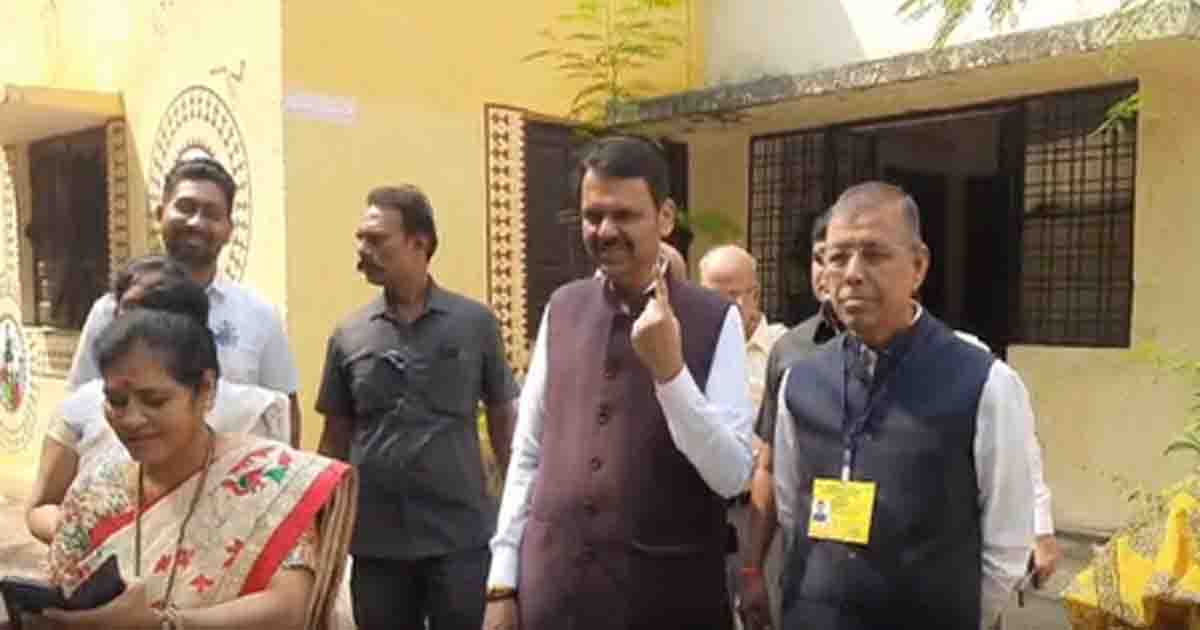
Polling for five Maharashtra Legislative Council seats, comprising three graduate and two teacher constituencies, is currently underway on Friday with 182 candidates in the fray, and their political futures sealed in ballot boxes across 2,419 polling stations.
The counting is scheduled for October 27. The polling, which started at 8 a.m. and will continue till 4 p.m., is taking place in the Pune Teachers and Pune Graduate constituencies; Amravati Teacher Constituency; Nagpur and Chhatrapati Sambhajinagar Graduate Constituencies, where the rebels have made the elections tough for both the ruling Mahayuti and Maha Vikas Aghadi.
Union Minister of State Murlidhar Mohol cast his vote at Dindayal Upadhyaya School in Kothrud, Pune. Speaking to reporters after exercising his franchise, Mohol expressed firm confidence that the ruling Mahayuti coalition will secure victories across all five constituencies.
Mohol stated that graduate and teacher voters are educated and analytical. He noted that voters evaluate national progress, global developments, and the accelerated pace of state development under Prime Minister Narendra Modi and Chief Minister/Deputy CMs leadership before casting their ballots.
Addressing comparisons with cooperative body elections (such as Gokul), Mohol emphasised that cooperative and legislative council polls operate under entirely different dynamics.
He reiterated full confidence in the victory of candidates such as Smita Jadhav and Kaustubh Gawde, noting that alliance-supporting voters will firmly back the coalition.
The Higher and Technical Education Minister Chandrakant Patil also said that the Mahayuti will win all five seats.
Expressing strong confidence in the Maha Vikas Aghadi (MVA) ahead of the Legislative Council elections, the Congress Legislature Party leader Vijay Wadettiwar predicted victories across all five seats, including the Nagpur Graduate constituency, both seats in Pune, Chhatrapati Sambhajinagar, and Amravati. Levelling serious allegations over electoral integrity, Wadettiwar claimed that flawed voter lists are a critical issue and asserted that the BJP resorts to manipulation in voter rolls because it cannot win elections fairly.
The Pune graduate constituency records the highest participation base with approximately 3.88 lakh voters. The Amravati teacher constituency records the smallest base with approximately 35,000 voters.
To ensure ballot validity, voters were required to present valid identification documents, including Aadhaar cards, driving licenses, PAN cards, Indian passports, government or semi-government service ID cards, MP/MLA/MLC official IDs, educational institution service IDs, or original university degree/diploma certificates.
The election process in the Nagpur graduate constituency witnessed friction following allegations of discrepancies in the voter rolls. Congress candidate Abhijit Wanjari and party leaders raised concerns over 8,744 duplicate voter entries across multiple polling booths, calling the situation a matter of serious concern.
Congress state chief spokesperson Atul Londhe alleged during a press conference that approximately 20,000 to 22,000 voter registrations were processed using a single mobile number (5432154321), and questioned the transparency of the verification process. A formal letter demanding an inquiry was submitted to the divisional commissioner by Congress leader Prafulla Goodhe.
Following complaints, election authorities at polling booths required voters with duplicate listings to execute a short written declaration confirming they were voting at only one designated location and would not cast a vote elsewhere.
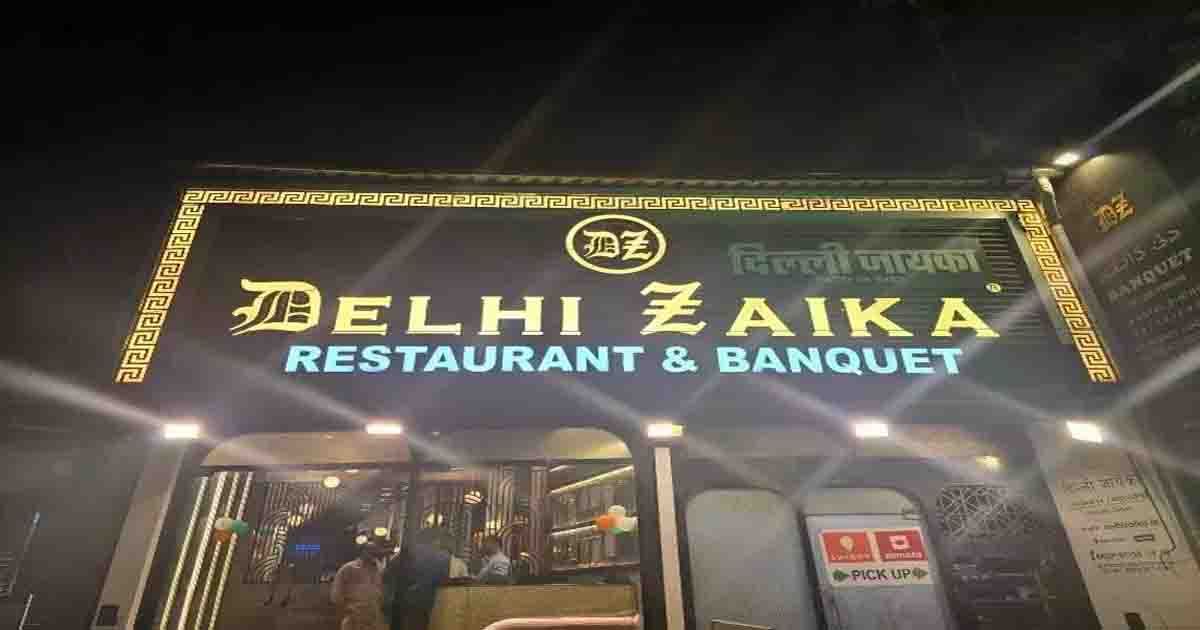
The Food and Drugs Administration (FDA) conducted a raid in Kurla, Mumbai, and suspended the license of ‘Desired Food and Hospitality’ (Delhi Zaiqa), imposing a complete ban on the sale of food items and prepared dishes at the establishment. Any violation of this order will result in further action by the FDA in accordance with the Food Safety Act.
During the inspection, the FDA observed several issues: the paint or plaster on the walls, ceilings, and doors was peeling; refrigeration and freezing facilities were inadequate; doors were not properly secured against pests; and utensils and containers were not in a condition to be cleaned effectively. The flooring had cracks, lacked proper slip resistance, and had an incorrect slope. Furthermore, food items were not stored at appropriate temperatures, and the establishment failed to follow FIFO (First-In, First-Out) or FEFO (First-Expired, First-Out) inventory management practices.
Additionally, the cooking oil used was unsuitable and unmonitored. There was no segregation between raw and cooked food, or between vegetarian and non-vegetarian items. Utensils were unclean, and the food did not meet hygiene standards. Records regarding suppliers and product expiry dates were unavailable. There was poor management of food quality, alongside unsanitary conditions in the kitchen and surrounding areas, including a lack of cleaning for floors and drains. Based on these findings, the FDA has suspended the establishment’s license for violating established rules and regulations.
Maharashtra
‘Fearing freedom’: Shiv Sena(UBT) criticises Centre over CJP activists’ arrest in ‘Saamana’

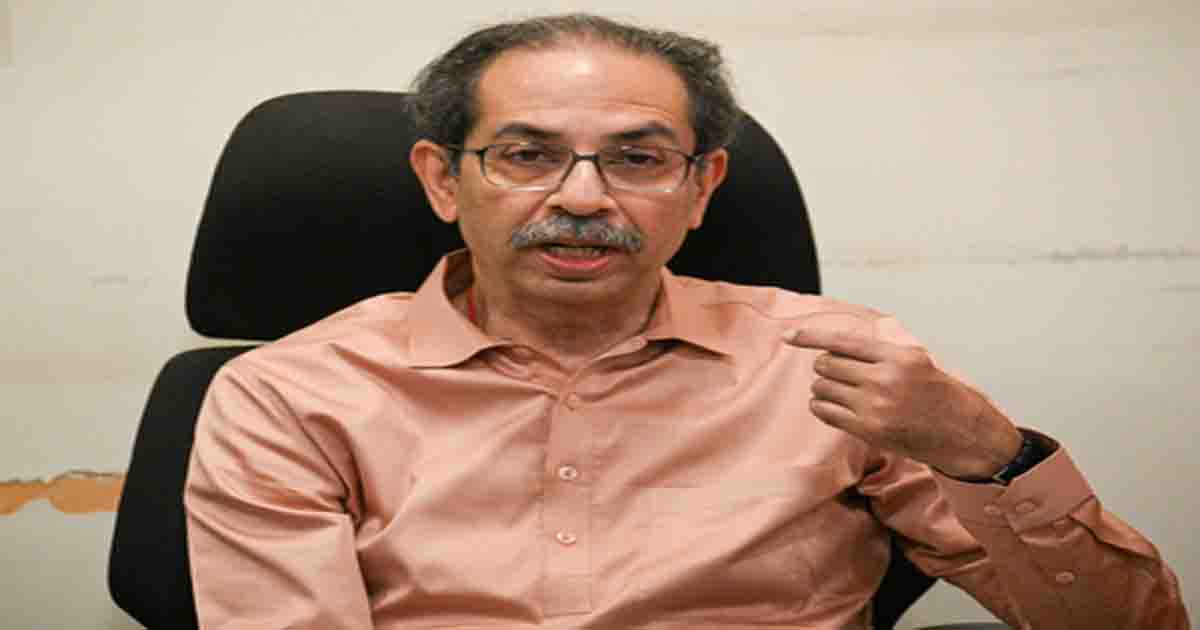
Shiv Sena Uddhav Balasaheb Thackeray on Friday accused the BJP government at the Centre of suffering from ‘deep insecurity’ and establishing a virtual “Police Raj” in the country.
The party criticised the arrest and seven-day detention of Cockroach Janta Party (CJP) youth activists Saurav Das and Ashutosh Ranka, who were jailed for carrying the National Flag and protesting peacefully at Delhi’s historic Jantar Mantar against Chief Election Commissioner Gyanesh Kumar.
The Thackray camp, in an editorial in the party’s mouthpiece, Samaana, questioned whether the government is afraid of peaceful democratic protests or terrified of young citizens holding the Indian National Flag. It condemned the government for systematically seizing public protest venues — from Mumbai and Delhi to Patna, Lucknow, and Kolkata — denouncing it as the outright choking of democracy.
Pointing out a stark contrast, the editorial highlighted that while courts lecture idealist youths holding the Tricolour, justice appears surprisingly lenient towards perpetrators of grave crimes, citing the case of rape-convicted former politician Kuldeep Sengar, whose sentence was suspended by a judge on the bench.
The editorial criticised the administration for using uniformed forces and political loyalists to suppress dissent, asserting that politicians once faced protesters directly, whereas the current regime hides behind barricades, police forces, and court injunctions.
The editorial detailed how CJP activists Saurav Das and Ashutosh Ranka were locked up in Tihar Jail after defying prohibitory orders issued by Union Home Minister Amit Shah, who unilaterally removed Jantar Mantar from the list of approved protest sites. “The children did not go to Jantar Mantar to play ‘Dandiya’; they went to raise their voice against corrupt electoral practices. If the government were truly generous and democratic, would it lock down Jantar Mantar? Asking protesters to seek government permission before rallying against state injustice is absurd — would a despotic regime ever grant permission for a protest against itself?” questioned the editorial.
Refuting arguments that “unscrupulous elements” might infiltrate public rallies — a rationale cited to justify police clearances — the Thackeray camp pointed out that prominent leaders such as Sonam Wangchuk, opposition MPs, and Parakala Prabhakar (the economist and husband of Union Finance Minister Nirmala Sitharaman) have all taken to the streets. “Are these individuals also ‘troublemakers’?” the editorial asked, alleging that actual violence stems from government-backed elements clad in khaki executing crackdowns on students.
Expressing deep disappointment over the High Court’s lecturing young idealists about student unrest in France or Albania, the Uddhav Thackeray-led Shiv Sena urged the judiciary to look at the root cause rather than the symptoms.
The editorial asserted that the policy under the current leadership has become clear — citizens must not ask questions, nor should they demand accountability. The editorial concluded that when a government begins fearing peaceful, nation-loving youths holding the Tricolour, it signals not strength but the peak of political paranoia — a phenomenon uniquely characteristic of the Modi-Shah administration.

One killed as freight train hits pickup van at unmanned railway crossing in MP Anuppur

Adani Power Q2 profit jumps 141 pc to Rs 7,019 crore on strong demand

BJP’s days are numbered, SP certain to win 2027 UP elections: Abu Azmi

Centre expects anti-cancer drug prices to fall 20-70 per cent under proposed trade margin cap

Delhi Police cracks two home burglary cases with arrest of two men; stolen jewellery, Rs 42,670 recovered

Rahul, Cong ecosystem want to force regime change: BJP after Neha Bora praises B’desh Gen-Z protest

BJP pays tribute to ex-President Abdul Kalam, recalls his enduring influence on generations of India’s youth

Attack on democratic rights: INDIA Bloc leaders on detentions of anti-ECI protestors

INDIA bloc begins protest march against ECI

Maha Congress stages agitation against Gyanesh Kumar
-

 Crime4 years ago
Class 10 student jumps to death in Jaipur
-

 Maharashtra2 years ago
Mumbai Local Train Update: Central Railway’s New Timetable Comes Into Effect; Check Full List Of Revised Timings & Stations
-

 Maharashtra2 years ago
Mumbai To Go Toll-Free Tonight! Maharashtra Govt Announces Complete Toll Waiver For Light Motor Vehicles At All 5 Entry Points Of City
-

 Maharashtra2 years ago
False photo of Imtiaz Jaleel’s rally, exposing the fooling conspiracy
-

 National News2 years ago
Ministry of Railways rolls out Special Drive 4.0 with focus on digitisation, cleanliness, inclusiveness and grievance redressal
-

 Maharashtra2 years ago
Maharashtra Elections 2024: Mumbai Metro & BEST Services Extended Till Midnight On Voting Day
-

 National News2 years ago
J&K: 4 Jawans Killed, 28 Injured After Bus Carrying BSF Personnel For Poll Duty Falls Into Gorge In Budgam; Terrifying Visuals Surface
-

 Crime2 years ago
Baba Siddique Murder: Mumbai Police Unable To Get Lawrence Bishnoi Custody Due To Home Ministry Order, Says Report