
National News
Dusted, rusted approach of vote bank is no longer working, says Nadda

BJP chief J.P Nadda on Monday said that Indian politics has undergone a rapid transformation in the last eight years.
In a letter to fellow citizens, Nadda said: “Indian politics has undergone a rapid transformation in the last eight years. The tried, tested, or I should say dusted and rusted approach of vote bank politics, divisive politics, and selective politics is no longer working.”
Nadda’s letter follows a joint statement of opposition parties on recent violence. “Under the leadership of Prime Minister Narendra Modi and his emphasis on ‘Sabka Saath, Sabka Vikas, Sabka Vishwas and Sabka Prayas’ every Indian is being empowered and is getting the wings to rise further. Unfortunately, this thrust towards development politics is being bitterly resisted by the rejected and dejected parties who are once again taking refuge in vote bank and divisive politics,” Nadda wrote.
He further wrote that today, India is seeing two distinctive styles of politics – the NDA’s efforts which are seen in their work and the petty politics of a group of parties, which is seen in their acerbic words. “In the last few days, we have seen these parties come together yet again in letter (whether in spirit too, time will tell) in which they have waged a direct onslaught on the spirit of our nation and cast aspersions on our hard working citizens,” he wrote.
Referring to violence in Rajasthan, he said: “I want to remind the rejected and dejected political parties – since you talk about vote bank politics, why have you forgotten the shameful happenings in Karauli, Rajasthan? What are the compulsions that are driving your haunting silence on the issue?”
“In November 1966, then Prime Minister Indira Gandhi opened fire on Hindu Sadhus sitting outside Parliament who had marched towards Delhi with the demand of banning cow slaughter in India. And who can forget Rajiv Gandhi’s infamous words – “When a big tree falls, the earth shakes” – that justified the killing of thousands of Sikhs in the wake of PM Indira Gandhi’s death,he said.
He mentioned violent incidents– Gujarat in 1969, Moradabad 1980, Bhiwandi 1984, Meerut 1987, various incidents against the Hindus in Kashmir valley throughout the 1980s, 1989 Bhagalpur, 1994 Hubballi. “The list of communal violence during Congress rule is long. Under which Government did the Muzaffarnagar Riots happen in 2013 or the Assam Riots in 2012,” he asked.
He noted that it was the UPA, controlled by an extra-constitutional NAC that brought in the most horrific Communal Violence Bill, which stooped to new lows of vote bank politics by even UPA standards.
“Similarly, the most horrific massacres against Dalits and Tribals have taken place under Congress regimes. This is the same Congress that even got Dr Ambedkar defeated in Parliamentary elections,” he said.
He mentioned that in Tamil Nadu, elements aligned to the ruling party in the state have left no stone unturned in verbally lynching, smearing and humiliating one of India’s tallest musical maestros just because he has views not palatable to one political party and their allies. “Is this democratic? One can have different views and yet coexist happily but why take to insults,” he further asked.
Talking about violent attacks on party workers in Kerala and West Bengal, the BJP chief said: “The shameful political violence in West Bengal and Kerala, and the repeated killing and targeting of BJP workers offers a glimpse of how some of our political parties view democracy.”
He pointed out that in Maharashtra, two Cabinet Ministers have been arrested on serious charges of corruption, extortion and links with anti-social elements. “Is this not worrisome for us as a nation that a state which houses India’s financial capital has such an uninspiring coalition where top Cabinet ministers have such extortionist tendencies,? he asked.
“This brings me to my next point. The reason for the shameful conduct by a select group of political parties lies in the above list of incidents that I have shared. Dyed in the wool proponents of vote bank politics that they are, these parties are fearing that their shenanigans are being finally exposed comprehensively,” the veteran leader said.
He alleged that for decades, they freely patronised lumpen, anti-social elements who bullied common people. Now that these elements are being subjected to the laws of the land, the parties which sheltered these elements are panicking and thus taking to this bizarre conduct.
“The results of the recently held Assembly election should be an eye-opener for those who thrive on vote bank politics. India’s largest state on the electoral map, a coastal state on the western coast, a state in the Northeast and a hill state have given a resounding mandate to the BJP,” he said.
Nadda claimed that due to the BJP, India is seeing a sentiment of pro-incumbency where developmental politics is being resoundingly rewarded.
The BJP also became the first party in many years to cross the 100 figure in the Rajya Sabha and get an absolute majority in the UP legislative council. The Opposition should introspect why the parties that ruled the nation for so many decades have been confined to the margins of history now, he noted.
“The youth of India want opportunities, not obstacles. They want development, not divisions. Today, when people across all faiths, all age groups as well as from all walks of life have come together to defeat poverty and take India to new heights of progress, I would urge the Opposition to change track and embrace the politics of development. We owe this to our coming generations,” Nadda added.

National News
PM Modi reiterates call for unity against divisive forces; emphasises self-reliance, Viksit Bharat by 2047

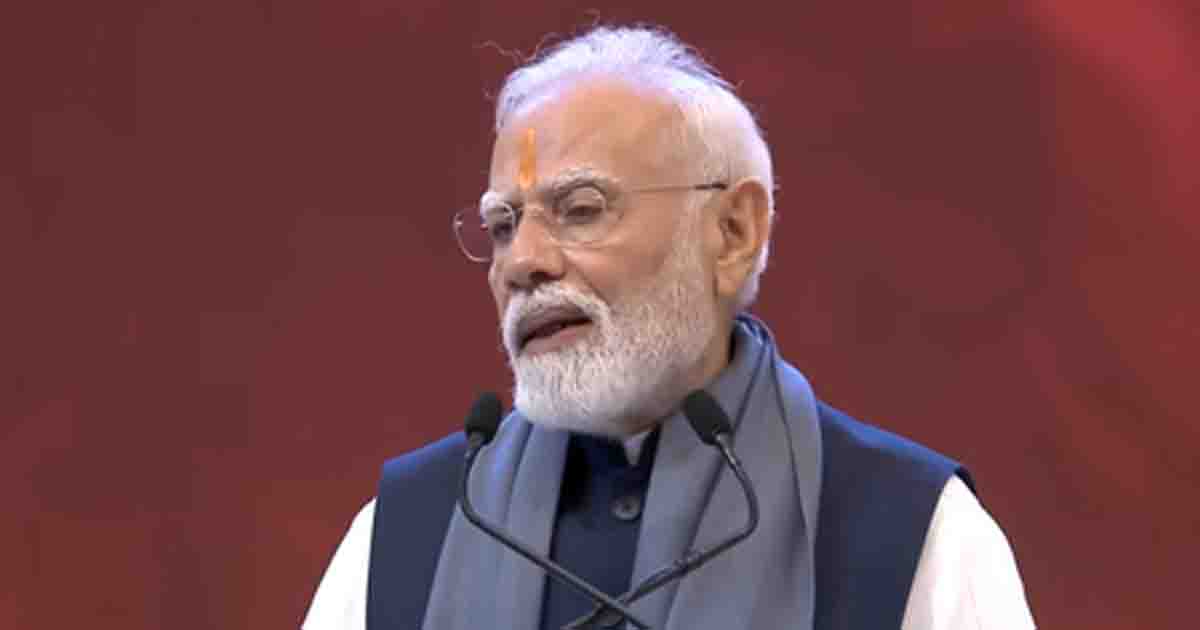
Prime Minister Narendra Modi on Friday called for unity against divisive forces, saying that new challenges and social distortions had emerged over the past decades and that the responsibility to address them rested with everyone.
Addressing the Chinmaya Amrit Mahotsav Global Sammelan in New Delhi, PM Modi emphasised the need to promote self-reliance and connect every citizen with the vision of a developed India by 2047.
“Times have changed in the past decades. New challenges have arisen for the country. New distortions have emerged in society. Today, the responsibility to resolve them rests with all of us,” the Prime Minister said.
“Today, we have to unite society against the divisive forces. We must awaken our citizens to the need for self-reliance. We must connect every citizen with the resolve for a developed India in 2047. We must become more active towards these objectives,” he added.
PM Modi said he had consistently kept young people at the centre of government policies and expressed happiness over the contributions made by the youth during the Chinmaya Amrit Mahotsav celebrations.
“In this journey, I have tried to keep youth in focus in all the policies. I am happy that young people have taken up several responsibilities during the Chinmaya Amrit Mahotsav,” he said.
Highlighting an initiative undertaken by young members of the Chinmaya Mission, the Prime Minister said a group of youngsters had travelled extensively across the country and interacted with thousands of young people.
“My young friends have travelled for 300 days, covering 40,000 kilometres. During this journey, they have met more than one lakh young people. I want to thank the entire team for this,” he said.
Referring to the Upanishadic expression ‘Vayam Amritasya Putrah’, meaning ‘We are the children of immortality’, PM Modi said it did not imply physical immortality but rather the eternal nature of consciousness.
“The meaning of ‘Bharat’ is someone who is engaged in knowledge and research,” he said, highlighting India’s longstanding intellectual and spiritual traditions.
Recalling India’s 75th year of Independence, PM Modi said he had wanted the milestone to inspire the vision of a developed nation while also highlighting the country’s enduring civilisational values.
“When the country marked 75 years of Independence, I thought we should not only make this occasion a platform to inspire the vision of a developed India but also bring to life the spirit of India, which knows how to live by immortal ideas and, drawing on its experience spanning thousands of years, can express concern for humanity across generations,” he said.
The Prime Minister said Swami Chinmayananda had devoted his life to raising awareness about the nation’s cultural heritage and development.
“Those of us who think about the country’s interests should work to make the nation aware and developed. Swami Chinmayananda devoted his entire life to this mantra. With the same devotion with which he spoke about spiritual subjects, he also spoke passionately and extensively about matters concerning the nation, because our nation is the birthplace of our culture and the foundation of our existence,” PM Modi said.
He also recalled Swami Chinmayananda’s birth centenary and the release of a commemorative coin in his honour in 2015. PM Modi described the spiritual leader’s life as a remarkable confluence of knowledge, action and devotion.
Highlighting the government’s efforts to reform education, the Prime Minister said the National Education Policy was introduced to meet the needs of a new India.
He said the policy placed importance on India’s knowledge traditions, education in the mother tongue, modern science and emerging technologies.

At least four people were killed and two others seriously injured after a car went out of control following a tyre burst and plunged into a deep roadside ditch near Raisar on Rajasthan’s Dausa-Manoharpur National Highway (NH-148) early Friday morning.
According to officials, all six occupants were pilgrims returning to Agra after visiting Khatu Shyamji.
The accident occurred at around 6 a.m. when the car’s tyre burst while the vehicle was travelling within the jurisdiction of the Raisar police station. The driver lost control, causing the car to plunge into the ditch. After receiving information, police reached the spot and, with the assistance of local residents, rescued those trapped inside the vehicle.
The injured were rushed to a hospital by ambulance, while the bodies of the deceased were shifted to the mortuary of a government hospital.
Raisar Station House Officer Rajpal Singh said the accident occurred due to a tyre burst.
The deceased have been identified as Atul, Mukul, Rupesh and Shiva, all residents of Agra. Two other occupants, Rahul and Arpit, sustained serious injuries and were admitted to a private hospital for treatment.
The accident triggered a traffic jam on the Dausa-Manoharpur National Highway. Long queues of vehicles formed on both sides of the road, causing inconvenience to commuters for nearly an hour.
After ensuring that the injured were taken to the hospital, police personnel managed traffic movement. The damaged car was subsequently removed from the ditch with the help of a crane.
In a separate accident in Rajasthan’s Dausa district, a loading tempo travelling from Delhi to Kota veered off the Delhi-Mumbai Expressway and overturned into a roadside ditch early Friday morning, leaving five people injured.
The injured have been identified as Noorjahan, Zyakat Ali, Kunal, Ajay and the driver, Vijaypal.
All five are residents of Kota and work in setting up amusement rides at fairs. They were taken to Dausa District Hospital, where they are undergoing treatment. According to police, the accident occurred after the driver reportedly dozed off at the wheel.
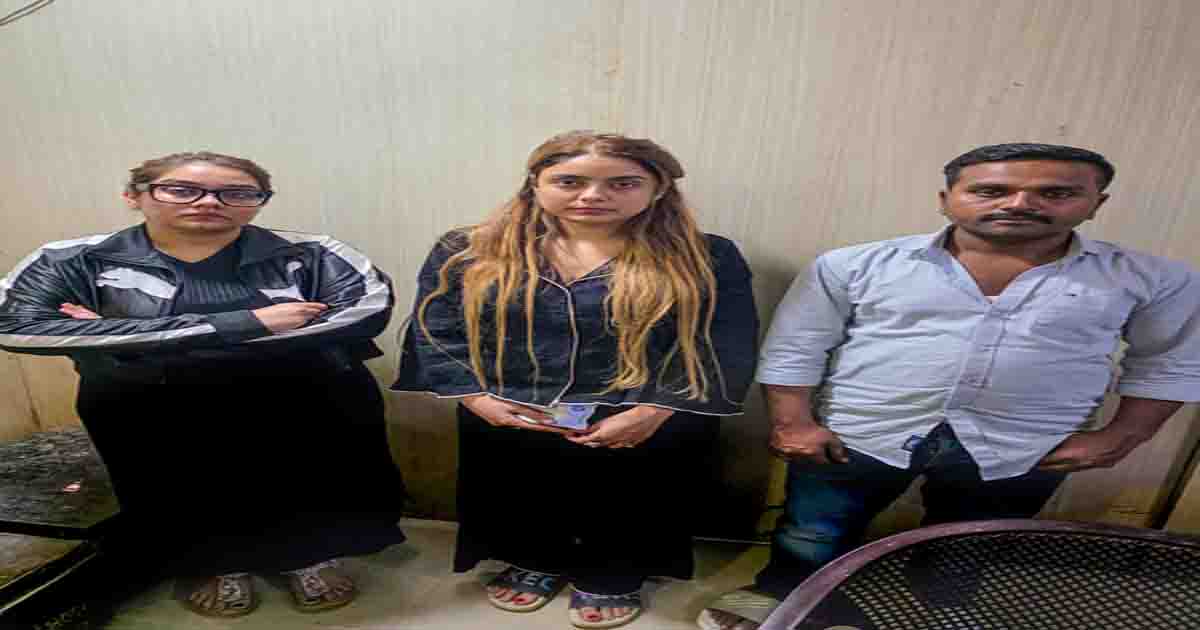
Model Shraddha Dubey, the prime accused in the murder of Shiva Sharma, has revealed details of her escape route and admitted that her boyfriend, Amir, had helped her evade the police, according to officials.
During hours of interrogation, Dubey disclosed several details but remained silent on certain aspects of the case. She was subsequently sent to jail. Investigators suspect that she kept her driver, Danish, with her to prevent him from revealing her secrets. She used him as a shield and a means of facilitating her escape.
In her statement to the police, Dubey admitted to travelling to Kanpur and Agra. On October 18, she reportedly visited a hotel in Kanpur to book a room. However, when the hotel staff asked her to produce identification, she left without completing the booking.
Dubey feared that if her photograph went viral following the murder case, the hotel staff might recognise her and inform the police. She subsequently booked a car and left for Nagpur without staying at the hotel.
She managed to evade the police for 11 days. Although she was fond of staying in large, luxurious hotels, she reportedly chose smaller hotels and lounges where identification documents were not required to avoid disclosing her identity.
Dubey also travelled to Rae Bareli but could not reach her home. Fearing that she might flee abroad, the Deputy Commissioner of Police (DCP) issued a lookout circular.
During interrogation, Dubey reportedly admitted that Amir had been accompanying her since Lucknow and had helped her enter Nepal through Bahraich. Following her statement, the police are likely to add Amir’s name to the First Information Report (FIR). Preparations are also underway to announce a reward for information leading to his arrest.
According to the DCP (Central), investigators are identifying people who allegedly helped Dubey and the other accused evade the police. Strict action will be taken against those found assisting them.
Investigators have also learnt that Dubey remained in contact with several people at the locations she visited. Police suspect that someone was continuously guiding her and helping her avoid arrest.
The DCP personally interrogated Dubey for hours. During questioning, she reportedly refrained from naming anyone and repeatedly complained of difficulty in breathing and speaking.
Meanwhile, Dubey was arrested in Nagpur by the Uttar Pradesh Special Task Force (STF) and Lucknow Police, officials said on Tuesday.
She had been on the run since October 9, when Sharma allegedly fell from the balcony of an apartment in Lucknow’s Hazratganj area. His death was initially treated as an accidental fall, but later became a suspected murder case after his family alleged that he had been assaulted and tortured before being thrown from the building.

PM Modi reiterates call for unity against divisive forces; emphasises self-reliance, Viksit Bharat by 2047

Salman Khan writes lengthy notes as autographs for little fans, stops to interact with them amid busy schedule

Trump signals possible further action on Iran

‘Fearing freedom’: Shiv Sena(UBT) criticises Centre over CJP activists’ arrest in ‘Saamana’

Four killed as car plunges into ditch on Dausa-Manoharpur Highway in Rajasthan

Rahul, Cong ecosystem want to force regime change: BJP after Neha Bora praises B’desh Gen-Z protest

BJP pays tribute to ex-President Abdul Kalam, recalls his enduring influence on generations of India’s youth

Attack on democratic rights: INDIA Bloc leaders on detentions of anti-ECI protestors

INDIA bloc begins protest march against ECI

Maha Congress stages agitation against Gyanesh Kumar
-

 Crime4 years ago
Class 10 student jumps to death in Jaipur
-

 Maharashtra2 years ago
Mumbai Local Train Update: Central Railway’s New Timetable Comes Into Effect; Check Full List Of Revised Timings & Stations
-

 Maharashtra2 years ago
Mumbai To Go Toll-Free Tonight! Maharashtra Govt Announces Complete Toll Waiver For Light Motor Vehicles At All 5 Entry Points Of City
-

 Maharashtra2 years ago
False photo of Imtiaz Jaleel’s rally, exposing the fooling conspiracy
-

 National News2 years ago
Ministry of Railways rolls out Special Drive 4.0 with focus on digitisation, cleanliness, inclusiveness and grievance redressal
-

 Maharashtra2 years ago
Maharashtra Elections 2024: Mumbai Metro & BEST Services Extended Till Midnight On Voting Day
-

 National News2 years ago
J&K: 4 Jawans Killed, 28 Injured After Bus Carrying BSF Personnel For Poll Duty Falls Into Gorge In Budgam; Terrifying Visuals Surface
-

 Crime2 years ago
Baba Siddique Murder: Mumbai Police Unable To Get Lawrence Bishnoi Custody Due To Home Ministry Order, Says Report