
National News
Tension in Kolkata’s Jadavpur University after ABVP-SFI clashes; V-C hints at police outpost

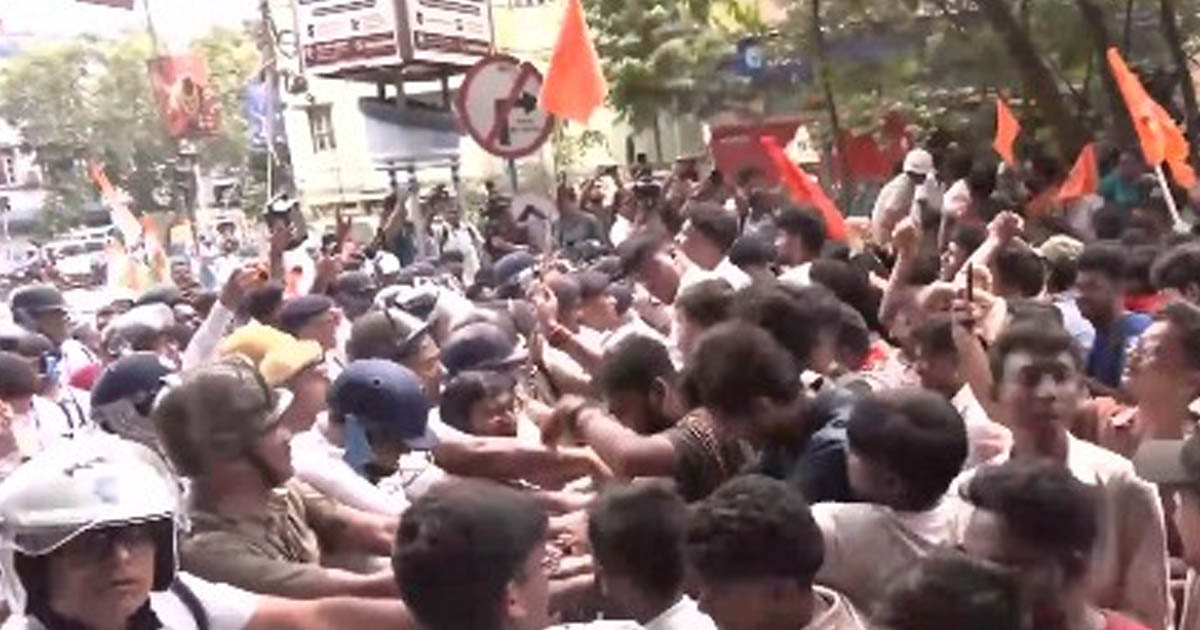
Tension prevailed at Jadavpur University in Kolkata following clashes between two rival student groups, prompting Vice-Chancellor Chiranjib Bhattacharya to hint at the possibility of setting up a permanent police outpost on the campus to maintain law and order.The supporters of the Students’ Federation of India (SFI), the student wing of the Communist Party of India-Marxist, and the Akhil Bharatiya Vidyarthi Parishad (ABVP) clashed at Jadavpur University in the intervening night of Wednesday and Thursday.
Following the clashes, with the two student groups continuing to challenge each other escalating tension in the campus, the Vice-Chancellor said on Thursday that the university may consider setting up a permanent police outpost on the campus if such incidents continue.Bhattacharya said that a permanent police outpost would not fit the culture of “open-minded thinking” for which Jadavpur University has been known for years.However, he added that the proposal could be considered if repeated clashes among student groups disturb the campus atmosphere.
“A university campus cannot be beyond the law and order of the country. So whatever laws are in the legal system of the country will be applicable here as well. I will try to maintain security within the campus. I am familiar with this ecosystem here. We believe in open-minded thinking. That will remain. A permanent police outpost does not suit the culture of Jadavpur University. But if such incidents happen again and again, we will have to think of that,” Bhattacharya said.An FIR was registered against 11 people under various sections of the Bharatiya Nyaya Sanhita (BNS) at Jadavpur Police Station.
All 11 people named in the FIR are associated with the SFI or other Left-wing student groups.On Thursday morning, SFI supporters began a protest march towards the Jadavpur University campus from the Jadavpur 8 Bus Stand in Kolkata.A large police contingent stopped the march at the outset.Besides personnel from the Kolkata Police, a sizeable number of Central Armed Police Forces (CAPF) personnel were deployed to prevent the protesters from reaching the university campus.
Meanwhile, a counter-rally by the ABVP began from Golpark Crossing, also in south Kolkata.The ABVP procession is also expected to be stopped before it reaches the university’s main gate, with police likely to halt it near Jadavpur Police Station.The primary objective of the police deployment is to prevent the two rival groups from coming face to face and avoid further clashes.The SFI has warned that it will not accept any move by the ABVP to proceed towards the university campus from the direction of Jadavpur Police Station.

A 75-year-old man was allegedly stabbed to death, while a woman and her 25-year-old son were injured in a violent clash between neighbours at Rohda Kala village under Barharia police station limits in Bihar’s Siwan district on Wednesday.
The deceased was identified as Rama Nandan Prasad, son of the late Garib Bhagat.
The injured were identified as Baby Devi, 44, and her son Kishan Kumar, 25.
The injured were taken to the Barharia Community Health Centre for treatment. While Kishan received primary medical care, Baby Devi was referred to Siwan Sadar Hospital due to her critical condition.
According to Kishan Kumar, his grandfather was sitting outside the house drinking tea while his mother was cooking, and he was asleep.
Hearing a commotion, he went outside and found his grandfather lying in a pool of blood.
He then heard his mother crying from inside the house and rushed in, where he allegedly saw neighbours attacking her with knives. When he tried to intervene, he was also injured in the attack.
Kishan claimed that he had no prior dispute with the neighbours and said the reason for the attack was unclear.
With the help of residents, two alleged assailants were apprehended and handed over to the police.
After receiving information, the Barharia police reached the village and launched an investigation.
A Forensic Science Laboratory (FSL) team was also called to collect evidence from the scene.
The police have set up a camp in the village amid tension following the incident.
Barharia Station House Officer Chhotan Kumar said a patrolling officer was initially sent to the spot, after which he reached the village to investigate the incident.
He said an FIR has been registered against the named accused based on Kishan Kumar’s statement.
The two detained suspects are being questioned, while the motive behind the incident remains unclear.
Police said further action would be taken based on the investigation.
National News
BJP is the real crisis, people and farmers will take away CM’s chair, says Akhilesh Yadav

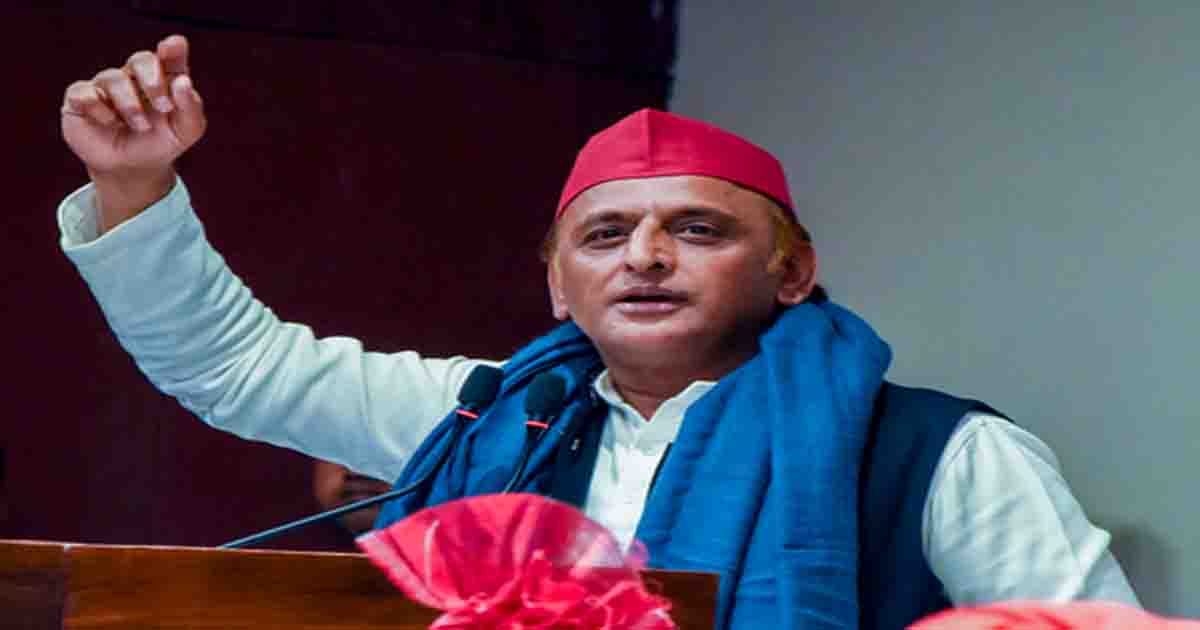
Samajwadi Party chief Akhilesh Yadav on Wednesday claimed that Uttar Pradesh Chief Minister Yogi Adityanath’s chair was not safe, and that people, including farmers and younger generations, would bring about a change in the state.
Speaking to reporters, Akhilesh Yadav said the ruling Bharatiya Janata Party (BJP) would face growing public opposition and asserted that the government was attempting to retain power amid mounting challenges.
“Even the Chief Minister’s chair is not safe, because the people are going to take it away from him this time. It is not just the people; farmers are also going to take his chair away. Gen Z is keeping a close watch, and Gen Alpha has also arrived. So, this time, his chair is not going to be safe. They can say anything to save it,” he said.
The Samajwadi Party leader further said the BJP itself was responsible for the problems facing the state and that removing the party from power was the only way to resolve the crisis.
“The BJP must be removed. The BJP itself is the real crisis. The crisis will end only when the BJP is removed. There is only one crisis, and that is the Bharatiya Janata Party,” he said.
Akhilesh Yadav also accused the ruling party of exploiting people’s religious faith and devotion to protect its government.
Referring to the 2020 incident involving gangster Vikas Dubey, whose vehicle overturned while he was being transported by police, he alleged that the incident had helped the government avert a political crisis.
“Look, have faith. You can have faith and devotion, but the BJP members are known for playing with people’s faith and devotion. You all know how people’s faith has been exploited. First, it was people’s faith in temples, and now their faith is being exploited in this matter…This government is trying to save itself from falling. Remember, Vikas Dubey’s vehicle did not overturn; they saved the government from collapsing. This show of faith and devotion is being used to protect their government,” he said.
Akhilesh Yadav also raised concerns over the alleged circulation of voice messages targeting voters, questioning how BJP leaders had obtained voter lists that were not publicly available to everyone.
“Voter lists are not available to everyone, but they are available to all BJP leaders. Voice messages are being sent, and calls are being made. How did the voter lists reach the ministers in the BJP government?” he asked.
He alleged that ministers had obtained voter data and engaged a company to circulate messages, adding that such communications could not be sent without access to the relevant information.
The SP chief also accused the BJP government of electoral malpractice and alleged that officials in the Education Department, including BSAs and DIOSs, were intimidating voters through phone calls.
Akhilesh Yadav warned that officials allegedly involved in such activities could face legal consequences if evidence emerged against them. He urged the Election Commission to remain impartial and called on government officials to perform their duties without political interference.
“If they will be political workers, then they should prepare to go to jail,” he said, alleging irregularities in the education sector, including corruption in transfers and postings.
Referring to his earlier remarks during the elections in Ayodhya, Akhilesh Yadav said those allegedly involved in electoral malpractice would eventually face legal action.
“No one will save you. Today or tomorrow, whenever there is a change, the law will send them to jail,” he said.
The Delhi High Court on Wednesday questioned whether Cockroach Janata Party (CJP) leaders Saurav Das and Ashutosh Ranka could technically be described as Gen Z, after being informed that they were 27 and 32 years old, respectively, while hearing their plea challenging the extension of their judicial custody in the Jantar Mantar trespassing case.
A single-judge Bench of Justice Subramonium Prasad made the oral observations while hearing submissions by advocate Abhik Chimni, appearing for the two activists, who sought their release on personal bonds after the Special Executive Magistrate (SEM) rejected their sureties and extended their custody.
When Chimni informed the High Court about the ages of the two petitioners, Justice Prasad remarked, “Then you are not Gen Z. What is Gen Z?” After being told that people born after 1997 are generally considered Gen Z, the High Court reiterated that the petitioners did not fall within that category.
The Delhi High Court also questioned how the nature of protests and the causes associated with them had evolved, observing that although students and young people had participated in earlier protests, the cause being pursued had since changed.
“Earlier, it was a student protest; children were there, but now it’s another cause. These people remain the same, but the cause is changed,” Justice Prasad orally remarked.
The judge then questioned the association of those organising such demonstrations and the purpose behind it, observing that these aspects could assume significance when authorities examined the possibility of a breach of peace and public tranquillity.
“When there is apprehension of breach of peace and tranquillity, all these questions will assume importance. What is your association? What is the purpose of the association?” the High Court remarked.
It added that such questions assumed significance when authorities were required to assess the likelihood of a breach of the peace and disturbance of public tranquillity.
Justice Prasad observed that these issues could be examined in appropriate proceedings, but the immediate question before it concerned the insistence on furnishing bonds.
During the hearing, Chimni challenged the rejection of the sureties furnished by the petitioners and argued that the decision was legally unsustainable. He sought their release on the basis of personal bonds, contending that preventive custody could not be imposed arbitrarily.
However, the High Court questioned whether the rejection of sureties could be termed illegal and whether the SEM court’s order was amenable to a statutory revision. It also questioned the petitioners’ decision to invoke the High Court’s writ jurisdiction under Article 226 of the Constitution when an alternative remedy of filing a revision petition was available.
Observing that there was a distinction between the maintainability of a petition and whether it ought to be entertained at that stage, Justice Prasad indicated that the petitioners should first await the outcome of the proceedings before the SEM court.
The judge also referred to the breach of bonds furnished by the activists earlier and their subsequent presence at Jantar Mantar, which had been denotified as a designated venue for demonstrations.
The Delhi High Court said that the challenge to the denotification was pending before the Supreme Court and that the notification had not been stayed.
Questioning the need to pursue High Court proceedings before the SEM court took up the matter later in the day, Justice Prasad suggested that the petitioners withdraw the plea and consider their legal options after the proceedings at 2 p.m. “Would it not be better for you to withdraw this, see what happens at 2 PM and then follow the course of law. It is for you to make a decision,” the judge said.
After the matter was passed over to enable the counsel to take instructions, Chimni informed the High Court that the petitioners wished to withdraw the plea. The Delhi High Court permitted the withdrawal and disposed of the petition without expressing any opinion on the merits of the case, leaving all contentions open.
The development came on the day the judicial custody of the two activists was due to end, with both scheduled to be produced before the SEM court. On Monday, SEM Ritu Raj had extended their custody, observing that their conduct “shows no respect for law” and reflected their “habitualness in calling protest at de-notified areas”.
The SEM court had recorded that the investigating officer placed material on record indicating a likelihood of a breach of peace and disturbance of public tranquillity. It also recorded that the two activists had allegedly breached bonds furnished before the SEM, South-West District, on October 11, and subsequently committed a breach of peace in the present case.
Das and Ranka, along with CJP member Ajinkya Shinde, were among 14 people detained on October 13 after they allegedly entered Jantar Mantar through private premises and obstructed police personnel from discharging their official duties.
The CJP members were protesting against alleged irregularities in the Special Intensive Revision (SIR) of electoral rolls and had raised slogans against Chief Election Commissioner (CEC) Gyanesh Kumar.

Bihar: 75-year-old man stabbed to death; woman and her son injured

Maha Minister instructs submission of village-wise water scarcity action plan by Oct 25

BJP is the real crisis, people and farmers will take away CM’s chair, says Akhilesh Yadav

‘Then you are not Gen Z’: Delhi HC questions CJP leaders Saurav Das, Ashutosh Ranka

Public will never accept this: NDA on Uddhav Thackeray ‘saffron identity’, ‘regime change’ remarks

Rahul, Cong ecosystem want to force regime change: BJP after Neha Bora praises B’desh Gen-Z protest

BJP pays tribute to ex-President Abdul Kalam, recalls his enduring influence on generations of India’s youth

Attack on democratic rights: INDIA Bloc leaders on detentions of anti-ECI protestors

INDIA bloc begins protest march against ECI

Maha Congress stages agitation against Gyanesh Kumar
-

 Crime4 years ago
Class 10 student jumps to death in Jaipur
-

 Maharashtra2 years ago
Mumbai Local Train Update: Central Railway’s New Timetable Comes Into Effect; Check Full List Of Revised Timings & Stations
-

 Maharashtra2 years ago
Mumbai To Go Toll-Free Tonight! Maharashtra Govt Announces Complete Toll Waiver For Light Motor Vehicles At All 5 Entry Points Of City
-

 Maharashtra2 years ago
False photo of Imtiaz Jaleel’s rally, exposing the fooling conspiracy
-

 National News2 years ago
Ministry of Railways rolls out Special Drive 4.0 with focus on digitisation, cleanliness, inclusiveness and grievance redressal
-

 Maharashtra2 years ago
Maharashtra Elections 2024: Mumbai Metro & BEST Services Extended Till Midnight On Voting Day
-

 National News2 years ago
J&K: 4 Jawans Killed, 28 Injured After Bus Carrying BSF Personnel For Poll Duty Falls Into Gorge In Budgam; Terrifying Visuals Surface
-

 Crime2 years ago
Baba Siddique Murder: Mumbai Police Unable To Get Lawrence Bishnoi Custody Due To Home Ministry Order, Says Report