
International News
Canada: 3 Including 2 Indian Trainee Pilots Killed In Plane Crash Near Vancouver

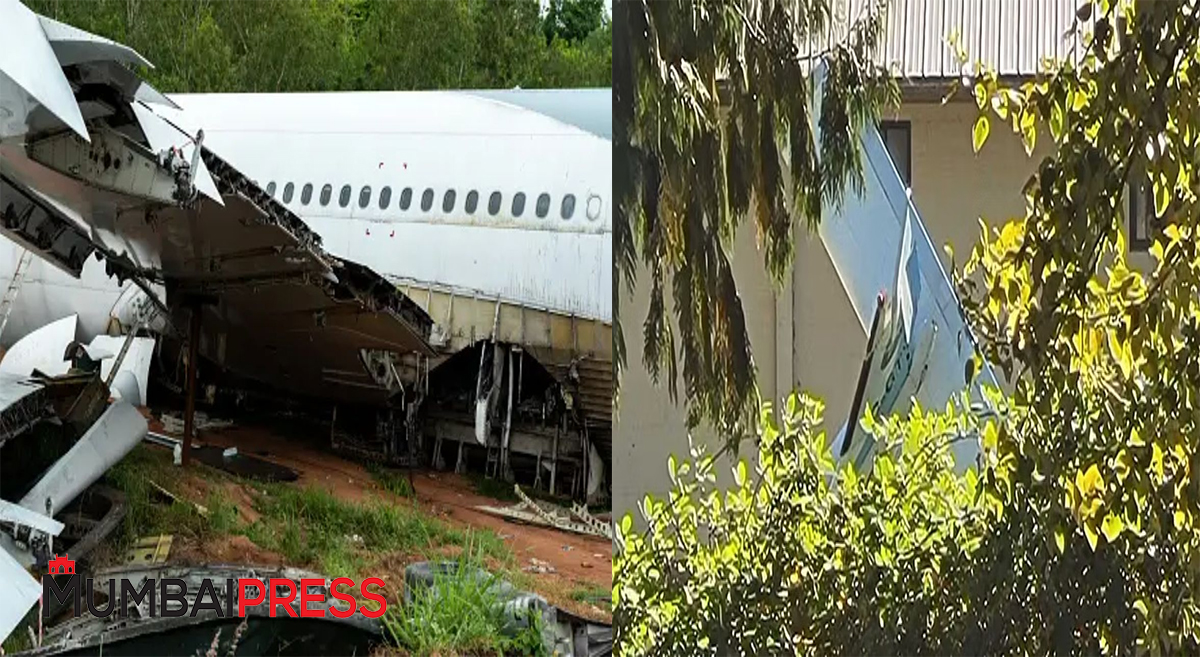
Canada: Three people, including two Indian trainee pilots lost their lives after a small plane crashed in Chilliwack, B.C., Friday afternoon (local time), near Vancouver in Canada. According to reports, the plane crashed after it hit a tree in the locality.
Both trainee pilots who died in the crash were from Mumbai, said reports. However, the identity of the deceased was not disclosed by officials initially. Local authorities rushed to the crash site immediately after the information of the tragedy was received.
The twin-engined light aircraft, Piper PA-34 Seneca, crashed into the trees and bushes behind a motel in the city of Chilliwack, said reports quoting Canadian police officials said.
Indian Pilots Identified
The two Indian pilots, identified as Abhay Gadroo and Yash Vijay Ramugade, hailed from Mumbai. Apart from Indian nationals, another pilot was also killed in the incident.
“The scene is contained and there were no other reported injuries or risks to the public in the area,” the Canadian police said in a statement.
The exact reason behind the aircraft crash is still unknown and the Transportation Safety Board of Canada has launched an investigation into the incident.

International News
Iran struggles to reopen Strait of Hormuz as missing sea mines complicate navigation: Report

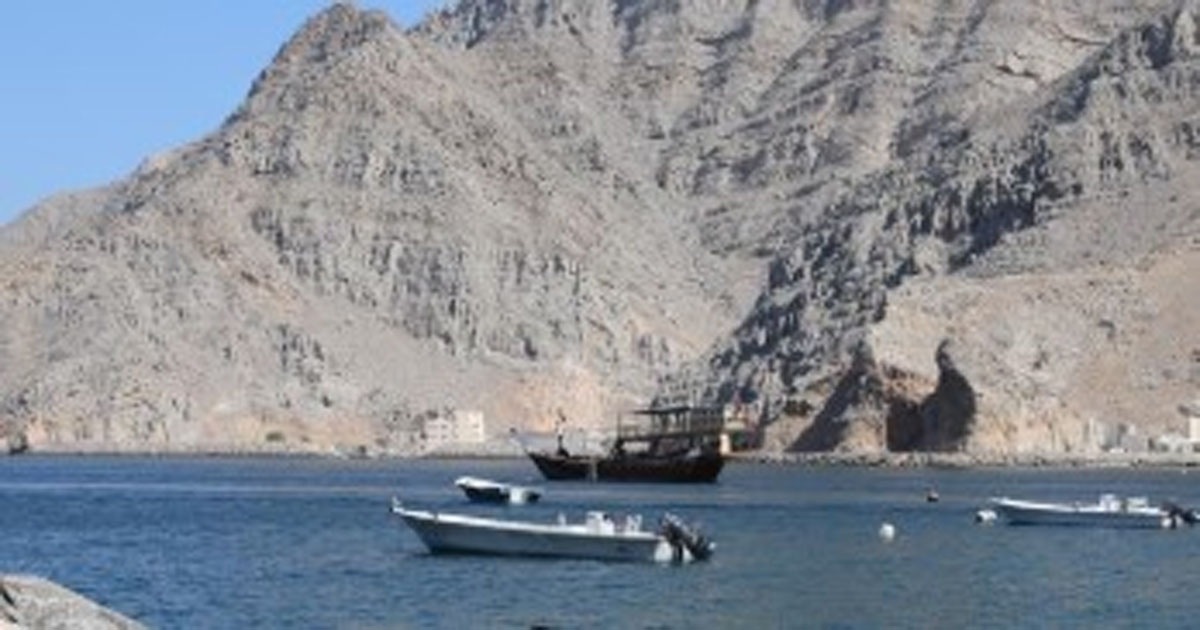
Washington, April 11: A fresh complication has emerged in the already tense geopolitical landscape, with Iran reportedly facing difficulties in reopening the strategically crucial Strait of Hormuz after laying sea mines during recent hostilities.
According to a report by The New York Times, citing US officials, Tehran is unable to locate all the mines it deployed in the vital shipping corridor, raising serious concerns over maritime safety and global oil supply.
The Strait of Hormuz, which links the Persian Gulf to the Gulf of Oman and the Arabian Sea, is one of the world’s most critical oil transit routes, carrying nearly a fifth of global oil shipments. For countries like India, the dependency is even higher, with a significant portion of its energy imports passing through this narrow channel.
As per the report, Iran had deployed mines using small boats last month, shortly after joint airstrikes by the US and Israel amid escalating tensions over Tehran’s nuclear programme. However, officials now believe that the mining operation may not have been systematically documented. Some of the devices, even when recorded, were laid in a manner that allowed them to drift, making detection and removal significantly more challenging.
US officials described the mining effort as “haphazard,” the New York Times reported, highlighting the risks posed to commercial shipping.
The situation has also cast a shadow over ongoing diplomatic efforts, particularly the high-stakes talks between Washington and Tehran currently underway in Islamabad.
“Iran’s Islamic Revolutionary Guard Corps had issued warnings that ships passing through the strait could collide with sea mines. It, however, left another passage open to allow the transit of ships that pay a toll,” said the report.
Adding to concerns, Iran’s Islamic Revolutionary Guard Corps (IRGC) has issued a public advisory warning vessels about the potential danger.
“All ships intending to transit the Strait of Hormuz are hereby notified that to comply with the principles of maritime safety and to be protected from possible collisions with sea mines… they should take alternative routes for traffic in the Strait of Hormuz,” the IRGC said in a statement.
While Iran has agreed to reopen the strait following a ceasefire with the US, just ahead of a deadline set by President Donald Trump, its inability to swiftly clear the mines has delayed full restoration of normal shipping operations. Authorities have instead proposed alternative navigation routes to minimise risk.
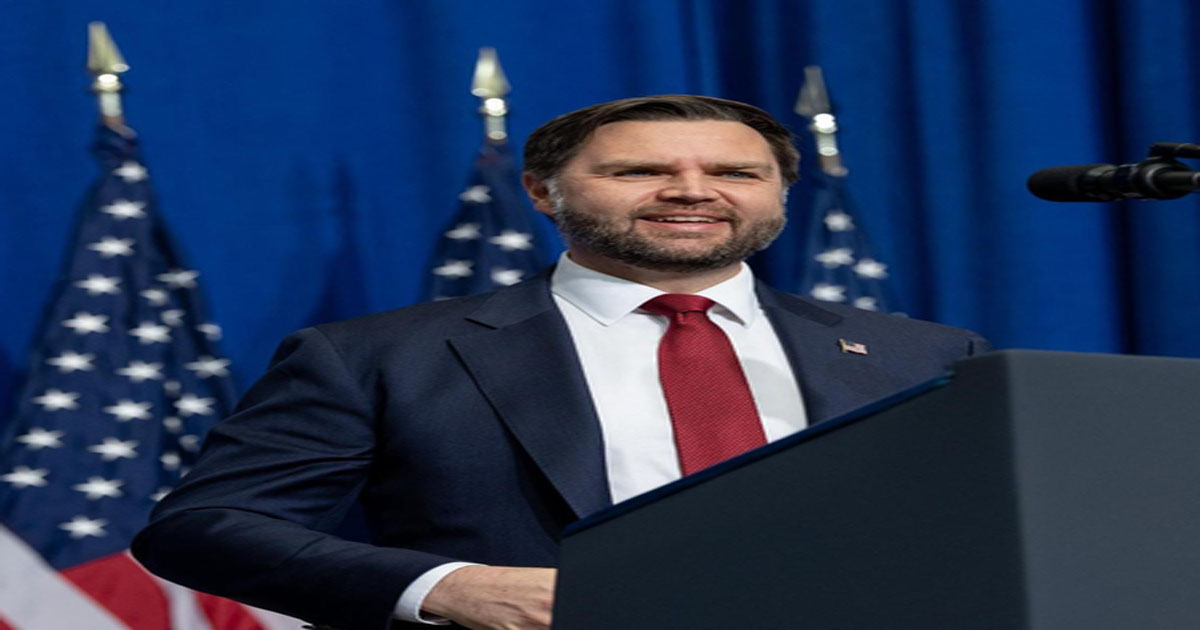
Islamabad, April 11: US Vice President, J.D. Vance, arrived in Islamabad at around 11:15 A.M. (IST) on Saturday to lead the American delegation for the crucial US-Iran talks.
All eyes are on Islamabad this weekend as high-stakes negotiations between the US and Iran get underway, carrying major implications for stability in the Middle East and the global economy.
Speaking to reporters before departing from Joint Base Andrews aboard Air Force Two, Vance struck an optimistic tone about the upcoming discussions. “We’re looking forward to the negotiation. I think it’s going to be positive,” he said.
The negotiations mark the first formal engagement between Washington and Tehran in this phase, facilitated by a fragile two-week ceasefire that has temporarily reduced tensions in the region.
However, uncertainty looms large, with ongoing developments — particularly Israel’s strikes on Hezbollah and disagreements over Lebanon’s role in any potential agreement — posing risks to the process.
The US is represented by a high-level delegation that includes Vice President Vance, special envoy Steve Witkoff, and Jared Kushner, son-in-law of President Donald Trump. The team is expected to push for a structured framework in the negotiations, with clear directives from the White House.
Reiterating the administration’s stance, Vance said, “We’re looking forward to negotiation. I think it’s going to be positive.”
He added that the US approach would depend on Iran’s intent. “As the President of the United States said, if the Iranians are willing to negotiate in good faith, we’re certainly willing to extend the open hand,” Vance stated. “If they’re going to try to play us, then they’re going to find the negotiating team is not that receptive.”
He further emphasised that the delegation is entering the talks with defined guidelines. “So we’re going to try to have a positive negotiation. The President gave us some pretty clear guidelines, and we’re going to see,” he said.
On the Iranian side, the delegation will be led by Parliament Speaker Mohammad Bagher Ghalibaf and Foreign Minister Abbas Araghchi.
International News
Iran’s Speaker carries photos of Minab attack victims on flight to Pakistan for US talks
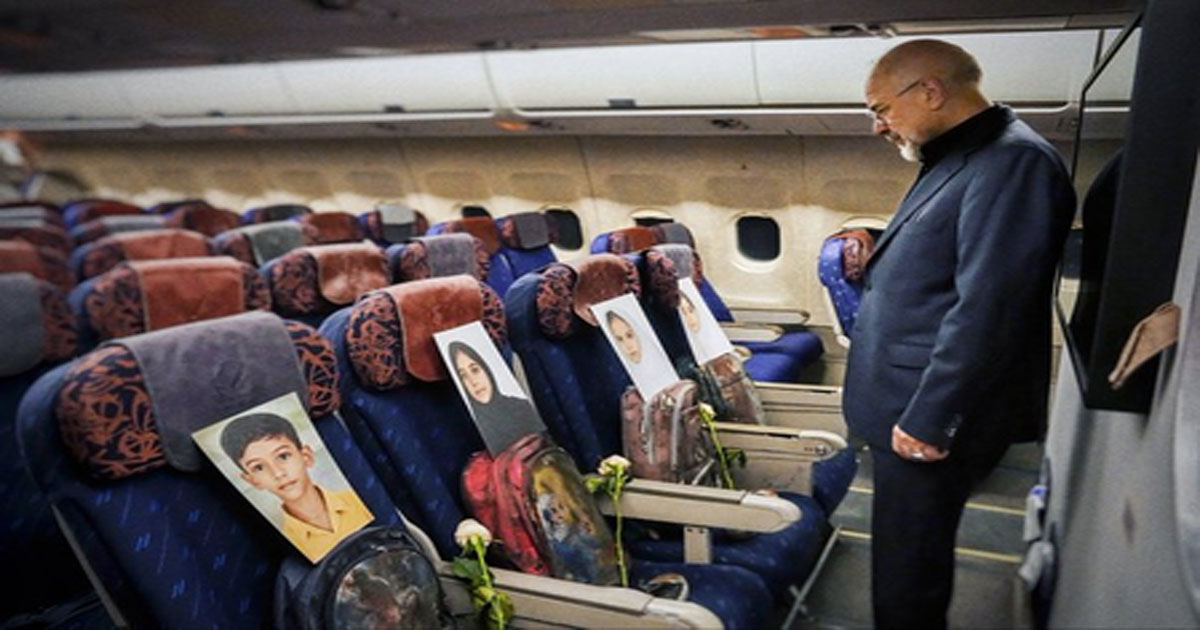
Tehran, April 11: A symbolic image from aboard an aircraft carrying Iran’s Parliament Speaker Mohammad Ghalibaf to Islamabad, showing portraits of children killed in the Minab school attack placed on aeroplane seats alongside backpacks and roses.
During the flight to Islamabad, Ghalibaf used the high-stakes journey to present a striking visual message. Inside the aircraft, several empty seats were arranged with photographs and personal belongings of victims of the Minab school strike, many of them children, who were killed in what Iran describes as a US-Israeli attack.
Sharing the image on X, Ghalibaf wrote, “My companions on this flight, Minab 168”, referring to the children and staff who lost their lives in the February 28, 2026, strike on an elementary school in Minab.
The incident, which reportedly resulted in at least 165 deaths and left more than 100 injured, has emerged as a key reference point in Iran’s narrative ahead of the negotiations, shaping its messaging on the international stage.
Upon arrival in Islamabad, Ghalibaf adopted a cautious stance, stating that Iran is entering the talks with “good intentions but no trust,” according to Tasnim News Agency.
He noted that previous rounds of negotiations had consistently failed to yield lasting outcomes.
“Unfortunately, our experience of negotiating with the Americans has always been met with failure and breach of contract,” he said, adding that even during earlier engagements, Iran had faced actions it considers violations of prior understandings.
Outlining Tehran’s position, Ghalibaf emphasised that any agreement would depend on the approach taken by the United States.
“In the upcoming negotiations, if the American side is ready to make a real agreement and grant the rights of the Iranian people, they will see our readiness to make an agreement as well,” he said.
He also cautioned against what he described as insincerity in diplomatic efforts, warning that Iran would respond firmly if negotiations were used as a cover for actions lacking genuine intent.
On the American side, J.D. Vance, speaking ahead of his departure for Islamabad, signalled openness to dialogue, provided it is conducted in good faith.
“If the Iranians are willing to negotiate in good faith, we are certainly willing to extend the open hand,” he said, while also issuing a warning: “If they’re going to try to play us, they’re going to find that the negotiating team is not that receptive.”
US President Donald Trump also commented on the situation via social media, suggesting that Iran may be overestimating its leverage ahead of the talks and pointing to ongoing tensions in the Strait of Hormuz as part of the broader geopolitical context.

Pune: Chhagan Bhujbal’s Helicopter Makes Wrong Landing In Purandar Village

Fake Baba Ashok Kharat predicted his own death, investigation agency also surprised, serious allegation of asthma threatens Kharat’s life

Central Railway To Run Special Midnight Trains On CSMT–Kalyan & Panvel Routes For Ambedkar Jayanti On April 14 | Details Here

Iran struggles to reopen Strait of Hormuz as missing sea mines complicate navigation: Report

Mumbai Police Detain 450 Bangladeshi Nationals In Crackdown Against Illegal Immigrants Since Jan 1; Over 200 Deported So Far

Married Mumbai Woman Mocked In Andheri Society Over ‘Lift Kissing’ CCTV Video, Files Police Complaint

LPG Crisis In Maharashtra: Cyber Crime On Rise Amid Shortage, 2 Women Lose ₹4 Lakh In ‘Gas Update’ Online Scam In Kalyan-Dombivli

Dhurandhar 2 Box Office Collection Day 1: Ranveer Singh Starrer Takes An Exceptional Opening; Crosses ₹100 Crore Mark

Mumbai Police Busts Fake Apple Accessories Racket In Ghatkopar, ₹16.33 Lakh Goods Seized; Six Booked

Mumbai: 28-Year-Old Ghatkopar Woman Killed By Speeding Tanker While Crossing Road, Driver Arrested
-

 Crime4 years ago
Class 10 student jumps to death in Jaipur
-

 Maharashtra2 years ago
Mumbai Local Train Update: Central Railway’s New Timetable Comes Into Effect; Check Full List Of Revised Timings & Stations
-

 Maharashtra1 year ago
Mumbai To Go Toll-Free Tonight! Maharashtra Govt Announces Complete Toll Waiver For Light Motor Vehicles At All 5 Entry Points Of City
-

 Maharashtra2 years ago
False photo of Imtiaz Jaleel’s rally, exposing the fooling conspiracy
-

 National News1 year ago
Ministry of Railways rolls out Special Drive 4.0 with focus on digitisation, cleanliness, inclusiveness and grievance redressal
-

 Maharashtra1 year ago
Maharashtra Elections 2024: Mumbai Metro & BEST Services Extended Till Midnight On Voting Day
-

 National News2 years ago
J&K: 4 Jawans Killed, 28 Injured After Bus Carrying BSF Personnel For Poll Duty Falls Into Gorge In Budgam; Terrifying Visuals Surface
-

 Crime1 year ago
Baba Siddique Murder: Mumbai Police Unable To Get Lawrence Bishnoi Custody Due To Home Ministry Order, Says Report