
Maharashtra
BMC To Roll Out QR Codes For 10,500 Licensed Hawkers By April-End To Tackle Illegal Vending


Mumbai: In a move aimed at bringing greater transparency and regulation to street vending, the Brihanmumbai Municipal Corporation (BMC) will issue QR codes to 10,500 licensed hawkers across the city by the end of April 2026. The initiative is expected to help citizens easily differentiate between authorised and unauthorised vendors.
Each licensed hawker will be provided with a unique QR code containing details of their licence and other relevant documents issued by the civic body. Hawkers will be required to display these codes prominently at their stalls, enabling Mumbaikars to scan and verify their authenticity in real time.
This news comes in after the Brihanmumbai Municipal Corporation (BMC) announced the issuance of QR code-based certificates to authorised hawkers as part of its 2026 Budget. The civic body mentioned that the initiative is expected to bring greater transparency and accountability to Mumbai’s street vending ecosystem.
The QR-coded certificates will help distinguish licensed hawkers from unauthorised ones, thereby curbing illegal encroachments. The civic body has been undertaking demolition drives across key areas to keep major roads, narrow footpaths, spaces beneath flyovers, and areas surrounding hospitals, schools and railway stations free from obstructions. Several stretches have also been designated as “vendor-free zones” due to recurring traffic congestion, pedestrian safety concerns and accident risks caused by unauthorised stalls.
The move is not only aimed at enforcement but also at creating safer and more accessible public spaces for citizens. By digitally verifying licences, the administration hopes to streamline regulation while protecting the rights of legitimate hawkers.
The BMC is also set to evaluate around 22,000 unlicensed hawkers who had registered with the civic body in 2014 during the formation of the Town Vending Committee (TVC). Based on this assessment, eligible vendors will be allotted designated pitches for street vending across the city.
The pitches will be finalised by the 13-member TVC, which plays a key role in regulating street vending in Mumbai. Notably, eight members of the committee were elected on March 28, 2026, following elections conducted in 2024.

The ED arrested a Mumbai-based advocate and secured his custody till October 29 from a Special Court (PMLA) in connection with the digital arrest of a Goa couple who were duped of Rs 2.6 crore and his association with a gang of cyber criminals, an official said on Monday.
The Directorate of Enforcement (ED), Panaji Zonal Office, arrested advocate Rashesh Bharatkumar Upadhyay alias Rashesh Shah on October 24 under the provisions of the Prevention of Money Laundering Act, 2002 (PMLA), the official said in a statement.
He was intercepted at the boarding gate of Chhatrapati Shivaji Maharaj International Airport, Mumbai, while attempting to leave Mumbai on an early-morning connecting flight to Delhi without any return booking, it said.
The interception was made possible by the active and timely support of Mumbai Customs and the Central Industrial Security Force (CISF).
The ED investigation was initiated on the basis of an FIR registered by the Goa Police in a digital arrest fraud.
Fraudsters impersonating officials of the Telecom Regulatory Authority of India and the Central Bureau of Investigation placed the Goa couple under continuous video surveillance, showed her a forged order of the Supreme Court, and coerced her into transferring about Rs 2.6 crore into accounts falsely described as “Secret Supervision Accounts”, said the statement
The ED’s investigation traced these proceeds through more than 400 mule accounts into a network of commodity, travel and foreign-exchange companies controlled by Fahim Moin Hussain Sayed and Naim Mueen Sayyed through dummy directors, the ED said.
This network undertook banking transactions of nearly Rs 28,000 crore and deposited about Rs 2,900 crore in cash. Its bank accounts have surfaced in over 300 victim complaints and more than 160 FIRs across 20 states and union territories, involving reported losses of over Rs 400 crore, the ED said.
Rashesh Upadhyay was a key node of this network. Whenever bank accounts of the network were frozen by law enforcement agencies on cyber fraud complaints, he arranged their release by paying cash bribes to certain suspected officials of the agencies concerned, routed through angadiyas.
He fixed the amounts, the collection points and the onward payments. On his own admission, he arranged the unfreezing of about 100 such accounts for various agents, including a payment of over Rs 60 lakh in a single instance, the ED said.
By restoring the network’s access to frozen fraud proceeds, he kept the money-laundering infrastructure behind digital fraud running across the country, the ED said.
He continued these dealings even after ED’s searches, including in respect of accounts frozen by the ED, deleted his chats with the co-accused, and switched off all his known mobile numbers before attempting to flee, said the probe agency.
Although enrolled as an advocate, he had never appeared or filed any vakalatnama for the co-accused or their companies. He misused his professional standing as a cover for brokering bribes and securing the release of fraud proceeds. Such conduct is not legal practice, and the protection available to communications between an advocate and a client does not extend to communications made in furtherance of an illegal purpose or showing the commission of a crime or fraud, the ED said.
This is the 7th arrest in the case. ED has earlier arrested six persons, including the two controllers of the network, Fahim Moin Hussain Sayed and Naim Mueen Sayyed, and the agents who supplied banking entries to the network and arranged the release of its frozen accounts.
Further investigation is in progress to identify the officials who received the bribes, the angadiyas and other intermediaries involved, and to trace the full extent of the Proceeds of Crime.
Maharashtra
Sanjay Raut demands ED, police probe into Manoj Jarange Patil’s Rs 500 crore payout claims

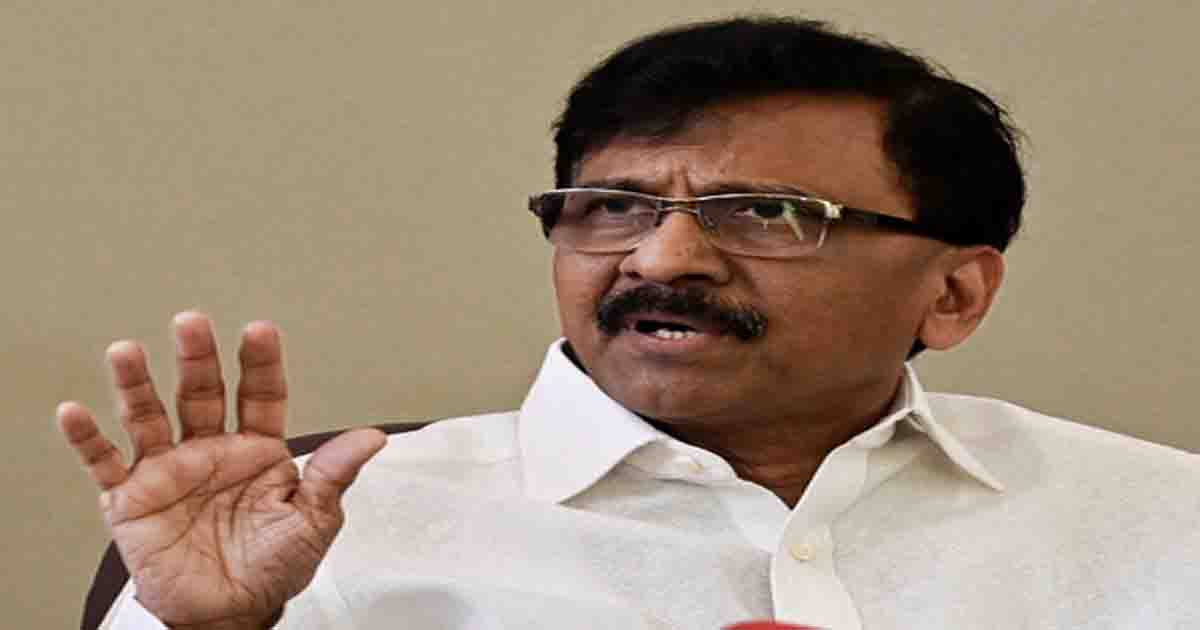
The Shiv Sena (UBT) MP Sanjay Raut, in a letter to Union Home Minister Amit Shah on Monday, demanded an immediate high-level investigation by the Enforcement Directorate (ED) and Maharashtra Police and called for the invocation of the Prevention of Money Laundering Act (PMLA) following explosive revelations made by Maratha reservation activist Manoj Jarange Patil about the Rs 500 crore payout.
Raut said the Maratha reservation activist Manoj Jarange Patil had alleged on October 20 that Maharashtra Deputy Chief Minister Eknath Shinde had taken Rs 500 crore from the BJP’s core team leaders in Maharashtra. The funds were reportedly meant to be handed over to Jarange Patil via Dr Shrikant Shinde (MP and son of Eknath Shinde) to silence his agitation prior to the 2024 state Assembly elections. However, Raut highlighted that the money never reached Jarange Patil, raising serious questions about where the Rs 500 crore vanished.
An audio clip released by Manoj Jarange Patil, which Raut described as clear and undeniable proof.
Drawing parallels to previous high-profile financial investigations in the state, Raut noted that the ED moved swiftly with great alacrity in March 2021 when former Mumbai Police Commissioner Param Bir Singh made allegations regarding a Rs 100 crore collection target against then-Home Minister Anil Deshmukh — despite a lack of initial proof.
Raut argued that the current allegations backed by Jarange Patil’s audio evidence are significantly more severe, involving a much larger sum of Rs 500 crore and clear indications of a classic money laundering scheme.
In his two-page letter, Raut has urged the Union Home Minister to direct both the Maharashtra Police and the ED to thoroughly probe the source of the Rs 500 crore fund and track its trail, uncover how senior BJP members, Dy CM Eknath Shinde, and Dr Shrikant Shinde are allegedly connected to this massive financial scam and arrest those involved and bring the complete truth to light before the public.
“The Rs 500 crore matter in Maharashtra must have surely reached you by now. Until now, the BJP has been buying MPs, MLAs, political parties and elections. Now it has begun buying agitations as well. The BJP handed over money to Shrikant Shinde so that Rs 500 crore could be given to Manoj Jarange Patil. Where did this money come from? And did it actually reach Jarange or not? This is a matter under the Prevention of Money Laundering Act (PMLA). Kindly entrust the investigation to the Enforcement Directorate (ED),” said Raut in his post on X.
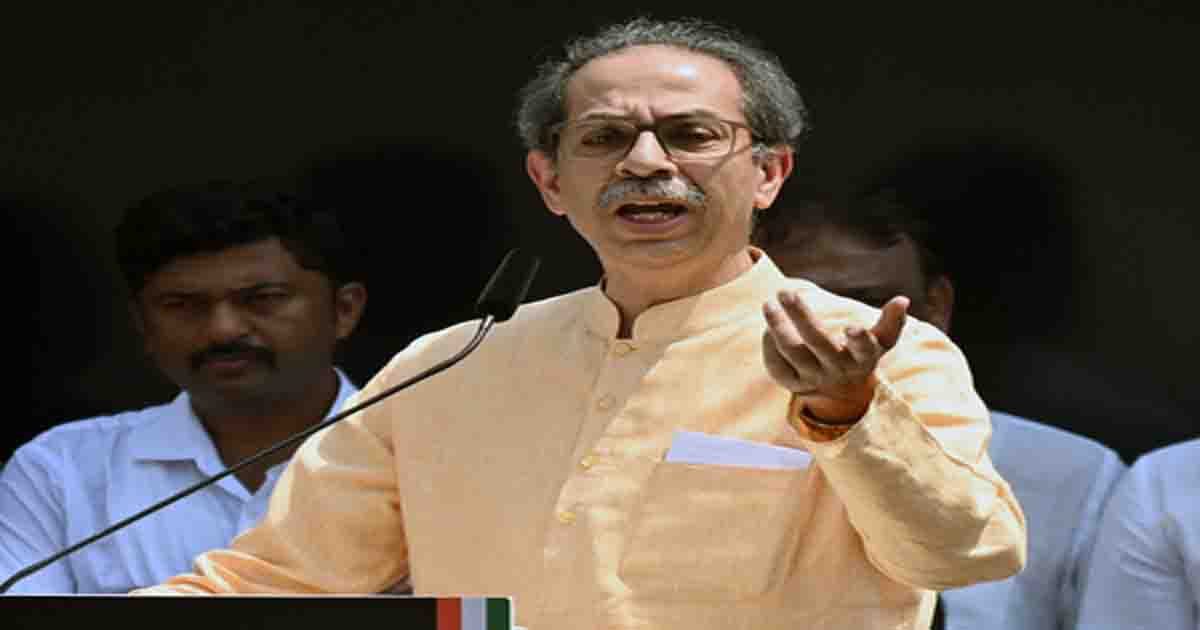
The Shiv Sena Uddhav Balasaheb Thackeray on Monday said that a major political storm has erupted following explosive disclosures made by Indo-Tibetan Border Police (ITBP) Director General Shatrujit Singh Kapoor regarding Chinese incursions along the Arunachal Pradesh border.
The Thackray camp in an editorial in the party’s mouthpiece, ‘Saamana’, claimed that the revelations have shattered the government’s narrative, exposing alleged systemic suppression of security truths and a failure of national leadership.
The editorial said that ITBP Director General Shatrujit Singh Kapoor recently revealed that Chinese troops have crossed the Arunachal Pradesh border, penetrating six to seven kms deep into Indian territory in the Asafila area and establishing military camps.
He disclosed that armed clashes between Indian and Chinese forces have been ongoing along the border for the past four months, noting that modern warfare has drastically evolved with the heavy deployment of drones and that China holds a technologically superior military standing. However, as the remarks sparked widespread public concern, the official video of his speech was swiftly removed from the official website.
The editorial contended that the Modi government has deliberately attempted to conceal these critical developments from the public.
It highlighted that the government has systematically targeted individuals attempting to bring forward the reality of Chinese aggression. “Leader of the Opposition Rahul Gandhi had warned a year ago that China was encroaching upon Arunachal Pradesh, but top leaders, including Prime Minister Narendra Modi, Amit Shah, and Rajnath Singh, dismissed his statements as false propaganda and blamed him. Local tribal communities in remote areas of Arunachal Pradesh and youths who posted social media reels about the Chinese intrusion were similarly silenced, with the government dismissing their accounts as enemy propaganda,” said the editorial.
According to the editorial, former Army Chief General Manoj Mukund Naravane’s autobiography, ‘Four Stars of Destiny’, has faced government censorship because it addresses the 2020 Ladakh-Galwan clashes and the Agnipath scheme.
The book revealed that on the night of August 31, 2020, as Chinese tanks advanced, Gen Naravane sought clear operational directives from Defence Minister Rajnath Singh, who allegedly handed down a vague response (“Do whatever you think is appropriate”) after consulting the Prime Minister — a situation described in the book as a difficult “Hot Potato” responsibility, said the editorial.
The editorial remarked that Environmentalist Sonam Wangchuk, who brought attention to Chinese intrusion in Ladakh, was branded a “traitor” by the government. Similarly, the editorial warned that ITBP’s Director General may now face similar political branding for speaking the truth.
The Uddhav Thackeray-led Shiv Sena drew a sharp contrast between active military engagements on the border and diplomatic optics in the national capital. While Indian soldiers were locked in active clashes with Chinese troops in Arunachal Pradesh, Prime Minister Modi was busy hosting and entertaining Chinese President Xi Jinping during the BRICS summit in Delhi.
The editorial labelled this simultaneous occurrence as an insult to the sacrifices and injuries of frontline Indian troops.
Accusing the ruling leadership of using soldiers for political leverage during crises and subsequently abandoning them, the editorial noted that Prime Minister Modi has evaded accountability for major security failures, including the Pulwama attack, the Pahalgam massacre, and the ongoing Chinese incursions in Arunachal Pradesh. The editorial asserted that leadership failing to safeguard national territory must face democratic reckoning and accountability.

Declining standard of language in political discourse: Shiv Sena-UBT, RJD on Kharge’s ‘baap’ remarks

ED arrests Mumbai advocate linked to Rs 2.6 crore ‘digital arrest’ case of Goa couple

Delhi Police busts Rs 30 crore online shopping scam, arrests seven

Israel heads to polls on Tuesday; Netanyahu to face ex-IDF chief Gadi Eisenkot

BJP to launch month-long padyatras to counter INDIA Bloc’s Nov 1 rally

Rahul, Cong ecosystem want to force regime change: BJP after Neha Bora praises B’desh Gen-Z protest

Attack on democratic rights: INDIA Bloc leaders on detentions of anti-ECI protestors

BJP pays tribute to ex-President Abdul Kalam, recalls his enduring influence on generations of India’s youth

INDIA bloc begins protest march against ECI

Maha Congress stages agitation against Gyanesh Kumar
-

 Crime4 years ago
Class 10 student jumps to death in Jaipur
-

 Maharashtra2 years ago
Mumbai Local Train Update: Central Railway’s New Timetable Comes Into Effect; Check Full List Of Revised Timings & Stations
-

 Maharashtra2 years ago
Mumbai To Go Toll-Free Tonight! Maharashtra Govt Announces Complete Toll Waiver For Light Motor Vehicles At All 5 Entry Points Of City
-

 Maharashtra2 years ago
False photo of Imtiaz Jaleel’s rally, exposing the fooling conspiracy
-

 National News2 years ago
Ministry of Railways rolls out Special Drive 4.0 with focus on digitisation, cleanliness, inclusiveness and grievance redressal
-

 Maharashtra2 years ago
Maharashtra Elections 2024: Mumbai Metro & BEST Services Extended Till Midnight On Voting Day
-

 National News2 years ago
J&K: 4 Jawans Killed, 28 Injured After Bus Carrying BSF Personnel For Poll Duty Falls Into Gorge In Budgam; Terrifying Visuals Surface
-

 Crime2 years ago
Baba Siddique Murder: Mumbai Police Unable To Get Lawrence Bishnoi Custody Due To Home Ministry Order, Says Report