
Crime
Mumbai Police Book Jogeshwari Constable Accused Of Using Fake Medical Documents For 49-Day Leave

Mumbai: The Jogeshwari police have booked a constable for allegedly submitting forged medical documents with fake signatures to obtain leave. The police investigated the matter up to Nashik before registering a case. This is likely one of the first cases against police personnel in Mumbai for allegedly remaining absent from duty using fake medical documents. The police have also booked an unidentified individual in connection with the case. The accused has been identified as Gajendra Rajput.
A police officer of Jogeshwari police station said, “The accused constable was earlier arrested by the Juhu police in an extortion case. We took his custody through the court in connection with the fake medical documents case, arrested him, and produced him before the court. The court granted him bail, and he has since been released.”
According to the FIR, the accused is Gajendra Rajput, who is attached to the Jogeshwari police station. In November and December last year, he informed his seniors that he was suffering from haemorrhoids and sought medical leave. He submitted prescriptions and treatment papers allegedly issued by Tulasi Hospital, a private hospital in Nashik, and availed 49 days of medical leave.
His seniors grew suspicious and initiated an inquiry. The police approached the hospital in Nashik and sought Rajput’s medical records. As there are two hospitals with the name Tulasi Hospital in Nashik, the police verified details with the second hospital. A police personnel from Jogeshwari police station visited the hospital, where it was revealed that Rajput had not undergone any such treatment. Although his name appeared in the hospital records as a patient, he had not received treatment for the claimed period.
Further investigation revealed that Rajput had allegedly created four forged documents. One was a medical certificate dated November 2025 stating that he required 15 days’ rest due to prolapsed haemorrhoids. The second, dated December 2025, recommended bed rest and follow-up treatment. A third document claimed that he was fit to resume duty, while a fourth was a fake discharge card.
Based on these documents, Rajput allegedly availed 49 days of leave in two phases.
Dr Yogesh Shinde informed the police that he had not signed any of these documents and that his signature had been forged.
Following this, Sandesh Pawar, 29, Marketing Director of Tulasi Hospital, lodged a complaint on behalf of the hospital against Rajput and an unidentified individual.
The police have registered an FIR under Sections 336(3) and 336(4) (forgery), 340 (using forged documents as genuine), and 3(5) (general explanation) of the Bharatiya Nyaya Sanhita on April 3.


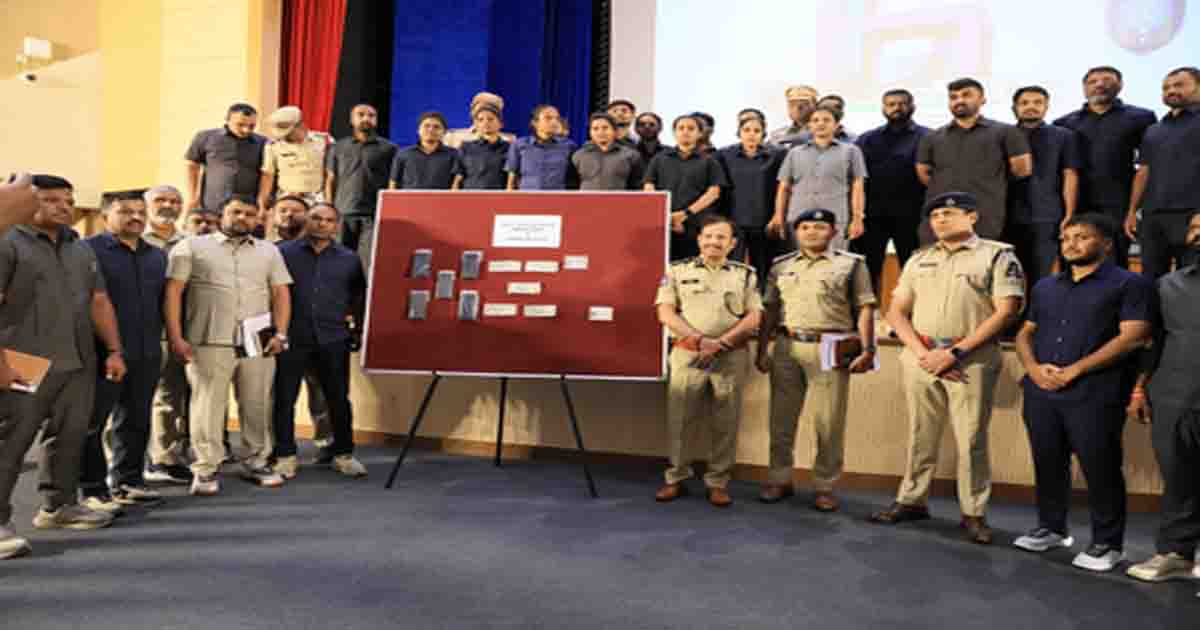
More than five months after Tanuja Ranjan, wife of retired Indian Police Service (IPS) officer Ray Vinay Ranjan, was brutally murdered at their residence in Hyderabad, police on Monday arrested four Nepalese.
Those arrested include the domestic worker, Dharma Tiruwa alias Kalpana, who had worked at the victim’s residence.
The arrests were made following a five-month-long investigation spanning several states and the India-Nepal border.
Hyderabad Police Commissioner V. C. Sajjanar announced the arrests at a press conference.
A Special Investigation Team (SIT), probing rising property offences committed by Nepali gangs across the three Police Commissionerates, arrested four accused near Nampally Railway Station on Monday (October 26).
Dharma alias Kalpana, 26, is from Surkhet district in Nepal. Ganesh B.K. alias Ganesh Bishwakarma alias Dinesh Thapa, 31, is a labourer who was residing in Pune; Chandra Bahadur Tamang alias Ranjeet Thapa alias Shanker Chandra Lama alias Kancha, 44, a cook whose listed Indian address is in Gurugram, Haryana; and Ganesh Bahadur Shahi, 37, a watchman who was residing in Pune.
Police said two other accused remained absconding and that teams were continuing efforts to trace them. The police had earlier arrested two other accused in the case.
Police said the accused entered the house in Prashasan Nagar on the night of May 7–8, restrained Tanuja Ranjan and smothered her. They allegedly escaped with 225 grams of gold jewellery and other valuables.
The police investigation revealed that Dharma came to Hyderabad in June 2025 through a relative and began working as a domestic help at the Jubilee Hills residence for a monthly salary of about Rs 20,000. During her employment, she allegedly remained in contact with Bikas, a Nepal national based in Pune, who repeatedly asked about her employer, the household’s assets and the valuables inside the house. He eventually proposed a robbery in return for a share of the proceeds. In April 2026, Dharma travelled to Pune to visit her ailing father and came into contact with other members of the alleged gang.
On May 4, when her employer left for Bengaluru, she allegedly alerted the group. The police account says Ganesh Bahadur Shahi, Shanker Chandra Lama and Sunil Pariyar met at Kalamboli in Raigad district, Maharashtra, on May 4 and travelled to Pune in a hired Maruti Ertiga. The next day, they met other alleged accomplices, including Ganesh B.K., before setting out for Hyderabad.
On the morning of May 7, Ganesh B.K. and Suresh Shahi allegedly met Dharma near her workplace, surveyed the premises and discussed how the group could enter the house. Two groups allegedly carried out the operation.
According to police, the gang assembled at Ravindra Bar near the Mahatma Gandhi Bus Station area on the evening of May 7. It allegedly split into two groups under a plan devised by Sujan Shahi, also known as Suresh Shahi. One group, comprising Ganesh B.K., Suresh Shahi and Shanker Lama, was assigned to enter the house and carry out the robbery. The other, comprising Ganesh Bahadur Shahi, Sunil Pariyar and Netra Shahi, allegedly remained near Nampally railway station as a lookout team.
During the intervening night of May 7 and 8, Dharma allegedly opened the door to let the others in. Police said Tanuja woke up during the incident. The attackers allegedly gagged and restrained her, causing her death by suffocation. The group then searched the house, broke open cupboards and took gold jewellery and other valuables.
After leaving through the rear gate, the accused allegedly travelled to Nampally and joined the lookout team.
Investigation revealed that the group subsequently travelled towards Kazipet, moved into isolated hilly terrain and divided the stolen property into nine equal shares. Members then split into smaller groups, fled towards Nepal and disposed of the valuables at different locations.
On May 22, Task Force teams arrested Sunil Bahadur Aauji alias Sunil Pariyar and alleged receiver Dilip Bahadur Mijar alias Sonar. Police recovered 26 grams of the stolen property from them.
The investigation continued across Bengaluru, Mumbai, Pune, Surat, Patna, Delhi, Lucknow and Uttarakhand. The SIT also carried out field inquiries near the India-Nepal border, spending more than five months gathering intelligence in remote and hilly areas.
Police said local informers helped the team track the suspects’ alleged hideouts, travel routes, employment and contacts.
The ED arrested a Mumbai-based advocate and secured his custody till October 29 from a Special Court (PMLA) in connection with the digital arrest of a Goa couple who were duped of Rs 2.6 crore and his association with a gang of cyber criminals, an official said on Monday.
The Directorate of Enforcement (ED), Panaji Zonal Office, arrested advocate Rashesh Bharatkumar Upadhyay alias Rashesh Shah on October 24 under the provisions of the Prevention of Money Laundering Act, 2002 (PMLA), the official said in a statement.
He was intercepted at the boarding gate of Chhatrapati Shivaji Maharaj International Airport, Mumbai, while attempting to leave Mumbai on an early-morning connecting flight to Delhi without any return booking, it said.
The interception was made possible by the active and timely support of Mumbai Customs and the Central Industrial Security Force (CISF).
The ED investigation was initiated on the basis of an FIR registered by the Goa Police in a digital arrest fraud.
Fraudsters impersonating officials of the Telecom Regulatory Authority of India and the Central Bureau of Investigation placed the Goa couple under continuous video surveillance, showed her a forged order of the Supreme Court, and coerced her into transferring about Rs 2.6 crore into accounts falsely described as “Secret Supervision Accounts”, said the statement
The ED’s investigation traced these proceeds through more than 400 mule accounts into a network of commodity, travel and foreign-exchange companies controlled by Fahim Moin Hussain Sayed and Naim Mueen Sayyed through dummy directors, the ED said.
This network undertook banking transactions of nearly Rs 28,000 crore and deposited about Rs 2,900 crore in cash. Its bank accounts have surfaced in over 300 victim complaints and more than 160 FIRs across 20 states and union territories, involving reported losses of over Rs 400 crore, the ED said.
Rashesh Upadhyay was a key node of this network. Whenever bank accounts of the network were frozen by law enforcement agencies on cyber fraud complaints, he arranged their release by paying cash bribes to certain suspected officials of the agencies concerned, routed through angadiyas.
He fixed the amounts, the collection points and the onward payments. On his own admission, he arranged the unfreezing of about 100 such accounts for various agents, including a payment of over Rs 60 lakh in a single instance, the ED said.
By restoring the network’s access to frozen fraud proceeds, he kept the money-laundering infrastructure behind digital fraud running across the country, the ED said.
He continued these dealings even after ED’s searches, including in respect of accounts frozen by the ED, deleted his chats with the co-accused, and switched off all his known mobile numbers before attempting to flee, said the probe agency.
Although enrolled as an advocate, he had never appeared or filed any vakalatnama for the co-accused or their companies. He misused his professional standing as a cover for brokering bribes and securing the release of fraud proceeds. Such conduct is not legal practice, and the protection available to communications between an advocate and a client does not extend to communications made in furtherance of an illegal purpose or showing the commission of a crime or fraud, the ED said.
This is the 7th arrest in the case. ED has earlier arrested six persons, including the two controllers of the network, Fahim Moin Hussain Sayed and Naim Mueen Sayyed, and the agents who supplied banking entries to the network and arranged the release of its frozen accounts.
Further investigation is in progress to identify the officials who received the bribes, the angadiyas and other intermediaries involved, and to trace the full extent of the Proceeds of Crime.
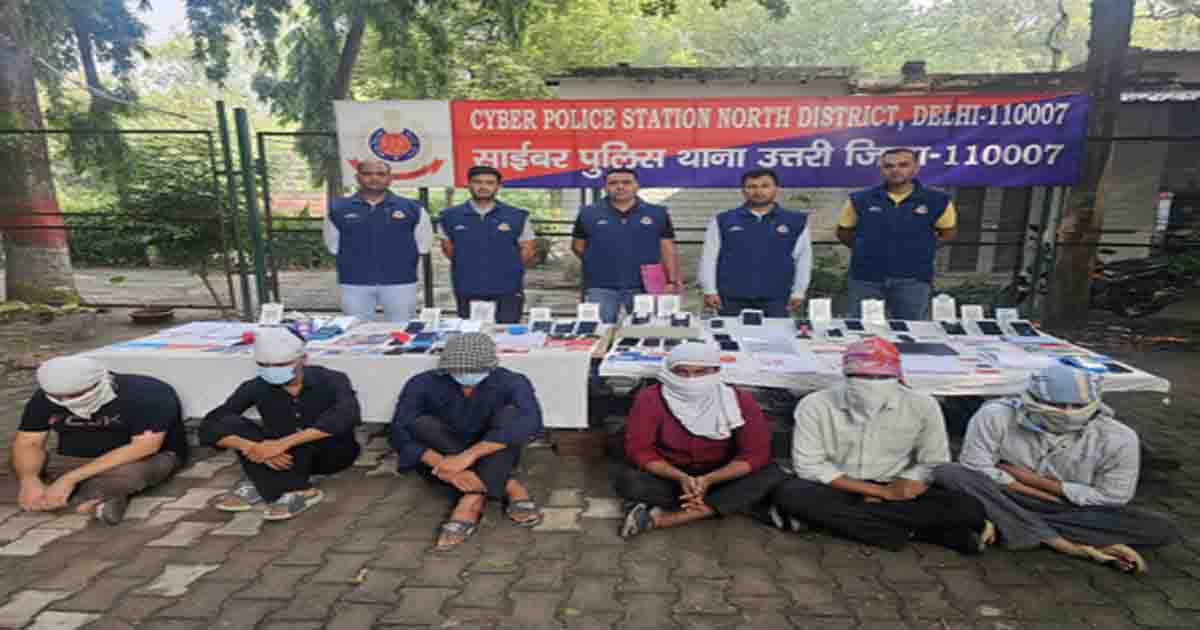
Delhi Police have busted a major cyber fraud network involved in transactions worth over Rs 30 crore as it arrested seven people in connection with an online shopping scam that came to light following a complaint by a Delhi University student, officials said on Monday.
The investigation began after Fatima, a student of Ramjas College at Delhi University and a resident of Uttar Pradesh’s Prayagraj, reported being cheated of Rs 6,450 through an Instagram shopping advertisement. The complaint was registered on the National Cybercrime Reporting Portal (NCRP), following which an FIR was registered at the Cyber Police Station, North District, on September 4.
According to the complaint, the student came across an advertisement for a kurti on an Instagram account named ‘Kavya_kurti_hub’. She was redirected to a WhatsApp number, where she placed an order worth Rs 799 and paid Rs 400 in advance through a QR code.
Subsequently, she received a call regarding parcel delivery and was asked to provide a passcode. The seller then induced her to make additional payments on the pretext of generating the code and processing a refundable charge. She transferred Rs 1,150, Rs 2,000, Rs 2,650 and Rs 650 in separate transactions. However, neither the parcel was delivered nor the money refunded.
During the investigation, police analysed nearly 200 mobile numbers, IMEI numbers, banking transactions, and digital records obtained from platforms and service providers, including Flipkart, Zomato and Blue Dart.
The investigation traced the cheated money through Pine Labs Merchant to a Canara Bank account linked to Kizentech Solutions Pvt. Ltd. in Greater Noida.
Following extensive technical surveillance, police conducted coordinated raids in Greater Noida on October 16 and arrested six accused: Aditya Mishra, Ayush Verma, Abhishek Pal, Himanshu Rana, Rahul Kumar, and Gaurav Pandey. Another accused, Udit Pratap Singh Bhadauriya, was arrested from Kanpur on October 21.
Police said the investigation had so far linked 27 cyber fraud complaints from different states to the network. Approximately 25 bank accounts allegedly opened in the names of fictitious firms and individuals were found to have been used to route the proceeds of cybercrime.
During interrogation, investigators found that the accused allegedly established firms and opened current bank accounts, which were subsequently supplied to other members of the syndicate for monthly payments and commissions. Pandey, an MBA graduate, allegedly played a key role in arranging and supplying bank accounts to cyber fraudsters.
Police also recovered 20 mobile phones, 45 SIM cards, 39 point-of-sale (POS) machines, 33 debit cards, 28 cheque books, 15 scanners, two laptops, five stamps, seven Aadhaar cards, five PAN cards and 21 bank-related documents.
The operation was conducted by a team led by SI Arvind Yadav under the supervision of senior North District police officers.
Police said further investigation was underway to identify additional members of the network and establish links with other cyber fraud cases.

Income Tax Dept nudges taxpayers owning undeclared properties in UAE

Delhi BJP protests near Kharge official residence over remark on PM Modi

Maha: State Board approves Wildlife Sanctuary status for two reserves; notifies 14 new conservation reserves

Nepali gang arrested for murder of retired IPS officer’s wife in Hyderabad

Raj Thackeray slams urban planning, traffic crisis in Navi Mumbai; says he awaits power in Maharashtra

Rahul, Cong ecosystem want to force regime change: BJP after Neha Bora praises B’desh Gen-Z protest

Attack on democratic rights: INDIA Bloc leaders on detentions of anti-ECI protestors

BJP pays tribute to ex-President Abdul Kalam, recalls his enduring influence on generations of India’s youth

INDIA bloc begins protest march against ECI

Maha Congress stages agitation against Gyanesh Kumar
-

 Crime4 years ago
Class 10 student jumps to death in Jaipur
-

 Maharashtra2 years ago
Mumbai Local Train Update: Central Railway’s New Timetable Comes Into Effect; Check Full List Of Revised Timings & Stations
-

 Maharashtra2 years ago
Mumbai To Go Toll-Free Tonight! Maharashtra Govt Announces Complete Toll Waiver For Light Motor Vehicles At All 5 Entry Points Of City
-

 Maharashtra2 years ago
False photo of Imtiaz Jaleel’s rally, exposing the fooling conspiracy
-

 National News2 years ago
Ministry of Railways rolls out Special Drive 4.0 with focus on digitisation, cleanliness, inclusiveness and grievance redressal
-

 Maharashtra2 years ago
Maharashtra Elections 2024: Mumbai Metro & BEST Services Extended Till Midnight On Voting Day
-

 National News2 years ago
J&K: 4 Jawans Killed, 28 Injured After Bus Carrying BSF Personnel For Poll Duty Falls Into Gorge In Budgam; Terrifying Visuals Surface
-

 Crime2 years ago
Baba Siddique Murder: Mumbai Police Unable To Get Lawrence Bishnoi Custody Due To Home Ministry Order, Says Report