
International News
Iran’s Speaker carries photos of Minab attack victims on flight to Pakistan for US talks

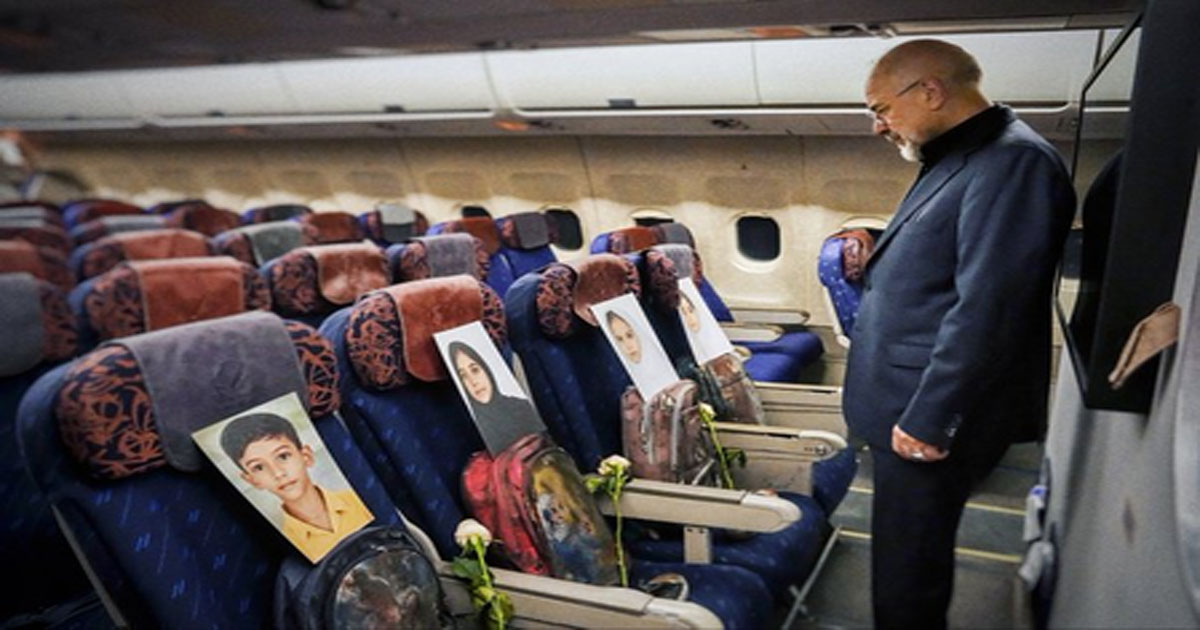
Tehran, April 11: A symbolic image from aboard an aircraft carrying Iran’s Parliament Speaker Mohammad Ghalibaf to Islamabad, showing portraits of children killed in the Minab school attack placed on aeroplane seats alongside backpacks and roses.
During the flight to Islamabad, Ghalibaf used the high-stakes journey to present a striking visual message. Inside the aircraft, several empty seats were arranged with photographs and personal belongings of victims of the Minab school strike, many of them children, who were killed in what Iran describes as a US-Israeli attack.
Sharing the image on X, Ghalibaf wrote, “My companions on this flight, Minab 168”, referring to the children and staff who lost their lives in the February 28, 2026, strike on an elementary school in Minab.
The incident, which reportedly resulted in at least 165 deaths and left more than 100 injured, has emerged as a key reference point in Iran’s narrative ahead of the negotiations, shaping its messaging on the international stage.
Upon arrival in Islamabad, Ghalibaf adopted a cautious stance, stating that Iran is entering the talks with “good intentions but no trust,” according to Tasnim News Agency.
He noted that previous rounds of negotiations had consistently failed to yield lasting outcomes.
“Unfortunately, our experience of negotiating with the Americans has always been met with failure and breach of contract,” he said, adding that even during earlier engagements, Iran had faced actions it considers violations of prior understandings.
Outlining Tehran’s position, Ghalibaf emphasised that any agreement would depend on the approach taken by the United States.
“In the upcoming negotiations, if the American side is ready to make a real agreement and grant the rights of the Iranian people, they will see our readiness to make an agreement as well,” he said.
He also cautioned against what he described as insincerity in diplomatic efforts, warning that Iran would respond firmly if negotiations were used as a cover for actions lacking genuine intent.
On the American side, J.D. Vance, speaking ahead of his departure for Islamabad, signalled openness to dialogue, provided it is conducted in good faith.
“If the Iranians are willing to negotiate in good faith, we are certainly willing to extend the open hand,” he said, while also issuing a warning: “If they’re going to try to play us, they’re going to find that the negotiating team is not that receptive.”
US President Donald Trump also commented on the situation via social media, suggesting that Iran may be overestimating its leverage ahead of the talks and pointing to ongoing tensions in the Strait of Hormuz as part of the broader geopolitical context.

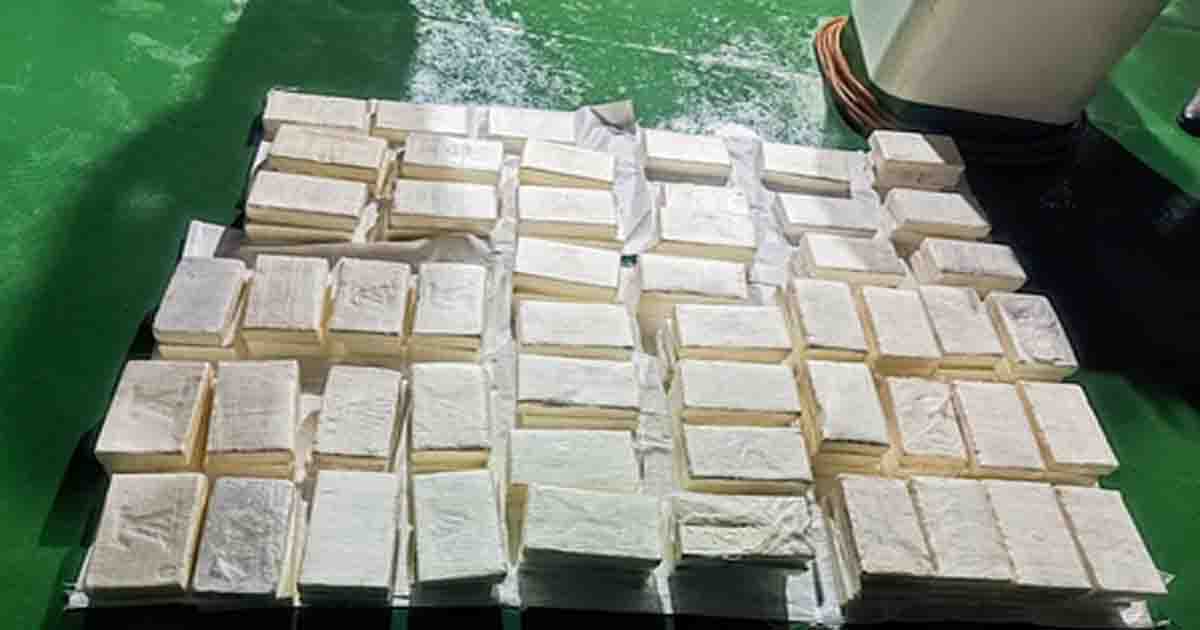
New Delhi, Oct 9: Pakistan-based narcotic cartels are now encouraging their cronies in India to ramp up homegrown production. With agencies such as the Narcotics Control Bureau (NCB) carrying out several drug busts, the cartels from Pakistan have decided to focus more on home-made substances to fuel their trade.
Before the Taliban took control of Afghanistan, poppy fields were in abundance. Opium and heroin were coming out of Afghanistan in large quantities, and Pakistan-based cartels would rely heavily on this product.
The Taliban have taken strict measures and ensured that Afghanistan shall no longer have drug-producing fields. Instead, in the fields of Afghanistan, one gets to see potatoes, grain, and other vegetables being grown.
This decision has resulted in a drop of 95 per cent in the production of drugs. Before the Taliban took over, drugs were being produced or grown on 232,000 hectares.
Following the ban in 2022, Pakistan- and Myanmar-based drug cartels began moving towards synthetic drugs. Drugs such as methamphetamine or meth are in very high demand both in the Indian and international markets.
Unlike opium and heroin, meth can be produced all through the year. This means that the production levels would be ten times higher when compared to heroin or opium. Further, this also ensures that synthetic drugs are cheaper when compared to the field-produced narcotics.
This also drives consumption, as the affordability of such narcotics makes them accessible to a wider section of society.
An Intelligence Bureau official said that drug cartels which had set up massive synthetic drug manufacturing units in Myanmar and Pakistan are now insisting that their recruits in India do the same at home.
“This has been done due to the massive drug busts that have taken place in India in recent months. The new tactic by the narcotic cartels is similar to the one that Pakistan tries to adopt when it comes to terror-related activities,” said the IB official.
There is a major push being made for homegrown terror modules so that Pakistan can have the deniability factor each time a bust takes place, the official added.
Another official said that the creation of multiple homegrown synthetic drug producing units also eliminates the risk of the contraband being intercepted either on Indian or international waters.
The Indian agencies have literally choked every route that is being used by cartels run by the likes of Dawood Ibrahim and Haji Salim.
The Iran war has added to their miseries as the usual routes that would be used to smuggle drugs into India have largely been disrupted.
In 2024, the NCB and Delhi Police busted a clandestine meth lab in Greater Noida, adjacent to the National Capital. During the operation, the NCB seized 95 kg of meth.
Officials say that the cartels would push and also facilitate the setting up of such homegrown drug-producing units in many more parts of the country.
“There is a lot of focus being given to both Tamil Nadu and Kerala. The recent drug busts have affected the southern markets and also the supplies into Sri Lanka and eventually Thailand,” officials say.
The intelligence agencies have learnt that Haji Salim, who controls this route, has been dialling his contacts in Sri Lanka, Kerala and the Maldives. He is also in touch with some of his associates who are behind bars now, the agencies have learnt.
Haji Salim has been instructing them to make all possible arrangements to set up clandestine meth-producing labs in large numbers.
These recent drug busts, which directly affected the southern markets and the other routes leading from there, have put Haji Salim under immense pressure, especially from his international dealers. He feels that ramping up homegrown production will make up for the loss.
Moreover, transporting homegrown drugs is easier than smuggling them in from Pakistan and then through the Indian waters. This, he hopes, would solve the problem, and in case of a bust, Pakistan can always deny any involvement, an official said.
International News
Israel to award brave Indian pilot Captain Smit Machchhar with Presidential Award for Civilian Heroism

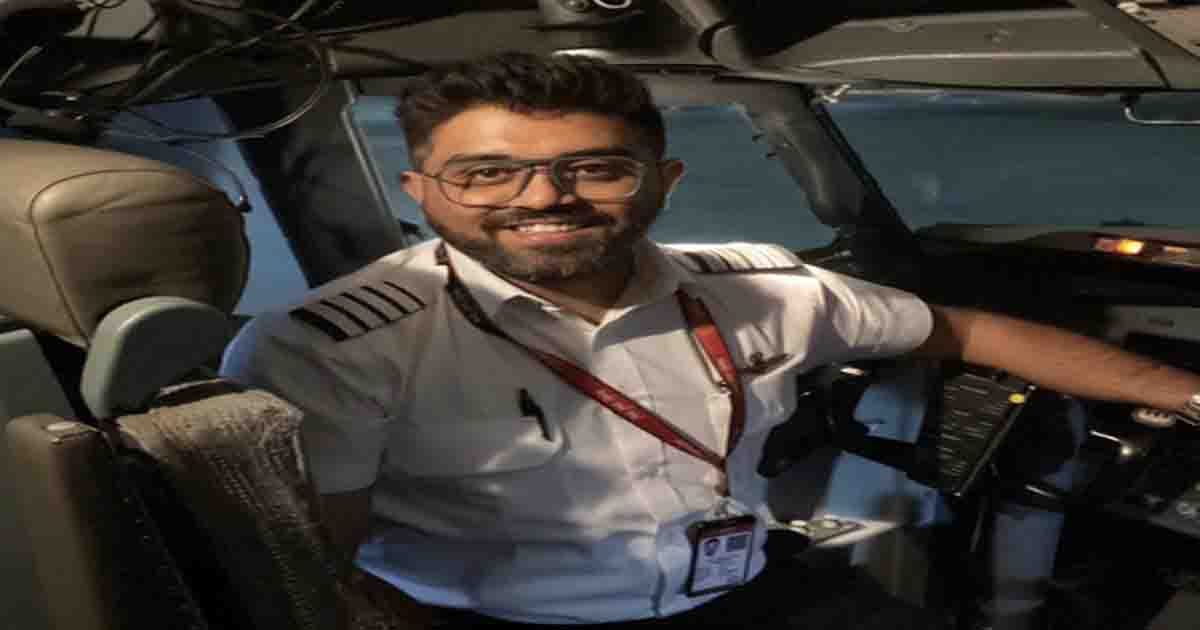
Jerusalem, Oct 9: Indian pilot Captain Smit Machchhar, who fought against the attacking co-pilot in a Flydubai aircraft and helped save 174 people onboard last week, will receive Israel’s Presidential Award for Civilian Heroism, the country’s highest bravery award for civilians.
Israeli President Isaac Herzog announced that Captain Machchhar would be presented with the award once he recovers.
“Alongside the Israeli heroes whom we honour today, we send our heartfelt wishes for the full and speedy recovery of Captain Smit Machchhar of India. Captain Machchhar’s sheer courage and bravery and sound professionalism helped avert a catastrophe. Once he regains his strength, it will be my honour and privilege to award him, on behalf of the people of Israel, the State of Israel’s Presidential Award for Civilian Heroism,” Herzog said.
According to the United Arab Emirates probe, Hamam Al-Hammami, the co-pilot of the Dubai-Tel Aviv flydubai flight, attacked Indian pilot Captain Machchhar with the cockpit’s crash axe in what the UAE authorities have described as a “terrorist attack”.
Al-Hammami tried to take control of the flydubai aircraft, carrying over 170 people, after attacking Captain Machchhar, who tried to stop him. Despite being injured, the Indian pilot managed to open the cockpit door, allowing passengers to intervene and overpower the attacker.
Israeli President Herzog also presented the Presidential Award for Civilian Heroism to six Israeli civilians for their courageous intervention in overpowering the flydubai co-pilot and preventing him from crashing the aircraft, as per local media reports.
The award was presented to Tali Manes, Zvika Manes, Yaniv Hayoun, Dr Shota Musayev, Asaf Rajuan and Or Pardilov during a ceremony at the President’s Residence in Jerusalem, recognising their role in averting a potential disaster.
Earlier on Saturday, Captain Machchhar recounted the terrifying moments inside the cockpit when he realised that his co-pilot was attacking him.
He described the ordeal while speaking to Israeli Prime Minister Benjamin Netanyahu, who invited the pilot and Prime Minister Narendra Modi to light a celebratory flame at Israel’s next Independence Day ceremony.
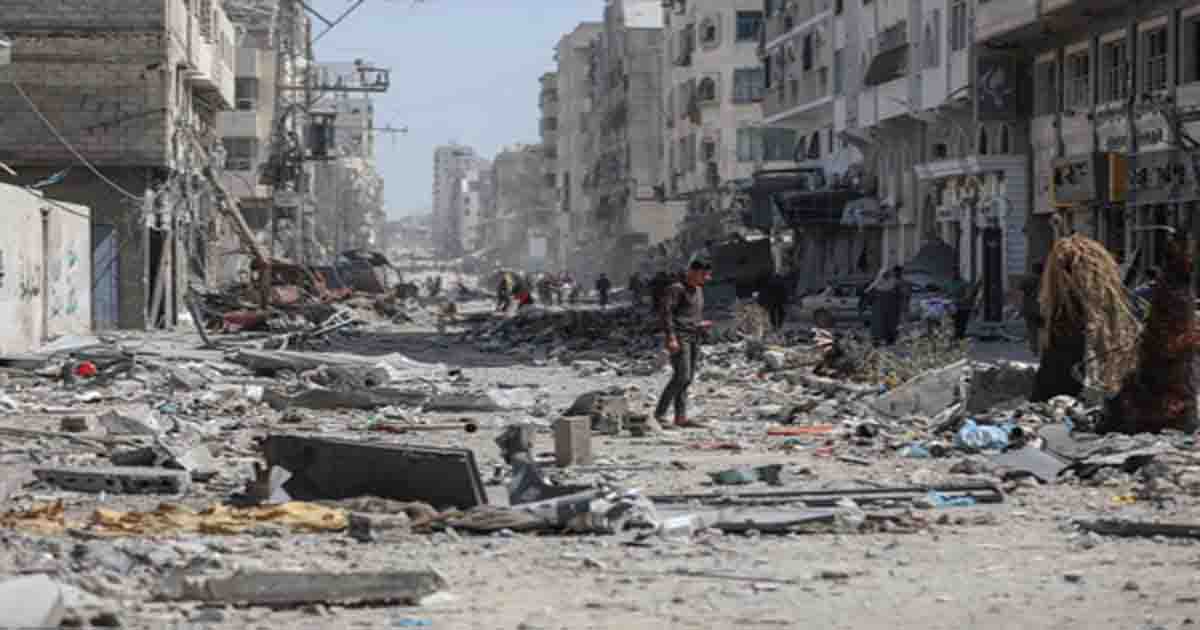
Jerusalem, Oct 8: The Israeli military has said that it has struck about 100,000 targets across the Middle East since October 2023 and expanded its reserve forces by 36 per cent, outlining the scale of its operations on the conflict’s third anniversary.
The military on Wednesday (local time) said combat reserve units were serving an average of 80-100 days in 2026, compared with a planned average of about 55 days, attributing the increase to “evolving operational needs.”
It said about 22,000 reservists previously released from service have been called back to duty following an August 2024 call-up order, reports Xinhua news agency.
The target tally included about 65,000 in Gaza, 28,000 in Lebanon and Syria combined, 4,500 in Iran and 80 in Yemen. The military did not specify whether repeated strikes on the same site were counted.
In the occupied West Bank, the military said it has detained about 45,000 people for questioning over three years, including people accused of throwing stones or possessing weapons and those suspected of planning attacks.
It said it has confiscated more than 3,800 weapons since the war began.
Over the three years, about 10,200 projectiles have been launched toward Israel from Gaza, 20,000 from Lebanon, 1,200 from Iran, 50 from Syria and 90 from Yemen, according to the military. The figures could not be independently verified.
It said 970 Israeli soldiers have died during operations and more than 70 per cent of soldiers wounded during the war have returned to service.
The Hamas-led attack on southern Israel on Oct. 7, 2023, killed about 1,200 people and triggered a massive Israeli military campaign across Gaza that has killed, according to Gaza-based health authorities, more than 74,200 people. It subsequently expanded into fighting across the region.

Telangana to cancel licences of shops selling synthetic manja

Bihar police driver recruitment aspirants protest in Patna, seek filling of vacant women’s quota posts

Pak drug cartels turn to India-made meth labs in Kerala, TN as busts choke smuggling routes

SC orders four-week deadline to link accident, vehicle, insurance databases

When Katrina Kaif revealed her biggest learnings from her relationships

Gift to President Putin part of PM Modi bid to globally display India’s heritage

PM Modi’s warm camaraderie with Putin, Xi on full display at BRICS Summit

INDIA bloc begins protest march against ECI

Complaint against Netflix & Mukesh Chhabra for inappropriate language on ‘India’s Got Latent 2’

Maha Congress stages agitation against Gyanesh Kumar
-

 Crime4 years ago
Class 10 student jumps to death in Jaipur
-

 Maharashtra2 years ago
Mumbai Local Train Update: Central Railway’s New Timetable Comes Into Effect; Check Full List Of Revised Timings & Stations
-

 Maharashtra2 years ago
Mumbai To Go Toll-Free Tonight! Maharashtra Govt Announces Complete Toll Waiver For Light Motor Vehicles At All 5 Entry Points Of City
-

 Maharashtra2 years ago
False photo of Imtiaz Jaleel’s rally, exposing the fooling conspiracy
-

 National News2 years ago
Ministry of Railways rolls out Special Drive 4.0 with focus on digitisation, cleanliness, inclusiveness and grievance redressal
-

 Maharashtra2 years ago
Maharashtra Elections 2024: Mumbai Metro & BEST Services Extended Till Midnight On Voting Day
-

 National News2 years ago
J&K: 4 Jawans Killed, 28 Injured After Bus Carrying BSF Personnel For Poll Duty Falls Into Gorge In Budgam; Terrifying Visuals Surface
-

 Crime2 years ago
Baba Siddique Murder: Mumbai Police Unable To Get Lawrence Bishnoi Custody Due To Home Ministry Order, Says Report