
Business
5G-ready car sales cross 500K first time ever globally


The connected car penetration surpassed that of non-connected cars for the first time ever globally, capturing almost 50.5 per cent share in the second quarter (Q2) this year.
5G-ready car sales surpassed half a million, though 4G accounted for 90 per cent of connected car sales.
According to Counterpoint Research, the US overtook China to lead the global connected car market and the top five automakers were Volkswagen, Toyota, GM, Stellantis and Hyundai.
The US, China and Europe accounted for nearly 80 per cent of connected car sales in the quarter.
“The US market trailed China in terms of connected car sales in the first quarter of this year. However, with the resurgence of Covid-19 and plant shutdowns in China from March onwards, the US overtook China,” said senior analyst Soumen Mandal.
According to the report, automakers are focusing on using powerful on-board computers for next-generation connected mobility.
“4G cars still dominate the global connected car market, capturing 90 per cent of shipments in Q2 2022, whereas 5G cars accounted for around 7 per cent. Although 5G’s share will continue to increase, 4G will see increased sales on a yearly basis until 2027,” said Research Vice-President Peter Richardson.
Non-connected cars have been steadily declining as automakers prefer to upgrade their portfolio with factory-fitted embedded connectivity even in base model variants.
Luxury brands like BMW, Mercedes and Audi were the first to introduce connected cars with inbuilt Wi-Fi, even before the initial push towards connected vehicles came from government mandates like eCall.
According to the report, there are several factors hindering the proliferation of 5G for cars, such as high prices of 5G NAD/TCU, and patchy network coverage even where 5G has been launched which, in turn, means limited availability of 5G capable cars.
Furthermore, there is only nascent adoption of ADAS/AD levels. Currently, there are few Level 3 capable models and all use 4G.
“We expect that mass adoption of 5G connectivity will only occur after 2025, when most of these issues will have been resolved,a said Richardson.

Business
Centre expects anti-cancer drug prices to fall 20-70 per cent under proposed trade margin cap


The Centre has told the Supreme Court that capping trade margins on anti-cancer medicines at 30 per cent of their maximum retail price (MRP) is expected to save patients around Rs 2,500 crore annually, with the proposed measure likely to reduce the MRP of such drugs by 20 to 70 per cent.
In an affidavit filed before the apex court in a pending plea seeking regulation of medicine prices, the Union government, through the Department of Pharmaceuticals, said it had decided to rationalise trade margins on anti-cancer drugs after extensive consultations with stakeholders and an assessment of the potential impact on the availability and affordability of medicines.
The proposed cap was intended to curb excessive trade mark-ups while retaining a reasonable margin for distributors and retailers, adding that an expert committee had been constituted to recommend the list of anti-cancer medicines to which the measure would apply, it said.
The Ministry of Health and Family Welfare constituted the committee on October 9 under the chairmanship of the Director General of Health Services, and it is expected to submit its report within 10 to 15 days.
“The trade margin is to be capped at 30 per cent of the MRP, on the same lines as was done in the TMR of 2019. The objective is to retain a reasonable trade margin while preventing excessive margins,” the affidavit stated.
The Centre said the list would cover drugs approved for the treatment of cancer, except inexpensive medicines, and could be periodically updated in view of market developments and public health considerations.
According to the affidavit, the National Pharmaceutical Pricing Authority (NPPA) would place the committee’s recommendations before its authority for deliberation and appropriate directions, following which it would issue a price notification and instructions to manufacturers to ensure that the benefits were passed on to patients.
The government said the proposed measure was expected to reduce out-of-pocket expenditure for cancer patients, improve affordability and accessibility of medicines, and bring greater transparency to the prices actually paid by consumers.
The affidavit was filed in response to a public interest litigation by Dr Sanjay Kulshrestha, which raises concerns over medicine pricing and the need for effective regulation of trade margins in the pharmaceutical sector.
The Centre maintained that a comprehensive statutory and policy framework was already in place to regulate drug prices, including the Drugs (Prices Control) Order, 2013, and that the government had been taking calibrated steps to address excessive margins without compromising the availability of essential medicines.
The government also referred to its earlier intervention in 2019, when the NPPA imposed a 30 per cent trade margin cap on 42 selected non-scheduled anti-cancer medicines.
According to the affidavit, the measure resulted in a reduction in the MRP of 526 brands and generated annual savings of approximately Rs 984 crore for patients, based on information provided by companies.
The Centre said the earlier intervention provided a policy precedent for extending trade margin rationalisation to a broader range of non-scheduled anti-cancer medicines.
However, it stressed that such interventions required careful consideration of their impact on different stakeholders, including small and medium pharmaceutical manufacturers, distributors and retailers, particularly those operating in remote areas.
The affidavit said some industry associations had expressed concerns that extending the cap could affect employment and medicine distribution in remote regions, given the dependence of smaller manufacturers on local traders and multiple distribution channels.
“Implementation of Trade Margin Rationalisation (hereinafter TMR) affects different stakeholders differently and, hence, requires extensive consultation with all stakeholders and a well-calibrated approach,” the affidavit stated.
The Centre said higher trade margins could sometimes be necessary for low-value medicines, drugs requiring specialised storage or handling, fragile products and medicines with low turnover, as retailers might otherwise find it commercially unviable to stock them.
It added that differences in distribution costs and market conditions had to be taken into account while framing a broader regulatory approach.
The government further referred to measures taken under its extraordinary powers under Paragraph 19 of the DPCO, 2013, including the capping of prices of certain diabetes and cardiovascular medicines, the fixation of ceiling prices for coronary stents and knee implants, and the regulation of trade margins on oxygen concentrators and other medical devices during the Covid-19 pandemic.
It also highlighted initiatives such as the Pradhan Mantri Bhartiya Janaushadhi Pariyojana, which provides generic medicines through around 19,000 Jan Aushadhi Kendras, and AMRIT pharmacies, which offer discounts on essential and life-saving medicines.
The affidavit said the government remained conscious of the need to balance affordability, accessibility and availability while regulating medicine prices.
“The Government has, in the public interest, been taking calibrated and consultative steps, including by invoking its extraordinary powers under Paragraph 19 of the DPCO, 2013, to curb excessive trade margins without compromising the availability of medicines,” it stated.

Indian equity benchmarks opened higher on Friday tracking positive domestic cues and buying in information technology (IT) sector stocks despite weak global signals.
Sensex opened at 73,665.64, an increase of over 400 points or 0.57 per cent, while Nifty started at 22,742.20, up 54.55 points or 0.24 per cent.
Sectorally, the market rally was driven by the technology sector as Nifty IT rose nearly 3 per cent in morning trade, followed by Nifty MidSmall IT & Telecom which surged 1 per cent.
Meanwhile, Nifty Pharma and Nifty Healthcare indices also traded marginally higher.
On the other hand, Nifty Metal, Nifty Realty and Nifty MidSmall Financial Services was decreased by up to 1 per cent.
Analysts said Brent crude spiking to $114 is a major negative for the economy and markets. However, the sharp decline in US 10-year yield to 4.96 per cent and rupee appreciation to 94.70 against the dollar are positives that can restrain FII selling significantly.
They further said more than Rs 3 lakh crore of the IPO money out of Rs 3.73 lakh crore that went into the Jio Platform IPO in the last two days will come back into the system after allotment by next Monday. “This potential liquidity surge can lift the market next week.”
For Nifty, RSI stood at 43.98, above its average of 38.86, while PCR eased to 0.82. Immediate support is placed at 22,600-22,650, with resistance seen at 22,900-23,000, analysts said.
On Thursday, FIIs remained net sellers and offloaded equities worth Rs 3,459 crore, while DIIs provided buying support with net purchases of Rs 2,891 crore.
In US markets on Thursday, Nasdaq closed lower by 2.6 per cent amid an AI-led technology sell-off.
Similarly, Asian markets opened lower with Japan’s Nikkei falling around 1.7 per cent.
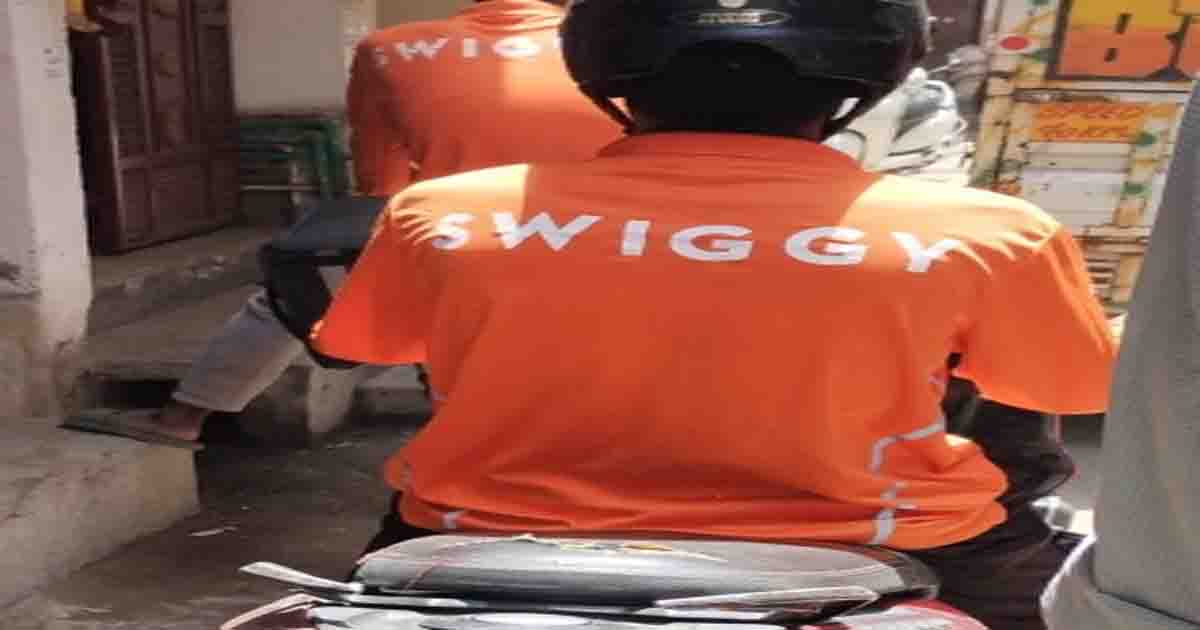
Food delivery and quick-commerce platform Swiggy on Thursday reported a consolidated net loss of Rs 922 crore for the quarter ended September 2026 (Q2 FY27), compared with a loss of Rs 791 crore in the preceding quarter (Q1 FY27).
However, the company’s losses narrowed from Rs 1,092 crore recorded in the corresponding period last financial year (Q2 FY26), according to its stock exchange filing.
Revenue from operations increased 36.1 per cent year-on-year to Rs 7,571 crore from Rs 5,620 crore, driven by growth across food delivery, quick commerce and out-of-home consumption segments.
Despite the robust revenue growth, total expenses climbed to Rs 8,703 crore from Rs 6,711 crore a year ago, as per its regulatory filing.
Swiggy’s core food delivery business continued to strengthen profitability during the quarter. Gross order value (GOV) for the segment rose 17.7 per cent year-on-year to Rs 10,054 crore, while adjusted EBITDA improved by Rs 101 crore to Rs 341 crore.
The adjusted EBITDA margin stood at 3.4 per cent of GOV, marking the business’s highest-ever profitability and margin performance.
The company’s out-of-home consumption business also maintained momentum, with GOV growing 34.9 per cent year-on-year to Rs 1,508 crore.
The segment reported its seventh consecutive quarter of profitability, delivering an adjusted EBITDA margin of 0.5 per cent of GOV.
Meanwhile, quick-commerce arm Instamart continued its expansion push. Net order value (NOV) rose 31.4 per cent year-on-year and 13.4 per cent sequentially to Rs 6,954 crore.
During the quarter, Instamart added 69 dark stores, taking its total network to 1,240 stores nationwide. However, the aggressive expansion continued to weigh on profitability. Instamart reported a loss of Rs 895 crore for the quarter.
Its contribution margin improved by 157 basis points year-on-year to minus 1 per cent of GOV, though it declined by 82 basis points on a sequential basis.
The segment’s adjusted EBITDA margin improved marginally to minus 9.7 per cent from minus 9.8 per cent in the previous quarter.

BJP’s days are numbered, SP certain to win 2027 UP elections: Abu Azmi

Centre expects anti-cancer drug prices to fall 20-70 per cent under proposed trade margin cap

Delhi Police cracks two home burglary cases with arrest of two men; stolen jewellery, Rs 42,670 recovered

Maha MLC polls: Voting underway for five seats; Mahayuti, MVA both assert wins

Amrita Arora recalls years of fights, tears and togetherness as she wishes sister Malaika Arora on her birthday

Rahul, Cong ecosystem want to force regime change: BJP after Neha Bora praises B’desh Gen-Z protest

BJP pays tribute to ex-President Abdul Kalam, recalls his enduring influence on generations of India’s youth

Attack on democratic rights: INDIA Bloc leaders on detentions of anti-ECI protestors

INDIA bloc begins protest march against ECI

Maha Congress stages agitation against Gyanesh Kumar
-

 Crime4 years ago
Class 10 student jumps to death in Jaipur
-

 Maharashtra2 years ago
Mumbai Local Train Update: Central Railway’s New Timetable Comes Into Effect; Check Full List Of Revised Timings & Stations
-

 Maharashtra2 years ago
Mumbai To Go Toll-Free Tonight! Maharashtra Govt Announces Complete Toll Waiver For Light Motor Vehicles At All 5 Entry Points Of City
-

 Maharashtra2 years ago
False photo of Imtiaz Jaleel’s rally, exposing the fooling conspiracy
-

 National News2 years ago
Ministry of Railways rolls out Special Drive 4.0 with focus on digitisation, cleanliness, inclusiveness and grievance redressal
-

 Maharashtra2 years ago
Maharashtra Elections 2024: Mumbai Metro & BEST Services Extended Till Midnight On Voting Day
-

 National News2 years ago
J&K: 4 Jawans Killed, 28 Injured After Bus Carrying BSF Personnel For Poll Duty Falls Into Gorge In Budgam; Terrifying Visuals Surface
-

 Crime2 years ago
Baba Siddique Murder: Mumbai Police Unable To Get Lawrence Bishnoi Custody Due To Home Ministry Order, Says Report