
Maharashtra
Sunetra Pawar asserts control, signals tougher leadership within NCP

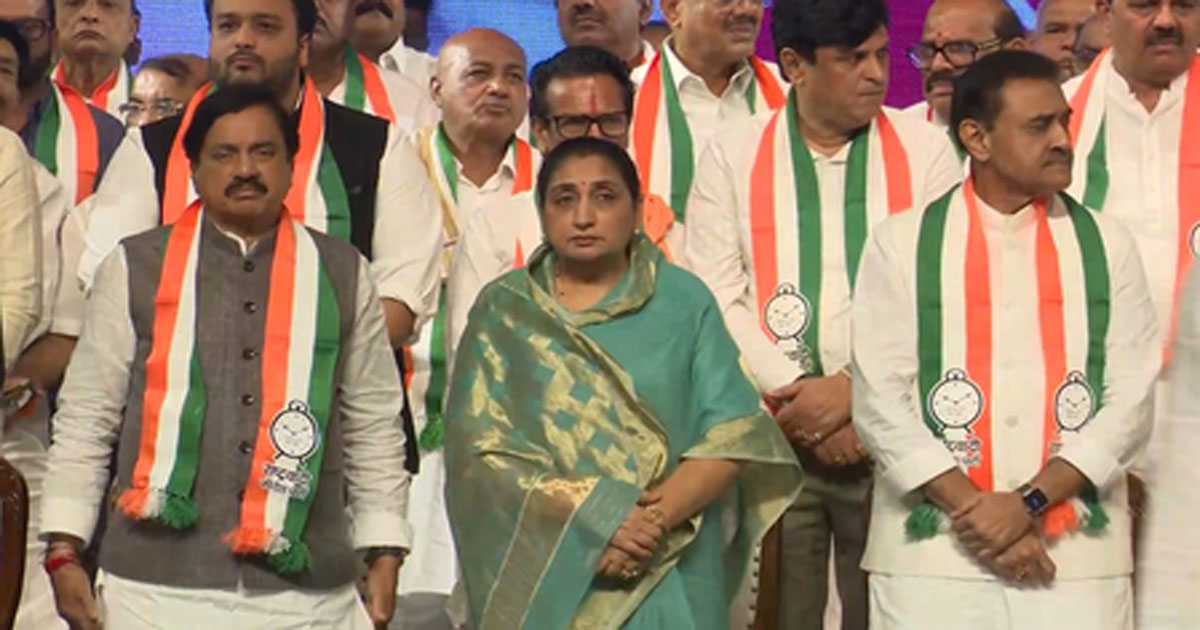
Mumbai, June 12: Sunetra Pawar’s address at the Nationalist Congress Party’s 27th Foundation Day marks a clear shift in her leadership approach, underlining an effort to consolidate control within the party amid internal churn and external scrutiny.
Stepping out from the long-standing shadow of her late husband, Ajit Pawar, her “no-nonsense” posture signals an aggressive attempt to consolidate power within a party still reeling from internal shifts and external scrutiny.
The speech reflected a transition towards a more assertive and centralised leadership style, with Pawar signalling that accountability would be performance-driven and that indiscipline would not be tolerated.
Moving past the initial phase of mourning following the tragic demise of Ajit Pawar, she is shifting into an aggressive, transactional command structure.
Historically, the NCP’s machinery relied on Ajit Pawar’s micro-management — he knew local block leaders by name and personally handled administrative bottlenecks. Sunetra Pawar knows she cannot replicate that exact style overnight. By framing the party’s survival as a performance-based metric (“pull up socks”), she is shifting accountability downward.
Sunetra Pawar explicitly stated that she would follow Ajit Pawar’s example in taking tough, uncompromising organisational decisions. This is a calculated double-edged sword. By directly invoking her late husband’s legacy of decisive, iron-fisted administration, she seeks immediate legitimacy among loyalists who might otherwise view her as a reluctant or transitional leader.
She is transitioning her image from a grieving widow to a political enforcement mechanism, especially as critics claim that the NCP is functioning under the grip of the BJP, its junior partner in the MahaYuti. By warning that she “will not hesitate to take difficult decisions,” she is setting a clear baseline that her initial period of observing and understanding internal dynamics is officially over.
A major portion of her speech focused on a strict warning against “divisive politics” and caste-based rifts, while explicitly stating that public criticism or “unnecessary interference” that damages the party’s image will face a severe backlash.
She made it clear that while she respects the seniority, she will not operate as a puppet ruler or a placeholder. By stating that she has “understood and tolerated everything until now, but will no longer,” she is drawing a strict boundary between healthy consultation and undermining her ultimate authority as the party head and Deputy Chief Minister.
While framed outwardly as a commitment to secularism and social harmony, her rhetoric acts as an internal disciplinary firewall. The NCP has faced intense public and media scrutiny regarding its political alignments and ideological consistency. Sunetra Pawar is effectively telling the veterans and office-bearers to fall in line. Her warning signals that localised rogue strategies will no longer be tolerated if they compromise the central high command.
Co-signing the strategy highlighted by senior leader Praful Patel, Sunetra Pawar urged the cadre to intensely focus on building infrastructure in urban centers ahead of the impending delimitation (the redrawing of electoral constituency boundaries). This highlights a sharp pragmatic shift.
Historically, the NCP’s core strength has heavily relied on rural agrarian networks, cooperative sugar factories, and local banking systems. Recognising changing demographics, Pawar is attempting to modernise the party’s voter base. It shows a forward-looking calculus — she isn’t just fighting to preserve her current seat; she is planning for an altered electoral map where cities will hold the ultimate veto power in Maharashtra.
Sunetra Pawar’s speech was less about celebrating a foundation day and more about asserting absolute authority. By declaring her willingness to be unpopular for the sake of the organization, she has drawn a clear line in the sand. The coming months will show whether the NCP cadre views this as a genuine strength or overcompensation.
Political observers said that Sunetra Pawar’s speech is a calculated preemptive strike against internal dissent. She has recognized that showing vulnerability or overly relying on an emotional sympathy wave will cause the NCP’s powerful regional bosses to partition the party among themselves.
By threatening a purge of the underperforming and the intrusive, she has staked everything on absolute dominance. “It is a high-risk, high-reward strategy: she will either successfully tame the party’s warring factions, or accelerate its fragmentation,” they remarked.


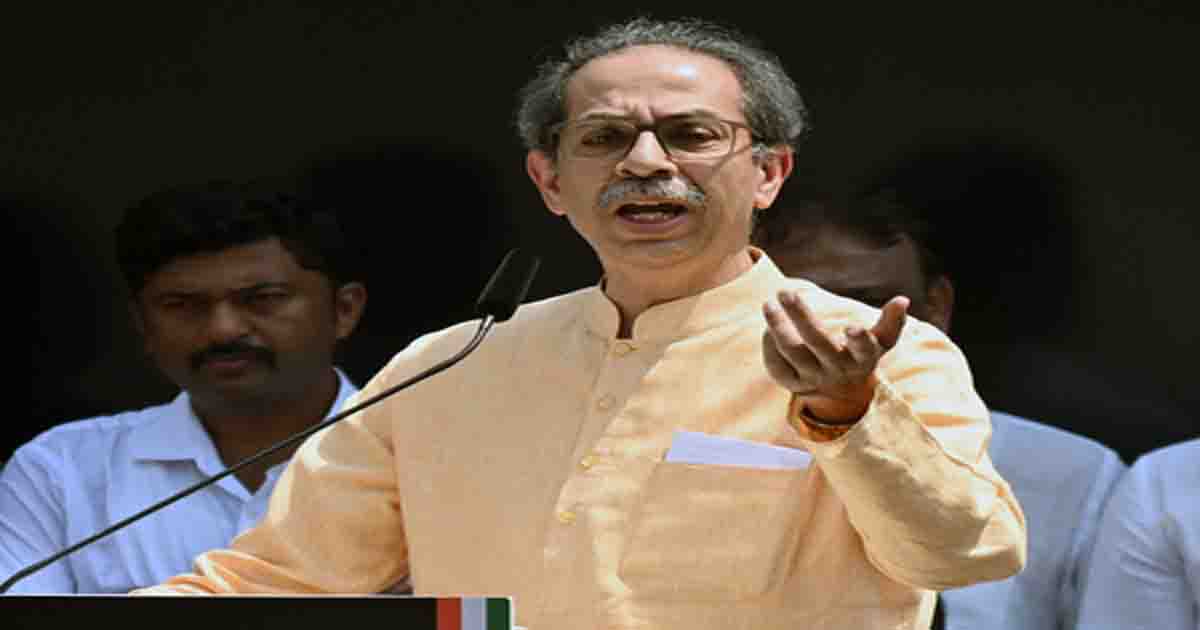
Mumbai, Oct 5: As the India Meteorological Department (IMD) officially announced the withdrawal of the monsoon from most parts of Maharashtra, Shiv Sena Uddhav Balasaheb Thackeray on Monday launched a sharp critique against the state government, warning that the state is staring at an unprecedented 9-to-10-month-long severe drought.
The Thackeray camp in the party’s mouthpiece, ‘Samaana’, emphasised that the departure of a dry monsoon without yielding return showers has shattered the final hopes of farmers across the state, leaving more than half of Maharashtra severely scorched.
According to the editorial, over 20 out of 36 districts in Maharashtra recorded an unprecedented rainfall deficit this season. The delayed arrival of the monsoon hindered early sowing. Subsequent sowing efforts went to waste as rains vanished for almost two consecutive months, destroying crops across Marathwada, Vidarbha, and Central Maharashtra.
“Solapur recorded the highest deficit in the state at 58 per cent. Beed faced a rainfall deficit of 51 per cent. Hingoli recorded a deficit of 49 per cent. Jalna logged a deficit of 48 per cent. Ahilyanagar and Dharashiv both registered a 46 per cent shortage. Even coastal Sindhudurg, usually known for high rainfall, registered a 36 per cent deficit,” said the Saamana editorial.
Criticising the state administration, the Thackeray camp alleged that local officials in drought-stricken Solapur took the Guardian Minister to inspect an irrigated, green farm instead of showcasing the actual dried-up crop conditions elsewhere, calling it a cruel mockery of suffering farmers.
The crisis has been further exacerbated by abnormal weather patterns. The typical “October Heat” started as early as mid-August, with temperatures climbing to 36 degrees across the state. This unrelenting heat has dried up green pastures, wells, and local water bodies, triggering severe shortages of both drinking water and cattle fodder, the editorial said.
The editorial highlighted that a fresh wave of farmer suicides has already commenced in regions like Vidarbha and Marathwada due to immense financial distress. Taking a direct swipe at political leaders, the Uddhav Thackeray-led Shiv Sena stated that simply declaring a drought does not absolve the government of its responsibilities.
The editorial noted that while the monsoon withdrew, ministers and leaders who previously visited farm bunds for photo-ops have also retreated to the Secretariat, leaving farmers waiting desperately for immediate relief assistance.
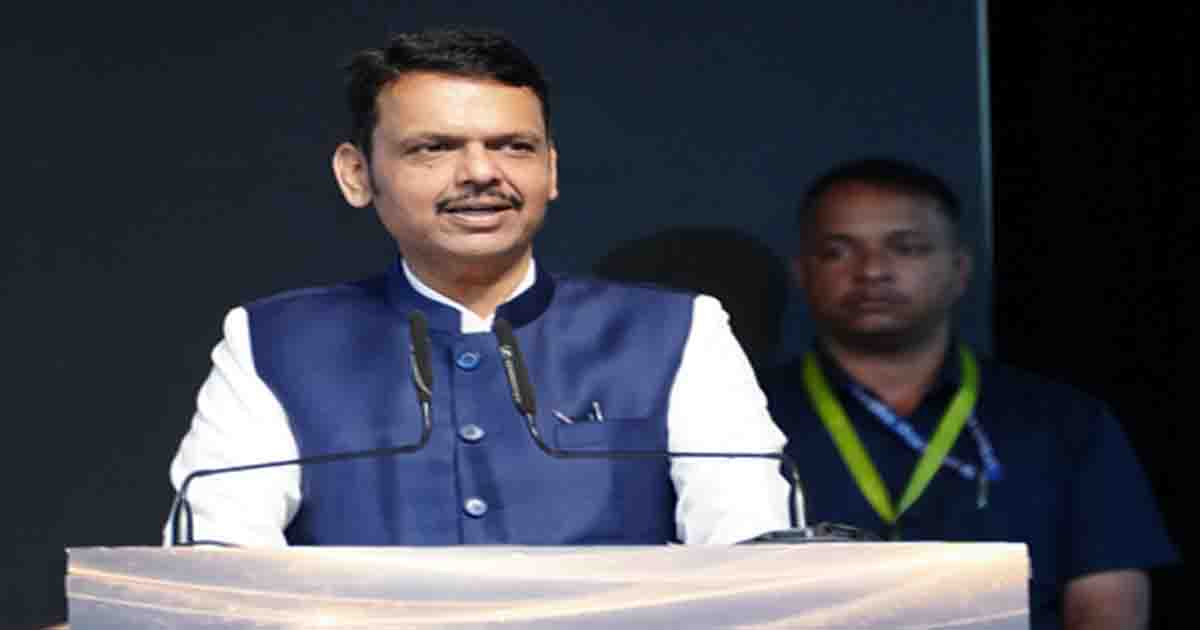
Mumbai, Oct 5: Defending the ongoing Special Intensive Revision (SIR) of electoral rolls in the state, Maharashtra Chief Minister Devendra Fadnavis on Monday described the exercise as the natural next phase of a long-standing democratic process aimed at safeguarding electoral integrity.
Addressing concerns and opposition’s pushback regarding voter list updates, the Chief Minister emphasised that intensive revisions are far from unprecedented. Instead, they constitute an essential mechanism that the Election Commission of India (ECI) has periodically deployed across decades to uphold the sanctity of the principle: “One Citizen, One Vote.”
CM Fadnavis chose to argue his case through his post on X, a day after Uddhav Thackeray and Raj Thackeray-led staged ‘Garjana Morcha’, demanding the scrapping of SIR in Maharashtra and holding elections on the ballot paper.
Highlighting the long timeline of electoral roll maintenance in post-independence India, CM Fadnavis outlined key phases where in-depth nationwide revisions were undertaken to ensure accuracy.
“During 1952-1956: The first major intensive revision conducted by the Election Commission across most parts of the country following India’s early general elections. Successive nationwide revisions executed to ensure nascent electoral rolls reflected growing populations and demographic shifts in 1957, 1961, 1965 & 1966. Periodic door-to-door enumeration drives carried out to cleanse rolls during periods of rapid political and social transition in 1983-1984, 1987-1989, 1992, 1993 & 1995. Comprehensive voter list overhauls undertaken ahead of major national polling cycles in 2002, 2003 & 2004,” he noted.
Outlining the operational reality behind voter list accuracy, CM Fadnavis stressed that intensive revisions require building electoral rolls afresh through rigorous field-level verification. “Rapid urbanisation, frequent migration, additions of newly eligible youth, unrecorded deaths, and constituency transfers continuously alter voter demographics. Over the past 20 years alone, millions of names have been added and deleted. Periodic, in-depth verification is essential so that no eligible citizen is excluded, and no illegal or duplicate entry remains,” he said.
The Chief Minister highlighted that the Special Intensive Revision operates through transparent, ground-level verification steps. “Door-to-Door Visits: Enumerators conduct physical visits to verify household voter data. Form Distribution & Collection: Distribution and collection of official Enumeration Forms directly from citizens. Record Cleaning: Updating records to remove deceased voters and eliminate duplicate registrations across constituencies. Public Verification: Allowing citizens to verify their details, correct spelling or address errors, and submit updated credentials,” he stated.
CM Fadnavis reiterated that the current SIR initiative is a routine yet essential constitutional process designed to ensure fair, transparent, and accurate elections across Maharashtra and the nation.
Meanwhile, CM Fadnavis launched a scathing attack on the rally organised by the Thackeray brothers, calling it an attempt to “reclaim lost ground”.
He pointed out that despite massive publicity, the turnout at the rally was quite low. He accused them of directing their frustration at the Election Commission after being rejected by the public. He raised strong objections to the Thackeray brothers’ persistent claims that there were irregularities in the Maharashtra Assembly elections and their demand to remove Gyanesh Kumar.
He clarified that Gyanesh Kumar became the Chief Election Commissioner in 2025, whereas the Maharashtra elections were held in 2024 and the Special Intensive Revision (SIR) took place in 2026.
Questioning the logic of their allegations, CM Fadnavis asked how a Chief Election Commissioner appointed in 2025 and an SIR conducted in 2026 could possibly impact elections held in 2024.
He added that after having been rejected by the people, they were simply taking out their frustration on the Election Commission.
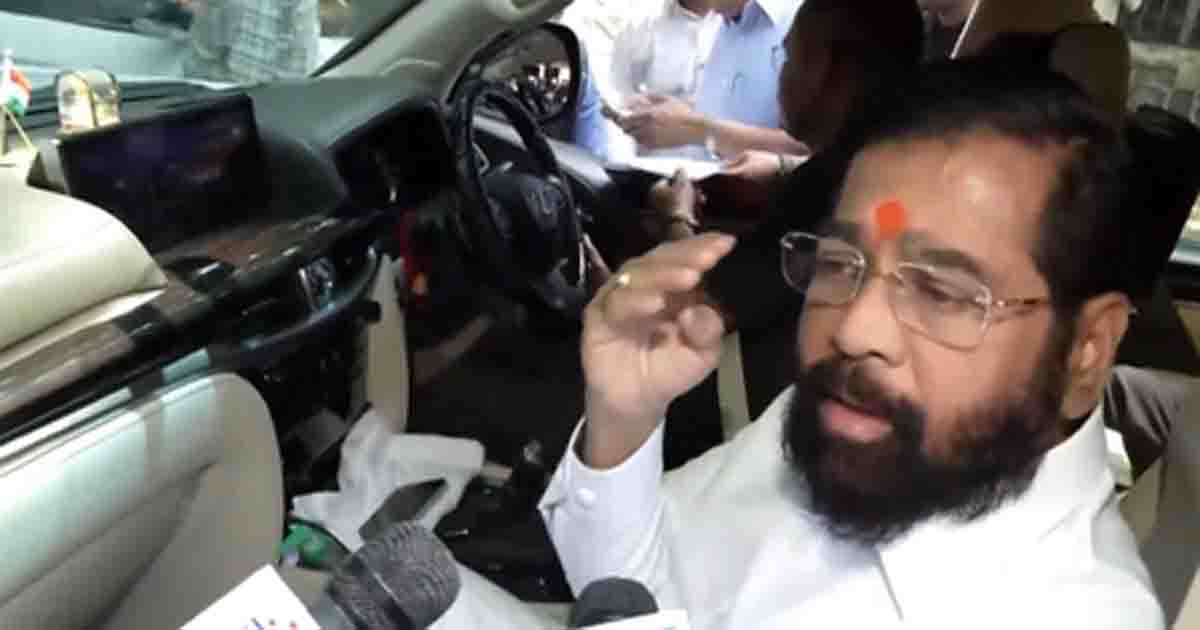
Mumbai, Oct 5: Maharashtra Deputy Chief Minister Eknath Shinde on Monday praised Indian pilot Captain Smit Machchhar for displaying exceptional courage and bravery during an alleged hijack attempt on a Dubai-Tel Aviv flight, saying his actions to save the lives of 174 people were a rare feat.
Speaking to media, Dy CM Shinde said Machchhar had risked his own life to protect everyone on board and prevent the aircraft from being hijacked.
“Captain Smit Machchhar’s act of bravery and valour is a rare feat in the entire world. He displayed immense courage, risking his own life to save 174 people. He prevented the aircraft from being hijacked and worked to protect everyone on board, putting his own life at risk,” Shinde said.
He also praised Prime Minister Narendra Modi for being among the first to congratulate the pilot and acknowledge his courageous efforts.
“Our country’s popular and successful Prime Minister Narendra Modi was the first to congratulate him. He felt immense pride that Machchhar belongs to our country, our Mumbai, and is also a source of pride for Maharashtra,” the Deputy Chief Minister added.
The incident involved Flydubai flight FZ1073, which was travelling from Dubai to Tel Aviv on September 30, when it reportedly transmitted emergency signals and made a sudden descent of more than 17,000 feet. The aircraft had been flying at an altitude of approximately 34,000 feet before the incident.
The Boeing 737-8 was carrying 174 passengers, including 27 children, when it was eventually diverted to Prince Sultan Bin Abdulaziz Airport in Tabuk, Saudi Arabia.
Videos circulating on social media showed Machchhar covered in blood, wearing an oxygen mask and lying on his back in the aircraft’s galley.
Israeli Prime Minister Benjamin Netanyahu said an Israeli passenger had informed him that the aircraft went into a spin and began descending.
According to Netanyahu’s account, the passenger and a crew member managed to enter the cockpit and overpower the pilot, who had allegedly stabbed Machchhar while attempting to interfere with the aircraft’s systems. The confrontation inside the cockpit was described as a crucial moment in preventing the aircraft from continuing its descent.
Machchhar, who is in his mid-30s, has since been hailed as a “true hero” for his role in helping save all 174 people on board.
He has been associated with Flydubai for more than four years and has over 13 years of commercial aviation experience, with more than 9,500 flying hours. Before joining the airline in June 2022 and relocating to Dubai, he spent over a decade with SpiceJet in India, where he also served as a Line Training Captain.
His brother is also a pilot with Flydubai.
Machchhar has received widespread appreciation from friends, former colleagues and neighbours, who described him as a good person and praised his courage during the incident.
Meanwhile, media reports have identified an Omani citizen, Hamam al-Hammami, as the co-pilot who attacked Machchhar and attempted to take control of the Dubai-Tel Aviv flight. However, his identity has not been officially confirmed.

Rakul Preet Singh breaks silence on IT raid reports, clarifies, ‘The search was not pertaining to me’

Shiv Sena(UBT) attacks Maha govt over rising farmer distress as monsoon retreats dry

Current SIR exercise natural next phase of decades-old tradition, says CM Fadnavis

Eknath Shinde lauds Capt Smit Machchhar, calls his bravery a rare feat in entire world

Dharmendra Pradhan calls for mass participation in Sambalpur cleanliness drive

Gift to President Putin part of PM Modi bid to globally display India’s heritage

PM Modi’s warm camaraderie with Putin, Xi on full display at BRICS Summit

Corporators of all parties in trouble! Corporators of all major parties including Shiv Sena (UBT), BJP and Congress are facing legal challenges.

Complaint against Netflix & Mukesh Chhabra for inappropriate language on ‘India’s Got Latent 2’

Maha Congress stages agitation against Gyanesh Kumar
-

 Crime4 years ago
Class 10 student jumps to death in Jaipur
-

 Maharashtra2 years ago
Mumbai Local Train Update: Central Railway’s New Timetable Comes Into Effect; Check Full List Of Revised Timings & Stations
-

 Maharashtra2 years ago
Mumbai To Go Toll-Free Tonight! Maharashtra Govt Announces Complete Toll Waiver For Light Motor Vehicles At All 5 Entry Points Of City
-

 Maharashtra2 years ago
False photo of Imtiaz Jaleel’s rally, exposing the fooling conspiracy
-

 National News2 years ago
Ministry of Railways rolls out Special Drive 4.0 with focus on digitisation, cleanliness, inclusiveness and grievance redressal
-

 Maharashtra2 years ago
Maharashtra Elections 2024: Mumbai Metro & BEST Services Extended Till Midnight On Voting Day
-

 National News2 years ago
J&K: 4 Jawans Killed, 28 Injured After Bus Carrying BSF Personnel For Poll Duty Falls Into Gorge In Budgam; Terrifying Visuals Surface
-

 Crime2 years ago
Baba Siddique Murder: Mumbai Police Unable To Get Lawrence Bishnoi Custody Due To Home Ministry Order, Says Report