
Maharashtra
Uddhav’s EXPLOSIVE Claim: ‘Godhra-Like Situation Likely After Ram Temple’s Inaugural Event’

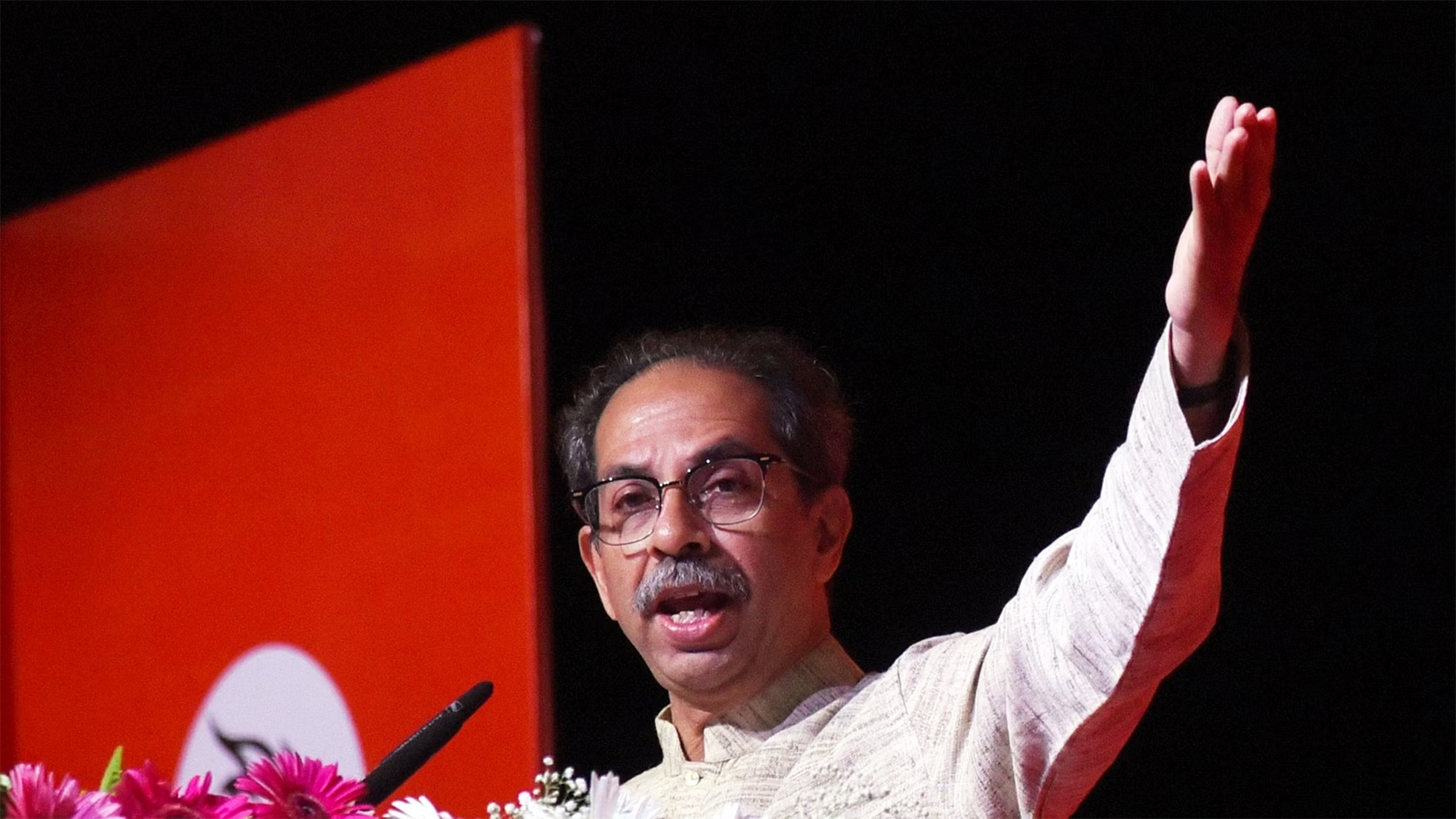
Mumbai, September 11: Shiv Sena (UBT) chief Uddhav Thackeray on Sunday claimed a “Godhra-like” incident may take place during the “return journey” of the large number of people expected to converge at Ayodhya in Uttar Pradesh from across the nation for the inauguration of the Ram Temple. ‘Karsevaks’ (Sangh Parivar term for volunteers who took part in the Ram temple movement) returning from Ayodhya on board the Sabarmati Express were attacked and their train coach set ablaze at Godhra station in Gujarat on February 27, 2002, leading to several deaths that triggered large scale riots across the state.
Government could invite a large number of people for the Ram Temple inauguration
“It is a possibility that the government could invite a large number of people for the Ram Temple inauguration in buses and trucks, and on their return journey, an incident similar to that in Godhra may occur,” Thackeray said in Jalgaon, some 400 kilometres from here.
Ram Temple is likely to be inaugurated in January 2024
The Ram Temple is likely to be inaugurated in January 2024, just months ahead of the Lok Sabha polls. Thackeray also slammed the Bharatiya Janata Party and the Rashtriya Swayamsevak Sangh (RSS) for not having icons whom people could idolise and instead appropriating legends like Sardar Patel and Netaji Subhash Chandra Bose.
BJP-RSS were now trying to lay claim to his father Bal Thackeray’s legacy
He said they (BJP-RSS) were now trying to lay claim to his father Bal Thackeray’s legacy.The BJP and RSS have no achievements of their own and it is not the size of the statue of Sardar Patel (the Statue of Unity in Gujarat’s Kevadia which at 182 metres is the highest such structure in the world) that matters but his achievements.
These persons are not even close to achieving the greatness of Sardar Patel
These persons (from the BJP and RSS) are not even close to achieving the greatness of Sardar Patel, the Shiv Sena (UBT) leader said.The BJP has often targeted Thackeray for forsaking the ideals of Bal Thackeray in order to become chief minister by joining hands with the Congress and NCP after the 2019 Assembly polls.
The attacks have got more strident after the Shiv Sena split in June last year
The attacks have got more strident after the Shiv Sena split in June last year and both factions began calling themselves the true inheritors of the party founder’s legacy.The BJP and Eknath Shinde-led Shiv Sena claim they are true adherents of Bal Thackeray’s Hindutva.



A 19-year-old second-year Chemical Engineering student at the Institute of Chemical Technology (ICT), Mumbai, has committed suicide in his hostel room in Matunga.
The student, identified as Siddhesh Patil, was a native of Nashik and resided at the ICT College hostel. According to preliminary information, the incident occurred at around 10:30 p.m. when he hanged himself from the ceiling fan in his room.
Mumbai Police have registered an Accidental Death (AD) report and initiated an investigation into the circumstances surrounding the incident.
According to information received in connection with the case, Patil had reportedly been experiencing mental health difficulties over the past few days and was undergoing treatment.
On the day of the incident (Tuesday), he reportedly sent a message to his doctor expressing emotional distress. The doctor promptly informed the student’s family after receiving the message.
Following this communication, the family contacted Patil’s friends at the hostel and asked them to reach his room immediately to check on him.
However, the friends reportedly arrived after the suicide had taken place.
The Matunga Police are investigating the case and gathering information to establish the sequence of events. Further details are awaited as the investigation continues.
The incident has drawn attention to the mental well-being of students pursuing higher education away from their families. It also underscores the importance of accessible mental health support and timely intervention when students experience emotional distress.
Earlier in September, a second-year student of the Indian Institute of Technology (IIT) Bombay died by suicide after he was found using a mobile phone during an examination, triggering protests by students on the institute’s Powai campus.
The incident marked the third reported suicide at the IIT-Powai campus in the past six months.
The deceased student was identified as Sahil Wakode, who was pursuing his second year in the Department of Energy Science and Engineering. According to the institute, Wakode had uploaded an examination question paper to ChatGPT in an attempt to obtain answers while the test was underway.
IIT-Bombay said no disciplinary proceedings had been initiated against him following the incident. The matter was discussed with the student by the examination instructor and the Head of the Department. They counselled him and assured him that the incident would not have an adverse impact on his academic career, the institute said.
Crime
Tiger Shroff firing case: Voice samples of threats to be verified through police ‘voice banks’

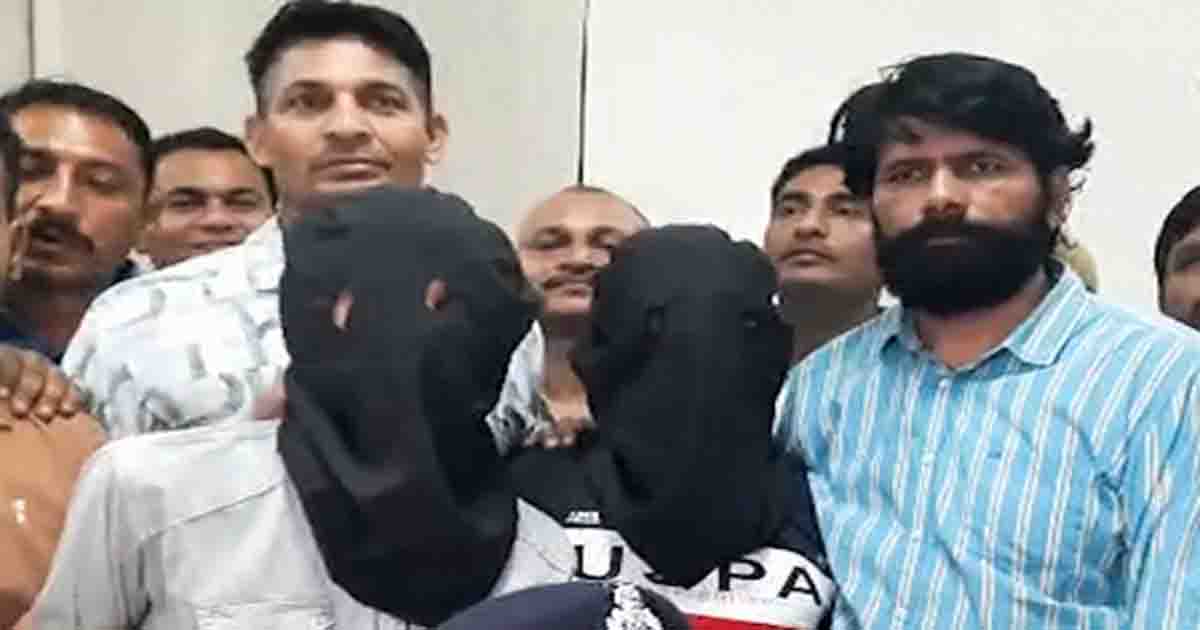
The audio clip containing a threat to Bollywood actor Tiger Shroff will now be examined, as the investigators plan to match the voice sample against the ‘voice banks’ maintained by the Punjab and Delhi Police, officials said.
These databases contain voice recordings of members allegedly linked to the Lawrence Bishnoi gang.
Punjab, Delhi and Rajasthan Police have separate voice banks containing audio samples of the Bishnoi gang members. Similar verification was earlier carried out on audio clips linked to threats received by Salman Khan, Aamir Khan, Rohit Shetty, Baba Siddique and others.
This time, investigators will examine the audio clip of Anil Pandit, which surfaced after the alleged attack threat against Tiger Shroff.
According to senior Mumbai Police sources, identifying the person behind an audio clip is a major challenge, as threats often arrive under different names and in different voices.
Delhi Police reportedly has a voice bank with over 200 voice samples connected to the Bishnoi gang, while Punjab and Rajasthan Police maintain similar databases.
Mumbai Police is also continuing to study the gang’s methods and activities, as the Bishnoi gang has increasingly come into focus in Maharashtra, particularly Mumbai, over the past two to three years.
Meanwhile, the Crime Branch’s Anti-Extortion Cell will produce the arrested accused in the Tiger Shroff firing case before the Esplanade Court at 3 p.m.
According to sources, the accused in the firing incident had arrived in Mumbai about a month ago and allegedly conducted a recce of the homes of several prominent Bollywood celebrities.
The accused would ask auto-rickshaw drivers, whom they hired to travel around Mumbai, to take them to the residences of Bollywood stars. They allegedly claimed that they wanted to photograph the celebrities’ homes.
Meanwhile, the accused allegedly discarded both weapons at an unidentified location while fleeing Mumbai after the attack. The Mumbai Police are now attempting to trace and recover the firearms.
According to police sources, the attackers used two pistols during the incident, one foreign-made and the other domestically manufactured. However, they reportedly had limited information about which of the two weapons was foreign-made.
Investigators are continuing their efforts to locate the discarded firearms as part of the probe into the firing incident.
The Mumbai Crime Branch is investigating the case to establish the roles of the accused and determine the full extent of the conspiracy.

Two people died, and four others sustained burn injuries, including one who suffered 80 per cent burns, after a fire broke out at a scrap godown in Abdul Rashid Compound in Saki Naka, Andheri East, Mumbai, officials said on Wednesday.
The Mumbai Fire Brigade received a call about the blaze at 6.18 p.m. on Tuesday and classified it as a Level-II fire shortly after responding to the incident.
The injured were subsequently rushed to the civic-run Rajawadi Hospital for treatment, police said. The identities of the two deceased persons have not yet been established.
A senior officer of the Mumbai Fire Brigade said the circumstances surrounding the blaze remained unclear, with the scale and nature of the incident making it difficult to determine its cause at this stage.
Preliminary investigations have so far been unable to establish the exact cause or point of origin of the fire.
Officials said the flames spread rapidly, with the large quantity of scrap material at the godown providing fuel and causing the blaze to intensify quickly.
The nature of the material stored at the premises also posed challenges for firefighting personnel, making the operation to extinguish the flames difficult. However, after sustained efforts, the fire brigade eventually managed to bring the blaze under control.
“Extinguishing the fire was also challenging, but it was eventually brought under control,” the officer said.
The four injured individuals were identified as Taufiq Shadil Qureshi, 20, who sustained 80 per cent burns; Jahid Abidulla Qureshi, 20, and Kamal Jalauddin Shah, 47, who both suffered 40 per cent burns; and Lalchand Ramlakhan Gautam, 40, who sustained 10 per cent burns.
All four were admitted to the civic-run Rajawadi Hospital for medical treatment.
According to doctors at the hospital, Taufiq Shadil Qureshi, who sustained 80 per cent burns, is in critical condition. The two other patients who suffered 40 per cent burns each are also in serious condition.
All three have been admitted to the hospital’s trauma ward for treatment and close monitoring.
The fourth injured person, Lalchand Ramlakhan Gautam, who sustained 10 per cent burns, is reported to be stable.
Doctors said he would remain under observation for some time before being discharged, depending on his condition.
Meanwhile, the police and fire brigade officials are continuing to examine the circumstances surrounding the incident.
Further details are awaited.

Delhi police bust inter-state car theft racket, two arrested; five stolen vehicles recovered

Jamshedpur: One killed, three injured in knife attack after dispute at fast-food stall

Anushka Sen on representing India globally: ‘Our stories deserve to be heard across the world’

19-year-old engineering student commits suicide at ICT College hostel in Mumbai

Tiger Shroff firing case: Voice samples of threats to be verified through police ‘voice banks’

Rahul, Cong ecosystem want to force regime change: BJP after Neha Bora praises B’desh Gen-Z protest

BJP pays tribute to ex-President Abdul Kalam, recalls his enduring influence on generations of India’s youth

Attack on democratic rights: INDIA Bloc leaders on detentions of anti-ECI protestors

INDIA bloc begins protest march against ECI

Maha Congress stages agitation against Gyanesh Kumar
-

 Crime4 years ago
Class 10 student jumps to death in Jaipur
-

 Maharashtra2 years ago
Mumbai Local Train Update: Central Railway’s New Timetable Comes Into Effect; Check Full List Of Revised Timings & Stations
-

 Maharashtra2 years ago
Mumbai To Go Toll-Free Tonight! Maharashtra Govt Announces Complete Toll Waiver For Light Motor Vehicles At All 5 Entry Points Of City
-

 Maharashtra2 years ago
False photo of Imtiaz Jaleel’s rally, exposing the fooling conspiracy
-

 National News2 years ago
Ministry of Railways rolls out Special Drive 4.0 with focus on digitisation, cleanliness, inclusiveness and grievance redressal
-

 Maharashtra2 years ago
Maharashtra Elections 2024: Mumbai Metro & BEST Services Extended Till Midnight On Voting Day
-

 National News2 years ago
J&K: 4 Jawans Killed, 28 Injured After Bus Carrying BSF Personnel For Poll Duty Falls Into Gorge In Budgam; Terrifying Visuals Surface
-

 Crime2 years ago
Baba Siddique Murder: Mumbai Police Unable To Get Lawrence Bishnoi Custody Due To Home Ministry Order, Says Report