
National News
Five places in Delhi receive bomb threats on eve of Independence Day

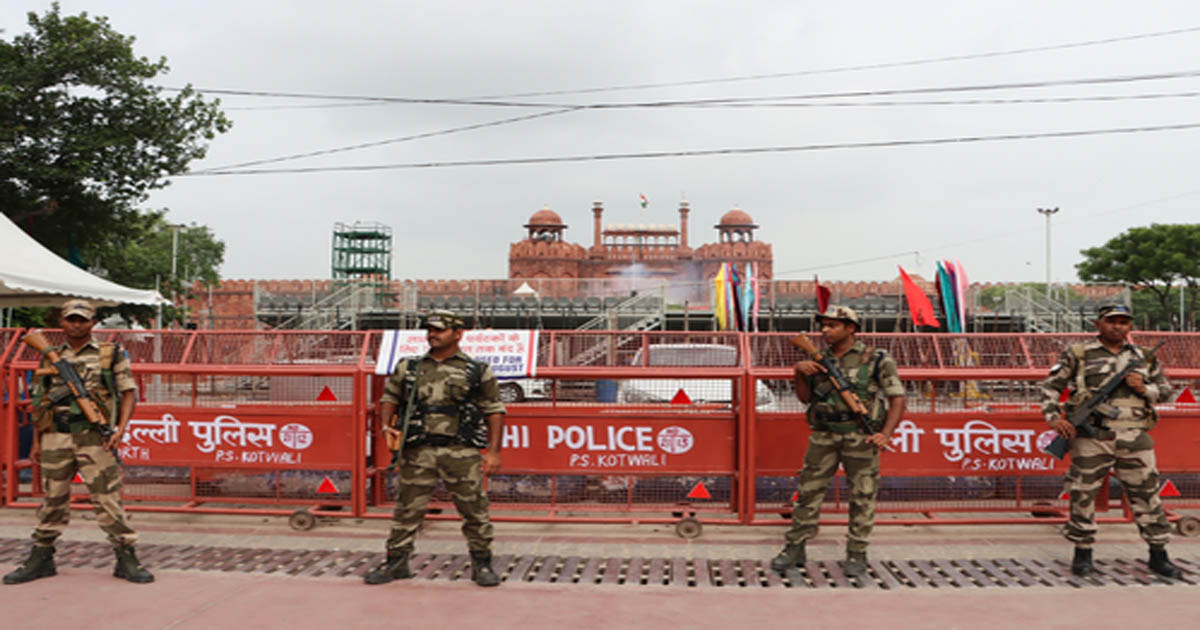
New Delhi, Aug 14: Five places in the national Capital received bomb threats a day before the nation celebrates its 80th Independence Day, officials of the Delhi Fire Service (DFS) said on Friday.
According to the DFS, the locations in Delhi which received calls alleging bomb blasts are Jamnagar House, Jhandewalan Flatted Factory Complex, District Magistrate Office in Saket, Terminal 3 of the Indira Gandhi International Airport and SDM Office at Delhi Cantt.
Fire tenders have been dispatched to all these locations. However, nothing suspicious has been found during the investigation so far, officials said.
Similarly, an email sent to the Delhi Mayor’s office on August 3 threatened multiple bomb blasts at the Red Fort on August 15, prompting security agencies in the capital city to spring into action to comb the entire area around the iconic monument.
As soon as the Mayor’s office received the bomb threat by email, it alerted the Delhi Police and other security agencies.
Soon after receiving the alert, police personnel, bomb disposal squads, and other security teams rushed to the historic Red Fort and carried out extensive sanitisation and inspection of the premises, an official said.
Delhi Police sources said that after receiving the information about the bomb threat, the security of the area was beefed up and an investigation was launched.
On July 11, a bomb threat targeting the Red Fort had also triggered a major security response, prompting police and security agencies to conduct a comprehensive combing exercise at the monument before declaring the threat to be a hoax.
According to Delhi Police, last month’s threat originated from a phone call made to the Mumbai Police Control Room, during which the caller allegedly claimed that the historic Red Fort would be blown up. Mumbai Police immediately relayed the information to the Delhi Police Control Room, which alerted the North District Police to initiate security measures.
After thoroughly checking the area, police officials found no suspicious object or explosive material and confirmed that the threat was false.
Prime Minister Narendra Modi is set to address the nation from the ramparts of the iconic Red Fort on August 15, Saturday. The event is expected to draw large crowds and involve extensive restrictions on movement in the capital city.

National News
Delhi CM Rekha Gupta urges residents to save 181, 112 emergency helpline numbers on phones

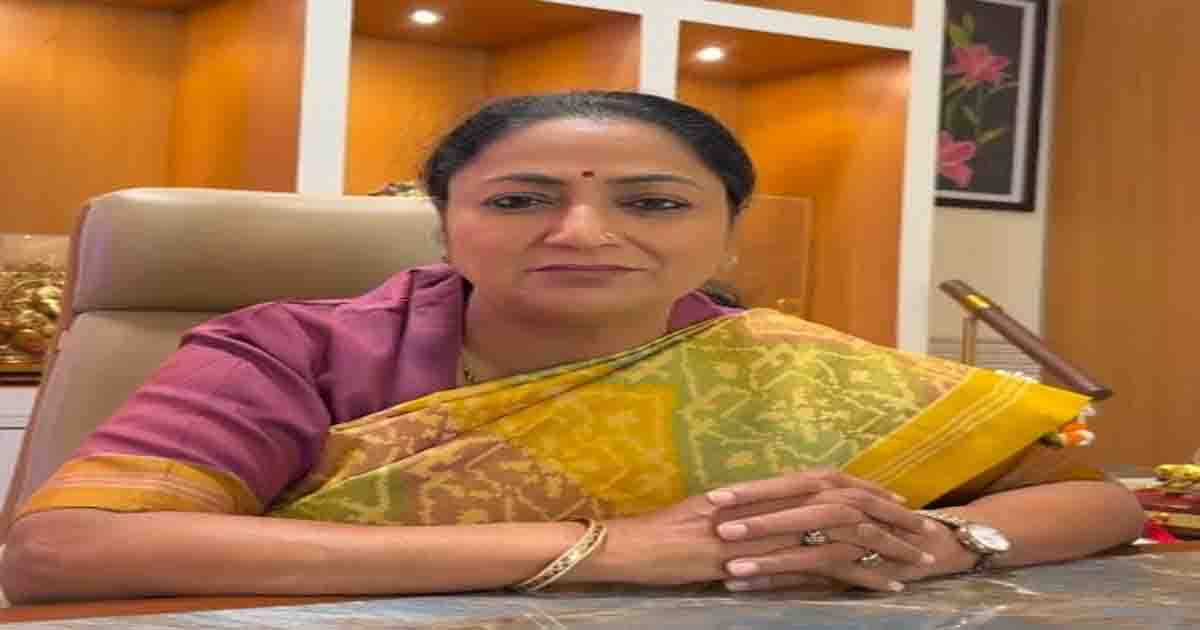
Delhi Chief Minister Rekha Gupta has appealed to residents to save the women’s helpline number 181 and the universal emergency helpline number 112 on their mobile phones and share them with their family members to ensure timely assistance during emergencies.
In a post on X, the Chief Minister emphasised the importance of receiving timely help during a crisis and reiterated her government’s commitment to women’s safety and building a safer Delhi.
In a video message, CM Gupta said: “I am telling you two numbers. Do not just memorise them; save them on your phones. You may think you know these numbers, but when a crisis strikes, nothing comes to mind. You may get confused about whether to dial 100 or 101, what to do, whom to call or how to inform the police. In such situations, remember these two numbers.”
Explaining the purpose of the two helplines, she said that 181 is exclusively dedicated to women’s assistance, while 112 is a universal emergency number that can be used to seek help from the police, ambulance services, and other emergency response agencies.
She advised residents to save both numbers as emergency contacts on their mobile phones so that they or their family members can access assistance without delay during difficult situations.
“The safety of every daughter and every woman in the city is our safety and our shared responsibility,” she said.
The Chief Minister also pointed out that people often get confused about older emergency numbers such as 100 and 101 during critical situations. Having the updated helpline numbers saved on their phones can help residents seek assistance quickly, without having to remember or search for them during an emergency.
The 181 helpline is specifically meant for women facing distress, harassment, domestic violence or situations involving threats to their safety. Women can use the service to seek assistance and support.
Meanwhile, 112 is the single universal emergency response number that can be dialled to seek assistance from the police, ambulance services and fire department, among other emergency services.
CM Gupta urged people to ensure that these two numbers are saved on their phones and circulated among family members to improve awareness and preparedness during emergencies.
National News
Special session on delimitation will ‘stab democracy in the cack,’ alleges Shiv Sena (UBT)
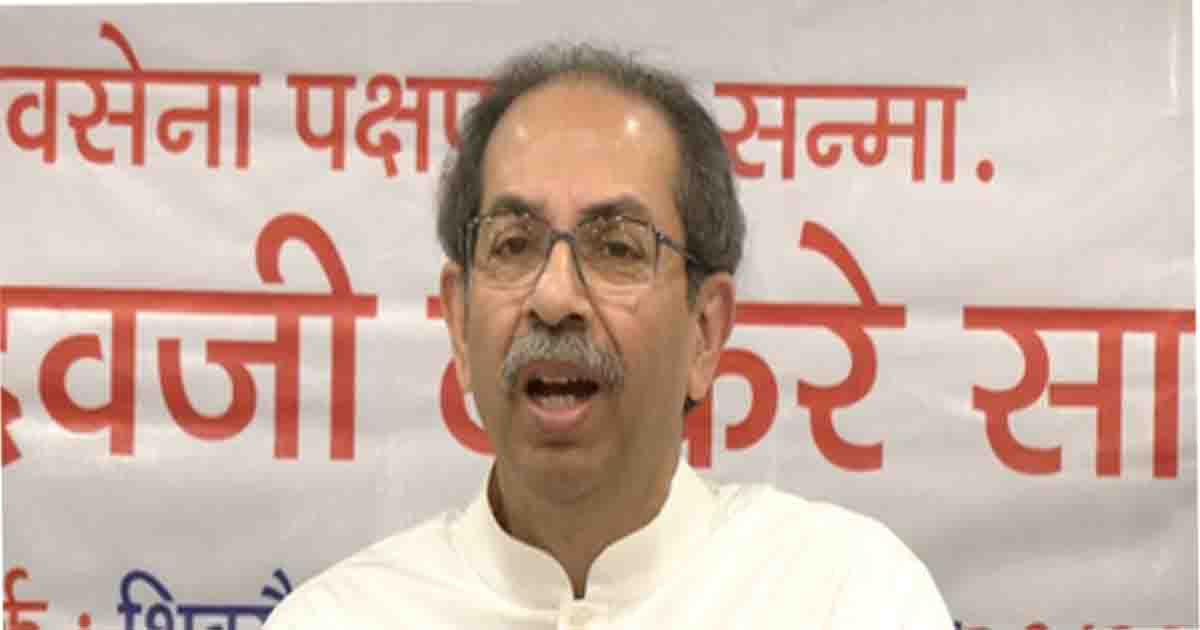
Shiv Sena (UBT) on Saturday launched a scathing attack on the union government, accusing it of bypassing the traditional winter session of parliament to convene a special session solely to push through the Delimitation Bill.
The Thackeray camp, in the party mouthpiece Samaana, alleged that the legislation is a calculated move to permanently impose political dominance of north India, referred to as the “cow belt,” over the rest of the country, ensuring that a Prime Minister from Maharashtra or southern India can never rise to power.
The editorial criticised Parliamentary Affairs Minister Kiren Rijiju for announcing the special session via social media — requesting Lok Sabha Speaker Om Birla to convene the House on November 30 and the Rajya Sabha Chairman on December 2 — without extending the courtesy of consulting the Leader of the Opposition or other senior parliamentary leaders.
It noted that although the 2026 monsoon session had been adjourned sine die over 100 days ago, the government deliberately refrained from proroguing parliament so it could summon a session at short notice once it had engineered the required numbers.
Recalling that the Delimitation Bill had previously collapsed in the Lok Sabha on April 17 due to the government’s failure to muster the requisite two-thirds majority, the editorial questioned how the ruling dispensation has now managed to gather the extra support.
It raised sharp concerns over reports that Tamil Nadu’s DMK and Maharashtra’s NCP (Sharad Pawar) might vote in favor of the bill.
The editorial warned that supporting the bill would amount to a betrayal of the core ideologies both parties have upheld.
While acknowledging recent friction between the DMK and the Congress that led the former to distance itself from the INDIA bloc, the editorial asserted that aligning with the BJP would cost the DMK its public support base, given the weight of its 28 MPs.
Similarly, it emphasised the crucial role of the NCP (SP)’s eight MPs, alleging that lawmakers were being intimidated with threats of party splits and central agency action — such as pending ED and CBI cases against YSR Congress chief Jagan Mohan Reddy — to coerce their votes.
The editorial also dismissed the “third front” comprising Chandrashekhar Azad and AIMIM, alleging they routinely act in alignment with the BJP’s interests.
According to the editorial, the government’s push to expand Lok Sabha strength to 850 seats based on population metrics disproportionately favours northern states experiencing rapid population growth while penalizing southern states like Kerala and Tamil Nadu that successfully implemented population control measures.
Accusing the Modi-Shah leadership of prioritising electoral calculations for the 2029 general elections over pressing national crises such as inflation, border tensions, internal security, and severe drought in Maharashtra, the Uddhav Thackeray-led Shiv Sena warned that passing the bill would be recorded in history as “stabbing democracy in the back” to retain an iron grip on power through communal polarisation.
International News
India says attacks on maritime shipping and seafarers unacceptable, calls for global response
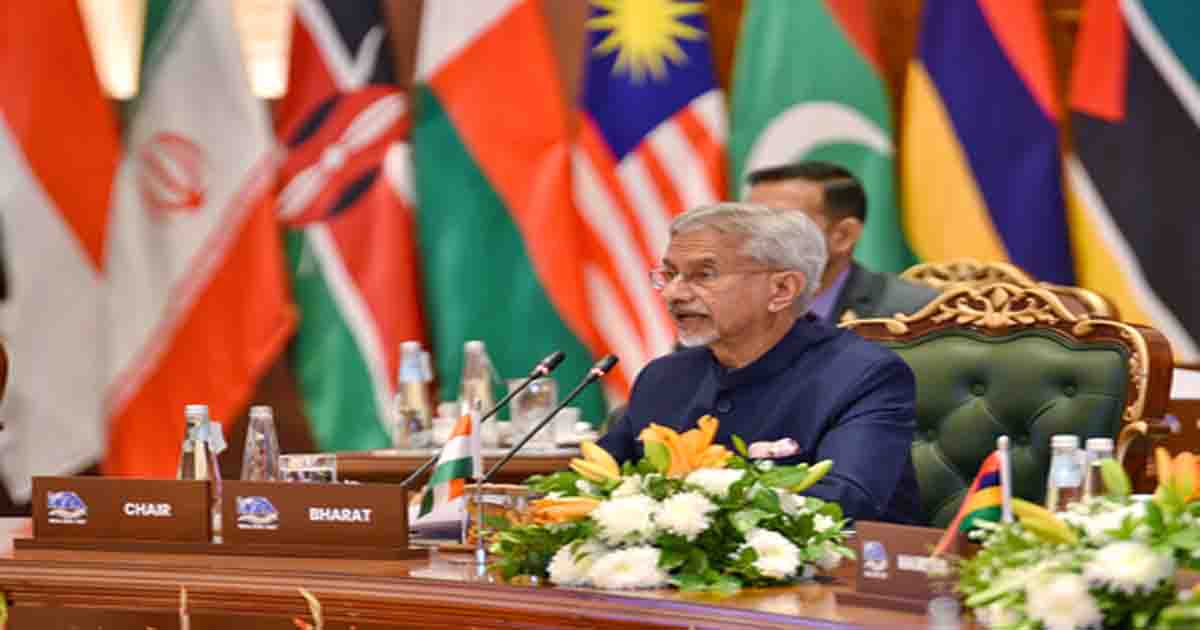
Calling for a global response, External Affairs Minister (EAM) S Jaishankar on Friday termed attacks on maritime shipping and seafarers as “unacceptable”.
In his remarks at the Indian Ocean Rim Association’s (IORA) General Debate on ‘A Stronger Regional Voice: Positioning IORA in a Changing Global Order’ in New Delhi on Friday, EAM Jaishankar highlighted the volatile aspects of a transforming global order, particularly conflicts, frictions and disruptions.
“We are understandably focused on the volatile aspects of a transforming global order, especially conflicts, frictions and disruptions. It is equally imperative to appreciate the promising aspects: deep interdependence, strong globalisation and the benefits of international cooperation,” EAM Jaishankar said.
He emphasised that the Indian Ocean is particularly poised to address its challenges. Recognising the criticality of maritime trade to global growth, EAM Jaishankar called on nations to deliver on safety and security of the Indian Ocean and stated that international law, especially the United Nations Convention on the Law of the Sea (UNCLOS), must be respected.
“Whether it is to counter terrorism, narcotics trade or illegal, unreported, and unregulated fishing, or indeed response to climate events and disaster situations, we have to become more self-reliant as well as more enthusiastic about cooperating with partners,” EAM Jaishankar said.
The meeting is being held under India’s IORA 2025-2027 chairship with the theme of ‘Innovation, Openness, Resilience and Adaptability in the Indian Ocean Region’.
The 23-member states of IORA are India, Australia, Bangladesh, Indonesia, Iran, Kenya, Madagascar, Comoros, France, Malaysia, Maldives, Mauritius, Mozambique, Oman, Seychelles, Singapore, Somalia, South Africa, Sri Lanka, Tanzania, Thailand, the United Arab Emirates, and Yemen.
The 12 dialogue partners are China, Egypt, the European Union, Germany, Italy, Japan, South Korea, Russia, Saudi Arabia, Turkey, the United Kingdom, and the United States.
The Council of Ministers is the Association’s highest decision-making body and comprises the Ministers of Foreign Affairs of IORA Member States. It provides the overall policy and strategic direction of the organisation. Its key responsibilities include formulating policies, reviewing progress in cooperation among member states, and identifying and deciding on new areas of collaboration to further advance the objectives of the Association.

Delhi CM Rekha Gupta urges residents to save 181, 112 emergency helpline numbers on phones

Nuclear-powered submarine Perm to join Pacific Fleet: Putin

Special session on delimitation will ‘stab democracy in the cack,’ alleges Shiv Sena (UBT)

Rift in MVA: Maha Congress reminds Sharad Pawar of RS backing amid delimitation row

Randeep Hooda on romancing Shraddha Kapoor: Who better to be a lover boy with than her?

Congress trying to protect 3 crore Bangladeshi infiltrators in voter list: HM Shah

Red Fort car blast probe exposes blueprint for spread of terror modules across India

Trump flags Iran targets as talks continue

‘Conspiracy, not accident’: NCP on Ajit Pawar death

BJP, Shiv Sena slam Mallikarjun Kharge for terming Diwali ‘Khushiyon ka Eid’
-

 Crime4 years ago
Class 10 student jumps to death in Jaipur
-

 Maharashtra2 years ago
Mumbai Local Train Update: Central Railway’s New Timetable Comes Into Effect; Check Full List Of Revised Timings & Stations
-

 Maharashtra2 years ago
Mumbai To Go Toll-Free Tonight! Maharashtra Govt Announces Complete Toll Waiver For Light Motor Vehicles At All 5 Entry Points Of City
-

 Maharashtra2 years ago
False photo of Imtiaz Jaleel’s rally, exposing the fooling conspiracy
-

 National News2 years ago
Ministry of Railways rolls out Special Drive 4.0 with focus on digitisation, cleanliness, inclusiveness and grievance redressal
-

 Maharashtra2 years ago
Maharashtra Elections 2024: Mumbai Metro & BEST Services Extended Till Midnight On Voting Day
-

 National News2 years ago
J&K: 4 Jawans Killed, 28 Injured After Bus Carrying BSF Personnel For Poll Duty Falls Into Gorge In Budgam; Terrifying Visuals Surface
-

 Crime2 years ago
Baba Siddique Murder: Mumbai Police Unable To Get Lawrence Bishnoi Custody Due To Home Ministry Order, Says Report