
National News
10% Additional GST On Diesel Vehicles As Pollution Tax Proposes Gadkari

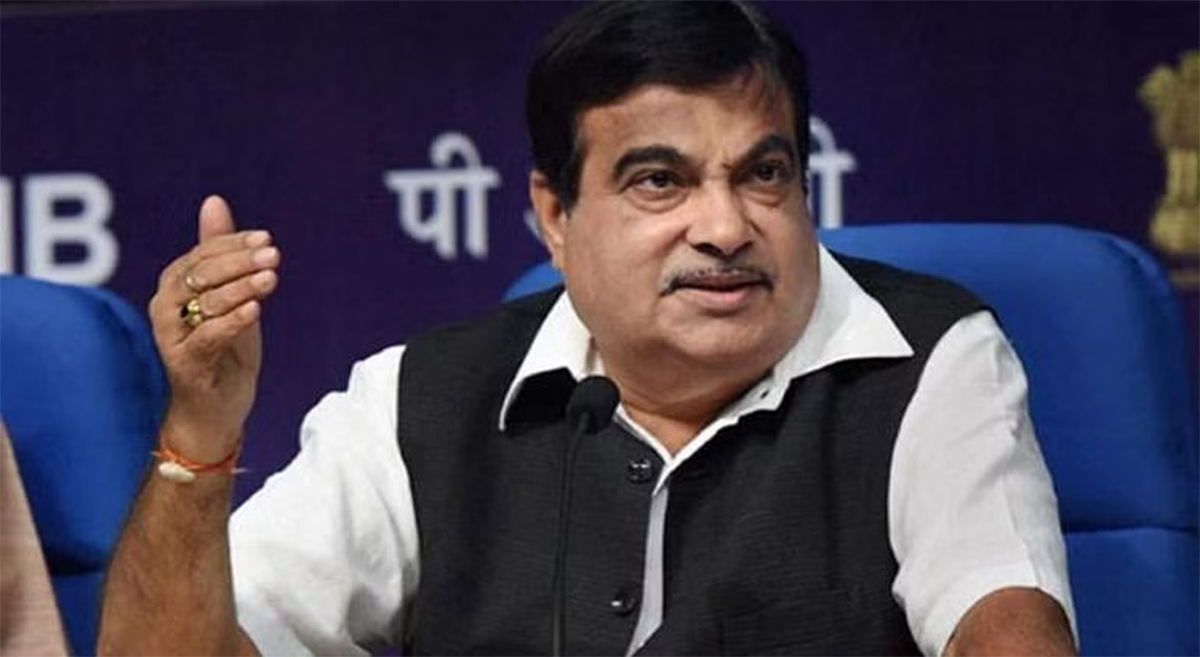
Union Minister Nitin Gadkari on Tuesday said he will seek a “pollution tax” in the form of additional GST of 10 per cent on diesel vehicles and gensets in order to cut down on air pollution.
Speaking at the 63rd Annual SIAM convention here, the Union Road Transport and Highways Minister said the rising level of pollution is a health hazard for citizens.
“I am going to handover a letter to the Finance Minister this evening stating that an additional 10 per cent GST be put on diesel-powered vehicles,” Gadkari said.
Most of the commercial vehicles in the country currently run on diesel.
Passenger vehicle segment
In the passenger vehicle segment, various carmakers including Maruti Suzuki India and Honda have already stopped manufacturing diesel cars.
Gadkari said the contribution of diesel cars has already come down drastically in the country and the manufacturers need to stop selling them in the market.
Terming diesel as a hazardous fuel, he noted that the country has to import the fuel to meet the demand.
“Say goodbye to diesel… Please stop making them, otherwise we will just increase the tax so much that it would become difficult to sell diesel cars” Gadkari said.
He said he will propose additional GST on diesel-powered generators as well.
Automobiles current tax
Automobiles are currently taxed at 28 per cent GST, with additional cess ranging from 1 per cent to 22 per cent depending on the type of vehicle.
SUVs attract the highest GST at the rate of 28 per cent along with a compensation cess at 22 per cent.
Gadkari also asked the industry to focus on environment-friendly alternative fuels like ethanol.
He also asked the industry to focus on green hydrogen.

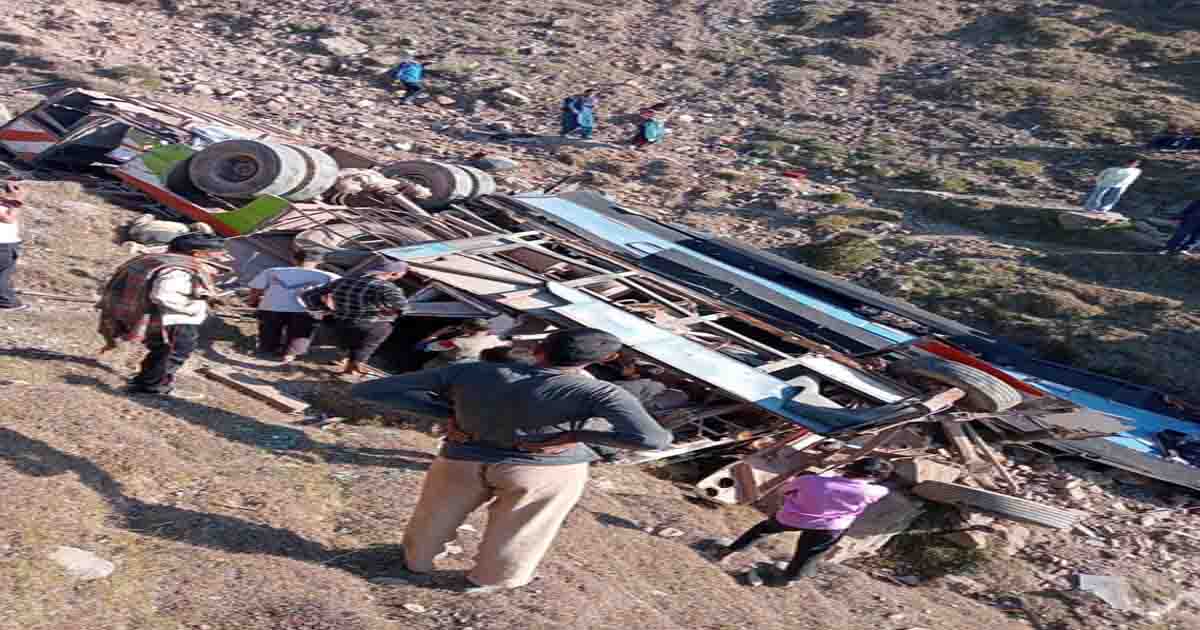
At least 10 passengers were injured when a bus veered off the road and rolled down into a gorge in Latti-Basantgarh tehsil in Jammu and Kashmir’s Udhampur district
Officials said a bus travelling from Pachiound to Ramnagar met with an accident at Gulli Gula, resulting in injuries to the passengers.
“The accident occurred when the driver lost control of the wheel, and the vehicle skidded off the road,” an official said.
“All the injured have been shifted to Ramnagar district hospital for treatment. No casualty has been reported in this accident. Police had taken cognisance of the incident,” the officials said.
Minister of State (PMO) and Lok Sabha member from Kathua-Udhampur constituency, Dr Jitendra Singh, said on X, “Just spoke to DC Udhampur Sh. Ananth Dwivedi, after receiving news of a bus accident on the Basantgarh-Ramnagar road. All passengers were promptly evacuated with the timely intervention of local residents.”
“Meanwhile, the rescue team has reached the spot, and 9-10 injured passengers are being shifted to the Sub-District Hospital, Ramnagar. No casualties have been reported so far. “All necessary assistance is being provided. My office is in constant touch with the administration,” he said.
Road accidents in the hilly areas of Jammu and Kashmir are primarily caused by a combination of treacherous mountain terrain, poor road infrastructure (such as narrow, winding curves and missing crash barriers), driver negligence (over-speeding and reckless driving), vehicle overloading, and extreme weather conditions like rain, fog, and landslides.
Narrow, single-lane or tight double-lane roads with steep gradients and sharp, blind curves, absence or damage to safety barriers, parapet walls, and guardrails along deep gorges (common in Chenab Valley districts like Ramban and Doda) can lead to accidents.
The other reasons can be — inadequate road engineering, loose earthen shoulders and unpaved or poorly maintained surfaces; over-speeding and loss of vehicle control on steep slopes or sharp turns; overloading of passenger buses, tempos, and commercial vehicles beyond permitted capacity; and inexperience with navigating high-altitude, hazardous mountain passes.
National News
Delhi HC agrees to urgent hearing on plea seeking release of CJP leaders Saurav Das, Ashutosh Ranka

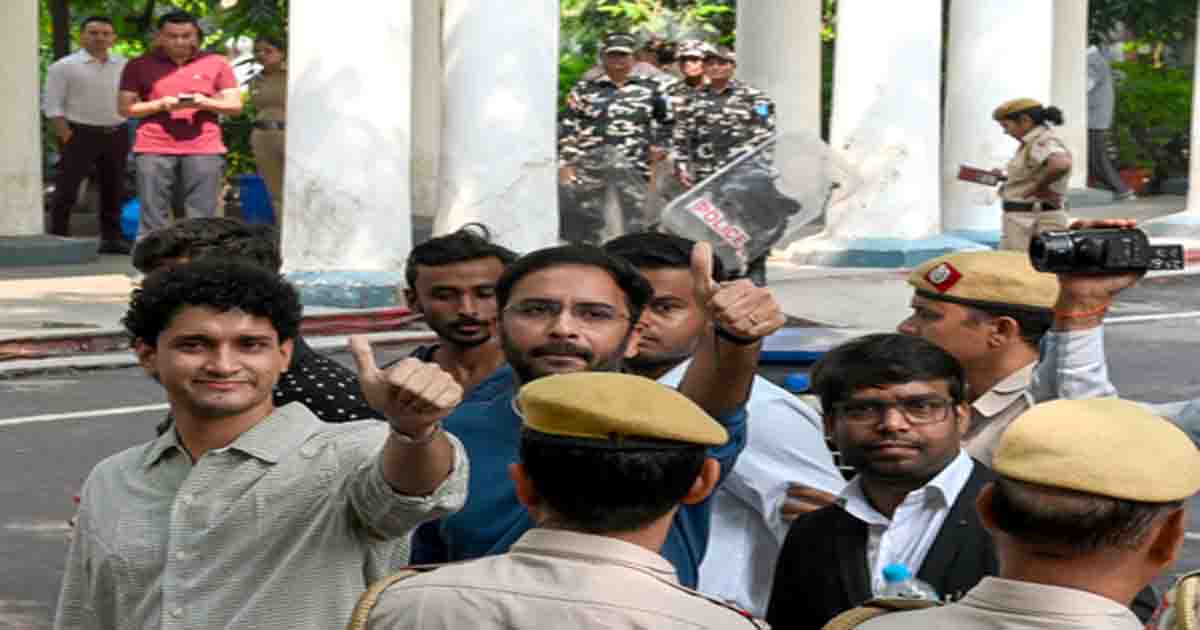
The Delhi High Court on Wednesday agreed to hear urgently a plea filed by Cockroach Janta Party (CJP) activists Saurav Das and Ashutosh Ranka seeking their release from custody in connection with the Jantar Mantar trespassing case.
The development comes on the day their judicial custody is due to end, with the two activists also scheduled to be produced before the Special Executive Magistrate (SEM) court.
CJP’s legal affairs head, Ratna Singh, said on Tuesday that the duo had moved the High Court and requested an urgent hearing at night.
“We have moved the Delhi High Court and requested an urgent night hearing. Saurav and Ashutosh should not spend a single minute behind bars. Their liberty must not be curtailed because of political games. Justice must not wait,” she said in a post on X.
On Monday, SEM Ritu Raj had extended their custody, observing that their conduct “shows no respect for law” and reflects their “habitualness in calling protest at de-notified areas”.
In its order, the SEM court said the Investigating Officer had placed substantial material on record, raising concerns over the likelihood of a breach of peace and disturbance of public tranquillity.
It also recorded that the two leaders had allegedly breached the bonds furnished by them before the SEM, South-West District, on October 11 and subsequently committed a breach of peace in the present case.
The SEM further observed that their assurance that they would not repeat the alleged offence did not inspire confidence in view of their past conduct and the material placed on record by the Investigating Officer.
Das and Ranka, along with party member Ajinkya Shinde, were among 14 people detained on October 13 after they allegedly entered Jantar Mantar through private premises and obstructed police personnel from discharging their official duties.
The CJP members were protesting against alleged irregularities in the Special Intensive Revision (SIR) of electoral rolls and had raised slogans against Chief Election Commissioner Gyanesh Kumar.
Delhi Police had justified their continued custody, citing repeated violations of law and apprehensions that their release could lead to further violations and instigation of others.
The SEM court had also found the sureties furnished on behalf of the two leaders unfit following an enquiry, citing discrepancies in identity documents and their inability to provide basic details about the persons for whom they stood surety. It had directed them to furnish fresh sureties.
A 52-year-old truck driver lost his life after being hit by a vehicle near Machlilok under the Mufassil police station area in West Champaran district on Wednesday. The vehicle reportedly bore a sign identifying it as belonging to the Senior DSP (Administration) at the DIG’s office, according to the deceased’s brother.
The deceased was identified as Sheikh Arman, son of Sheikh Serajul Haque and a resident of Beldari Ward No. 35.
According to his brother, Mohammad Nezam, the incident occurred around 6 a.m. when Arman had parked his truck along the Bettiah-Motihari main road near Machlilok and stopped to have tea.
A vehicle allegedly struck him, leaving him seriously injured.
Police personnel travelling in the vehicle took Arman to the Government Medical College and Hospital (GMCH) in Bettiah for treatment.
However, he succumbed to his injuries at around 8.45 a.m., despite medical intervention.
Following his death, family members rushed to the hospital. Police sent the body for a post-mortem examination.
Nezam claimed that the vehicle involved in the accident carried a sign identifying it as belonging to the Senior DSP (Administration) at the DIG’s office.
However, there was no official confirmation regarding the identity of the driver or the other occupants of the vehicle at the time of the incident.
Arman was the eldest of five brothers and is survived by his wife, Salma Khatoon, and four sons, according to his family.
His death has plunged the family into grief, while residents of the Beldari locality were mourning the loss.
The incident has also triggered anger among local residents, particularly over the reported involvement of a vehicle bearing the police official’s designation.
No detailed official statement regarding the circumstances of the accident had been issued at the time of reporting.
Further details about the incident and the responsibility for the collision are awaited.

Two killed in fire at scrap godown in Mumbai Andheri

Nine injured as bus rolls down into gorge in J&K’s Udhampur

Manipur burns while Delhi barricades: Shiv Sena(UBT) in ‘Samaana’

Delhi HC agrees to urgent hearing on plea seeking release of CJP leaders Saurav Das, Ashutosh Ranka

Truck driver dies after being hit by vehicle with DSP sticker in Bihar West Champaran

Rahul, Cong ecosystem want to force regime change: BJP after Neha Bora praises B’desh Gen-Z protest

BJP pays tribute to ex-President Abdul Kalam, recalls his enduring influence on generations of India’s youth

Attack on democratic rights: INDIA Bloc leaders on detentions of anti-ECI protestors

INDIA bloc begins protest march against ECI

Maha Congress stages agitation against Gyanesh Kumar
-

 Crime4 years ago
Class 10 student jumps to death in Jaipur
-

 Maharashtra2 years ago
Mumbai Local Train Update: Central Railway’s New Timetable Comes Into Effect; Check Full List Of Revised Timings & Stations
-

 Maharashtra2 years ago
Mumbai To Go Toll-Free Tonight! Maharashtra Govt Announces Complete Toll Waiver For Light Motor Vehicles At All 5 Entry Points Of City
-

 Maharashtra2 years ago
False photo of Imtiaz Jaleel’s rally, exposing the fooling conspiracy
-

 National News2 years ago
Ministry of Railways rolls out Special Drive 4.0 with focus on digitisation, cleanliness, inclusiveness and grievance redressal
-

 Maharashtra2 years ago
Maharashtra Elections 2024: Mumbai Metro & BEST Services Extended Till Midnight On Voting Day
-

 National News2 years ago
J&K: 4 Jawans Killed, 28 Injured After Bus Carrying BSF Personnel For Poll Duty Falls Into Gorge In Budgam; Terrifying Visuals Surface
-

 Crime2 years ago
Baba Siddique Murder: Mumbai Police Unable To Get Lawrence Bishnoi Custody Due To Home Ministry Order, Says Report