
International News
UAE, Jordan summon Iranian envoys over ‘terrorist attacks’ targeting Arab territories

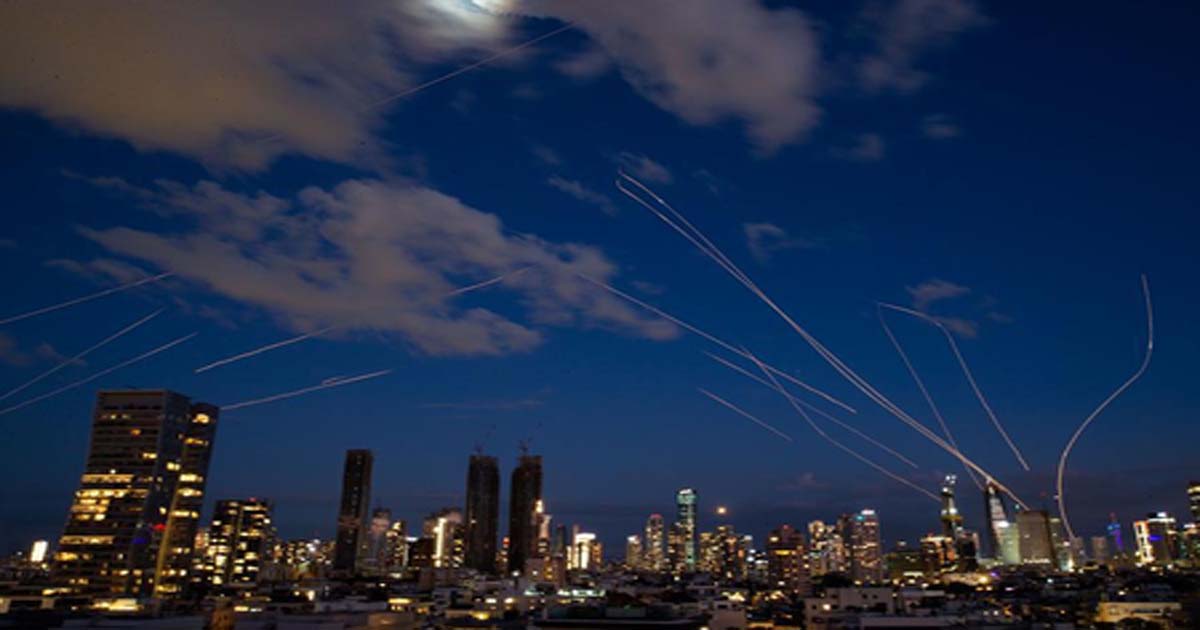
The Ministries of Foreign Affairs of the United Arab Emirates and Jordan have summoned the Iranian envoys in their respective capitals to deliver strong protests against recent attacks targeting their territories, condemning them as flagrant violations of sovereignty and international law.
In Amman, the Jordanian Ministry of Foreign Affairs and Expatriates Affairs summoned the Chargé d’Affaires of the Islamic Republic of Iran’s Embassy and conveyed a strongly worded protest message to his government.
According to a statement posted on X, the Ministry said the attacks targeted Jordanian territories and those of brotherly Arab countries, “condemning them as a flagrant violation of its sovereignty and the sovereignty of Arab countries, a blatant breach of the rules of international law and the United Nations Charter, and a rejected escalation that threatens the safety of citizens and regional and international security and stability.”
The Ministry’s spokesperson, Fuad Al-Majali, added, “The Ministry informed the Chargé d’Affaires of the necessity of immediately ceasing the attacks targeting Jordan, respecting its sovereignty and the safety of its territories, and adhering to the rules of international law and the principles of good neighborliness. Jordan will take all available and necessary steps to protect the safety of its citizens, its security, and its sovereignty.”
Similarly, in Abu Dhabi, the UAE Ministry of Foreign Affairs summoned His Excellency Reza Ameri, Iranian Ambassador to the UAE, delivering a strongly worded note of protest over the attacks.
The Ministry said, “The Ministry conveyed the UAE’s condemnation in the strongest terms of Iran’s terrorist attacks and assaults. The Ministry stressed that the targeting of the UAE’s territory constitutes a blatant violation of its sovereignty, a threat to its national security, and a clear breach of all international conventions, resolutions, and established norms.”
Khalifa Shaheen Al Marar, Minister of State, said, “The UAE categorically rejects any justifications or excuses issued by the Iranian Government regarding the hostile escalation that targeted civilian sites, including residential areas, airports, ports, and service facilities, thereby placing innocent civilians at risk. This serious and irresponsible escalation disregards the UAE’s clear position that it would not permit its territory to be used in any military action against Iran.
He emphasised that these attacks contravene the principles of good neighborliness and the Charter of the United Nations, and undermine the path of de-escalation and peaceful solutions that the UAE has consistently pursued with Iran.
The minister warned of the serious repercussions on bilateral relations, with direct impact across political, economic and commercial levels.
The coordinated diplomatic protests from Jordan and the UAE underline growing regional alarm over Iran’s military actions and their potential impact on civilian safety and regional stability.


International News
Netanyahu speaks with PM Modi, invites him for Israel’s Independence Day along with heroic Indian pilot

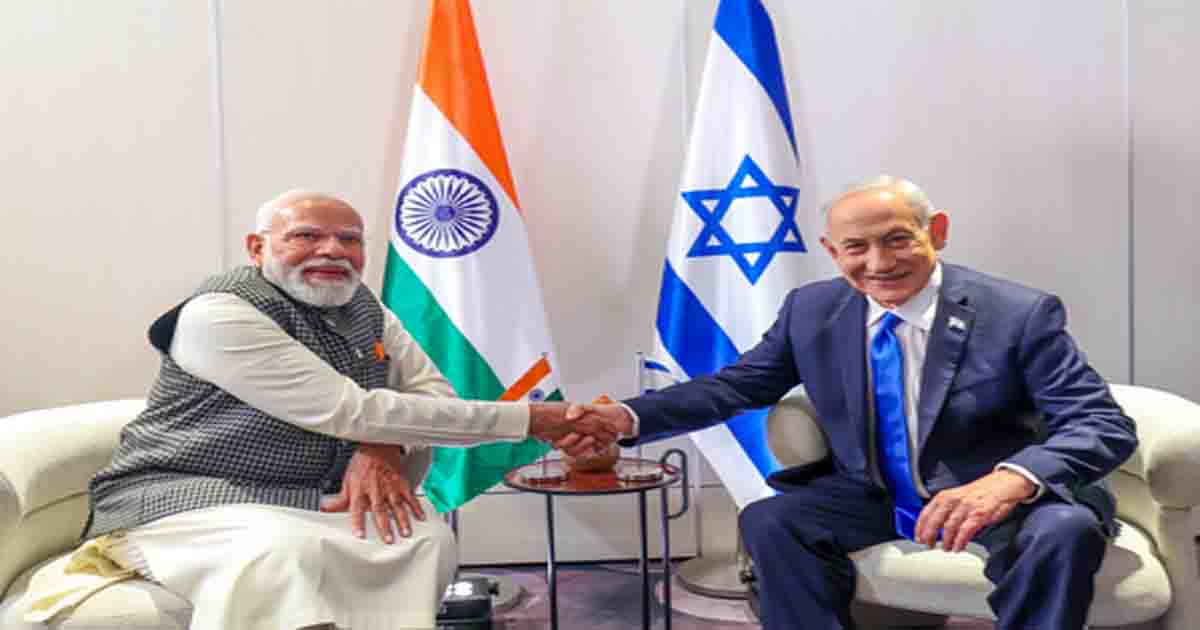
Israel Prime Minister Benjamin Netanyahu held a telephonic conversation with Prime Minister Narendra Modi on Thursday and invited him to light a torch along with “heroic Indian pilot” Captain Smit Machchhar on the country’s Independence Day.
During the phone call, PM Modi and Netanyahu also reviewed the sustained momentum in bilateral ties and reaffirmed their commitment to further strengthen the partnership between both countries.
“Received a phone call from Israeli Prime Minister Benjamin Netanyahu. We reviewed the sustained momentum in our bilateral ties and reaffirmed our commitment to further strengthening our partnership. We also exchanged views on recent developments in West Asia and underscored the urgent need to restore peace and stability in the region,” PM Modi wrote on X after the phone call.
Netanyahu said that PM Modi thanked him for the invitation and expressed India’s readiness to cooperate with Israel in fighting terrorism.
“I spoke with my friend, Indian Prime Minister Narendra Modi, and invited him to light a torch together with the heroic Indian pilot on the Independence Day of the State of Israel. Modi thanked me for the invitation and said that on the ground and in the air, India and Israel fight terrorism together. He expressed his appreciation for the courageous and long-standing relationship between us,” Netanyahu posted on X.
Machchhar sustained severe injuries during an attack by the Omani co-pilot on a Tel Aviv-bound flydubai flight on September 30. The co-pilot allegedly attempted to take control of the aircraft, following which Machchhar fought him off and managed to unlock the cockpit door.
The move allowed crew members and passengers to enter the cockpit and restrain the attacker, averting what could have been a major disaster. The flight was carrying more than 170 people.
On October 3, Netanyahu held a telephonic conversation with Captain Smit Machchhar and hailed him as a “true hero” of the people of India, Israel and the whole world. He invited Captain Smit Machchhar and PM Modi to light a celebratory flame on Israel’s Independence Day.
“Captain, I want to invite you and my dear friend, Prime Minister Narendra Modi, to light a celebratory flame on our next Independence Day. You are a true hero of the brave peoples of India and Israel, and you’re a hero of the entire world,” Netanyahu told the Captain Machchhar.
“I wish you a very speedy and complete recovery,” he added.
The Israeli Prime Minister said the honour was usually reserved for his country’s own citizens. However, he added, “But I think here in this case, all the citizens of Israel will embrace you. They do now and they will then too.”
Netanyahu, who was told by the pilot how the attack unfolded in the cockpit, said he was amazed by his conduct.
“I’m amazed at your courage, at your coolness of judgment under impossible conditions,” the Israeli Prime Minister said, adding that what the Captain did was remarkable and that it bordered on the miraculous.
Netanyahu said the pilot had saved more than the lives of those on board.
“You saved so many souls. I think you saved something bigger. You saved the spirit of the world to realise that a brave pilot and brave passengers can overcome this evil, however threatening, however violent. It’s something that is being justly hailed around the world,” Netanyahu said.
“You’re a hero of Israel. You’re a hero of India. You’re a hero of the entire world,” he added.
Inviting the Captain again towards the end of the conversation, Netanyahu said: “So we hope to see you very soon in Israel. I look forward to seeing you here again. But under the circumstances, I think this will be a memorable and historic visit.”
“Thank you for everything you did,” the Israeli Prime Minister told the Indian pilot.
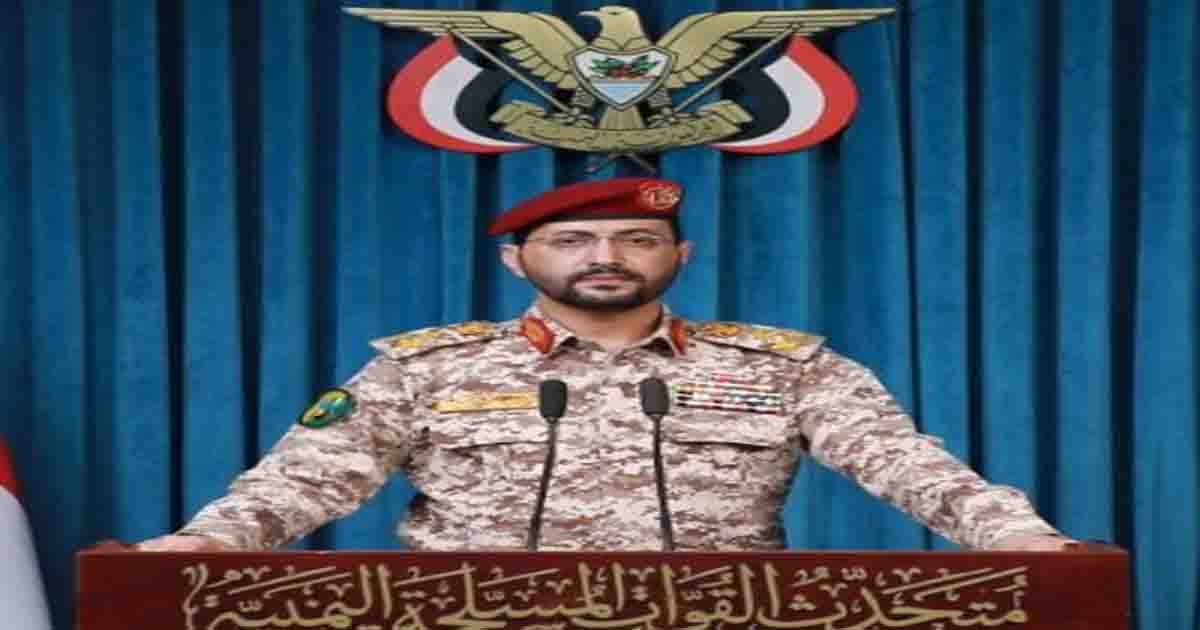
Yemen’s Houthis on Thursday claimed that its forces engaged in a rescue operation after Saudi Arabia targeted an Indian yacht carrying 14 Indian nationals near Zuqar Island in the southern Red Sea.
Citing preliminary information, Houthi military spokesperson Yahya Saree said that the Yemeni Armed Forces would provide more details later.
“The Saudi enemy is targeting an Indian yacht near Zuqar Island, carrying 14 people of Indian nationality, according to preliminary information. The Yemeni Armed Forces are rescuing them and will provide more details later. This reckless act by the Saudi enemy in targeting it threatens international navigation in the Red Sea, and the international community must stop the Saudi enemy from these reckless actions,” Saree posted on X.
The claim comes a day after an Indian national was among two people killed, while two other Indian nationals were injured, in an attack on King Fahd International Airport in Saudi Arabia’s Dammam on Wednesday, the Indian Embassy said on Thursday.
“Saudi authorities have informed that one Indian national was among two people who unfortunately lost their lives in the attack on Dammam airport yesterday night and two Indian nationals were injured. We are ascertaining further details and contacting the affected families. Our thoughts and prayers are with the family and loved ones of the deceased and we wish speedy recovery of the injured,” it said in a post on X.
India on Thursday condemned the continued attacks on civilian and energy infrastructure in Saudi Arabia, including the attack on King Fahd International Airport and Aramco’s Shaybah oil field, while expressing hope that peace and normalcy would return to the region at the earliest.
“We strongly condemn the continued attacks on civilian and energy infrastructure in Saudi Arabia, including the attack on King Fahd International Airport in Dammam and Saudi Aramco’s Shaybah oil field in the Eastern Province on October 21. These attacks have unfortunately resulted in civilian deaths and injuries,” the MEA said in a statement.
India had also expressed its solidarity with Saudi Arabia in safeguarding its sovereignty.
“We also reiterate that the attacks on civilian and critical infrastructure are completely unacceptable and must cease immediately. We stand in solidarity with the people and the Government of the Kingdom of Saudi Arabia in safeguarding its sovereignty, and hope that peace and normalcy would return to the region at the earliest,” read the MEA statement.
The Houthis, for their part, have accused the Saudi forces for carrying out air and missile strikes across Yemeni provinces this week.
International News
Indian national among two people killed in attack on Saudi Arabia’s airport, two Indians injured
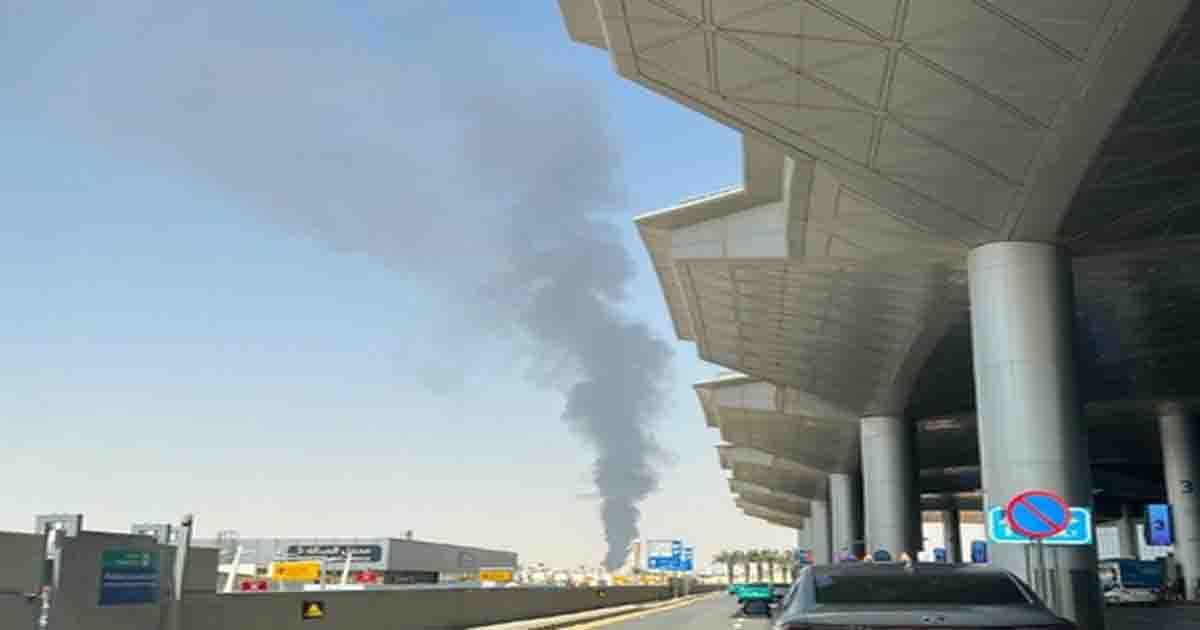
An Indian national was among two people killed, while two other Indian nationals were injured, in an attack on King Fahd International Airport in Saudi Arabia’s Dammam on Wednesday, the Indian Embassy said on Thursday.
The Indian Embassy in Saudi Arabia said that it is ascertaining further details and contacting the affected families.
“Saudi authorities have informed that one Indian national was among two people who unfortunately lost their lives in the attack on Dammam airport yesterday night and two Indian nationals were injured. We are ascertaining further details and contacting the affected families. Our thoughts and prayers are with the family and loved ones of the deceased and we wish speedy recovery of the injured,” it said in a post on X.
Earlier in the day, Saudi Arabia’s General Authority of Civil Aviation (GACA) said that two people were killed in the attack that targeted King Fahd International Airport on Wednesday, which includes one Indian resident and one Saudi citizen. It further said that eight people were injured in the attack.
In a statement shared on X, the GACA said, “Further to its earlier statement regarding the attack that targeted King Fahd International Airport in Dammam on the evening of Wednesday, October 21, 2026, corresponding to 10 Jumada Al-Awwal 1448 AH, the General Authority of Civil Aviation (GACA) clarifies that the number of fatalities has risen to (2) after an additional fatality was confirmed, involving (1) Saudi citizen and (1) Indian resident. The number of the injured remains at (8), including (1) Saudi citizen, and residents of the following nationalities: (2) Indian, (2) Yemeni, (2) Bangladeshi, and (1) Nepalese. Their injuries range from minor to critical, and they are receiving the necessary medical care at several hospitals.”
Saudi Arabia’s GACA stated that it is working in coordination with the relevant authorities to complete the damage assessment, verify the safety of the facilities, and take the necessary measures to ensure the safety of passengers and personnel and maintain the security and safety of Saudi Arabia’s civil aviation system. It further mentioned that airport operations have resumed and air traffic has returned to normal.
On Sunday, the Indian Embassy advised its nationals in Saudi Arabia to take due precautions under the prevailing situation, visit the nearest safe place in case of an aerial attack, and refrain from filming, publishing or sharing any information, photos and videos regarding the ongoing events.
“The Indian Community in Saudi Arabia is advised to take due precautions under the prevailing situation. In case of an aerial attack, immediately proceed to the nearest safe place (inside a building or an interior room away from windows), and refrain from filming, publishing, or sharing any information, photos, or videos related to the ongoing events,” it posted on X.
The Embassy said that its officials continue to visit hospitals where Indian nationals are undergoing treatment and are in constant touch with their families and providing necessary assistance.

Netanyahu speaks with PM Modi, invites him for Israel’s Independence Day along with heroic Indian pilot

Aasif Khan’s wife reveals actor suffered major heart attack, calls out Qazi Touqeer for mocking him

Four more arrested in Tiger Shroff firing case; two women accused of supplying weapons, accused remanded to police custody till October 26.

Swiggy’s Q2 net loss widens sequentially to Rs 922 crore

12 injured in attack on Dalit family in Patna, two critical

Rahul, Cong ecosystem want to force regime change: BJP after Neha Bora praises B’desh Gen-Z protest

Attack on democratic rights: INDIA Bloc leaders on detentions of anti-ECI protestors

BJP pays tribute to ex-President Abdul Kalam, recalls his enduring influence on generations of India’s youth

INDIA bloc begins protest march against ECI

Maha Congress stages agitation against Gyanesh Kumar
-

 Crime4 years ago
Class 10 student jumps to death in Jaipur
-

 Maharashtra2 years ago
Mumbai Local Train Update: Central Railway’s New Timetable Comes Into Effect; Check Full List Of Revised Timings & Stations
-

 Maharashtra2 years ago
Mumbai To Go Toll-Free Tonight! Maharashtra Govt Announces Complete Toll Waiver For Light Motor Vehicles At All 5 Entry Points Of City
-

 Maharashtra2 years ago
False photo of Imtiaz Jaleel’s rally, exposing the fooling conspiracy
-

 National News2 years ago
Ministry of Railways rolls out Special Drive 4.0 with focus on digitisation, cleanliness, inclusiveness and grievance redressal
-

 Maharashtra2 years ago
Maharashtra Elections 2024: Mumbai Metro & BEST Services Extended Till Midnight On Voting Day
-

 National News2 years ago
J&K: 4 Jawans Killed, 28 Injured After Bus Carrying BSF Personnel For Poll Duty Falls Into Gorge In Budgam; Terrifying Visuals Surface
-

 Crime2 years ago
Baba Siddique Murder: Mumbai Police Unable To Get Lawrence Bishnoi Custody Due To Home Ministry Order, Says Report