
Politics
Trinamool leader Anubrata Mandal arrives at CBI office for questioning

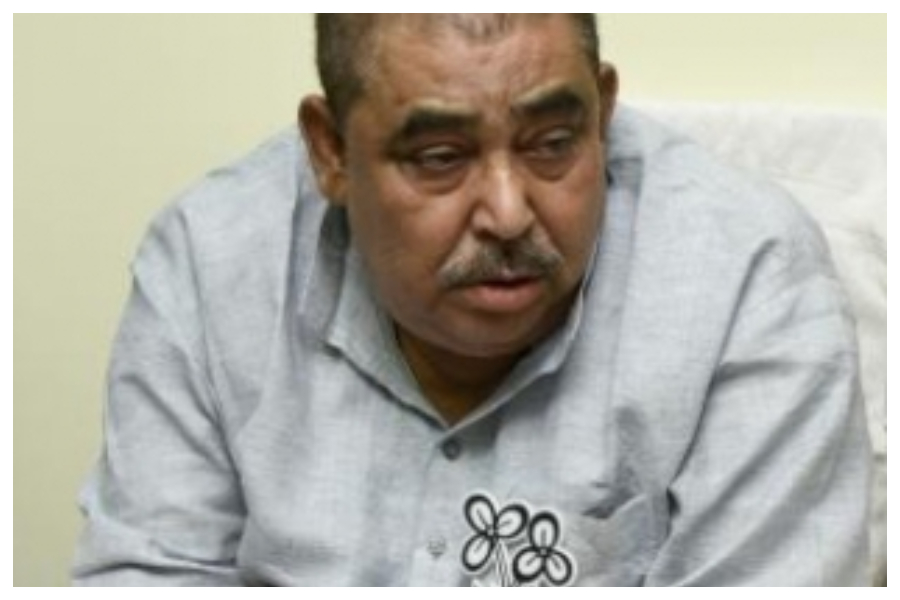
After avoiding seven summons from the Central Bureau of Investigation (CBI) for interrogation in the cattle and coal smuggling cases in West Bengal, Trinamool Congress leader Anubrata Mandal on Thursday turned up at the CBI’s Nizam Palace hospital here.
His voluntary appearance at the CBI office happens 12 hours after the former state education minister and the Trinamool Congress secretary general, Partha Chatterjee was grilled for four hours at the same place on Wednesday evening. Chatterjee was being probed in the West Bengal School Service Commission (WBSSC) recruitment irregularities scam.
Incidentally, Mandal’s voluntary appearance also happens two days ahead of the May 21 deadline for him. In his last communique to the CBI, Mandal, the Trinamool Congress’ Birbhum district president, had informed that till May 21 he would not be able to meet the central agency sleuths as a medical report of the state-run SSKM Medical College & Hospital had advised him complete bed rest till that period.
However, quite to the surprise of the CBI sleuths, they received a communique from Mandal late Wednesday evening about just an hour after Partha Chatterjee left the office. In that communique, Mandal said that he would be reaching the CBI office on Thursday morning by 10 a.m.
Accordingly on Thursday morning, Mandal started from his residence at Chinar Park in the northern outskirts of Kolkata at around 9.10 a.m. and finally his vehicle reached the CBI’s Nizam Palace Office in central Kolkata.
He refused to answer the queries of the mediapersons and went straight into the elevator. A team of CBI sleuths led by the agency’s joint director, Prakash Srivastav was waiting there with a seven-page list of questions.
Legal brains believe that in all probability Mandal has exhausted all his legal options to avoid the CBI questioning, and hence he decided to join the probe.
The political observers feel that the event of Partha Chatterjee, currently the state commerce and industries minister, being compelled to face the CBI grilling might have made Mandal feel that he should voluntarily appear at the CBI office without further delay.


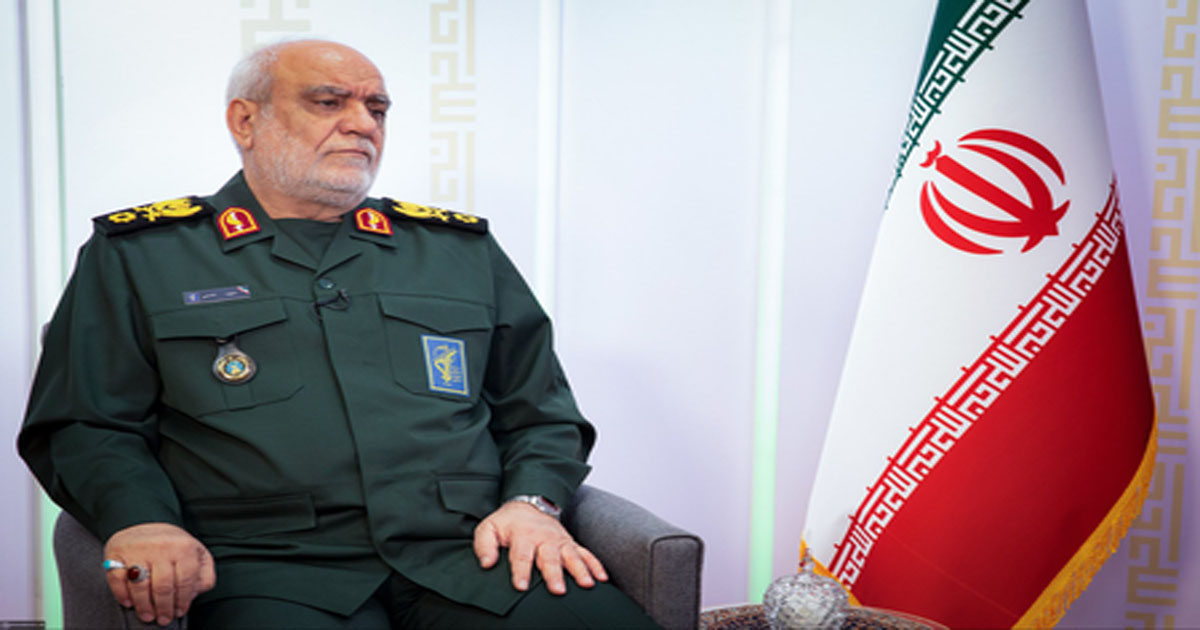
Tel Aviv, April 6: The Israel Defence Forces (IDF) on Monday claimed to have killed Majid Khatem-Hosseini Khadami, Chairman of Iran’s Revolutionary Guards’ (IRGC) intelligence organisation, in an air strike in Tehran on Sunday night.
“Eliminated: Majid Khademi, the Head of Intelligence of the IRGC. Khadami was one of the most important commanders of the Revolutionary Guards and had accumulated military and security experience over the years,” read a statement issued by the IDF.
It mentioned that the Israeli Air Force, under precise intelligence guidance from the Intelligence Directorate, attacked during the night in Tehran and killed Khadami.
According to the IDF, Khadmi was appointed to his position after the assassination of Muhammad Khatami in Operation ‘Am Kalavi’. As part of his role, he worked to gather intelligence to form an intelligence picture for the regime’s senior echelons during Operation ‘Roar of the Harrier’.
“Khademi worked to advance terrorist attacks worldwide, and was responsible for monitoring Iranian civilians as part of the regime’s suppression of internal protests. He was a key figure in the campaign, the intelligence he collected was used to promote and execute terrorist operations,” the IDF stated.
“Alongside this, Khadami worked to promote terrorist acts against the State of Israel and against Jews around the world and took part in attempts to harm American targets, and was even responsible for monitoring Iranian citizens as part of the suppression of internal protests in Iran,” it added.
The Israeli defence ministry mentioned that Khadami’s “elimination” constitutes another serious blow to the command and control systems of the Revolutionary Guards, and to its ability to “conduct terrorist activity” against the State of Israel and countries around the world.
On Sunday, the IDF announced that it had killed Mohammad Reza Ashrafi Kahi, the Head of Commerce at the IRGC’s Oil Headquarters in Tehran.
“Ashrafi managed the commercial operations of the Oil Headquarters, estimated at billions of dollars annually, and advanced the development of the IRGC’s military capabilities, as well as those of the Houthis, Hezbollah & Hamas,” the IDF posted on X.
Crime
‘He Kicked Her, Inquired About Her Name & Then Committed Obscene Act’: Navi Mumbai Police Arrest 35-Year-Old Man For Molesting Minor Girl In Rabale

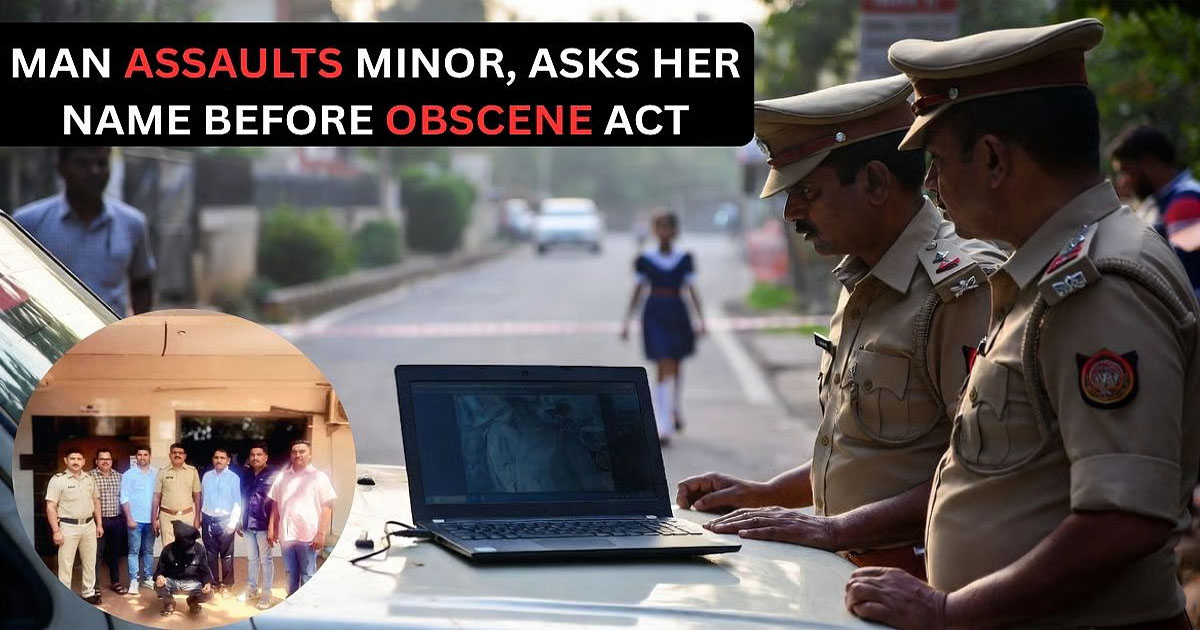
Navi Mumbai: Police have arrested a 35-year-old man for allegedly molesting a minor girl in the Rabale area on Saturday morning.
The incident took place on 4 April 2026 at around 8:35 AM, when the complainant’s young daughter was walking along the road. According to the complaint, the accused approached the girl from behind, kicked her, inquired about her name, and then committed an obscene act.
Based on the girl’s complaint, Rabale Police Station registered a case (C.R. No. 293/2026) against the accused under Section 74 of the Bharatiya Nyaya Sanhita and Sections 8 and 12 of the Protection of Children from Sexual Offences (POCSO) Act.
Senior Police Inspector Balkrishna Sawant supervised the investigation, with active involvement from PI (Administration) Bansode and PI (Crime) Sachin Gawali.
Crime Detection Officer API Dipak Kharat and his team immediately examined the crime scene and reviewed CCTV footage from the surrounding area. Using technical analysis and inputs from informants, officers successfully traced the suspect within hours.
The accused, identified as Vivek Gajanan Kadam, an office boy residing in Ghansoli, Navi Mumbai, was taken into custody. During interrogation, he reportedly confessed to the crime.
The operation was carried out by API Deepak Kharat along with police personnel Darshan Katke, Mayur Sonawane, Ganesh Veer, Dhanaji Bhangare, Yadavrao Ghule, and Manoj Dede.
Local residents have expressed concern over the safety of children in the area, especially during morning hours. Police have assured strict action against such offences and appealed to citizens to remain vigilant and report suspicious activities immediately.
The accused has been remanded in police custody for further investigation and legal proceedings.
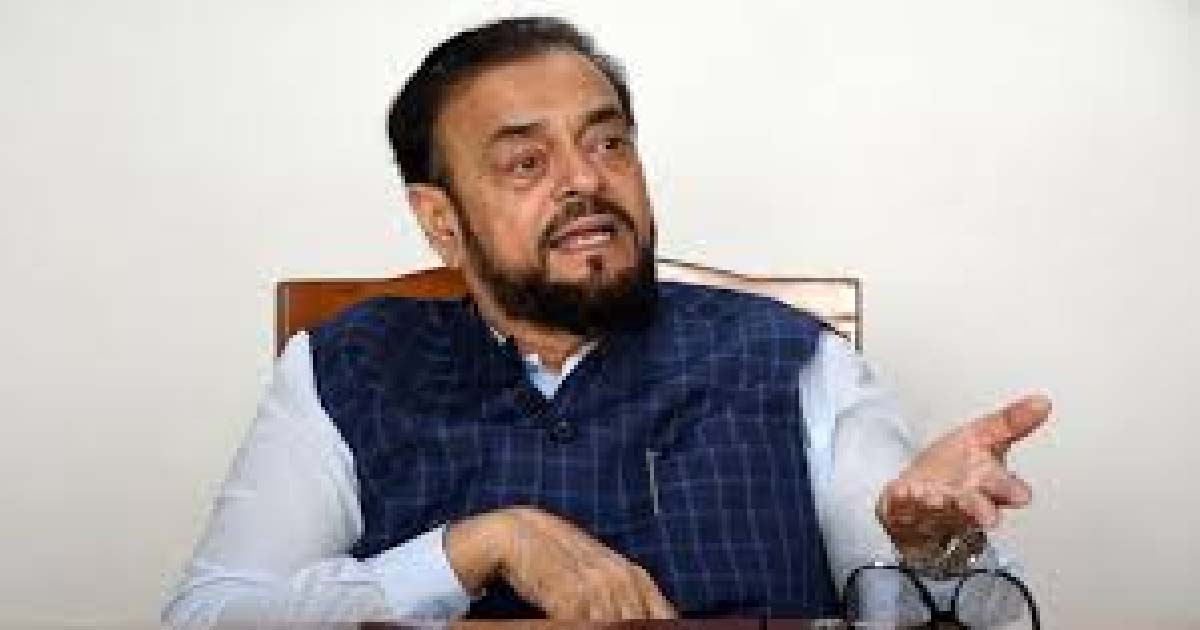
Mumbai: Hundreds of poor and needy students of Mankhurd Shivaji Nagar constituency are studying in the Kalina campus of Mumbai University. Only, or the lack of BEST buses for the transportation of students, the transportation tickets are high. Taking this issue seriously, Samajwadi Party state president and MLA Abu Asim Azmi has written a letter to the chairman of the ‘BEST’ committee and demanded the start of a new bus service. Azmi said in his letter that due to the non-availability of buses for timely travel, students have to travel urgently between 10 am and 12 pm and 5 pm to 6 pm, but despite this, the students have to wait. Due to which the students suffer academically and they have to endure physical and mental trauma. He has requested the administration to provide a new bus service from the new bus stand located on 90 feet road to Kalina Vidyapeeth and provide more buses at the right time.

Israel says Iran’s intelligence chief killed in Tehran air strike

‘He Kicked Her, Inquired About Her Name & Then Committed Obscene Act’: Navi Mumbai Police Arrest 35-Year-Old Man For Molesting Minor Girl In Rabale

Abu Asim Azmi demands to start new bus service from Mankhurd to Kalina Vidyapeeth

Mumbai: Two arrested for involvement in online terrorist group ‘Soldiers of Khilafat’

‘One Can Consider It…’: Maharashtra Congress Sets ‘Ajit Pawar-Linked’ Condition For Baramati Bypoll Exit

Married Mumbai Woman Mocked In Andheri Society Over ‘Lift Kissing’ CCTV Video, Files Police Complaint

LPG Crisis In Maharashtra: Cyber Crime On Rise Amid Shortage, 2 Women Lose ₹4 Lakh In ‘Gas Update’ Online Scam In Kalyan-Dombivli

Mahayoti’s big gift to the people of Mumbai… Now there is no tax for houses up to 500 square feet, the Municipal Corporation has increased this limit to 700 square feet.

Dhurandhar 2 Box Office Collection Day 1: Ranveer Singh Starrer Takes An Exceptional Opening; Crosses ₹100 Crore Mark

‘Crores Of Indians Await Victory’: Eknath Shinde Wishes Team India Ahead Of T20 Cricket World Cup Final In Ahmedabad Against NZ
-

 Crime4 years ago
Class 10 student jumps to death in Jaipur
-

 Maharashtra2 years ago
Mumbai Local Train Update: Central Railway’s New Timetable Comes Into Effect; Check Full List Of Revised Timings & Stations
-

 Maharashtra1 year ago
Mumbai To Go Toll-Free Tonight! Maharashtra Govt Announces Complete Toll Waiver For Light Motor Vehicles At All 5 Entry Points Of City
-

 Maharashtra2 years ago
False photo of Imtiaz Jaleel’s rally, exposing the fooling conspiracy
-

 National News1 year ago
Ministry of Railways rolls out Special Drive 4.0 with focus on digitisation, cleanliness, inclusiveness and grievance redressal
-

 Maharashtra1 year ago
Maharashtra Elections 2024: Mumbai Metro & BEST Services Extended Till Midnight On Voting Day
-

 National News2 years ago
J&K: 4 Jawans Killed, 28 Injured After Bus Carrying BSF Personnel For Poll Duty Falls Into Gorge In Budgam; Terrifying Visuals Surface
-

 Crime1 year ago
Baba Siddique Murder: Mumbai Police Unable To Get Lawrence Bishnoi Custody Due To Home Ministry Order, Says Report