
Business
Sensex, Nifty close week with gains over positive cues


Mumbai, Jan 16: The Indian equity markets ended marginally higher on Friday, before surrendering most of their intra-day gains in the afternoon session.
At the closing bell, the Sensex added 187 points, or 0.23 per cent to settle at 83,570. The Nifty advanced 28 points, or 0.11 per cent, to close at 25,694.
The broader markets performed in line with the benchmark indices, as Nifty Midcap 100 index lost 0.07 per cent, while the NSE Smallcap 100 declined 0.34 per cent.
The benchmark Nifty opened on a muted note at 25,696, advanced to an intra-day high of 25,873 driven by a rally in IT stocks amid stronger-than-expected December quarter results. Nifty, however failed to sustain higher levels and eventually slipped to an intraday low of 25,662, reflecting profit-taking at elevated levels.
On the sectoral front, IT, realty and banking stocks outperformed. Nifty IT was the top gainer, up 3.34 per cent. Nifty Pharma and consumer durables slipped 1.30 per cent and 1.15 per cent, respectively.
The Nifty Bank index also surged around 0.84 per cent, inching up to 60,082 closer to setting a new record high mark.
Analysts said the IT sector outperformed, supported by an upward revision in revenue growth projections from a leading industry bellwether, coupled with expectations of increased technology spending.
Meanwhile, investor focus also shifted to banking counters, as early results reflected notable improvements in asset quality and margin profiles, further strengthening sentiment in the sector.
In the derivatives segment, market breadth remained marginally positive, with 131 stocks advancing against 82 declines.
Analysts predict that better-than-expected results in Q3 FY26 could trigger stock-specific action but foreign institutional selling is expected to continue in the near term.


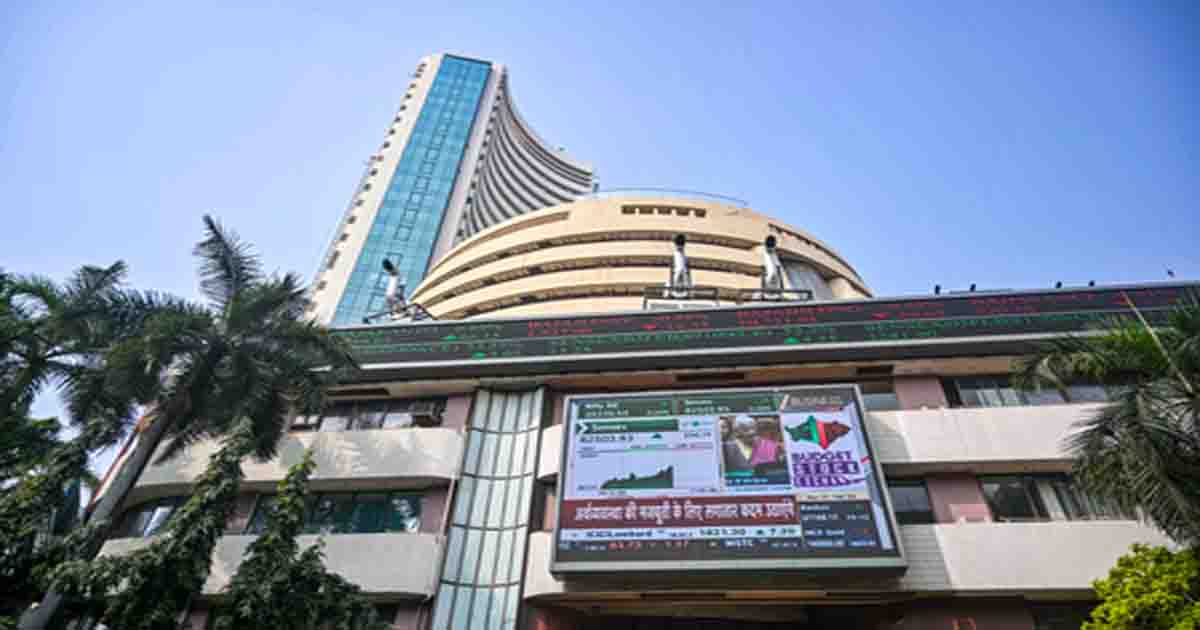
Domestic equity benchmarks opened on a flat note on Monday tracking mixed global cues and momentum from last week’s gains.
Sensex opened at 74,849.30, up 120.03 points or 0.16 per cent, while Nifty began trading at 23,150.85, up 4.70 points or 0.02 per cent.
Sectorally, Nifty PSU Bank led gains and rose over 1 per cent, followed by Nifty Oil & Gas which surged 0.6 per cent.
In contrast, Nifty Private Bank, Nifty IT and Nifty Chemicals dropped up to 1 per cent.
Market experts said momentum from Nifty’s 2.8 per cent surge last week and good results from banking majors after better-than-expected IT earnings could keep the market resilient.
“However, escalation of tensions in Hormuz and consequent surge in Brent crude to $109 will act as a strong headwind,” according to them.
They further said that attractive large-cap valuations and rupee appreciation turned FII stance slightly positive, though unlikely to sustain at high crude prices. Large-caps outperforming mid and small-caps is likely to continue, with stock-specific action on Q2 results.
For Nifty, immediate support is placed at 22,950–23,000, while resistance is seen at 23,250–23,300, the experts said and added that RSI strengthened to 52.81 above its average of 34.70, while PCR stood at 1.08.
In the previous session on October 16, FIIs turned net buyers after 15 straight sessions of selling, buying equities worth about Rs 1,166 crore, while DIIs ended their 45-session buying streak with net sales of around Rs 3,661 crore.
On commodities, Brent crude traded nearly 2 per cent lower at around $107.76 per barrel, while US WTI declined about 1 per cent to $100.43.
In Asia, markets were mixed. Japan’s Nikkei traded 0.84 per cent lower, while Hong Kong’s Hang Seng and South Korea’s KOSPI rose up to 0.83 per cent. Indonesia’s Jakarta Composite fell over 5 per cent.

India’s strong economic growth trajectory and the implementation of the India-EFTA Trade and Economic Partnership Agreement (TEPA) are creating significant opportunities for Norwegian investors, particularly in manufacturing, renewable energy, infrastructure, financial services and the digital economy, according to industry insights.
With GDP growth projected to remain around 6.5 per cent annually through 2030, India is widely expected to become the world’s third-largest economy by the end of the decade, according to EY India report.
Analysts attribute this outlook to strong domestic consumption, rising investments, ongoing infrastructure development and reforms aimed at improving the ease of doing business.
The India-EFTA TEPA, which came into effect in October 2025, is being viewed as a major milestone in India-Norway economic relations.
The agreement seeks to promote trade liberalisation, facilitate investment flows and deepen cooperation in areas such as innovation, sustainability and advanced technologies.
The pact includes investment commitments of $100 billion over 15 years and is expected to support the creation of one million direct jobs in India, aligning with the country’s broader goals of expanding manufacturing capacity and strengthening its position in global value chains.
Industry experts believe the agreement creates a strong framework for Norwegian companies to expand their presence in India by combining Norway’s expertise in technology, sustainability and capital-intensive industries with India’s large market and growth ambitions.
Several sectors have been identified as priority areas for collaboration, including manufacturing, renewable energy, oil and gas, maritime services, seafood processing, information and communication technology (ICT), fintech and financial services. These industries are expected to benefit from increasing bilateral cooperation under the TEPA framework.
The rapid expansion of India’s digital economy and digital payments ecosystem is also creating opportunities for Norwegian companies seeking exposure to one of the world’s largest and fastest-growing consumer markets.
At the same time, India’s policy measures aimed at attracting foreign investment are expected to provide a supportive environment for long-term investors, as per the report.
Business
Delhi protests put business worth Rs 400 crore at daily risk, exposure may reach Rs 4,000 crore in 10 days: CAIT

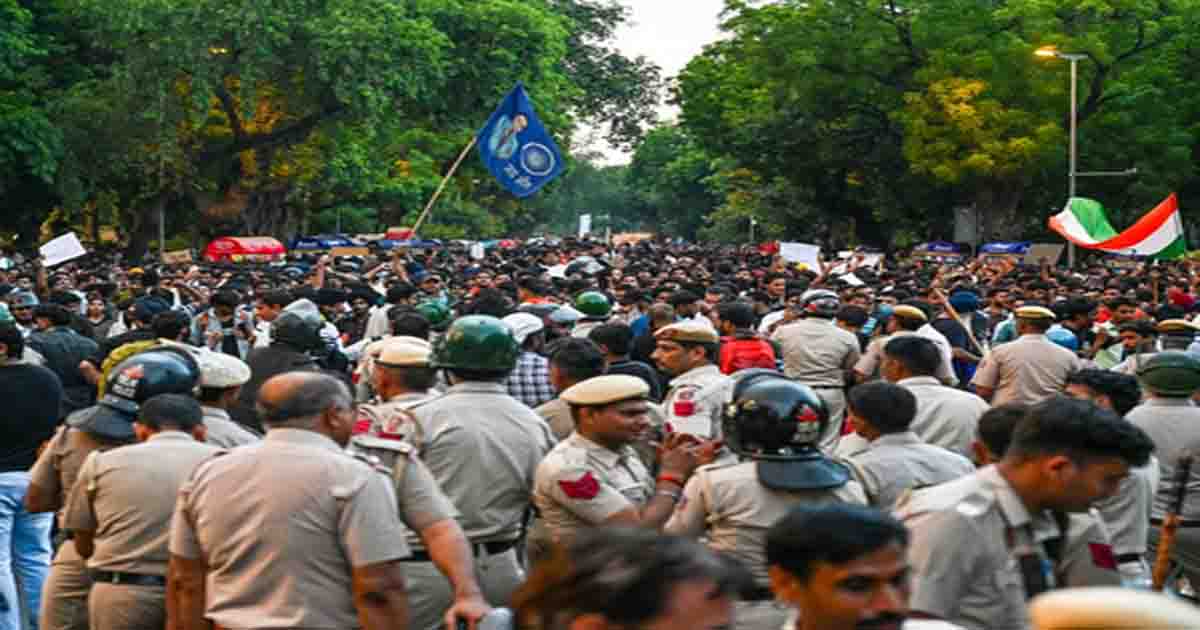
Protests in Delhi could put business transactions worth over Rs 400 crore at risk every day, with the potential exposure reaching Rs 4,000 crore over ten days if disruptions persist, Confederation of All India Traders (CAIT) Secretary General and Chandni Chowk MP Praveen Khandelwal said on Sunday.
Expressing concern over the economic impact of prolonged protests, Khandelwal said disruptions to traffic, transportation, customer movement and market accessibility could significantly affect the capital’s commercial activities, particularly during the crucial festive and wedding season.
He clarified that the figures represent indicative estimates of business activity at risk and not verified actual losses.
According to Khandelwal, Delhi’s estimated average daily business turnover stands at approximately Rs 2,200 crore. Even a 10 per cent decline in business activity could affect transactions worth Rs 220 crore daily, while a 15 per cent decline could put Rs 330 crore at risk. If the disruption reduces business activity by 20 per cent, the amount at risk could rise to Rs 440 crore per day.
Based on these estimates, the cumulative exposure could approach Rs 4,000 crore over ten days if disruptions continue at the higher end of the projected range.
Khandelwal emphasised that while the Constitution guarantees citizens the right to freedom of speech and peaceful assembly, traders must also be able to conduct their businesses and earn their livelihoods without avoidable disruptions.
“Delhi is not merely the national capital; it is one of the country’s most important centres of wholesale distribution, retail trade and commercial activity. Its markets connect manufacturers, distributors, retailers and consumers across India. Any prolonged disruption in Delhi therefore has a cascading impact on supply chains, business transactions and livelihoods far beyond the city,” Khandelwal said.
“The right to protest and the right to trade are both integral to a functioning democracy. Protecting one should not mean disregarding the other. The larger public interest demands a responsible approach in which democratic expression, the rule of law, economic activity and the livelihood of millions of people are all duly respected,” Khandelwal noted.

Tiger Shroff firing case: Juvenile among 3 detained in Rajasthan Kota

US intelligence blackout hurt Ukraine: Zelensky

Pune: 70-year-old man duped of Rs 4.81 lakh in pension card fraud

Tiger Shroff attack: CM Fadnavis vows action, says Mumbai Police will dismantle gangs operating from abroad

Regime change inevitable, natural democratic process: Shiv Sena(UBT) in ‘Samaana’

Rahul, Cong ecosystem want to force regime change: BJP after Neha Bora praises B’desh Gen-Z protest

BJP pays tribute to ex-President Abdul Kalam, recalls his enduring influence on generations of India’s youth

Attack on democratic rights: INDIA Bloc leaders on detentions of anti-ECI protestors

INDIA bloc begins protest march against ECI

Maha Congress stages agitation against Gyanesh Kumar
-

 Crime4 years ago
Class 10 student jumps to death in Jaipur
-

 Maharashtra2 years ago
Mumbai Local Train Update: Central Railway’s New Timetable Comes Into Effect; Check Full List Of Revised Timings & Stations
-

 Maharashtra2 years ago
Mumbai To Go Toll-Free Tonight! Maharashtra Govt Announces Complete Toll Waiver For Light Motor Vehicles At All 5 Entry Points Of City
-

 Maharashtra2 years ago
False photo of Imtiaz Jaleel’s rally, exposing the fooling conspiracy
-

 National News2 years ago
Ministry of Railways rolls out Special Drive 4.0 with focus on digitisation, cleanliness, inclusiveness and grievance redressal
-

 Maharashtra2 years ago
Maharashtra Elections 2024: Mumbai Metro & BEST Services Extended Till Midnight On Voting Day
-

 National News2 years ago
J&K: 4 Jawans Killed, 28 Injured After Bus Carrying BSF Personnel For Poll Duty Falls Into Gorge In Budgam; Terrifying Visuals Surface
-

 Crime2 years ago
Baba Siddique Murder: Mumbai Police Unable To Get Lawrence Bishnoi Custody Due To Home Ministry Order, Says Report