
General
The five women whose petition has shaken up the nation

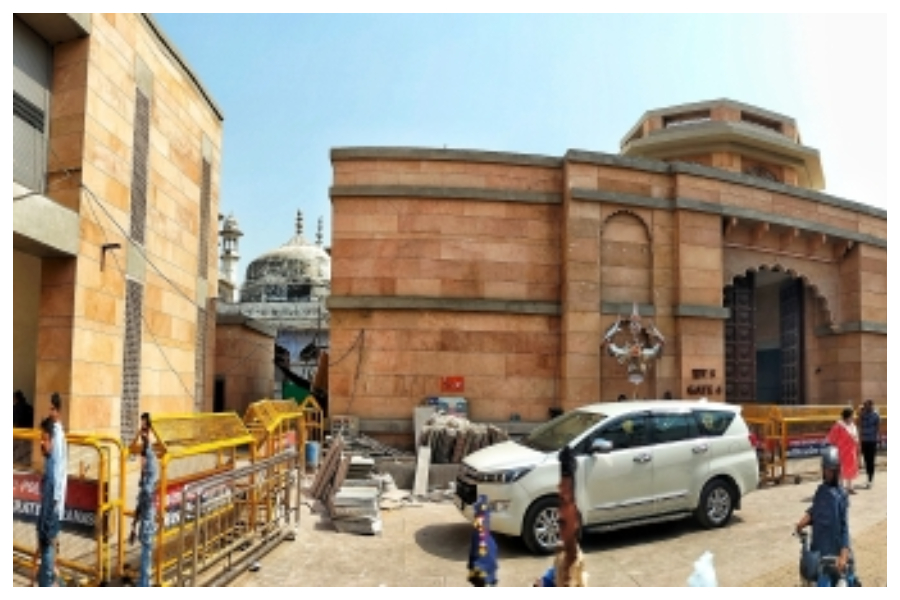
The five women who caused an upheaval in the country by filing a petition seeking permission to offer prayers at the Shringar Gauri shrine in the Gyanvapi mosque complex here are neither friends, nor part of one group.
Of the five petitioners, one is based in Delhi while four belong to Varanasi. The closest they came to know of each other is a chance meeting at a ‘satsang’.
While Laxmi Devi, Sita Sahu, Manju Vyas and Rekha Pathak live in Varanasi and have been present at every hearing of the case which began in August 2021, the fifth and the main petitioner, Rakhi Singh, lives in Delhi and has not been to court.
Rakhi Singh’s interest in religion seems to originate from her links to the ‘Vishwa Vedic Sanathan Sangh’.
Rakhi, 35, is a founder member of the outfit, which claims to have done ‘coordination’ for the petition. Her uncle, Jitendra Singh Bishen, is the President of the Sangh.
According to Santosh Singh, the UP convenor of the Vishwa Vedic Sanathan Sangh, the outfit coordinated with four of the women and brought them together to file the Gyanvapi petition in August 2021.
“We are managing the whole case,” he claimed.
The second petitioner is Laxmi Devi, 65, whose husband, Sohan Lal Arya, is a senior VHP office-bearer in Varanasi. Laxmi Devi is essentially a homemaker and lives in Varanasi’s Mahmoorganj area.
An active player in this case, her husband claims it was he who “inspired and brought together the five women (petitioners)”.
Arya, 71, is also the litigants’ agent in the petition.
The VHP Varanasi Mahanagar vice-president and spokesperson since 1984, he said that the petitioners, including his wife, were chosen by him.
Arya, who claims to have been associated with the RSS since childhood, said that he filed his first petition in the Kashi Vishwanath-Gyanvapi matter in a Varanasi court in 1985.
“This time, I decided to put women in front as it is they who pray to Maa Shringar Gauri. I chose the four women as I needed some women to file the petition. I didn’t have any other names, so I picked them,” he said.
The Vishwa Vedic Sanathan Sangh was founded in 2018 “for the cause of Hindutva”. The outfit has also filed cases over the status of Qutub Minar in a Delhi court as well as one regarding the Krishna Janmabhoomi in a Mathura court, which also involves dispute with a mosque.
Sita Sahu, another petitioner, however, has another story as to how they came together for the case.
“Four of us met at a satsang and decided to file the petition. We were contacted by Rakhi Singh saying she wanted to be a part of the petition, so we included her as well,” she said.
Sita Sahu runs a small general store from her house in Chetganj area of Varanasi, just 2 km from the Gyanvapi complex.
While she has never been associated with any outfit or organisation, she said, “We are doing work for Hindu religion and filed the petition because we are not allowed to properly worship our Goddess at the temple.”
Manju Vyas, 49, runs a beauty parlour from her house located 1.5 km from the Gyanvapi complex and is not a member or office-bearer of any outfit or organisation. Apart from her small business, she looks after her family. Her interest is to pray at the Shringar Gauri Sthal.
Rekha Pathak, 35, the fifth petitioner in the case, said she became a part of the petition for the cause of her Goddess.
“I felt bad that women who go to the temple for worship are not allowed past the barricading, so I became a part of the petition. The decision to file the petition was taken by us during a satsang of the temple because all of us worship the Goddess,” she said.
It is on their petition that the Civil Judge (Senior Division), Varanasi, ordered a videographic inspection of the Gyanvapi mosque, inviting objections from the Muslim community.
“For us, nothing else matters except for offering prayers at Shringar Gauri Maa and we will not rest till we are given the permission,” the petitioners said.
Interestingly, none of the five petitioners are aware of the legal or political implications that their petition is having on the nation.
“We are only concerned with worshipping at Shringar Gauri and nothing else matters to us,” said Rekha Pathak.

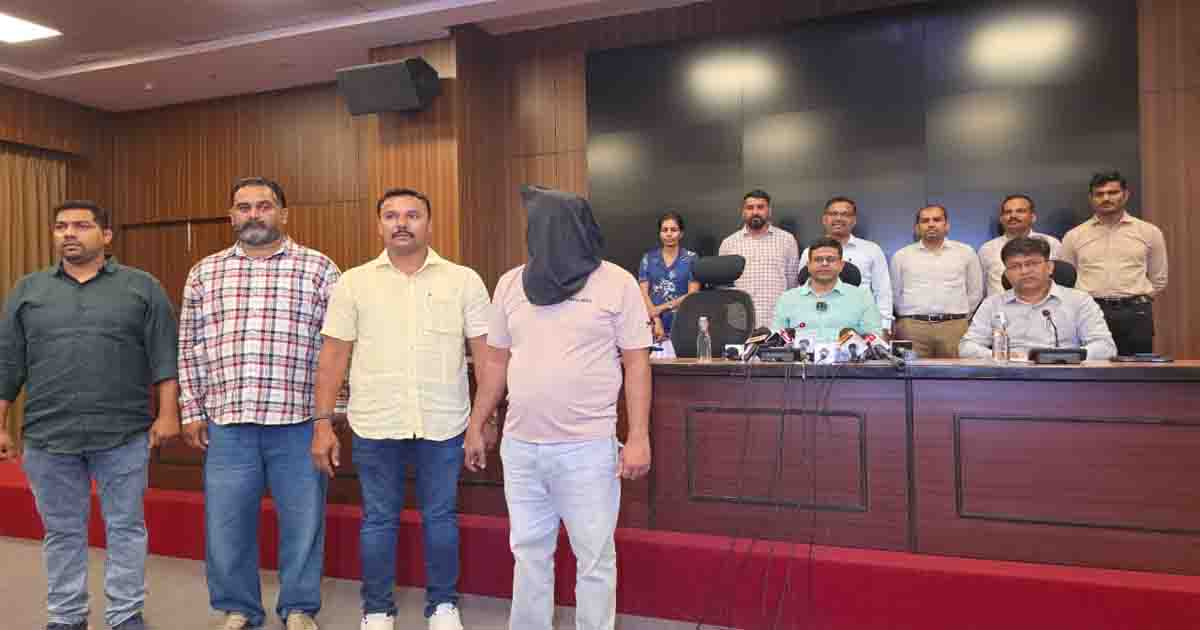
In a case involving the defrauding of a 72-year-old senior citizen in Mumbai on August 13, an unidentified caller—posing as Dinesh Kumar, a Senior Manager at Bank of India—gained the victim’s trust by promising to facilitate the issuance of a Senior Citizen Card. The caller sent an APK file named “Senior Citizen Card http://Verification.apk” to the complainant’s WhatsApp and coerced them into entering personal and bank debit card details, resulting in the misappropriation of ₹5,62,000. Initially, the Byculla Police Station registered a case (No. 497/26) under Sections 318(4) and 319(2) of the BNS and Sections 66(C) and (D) of the Information Technology Act, 2000. While the Property Cell of the Mumbai Crime Branch was conducting a parallel investigation, senior officials ordered the transfer of the case to the Crime Branch; it was subsequently re-registered as Case No. 927/2026 for further investigation.
A thorough technical analysis of the aforementioned APK file was conducted, leading to the identification and arrest of the accused—a 36-year-old male software developer and resident of Madhya Pradesh—who was responsible for developing the fraudulent APK file. During a raid on the accused’s office in Madhya Pradesh, authorities recovered a pen drive, a CPU, three hard disks, a Wi-Fi router, and three mobile phones. Preliminary technical analysis revealed that the accused was utilizing servers from various service provider companies. Investigation confirmed that the accused had created and sold a total of 2,805 malicious APK files to other cybercriminal gangs. These files were used to defraud 9,673 people across India. Complaints regarding these incidents have been registered on the cyber helpline number 1930—specifically 1,074 nationwide, 143 in Maharashtra, and 36 in Mumbai—revealing a total fraud amount of ₹15.75 crore. Cases have been cracked involving 88 incidents across India, 8 in Maharashtra, and 5 in Mumbai.
This successful operation was executed by a team comprising Police Commissioner Devin, Joint Police Commissioner Anil Kumbhare, Additional Commissioner Krishna Kant Upadhyay, DCP (Crime) Raj Tilak Roshan, and the Crime Branch. DCP Raj Tilak Roshan stated that this action was taken in response to fraud targeting the elderly under the guise of issuing senior citizen cards; the police also regularly conduct awareness campaigns among the elderly regarding this issue.
Maharashtra
Mumbai CSMT: Case Filed Against Garjana Morcha Over Demand to Scrap SIR; Nitesh Rane Defends Action, Calls for Aditya Thackeray Passport to Be Seized

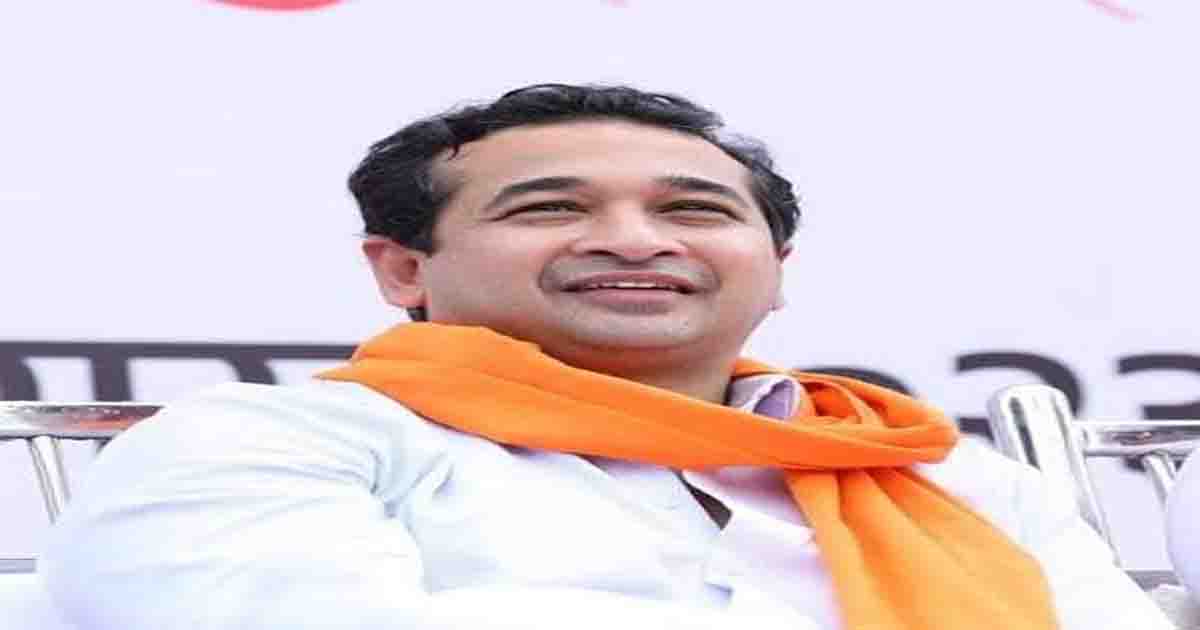
Mumbai: The Mumbai Police have registered a case against the organizers of the ‘Garjana Morcha’ (Roaring Rally), which was held without permission at Azad Maidan near the BMC headquarters. The protest, organized by Shiv Sena chief Uddhav Thackeray and MNS chief Raj Thackeray, saw the participation of party workers from across Mumbai and the state. During the event, demands were raised to cancel the FIR, and Raj Thackeray—in his address—termed the FIR itself illegal; he also proposed a boycott of the elections. The Mumbai Police have registered the case under Sections 223, 189, and 190 of the BNS. Authorities stated that the case was filed due to the unlawful assembly of a crowd. The Azad Maidan Police have initiated an investigation into the matter, and the case has been registered against the organizers as well as other leaders. A case must be registered for an illegal protest: Nitesh Rane
Following the police case registered after the Azad Maidan protest, BJP leader and minister Nitesh Rane stated that filing a case for an unauthorized, illegal protest is mandatory because the Constitution of Babasaheb Ambedkar prevails here. He alleged that the protest was held for “Vote Jihad.” Furthermore, in a vitriolic outburst, Rane noted that Aaditya Thackeray was absent from the protest organized by Uddhav and Raj Thackeray; claiming Aaditya knew action would be taken against him and might flee, Rane demanded that his passport be confiscated.
Maharashtra
Mumbai Mobile Theft Gang Busted: 42 Mobile Phones Worth ₹16 Lakh Recovered, Police Investigation Underway
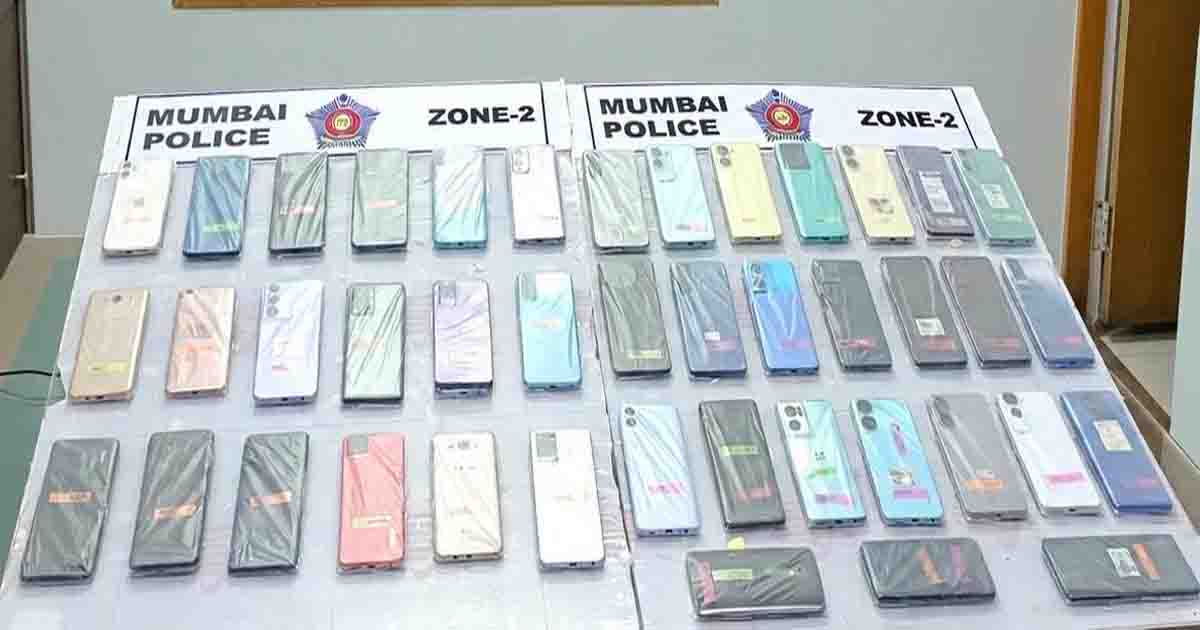
A case (No. 693/26) was registered at the Gamdevi Police Station, Mumbai, under Sections 303(2) and 3(5) of the BNS. The complainant was traveling by bus from the Colaba Hill bus stop towards Pedder Road, Mumbai, when an unidentified individual shoved him amidst the crowd and stole his OnePlus mobile phone. Following the investigation—which utilized technical analysis and information from confidential informants—an organized gang responsible for such crimes was traced. Arrests were made in Mankhurd and Shivaji Nagar, while the gang’s ringleader was apprehended in Rajasthan.
The arrested accused are: 1) Aftab Abad Ansari (26), 2) Hasan Abbas Shaikh (35), 3) Chand Mohammad Mohammad Sultan (53), 4) Imtiaz Imam Ali Shaikh (46), 5) Ajmi Akram Qureshi (32), 6) Swapnil Shankar Sonawane (29), and 7) Rajab Ali Mohammad Taqi Shaikh alias Chakna (32). Stolen mobile phones from 42 different brands—including the device involved in the aforementioned case—were recovered.
This successful operation was executed by a team comprising Deven Bharti, Joint Commissioner of Police Manoj Kumar Sharma, Additional Commissioner Shailesh Balkawade, Ragsudha R. (South Region 02), Prashant Mohite, and Rajiv Patil.

AAP students’ wing to join protests against CEC on Oct 10

Drug-free Maharashtra: CM Devendra Fadnavis, NCB D-G Anurag Garg discuss strategy

CM Yadav promises more job opportunities for youth, announces twice-yearly PSC exams

Maha CM launches ‘Participate Mumbai’ platform to boost CSR-led development partnerships

Navi Mumbai International Airport steps up mobility, hospitality and airline support

Gift to President Putin part of PM Modi bid to globally display India’s heritage

PM Modi’s warm camaraderie with Putin, Xi on full display at BRICS Summit

Corporators of all parties in trouble! Corporators of all major parties including Shiv Sena (UBT), BJP and Congress are facing legal challenges.

Complaint against Netflix & Mukesh Chhabra for inappropriate language on ‘India’s Got Latent 2’

Maha Congress stages agitation against Gyanesh Kumar
-

 Crime4 years ago
Class 10 student jumps to death in Jaipur
-

 Maharashtra2 years ago
Mumbai Local Train Update: Central Railway’s New Timetable Comes Into Effect; Check Full List Of Revised Timings & Stations
-

 Maharashtra2 years ago
Mumbai To Go Toll-Free Tonight! Maharashtra Govt Announces Complete Toll Waiver For Light Motor Vehicles At All 5 Entry Points Of City
-

 Maharashtra2 years ago
False photo of Imtiaz Jaleel’s rally, exposing the fooling conspiracy
-

 National News2 years ago
Ministry of Railways rolls out Special Drive 4.0 with focus on digitisation, cleanliness, inclusiveness and grievance redressal
-

 Maharashtra2 years ago
Maharashtra Elections 2024: Mumbai Metro & BEST Services Extended Till Midnight On Voting Day
-

 National News2 years ago
J&K: 4 Jawans Killed, 28 Injured After Bus Carrying BSF Personnel For Poll Duty Falls Into Gorge In Budgam; Terrifying Visuals Surface
-

 Crime2 years ago
Baba Siddique Murder: Mumbai Police Unable To Get Lawrence Bishnoi Custody Due To Home Ministry Order, Says Report