
Maharashtra
Thane Municipal Corporation to induct 123 electric air-conditioned buses: Mumbai

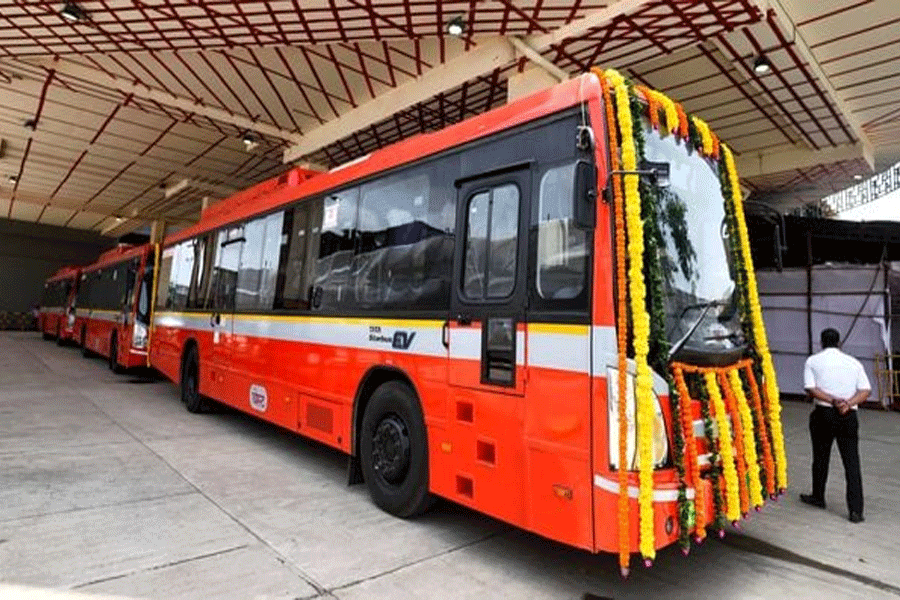
Buses will be supplied to Thane civic body in 9 months on a gross cost contract model basis for a period of 15 years, The Thane Municipal Corporation, in its move to change the face of public transportation and convert its entire fleet of buses into electric ones, has placed an order for 123 electric buses. “The undertaking is procuring 123 electric buses at a cost of Rs 185 crore. The buses will be supplied on a gross cost contract [GCC] model basis for a period of 15 years. A consortium of Olectra Greentech and Evey Trans [Evey] has received the order,” a senior TMC official said.
He added, “Evey will procure the electric buses from Olectra Greentech and they will be delivered in 9 months. Of these 123 buses, 55 will be 12-metre buses including 45 AC and 10 non-AC buses. The remaining 68 e-buses—26 AC and 42 non-AC—will be 9-metre long. The 12-metre buses will have 200-km range and a seating capacity of 39 plus driver, while the 9-metre buses will have 160-km range with a seating capacity of 31 passengers plus driver. These lithium-ion battery-run buses can be fully charged in four hours. Olectra Greentech will maintain them during the contract period.”
The civic body has recently also started work on a dedicated road for public transport buses which is scheduled to be ready by May 2023. mid-day had on September 9 reported how Thane city is setting an example and taking the lead in easing public transport connectivity by beginning the construction of the 2.4-km-long dedicated elevated road only to be used by public transport buses, including those by various municipal transport undertakings. Procuring new electric buses is an extension of this public friendly initiative.
The BEST undertaking was one of the first public transport undertakings to start this process and has already replaced 400 buses with electric ones. The BEST has begun the process of procuring 3,000 electric buses by 2023 and plans to expand its entire fleet to over 10,000 e-buses by 2025.
The buses are procured and funded under the Union government’s FAME-II (Faster Adoption and Manufacturing of (Hybrid &) Electric vehicles) initiative. Earlier on August 6, mid-day had reported how at a crucial meeting held at the BEST headquarters in Colaba, secretary of the Union ministry of heavy industries Arun Goel along with public transporters from Thane, Navi Mumbai, Kalyan-Dombivli, Pune, and the Maharashtra state transport strategised how the BEST undertaking could guide and show the way to other public transport undertakings on operation of electric buses. Goel had been on an official visit to Mumbai to review the e-bus projects in Mumbai and neighbouring cities.
The Konkan Railway, which covers 740 km and is one of the longest stretches working on diesel engines, started getting clean and green electric locomotives for national trains. The Konkan Railway Corporation Ltd (KRCL) said they would facilitate operation of four pairs of trains on electric traction with effect from Tuesday, including Delhi-Kerala and Delhi-Goa Rajdhani trains.
“The change will not only lead to a more environment-friendly move since there will not be smoke in the tunnels, but also lead to a faster journey time due to saving of time as it would not involve a locomotive change,” an official said.
The conversion to electric railway will also make train operations easier and save the cost of fuel to the tune of Rs 150 crore per year. While the foundation stone of Konkan Railway electrification, at a cost of Rs 1,287 crore, was laid in November 2015, the project was approved by the Ministry of Railways in 2016.


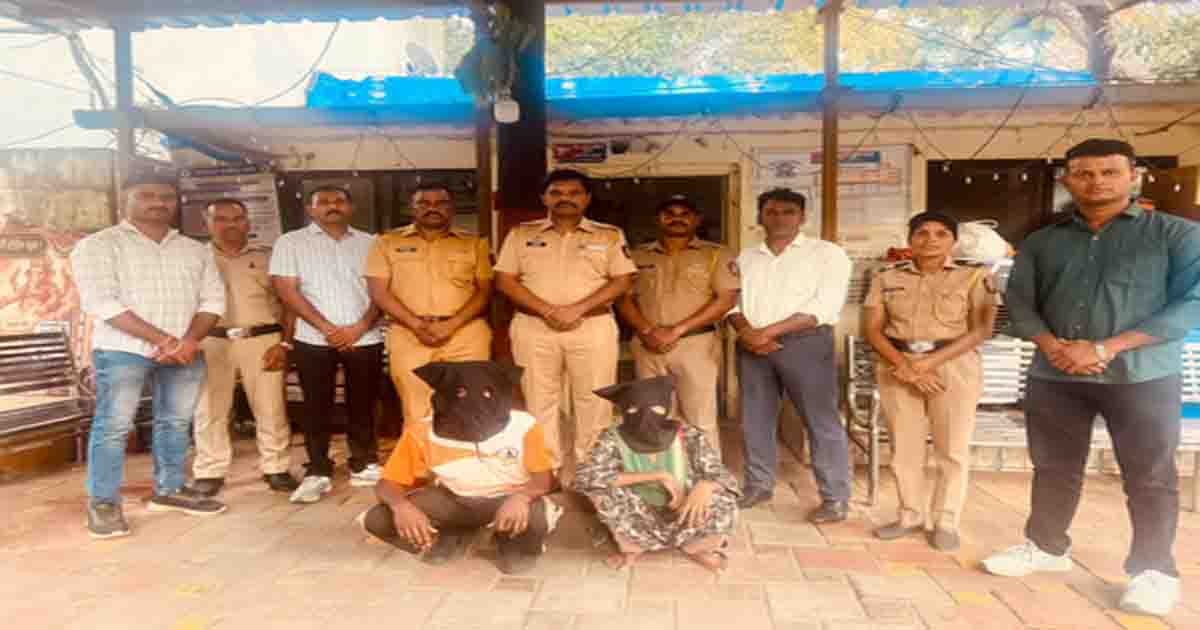
Palghar Police have solved the murder of a 52-year-old woman, Sajani Vinod Waghari, who was allegedly bludgeoned to death with a hammer following a minor dispute in the Saphale police station area. Two accused have been arrested in connection with the crime, police said on Tuesday.
The accused have been identified as Nilesh Dharamaji Chibhade (35), a resident of Bambar Pada, Jamshar Post, Jawhar taluka, and Ujwala Navsu Khutade (33), a resident of Dabhosa in Jawhar taluka, both in Palghar district.
According to police, Waghari, a resident of Adwan Sawarpada in Palghar taluka, was found injured near an iron bridge at Tepacha Pada on October 15, 2026. She was immediately taken to the Saphale Primary Health Centre, where doctors examined her and declared her dead.
Initially, a case of accidental death (No. 32/2026) was registered at Saphale Police Station under Section 194 of the Bharatiya Nagarik Suraksha Sanhita (BNSS), 2023.
However, during the inquest and subsequent medical examination, doctors found a serious injury behind the woman’s ear, apparently caused by a weapon. The injury had resulted in excessive blood loss, leading to her death.
Following the medical findings, police suspected murder and registered a case (No. 119/2026) under Section 103(1) of the Bharatiya Nyaya Sanhita (BNS) on October 15.
Considering the seriousness of the crime, Palghar Superintendent of Police Yatish Deshmukh directed the formation of separate teams from the Local Crime Branch and Saphale Police Station to investigate the case.
The teams pursued leads through confidential information and technical analysis, which eventually helped identify the two suspects.
During interrogation, the accused allegedly confessed to attacking Waghari on the head with a hammer following a minor altercation, police said.
Both were subsequently arrested and produced before a court, which remanded them to five days of police custody until October 22.
The murder case was cracked under the guidance of SP Yatish Deshmukh, Additional Superintendent of Police Vinayak Narale and Sub-Divisional Police Officer of Palghar division Umesh Gawali. Further investigation is being conducted by Assistant Police Inspector Datta Shelke of Saphale Police Station.
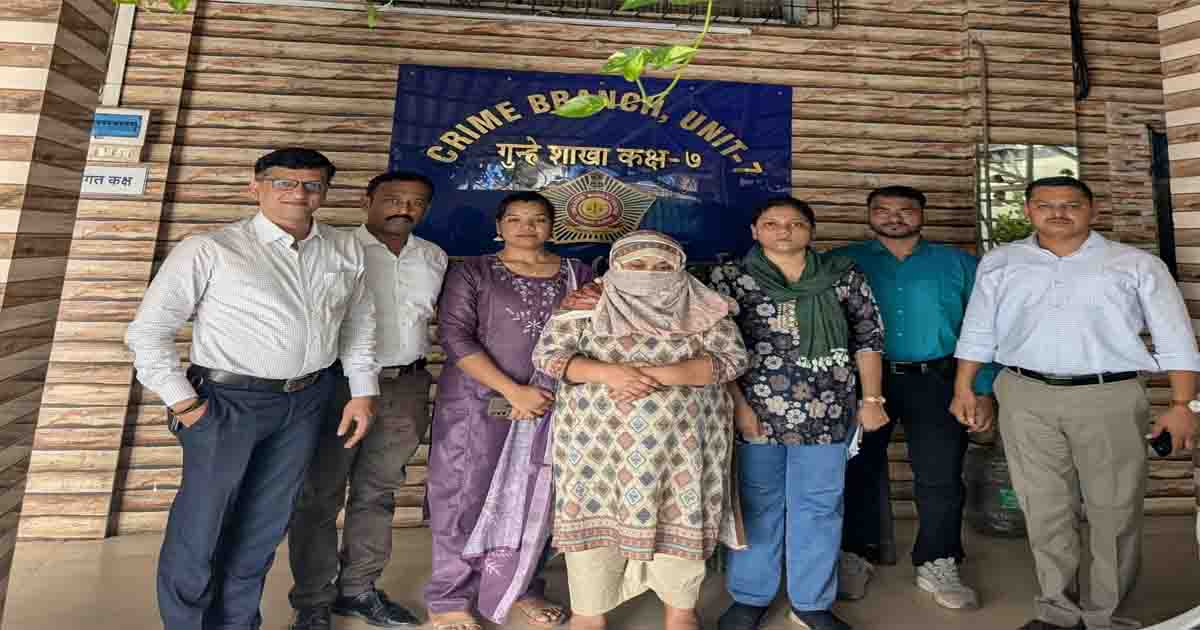
Mumbai: A woman has been arrested by a team from Crime Branch Unit 7 in connection with an extortion case. The accused allegedly extorted approximately 40 million rupees (4 crore rupees) from a resident of Ghatkopar by threatening to defame her using an obscene video and threatening her with death. She was also demanding further payments.
The complainant works as a manager at a jewelry store. Between December 2024 and January 2025, an acquaintance—a woman—engaged the complainant in an obscene video chat via WhatsApp. The accused then threatened to circulate this footage to the police, the courts, and the CBI, claiming that the complainant would be summoned for investigation. Fearing public disgrace, the complainant paid a total of 40 million rupees to the accused. The woman continued to demand more money and threatened that if further payments were not made, she would break the complainant’s limbs and kill her. Taking into account the gravity of the matter, Crime Branch Unit 7 (Ghatkopar, Mumbai) laid a trap for the woman who had been demanding extortion money. On October 19, she was caught red-handed at RK Restaurant, LBS Road, Ghatkopar West, Mumbai, while accepting a sum of 5 lakh rupees from the complainant. Following the complainant’s report, a case was registered at the Ghatkopar Police Station under Sections 308(2) and 308(7) of the Bharatiya Nyaya Sanhita (BNS). The Crime Branch has taken over the investigation, and the woman has been arrested; further inquiries are being conducted by Unit 7, Ghatkopar.
This operation was carried out by a team comprising Mumbai Police Commissioner Deven Bharti, Joint Police Commissioner Anil Kumbhare, Additional Commissioner Krishnakant Upadhyay, and DCP Nanath, along with the personnel of Unit 7.
Maharashtra
Major crackdown by Mumbai Crime Branch, 2 kg heroin worth ₹10 crore seized, three accused arrested.

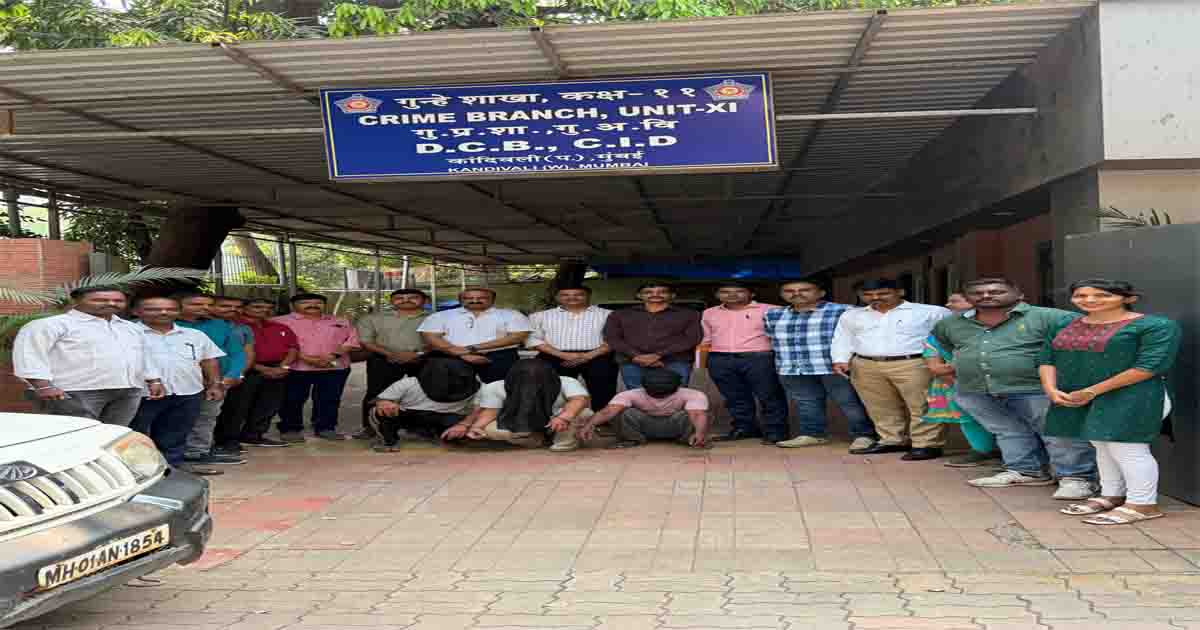
The Mumbai Crime Branch has intensified its operations against drug peddlers, and in the process, the police have reported the arrest of a drug smuggler.
A case has been registered at the Borivali Police Station under Sections 8(c), 21(c), and 29 of the NDPS Act, 1985.
On October 14, the Crime Branch conducted a raid in Borivali West. So far, three suspects have been arrested in connection with this case. The seized items include: 1) 2,032 grams of heroin, valued at 10,16,00,000 rupees; and 2) three mobile phones, valued at 30,000 rupees. Acting on the directives of Mumbai Police Commissioner Deven Bharti, the Mumbai Crime Branch has launched a special campaign to identify and take strict action against individuals involved in the smuggling, purchase, and sale of narcotics across Mumbai. During the aforementioned operation, acting on secret information, a police team conducted a swift and effective raid in Kandivali (West), Mumbai, on October 14. They seized 758 grams of heroin—estimated to be worth 37,900,000 rupees—from the possession of two individuals.
Subsequently, on October 17, based on information obtained during the interrogation of the arrested suspects, the police carried out another prompt and effective operation, seizing 1,274 grams of heroin—valued at approximately 63,700,000 rupees—from a third suspect. In total, 2,032 grams of heroin, with an estimated value of 101,600,000 rupees, have been seized from the three suspects.
A case has been registered under Sections 8(c) and 21(c) of the NDPS Act, 1985 (at the Borivali Police Station), as the suspects were found to be in possession of and smuggling heroin. The suspects are believed to be part of an inter-state drug trafficking syndicate. Further investigation is underway to identify and apprehend those responsible for supplying, buying, and selling the narcotics.
This successful operation was carried out by the Kandivali unit under the supervision of Police Commissioner Deven Bharti, Joint Police Commissioner Anil Kumbhare, Additional Commissioner Krishnakant Upadhyay, and DCP Nanath Dhole.

EAM Jaishankar and US counterpart Rubio discuss advancing ties, regional developments

Maha: Woman beaten to death with hammer over minor dispute in Palghar; two arrested

Woman arrested for extorting ₹4 crore by blackmailing victims with obscene videos

Major crackdown by Mumbai Crime Branch, 2 kg heroin worth ₹10 crore seized, three accused arrested.

Model Shraddha Dubey, wanted in businessman Shiva Sharma death case, arrested in Nagpur

Rahul, Cong ecosystem want to force regime change: BJP after Neha Bora praises B’desh Gen-Z protest

BJP pays tribute to ex-President Abdul Kalam, recalls his enduring influence on generations of India’s youth

Attack on democratic rights: INDIA Bloc leaders on detentions of anti-ECI protestors

INDIA bloc begins protest march against ECI

Maha Congress stages agitation against Gyanesh Kumar
-

 Crime4 years ago
Class 10 student jumps to death in Jaipur
-

 Maharashtra2 years ago
Mumbai Local Train Update: Central Railway’s New Timetable Comes Into Effect; Check Full List Of Revised Timings & Stations
-

 Maharashtra2 years ago
Mumbai To Go Toll-Free Tonight! Maharashtra Govt Announces Complete Toll Waiver For Light Motor Vehicles At All 5 Entry Points Of City
-

 Maharashtra2 years ago
False photo of Imtiaz Jaleel’s rally, exposing the fooling conspiracy
-

 National News2 years ago
Ministry of Railways rolls out Special Drive 4.0 with focus on digitisation, cleanliness, inclusiveness and grievance redressal
-

 Maharashtra2 years ago
Maharashtra Elections 2024: Mumbai Metro & BEST Services Extended Till Midnight On Voting Day
-

 National News2 years ago
J&K: 4 Jawans Killed, 28 Injured After Bus Carrying BSF Personnel For Poll Duty Falls Into Gorge In Budgam; Terrifying Visuals Surface
-

 Crime2 years ago
Baba Siddique Murder: Mumbai Police Unable To Get Lawrence Bishnoi Custody Due To Home Ministry Order, Says Report