
Maharashtra
Supriya Sule’s merger ‘full stop’ leaves two NCP factions to fight separate battles

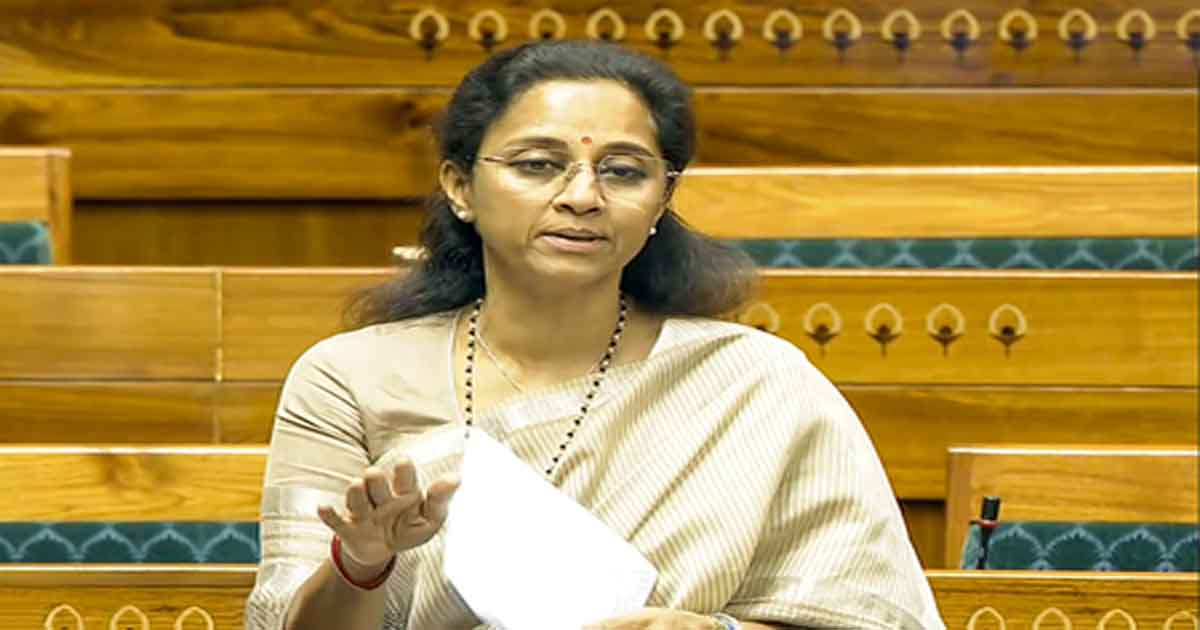
The categorical statement by Nationalist Congress Party (Sharadchandra Pawar) working president and Baramati MP Supriya Sule on Saturday, declaring that merger talks had come to a “full stop” following the tragic death of her brother Ajit Pawar in January this year, and ruling out any possibility of joining the BJP-led NDA, marks a decisive turning point in Maharashtra politics.
With personal ties severed and the two factions aligned with opposing national alliances, the two wings of the Nationalist Congress Party (NCP) now face distinct challenges in sustaining their political relevance, expanding their support base and securing their future in Maharashtra politics.
Having rejected both reunification with the ruling faction and alignment with the National Democratic Alliance (NDA), the NCP (SP) has chosen ideological consistency over immediate access to state power. The Sharad Pawar-led faction is expected to focus more now on its consolidation as the principal Opposition anchor in Maharashtra.
With eight Lok Sabha MPs — far outnumbering the rival faction’s lone MP—NCP–SP holds significant leverage in Delhi and within the Maha Vikas Aghadi (MVA).
By staying firmly in the Opposition, Sule has avoided triggering an internal revolt from younger leaders like Rohit Pawar, who had reportedly threatened to join the Congress if NCP–SP aligned with the Bharatiya Janata Party (BJP).
However, with only 10 MLAs in the Maharashtra Assembly and the next Assembly elections years away, keeping ground-level cadres motivated without state patronage or development funds is notoriously difficult in Western Maharashtra’s cooperative-driven politics.
Former Maharashtra deputy chief minister Ajit Pawar was the undisputed organisational engine of the rival faction. Without his direct grip over local sugar cooperatives, district banks, and municipal bodies, NCP–SP can target second-rung leaders and disgruntled MLAs in the Sunetra Pawar camp who feel sidelined by senior leaders like Praful Patel or Sunil Tatkare.
Poaching the sitting MLAs may invite immediate retaliation from the BJP-led state machinery, including investigative agency scrutiny and financial squeezes on cooperative institutions.
At 86, Sharad Pawar’s active campaigning bandwidth is naturally limited. Sule’s firm “no” to a merger establishes her independent authority, signalling to cadres that she is not looking for a crutch from the ruling faction to inherit her father’s political legacy.
She can position herself as a policy-focused national parliamentarian while empowering Rohit Pawar and Jayant Patil to handle state-level street agitation. Over the medium term, if sustaining a standalone regional party without the “Clock” symbol becomes resource-heavy, NCP (SP) could explore closer structural integration—or even a future merger—with the Congress, returning to its pre-1999 roots.
As far as the ruling NCP faction is concerned, Sule’s statement closes off an easy path to regaining emotional legitimacy among traditional Pawar loyalists. Operating without Ajit Pawar’s charismatic mass appeal, Sunetra Pawar and senior leaders face acute strategic choices.
Sunetra Pawar holds the dual positions of Maharashtra Deputy Chief Minister and national president of the NCP. The party may have to explore an option of transition from a one-man command structure (Ajit Pawar) to a collective leadership model where Sunetra Pawar serves as the unifying Pawar surname and empathetic face, while the party working president Praful Patel manages Delhi equations, the Maharashtra unit chief Sunil Tatkare handles state organisation, and senior minister Chhagan Bhujbal anchors the Other Backward Class (OBC) outreach.
However, recent setbacks in the October 2026 Maharashtra Legislative Council (MLC) polls (where the party nominee lost to NCP (SP) in the Aurangabad graduates constituency) indicate that transferring Ajit Pawar’s personal vote bank seamlessly to a new leadership setup is proving challenging.
With 41 MLAs in a comfortable Mahayuti government, the NCP does not face an immediate existential threat. It can use ministerial portfolios, Guardian Ministerships (such as Pune and Beed), and state funds to keep its MLAs satisfied and ring-fence its Western Maharashtra bastions ahead of local body and civic polls.
But the over-dependence on the BJP may reduce the party’s autonomous identity. As seen in Chief Minister Devendra Fadnavis’s remarks that the BJP would expect to be consulted on any merger, the BJP treats the NCP as a junior partner whose seat share in future elections could be trimmed if its independent vote transfer weakens.
If a formal party-to-party merger is off the table, the ruling NCP can still weaken NCP (SP) incrementally by inducing individual MLAs or local strongmen from Sharad Pawar’s camp to cross over, citing constituency development funds and three more years of Mahayuti rule. However, bringing in outsiders could trigger friction among its own 41 MLAs over ticket distribution and cabinet berths, said the party insiders.
As long as NCP’s identity revolves around being the “other Pawar faction,” it remains vulnerable to comparisons with Sharad Pawar’s original legacy. Sunetra Pawar has already signalled a shift towards issue-based positioning — such as focusing on artificial intelligence (AI) and modern technology in agriculture and party introspection.
Carving out a distinct social coalition (Maratha-OBC-minority balance within the NDA) is essential to survive independently of the Baramati family dynamic.
The political observers argued that a permanently divided NCP prevents either faction from recreating the undivided NCP’s 55–70 seat dominance in Maharashtra. In Western Maharashtra, the BJP gains room to expand into traditional sugar-belt constituencies, while the Congress becomes the primary beneficiary of anti-BJP votes within the MVA.
For voters and party workers, the biggest fallout of Sule’s announcement is clarity. Since January 2026, persistent rumours of a reunion kept cadres in both camps hesitant to attack each other aggressively. With reunification formally buried, both factions will have to now fight each other as permanent political rivals.


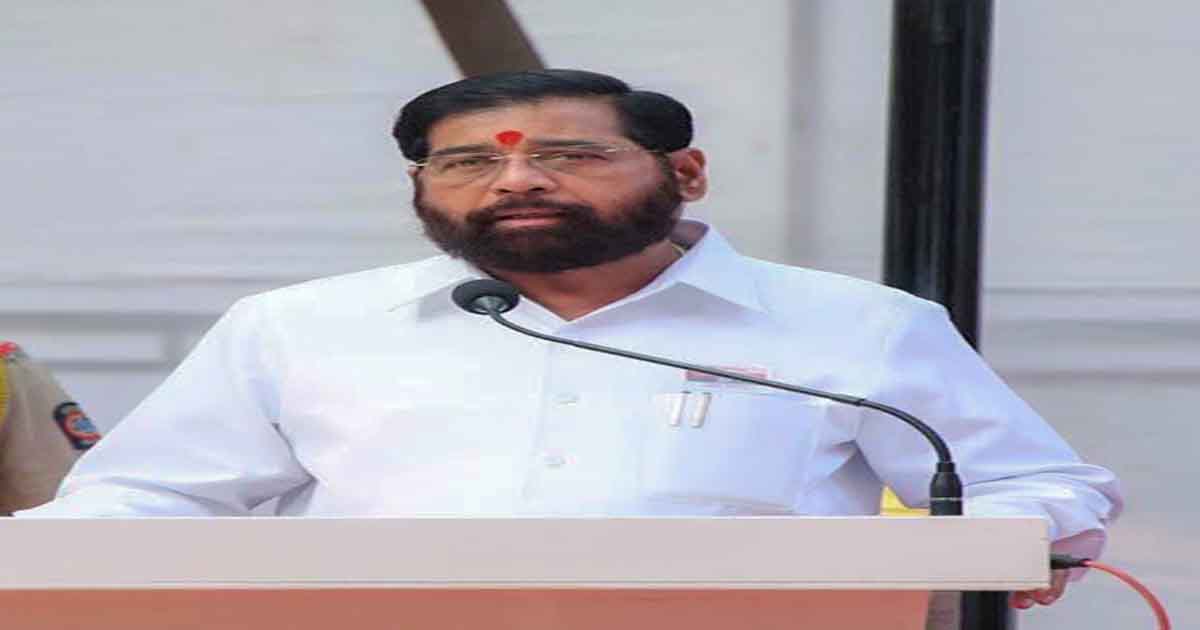
Amid the rhythmic beats of taal-mridanga, chants of Harinaam, and a deeply devotional atmosphere created by lakhs of Warkaris arriving from across Maharashtra, Kartiki Ekadashi was celebrated with great enthusiasm in Pandharpur on Saturday.
On this auspicious occasion, Deputy Chief Minister Eknath Shinde, accompanied by his family, performed the official Mahapuja of Shri Vitthal-Rukmini.
Speaking to reporters after the rituals, Shinde said he prayed to Lord Vitthal for the prosperity of the state’s farmers, relief from crises for the farmers, and overall peace and prosperity in Maharashtra.
He also affirmed the government’s resolve to transform Pandharpur from merely a pilgrimage site into a modern, eco-friendly destination offering permanent, high-quality facilities to lakhs of devotees.
Farmer couple Sudhakar and Pranita Shinde from Unchegaon in Nanded district received the honour of participating in the official Mahapuja as the Warkari representatives (Manache Warkari). The honour served as a tribute to the Warkari tradition and the hard work of farmers.
Following the puja, Dy CM Shinde extended heartfelt Kartiki Ekadashi greetings to all devotees gathered from across Maharashtra. Referring to the drought situation in the state, Shinde stated that he prayed for happiness and contentment in the lives of farmers.
Emphasising that farmers are our food providers and hold the first right over the state treasury, he assured that the government would not abandon them in times of crisis. He promised that necessary measures—including advance drought relief, crop loss compensation, fee concessions for students, and a stay on loan recoveries—would be implemented on a war footing. District Collectors have also been instructed to ensure adequate fodder for livestock, drinking water, and food grain availability.
Highlighting the holistic development of Pandharpur, he noted that providing year-round permanent amenities to visiting devotees is a top priority. Focus will be placed on upgrading darshan arrangements, sanitation, water supply, healthcare, and basic infrastructure while balancing environmental conservation with the interests of local residents.
Addressing the Pandharpur Corridor project, the Deputy Chief Minister assured that further steps would only be taken after taking local citizens into confidence. He clarified that no injustice would be done to anyone, everyone would receive fair treatment, and the direction of development would be decided solely with local consent. “Development is for the people, and earning their trust while executing it is crucial,” he underlined.
He also stressed the need to boost water conservation through initiatives like Jalyukt Shivar, Pani Adva-Pani Jirva (catch and percolate water), and Jaltara, calling for joint participation from the government, social organisations, and citizens. Through these efforts, he reiterated the government’s commitment to building a modern Pandharpur while preserving the heritage of devotion, tradition, and the Warkari sect.
During his tenure as Chief Minister, Eknath Shinde had sanctioned Rs 129 crore to construct a Tirupati Balaji-style Darshan Mandap, skywalk, and token-based darshan queue system in Pandharpur, for which work is currently underway in the temple premises.
After inspecting the ongoing project, District Collector S Kartikeyan brought to Dy CM Shinde’s attention the need for additional funds to complete the work. Responding promptly, he announced an additional Rs 25 crore through the Tourism Department.
Furthermore, acting on a memorandum submitted by the Temple Committee, he assured that the long-pending issues regarding post approvals and housing for temple employees would definitely be resolved.
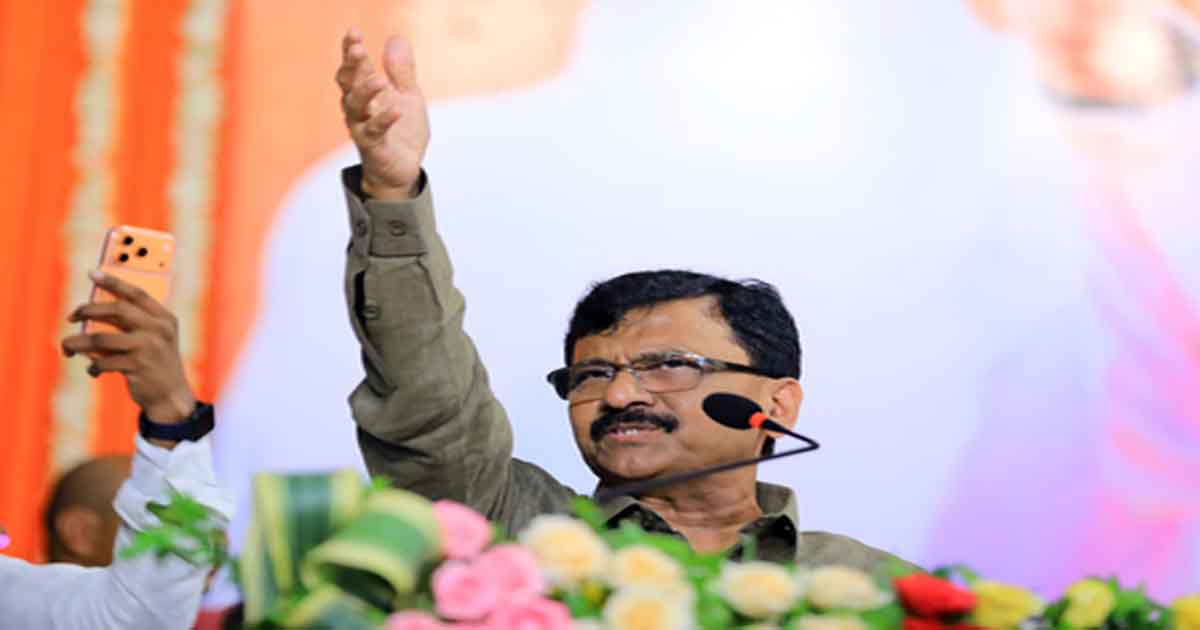
A political debate has emerged in Maharashtra following a proposal by Shiv Sena Uddhav Balasaheb Thackeray MP Sanjay Raut to rename the city of Nagpur as “Deekshabhoomi.”
Speaking to the media in Nagpur, Maharashtra Revenue Minister and Nagpur Guardian Minister Chandrashekhar Bawankule responded to the demand by stating that the global significance of Deekshabhoomi is already well known, regardless of Raut’s remarks.
Speaking to reporters in Mumbai, Raut on Friday stated that changing the city’s name would serve as a true tribute to B. R. Ambedkar, noting that Ambedkar’s historic social revolution began in Nagpur.
He challenged Maharashtra Chief Minister Devendra Fadnavis—who hails from and represents Nagpur—to initiate an official proposal for the name change.
He added that if the state government brings forward such a proposal, Shiv Sena (UBT) and party chief Uddhav Thackeray would extend their full support.
According to Raut, Dr B R Ambedkar initiated his social revolution in Nagpur, making the renaming of the city after Deekshabhoomi a fitting tribute.
He claimed that Shiv Sena (UBT) chief Uddhav Thackeray had also made suggestions regarding this, adding that his party would support the move if Chief Minister Devendra Fadnavis and the state government drafted a formal proposal.
Raut’s demand comes amid an ongoing political controversy over renaming Mumbai’s Dadar station as Chaityabhoomi.
Following confusion over whether the Dadar railway station or the Dadar Metro station was being renamed to Chaityabhoomi—which required a clarification from the Chief Minister’s Office he argued that rather than focusing solely on a smaller station, renaming an entire city like Nagpur to Deekshabhoomi would be a far greater honour to Dr Ambedkar’s legacy.
However, the Chief Minister’s Office (CMO) clarified that only the underground Metro Line 3 station is being renamed as Chaityabhoomi.
An initial official press release mistakenly stated that the Dadar railway station would be renamed, prompting a clarification from the Chief Minister’s Office (CMO) to prevent public confusion and political pushback.
During the same press interaction, Raut also criticised the state government over delays and rising costs associated with the construction of the Babasaheb Ambedkar memorial at Indu Mill in Mumbai.
Meanwhile, Minister Bawankule noted that Nagpur’s Deekshabhoomi—the sacred monument of Navayana Buddhism where Dr Ambedkar embraced Buddhism along with hundreds of thousands of followers on October 14, 1956—already enjoys international recognition.
“Every person visiting Nagpur visits Deekshabhoomi. Nagpur has established its global identity through the name of Deekshabhoomi, and the entire world knows its importance,” he stated, without committing to an official renaming proposal.
During the same media interaction, Bawankule reaffirmed the state government’s commitment to completing the B R Ambedkar Memorial at Mumbai’s Indu Mill compound.
He acknowledged that project costs have escalated and work faced temporary delays due to material shortages. However, he assured that the government has allocated the necessary funds and is working to finish the remaining construction promptly.
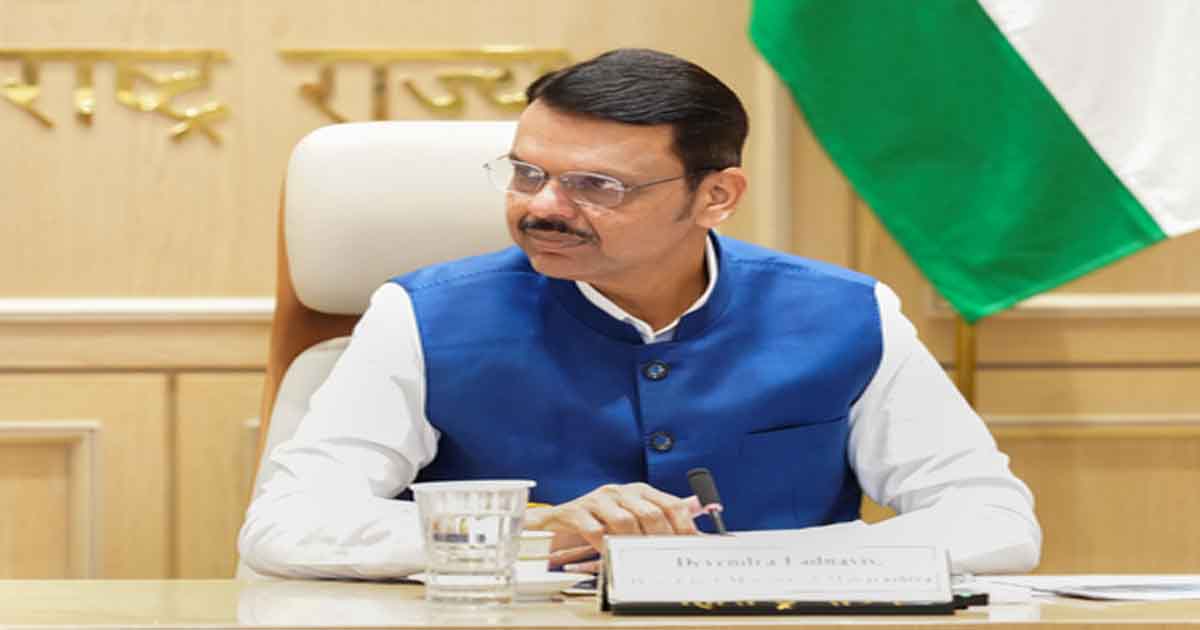
Chief Minister Devendra Fadnavis said on Friday said that long-term planning, proper land management, timely execution of infrastructure projects, and boosting agricultural productivity are vital to Maharashtra’s all-round development.
He added that the state government is actively implementing a range of development initiatives to achieve these goals.
He made the remarks during a review meeting on Maharashtra’s development projects at his official residence, held with NITI Aayog Vice Chairman Ashok Kumar Lahiri.
Thanking NITI Aayog, the Chief Minister noted that the think tank has consistently provided guidance and practical advice to the state, expressing hope for continued support going forward. He reiterated that the administration is working in mission mode to complete development works at a set pace.
During the meeting, special emphasis was placed on long-term planning for land acquisition. Lahiri urged authorities to resolve pending issues related to land acquisition, infrastructure, and agriculture on priority.
Observing that land development and sound management can generate substantial revenue, Lahiri emphasised acquiring land needed for future development projects in advance and managing it effectively.
Land available at lower costs today can become far more valuable in the future, he said, calling for an ambitious land acquisition policy framed with future generations in mind.
He also expressed satisfaction with the progress of the state government’s flagship Vadhavan Port project.
Earlier, CM Fadnavis presented the state’s long-term development roadmap—anchored around the goal of making Maharashtra a $5-trillion economy by 2047, aligned with Viksit Bharat 2047.
He further stated that the government has laid focus on developing Mumbai Metropolitan Region (MMR) into a major economic engine, with NITI Aayog partnering on the city-region growth strategy to scale MMR’s economy from $140 billion toward $300 billion by 2030 and $1 trillion long-term.
A special development plan under post-Naxal development initiatives is being implemented to turn Gadchiroli into India’s first major integrated steel hub, alongside investments in infrastructure, education, healthcare, and employment.

6.7-magnitude earthquake hits Peru, tremors felt in Lima

Fire breaks out at warehouse in Delhi Burari, 10 fire tenders rushed to spot

‘No love equals a mother love’: CM Yogi bids tearful farewell to his ma at ancestral village

Ravi Kishan speaks fluent Marathi with Madhuri Dixit, reveals he is the only one who dubbed Spider-Man in Bhojpuri

Rajasthan Panchayat Elections: Re-polling on November 22 as EVMs at 28 booths fail to open

Congress trying to protect 3 crore Bangladeshi infiltrators in voter list: HM Shah

Red Fort car blast probe exposes blueprint for spread of terror modules across India

Trump flags Iran targets as talks continue

‘Conspiracy, not accident’: NCP on Ajit Pawar death

BJP, Shiv Sena slam Mallikarjun Kharge for terming Diwali ‘Khushiyon ka Eid’
-

 Crime4 years ago
Class 10 student jumps to death in Jaipur
-

 Maharashtra2 years ago
Mumbai Local Train Update: Central Railway’s New Timetable Comes Into Effect; Check Full List Of Revised Timings & Stations
-

 Maharashtra2 years ago
Mumbai To Go Toll-Free Tonight! Maharashtra Govt Announces Complete Toll Waiver For Light Motor Vehicles At All 5 Entry Points Of City
-

 Maharashtra2 years ago
False photo of Imtiaz Jaleel’s rally, exposing the fooling conspiracy
-

 National News2 years ago
Ministry of Railways rolls out Special Drive 4.0 with focus on digitisation, cleanliness, inclusiveness and grievance redressal
-

 Maharashtra2 years ago
Maharashtra Elections 2024: Mumbai Metro & BEST Services Extended Till Midnight On Voting Day
-

 National News2 years ago
J&K: 4 Jawans Killed, 28 Injured After Bus Carrying BSF Personnel For Poll Duty Falls Into Gorge In Budgam; Terrifying Visuals Surface
-

 Crime2 years ago
Baba Siddique Murder: Mumbai Police Unable To Get Lawrence Bishnoi Custody Due To Home Ministry Order, Says Report