
National
SC to set up fresh bench to hear pleas against polygamy, nikah halala

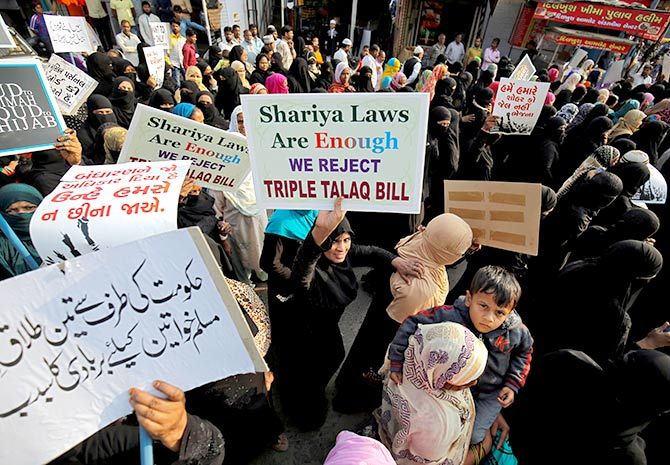
The Supreme Court on Thursday said that it will constitute a fresh five-judge constitution bench at an “appropriate stage” to take up petitions challenging the constitutional validity of polygamy and ‘nikah halala’ among Muslims.
Advocate Ashwini Upadhyay, who has filed a plea in connection with the issue, mentioned the matter before a bench headed by Chief Justice of India D.Y. Chandrachud. The bench, also comprising Justices P.S. Narasimha and J.B. Pardiwala, said that it will consider the matter. The Chief Justice said, “At an appropriate stage, I will constitute a constitution bench”.
On August 30, a five-judge constitution bench comprising Justices Indira Banerjee, Hemant Gupta, Surya Kant, M.M. Sundresh, and Sudhanshu Dhulia issued a notice on the petitions and made the National Human Rights Commission (NHRC), National Commission for Women (NCW) and the National Commission for Minorities (NCM) parties to the matter and sought their response in the matter.
However, two judges’, Justice Banerjee and Justice Gupta, have retired now, therefore there is a need to re-constitute the bench to hear a batch of pleas challenging the practices of polygamy and ‘nikah halala’.
Upadhyay’s plea said the injury caused to the women as practice of triple-talaq, polygamy and nikah-halala is violative of Articles 14, 15 and 21 of the Constitution and injurious to public order, morality, and health.
The plea sought a direction to declare Section 2 of the Muslim Personal Law (Shariat) Application Act, 1937, unconstitutional and violative of Articles 14, 15 and 21 of the Constitution, insofar as it seeks to recognise polygamy and nikah-halala.
“It is well-settled that common law has primacy over the personal laws. Hence, this court may declare that — Triple Talaq is cruelty under Section 498A of the IPC, 1860, Nikah-Halala is rape under Section 375 of the IPC,1860, and Polygamy is an offence under Section 494 of the IPC, 1860”, said Upadhyay’s plea.
In August 2017, the top court held that Muslim practice of ‘triple talaq’ is unconstitutional and struck it down by 3:2 majority. Polygamy allows a Muslim man to have four wives, and once a Muslim woman has been divorced, her husband is not permitted to take her back even if he had pronounced talaq under the influence of any intoxicant, unless his wife undergoes nikah-halala, which involves her marriage with another man, who subsequently divorces her so that her previous husband can remarry her.


New Delhi, Jan 24 : Investors are likely to remain on edge over the proposed US framework on Greenland, and near-term volatility related to this issue can continue, a report has said.
The report from Bank of Baroda said that market participants are awaiting more details that could determine whether negotiations succeed or unravel.
“Going ahead, investors are likely to await more details of the deal, as there are a few sticking points which can derail the negotiations. Hence, some volatility can be expected,” the report said.
Several analysts expect the arrangement to resemble an update of the existing security agreement between the US and Denmark, which was signed in 1951, the report noted.
Further negotiations will follow in due course which will cover areas such as US military presence in Greenland, as well as use of its mineral resources and sovereignty, said Aditi Gupta, Economist, Bank of Baroda.
US President Donald Trump has framed Washington’s interest in Greenland as driven by national security concerns, but the island’s largely unexplored mineral wealth including oil, gas and rare earth elements is of interest to US, the report said.
“The announcement of a framework deal between the US and NATO has helped to soothe investors’ nerves, however the details of the deal are still fuzzy,” it added.
Geo-political tensions escalated and markets went into turmoil after the US President intensified rhetoric to annex Greenland and threatened economic measures against European countries that oppose US plans. In response, several European nations, including France, Germany, Sweden amongst others increased military deployment in Greenland, further escalating tensions.
Trump had announced a 10 per cent additional tariff on goods from the UK, Denmark, Norway, Sweden, France, Germany, Netherlands and Finland from February 1, 2026. The rate was expected to increase to 25 per cent by June 1, 2026.
Later, he backed off from his threat of imposing tariffs on European countries along the sidelines of the World Economic Forum meeting in Davos.
Crime
Two Held With ₹68 Lakh Cash Near India-Myanmar Border In Mizoram; Heroin Worth ₹78 Lakh Seized


Aizawl: Two persons were arrested with Rs 68 lakh in cash near the India-Myanmar border in east Mizoram’s Champhai district, officials said on Thursday.
Acting on a tip-off, the Assam Rifles intercepted a vehicle at Zote village on August 11, they said.
Upon thorough checking, Rs 60 lakh in cash was recovered from two persons in the vehicle.
The duo, identified as Joseph Lalthansanga and Vanlalruati, could not state any proper reason why they were carrying such a huge amount of cash. They were subsequently handed over to the police for legal action, officials said.
In another operation, the Assam Rifles recovered 94.6 gram of heroin, worth Rs 78 lakh, from the village on Wednesday.
The drugs were handed over to the Excise and Narcotics Department, officials said.

India’s AI technology spending is projected to grow at an annualised rate of 38 per cent from 2023 to reach $10.4 billion (approximately Rs. 92 thousand crore) in 2028, a report said on Thursday.
Around 40 per cent of organisations in India have already implemented agentic AI, and close to 50 per cent are planning to use the technology within the next 12 months, IDC InfoBrief and UiPath said in a joint report.
In 2025, AI investments are focused on building the foundational infrastructure required to power transformative, high-value use cases.
According to the report, the adoption is surging, fueled by a tech-savvy workforce, expanding digital infrastructure, and government-backed initiatives.
Organisations’ spending on enterprise automation, multilingual AI models, and agentic deployments is driving this momentum further.
The benefits are already visible, as 80 per cent of Indian companies say agentic AI boosts productivity, while 73 per cent say it improves decision-making, the report said.
According to the report, agentic AI is gaining strong traction across the manufacturing, retail and wholesale, healthcare, and life sciences industries, which heavily rely on data and repetitive decision-making cycles.
“Agentic automation is rapidly redefining business operations across India. While enterprises in this region are embracing the full potential of AI agents to streamline workflows and autonomously execute complex business processes, trust and security remain barriers to widespread implementation,” said DebDeep Sengupta, Area Vice President, South Asia, UiPath.
Our agentic automation platform directly addresses these challenges, breaking down barriers to enterprise AI adoption by enhancing security and compliance, improving accuracy and reliability for agentic outcomes, Sengupta added.
About 69 per cent of Indian organisations are using agentic AI to enhance productivity, 59 per cent to drive personalised customer engagement, while 57 per cent apply it to risk and fraud detection, highlighting how agentic AI is being applied across front and back-office functions, the report highlighted.
“Becoming an AI-fueled business is no longer an option in today’s unpredictable climate. For many organisations, it’s fast becoming a strategic necessity,” said Deepika Giri, Associate Vice President, IDC Asia/Pacific.
Across the region, organisations are embracing agentic AI and agentic automation at scale, Giri added.

Building collapses in Varanasi due to firecracker explosion, two rescued

Take child sexual abuse material circulation on social media seriously, SC tells Centre

Kerala: 5,991 road accident deaths occurred on national highways in three years

SC refers Rajpal Yadav cheque bounce cases to mediation for amicable settlement

NEET-PG 2026: SC issues notice on plea seeking candidate-wise disclosure of questions, options, and answers

Rahul, Cong ecosystem want to force regime change: BJP after Neha Bora praises B’desh Gen-Z protest

BJP pays tribute to ex-President Abdul Kalam, recalls his enduring influence on generations of India’s youth

Mumbai Cyber Cell arrests 6 members of organized gang in major operation; Beware of cyber fraudsters; Digital arrest has no legal status; DCP Bajrang Bansode

INDIA bloc begins protest march against ECI

Maha Congress stages agitation against Gyanesh Kumar
-

 Crime4 years ago
Class 10 student jumps to death in Jaipur
-

 Maharashtra2 years ago
Mumbai Local Train Update: Central Railway’s New Timetable Comes Into Effect; Check Full List Of Revised Timings & Stations
-

 Maharashtra2 years ago
Mumbai To Go Toll-Free Tonight! Maharashtra Govt Announces Complete Toll Waiver For Light Motor Vehicles At All 5 Entry Points Of City
-

 Maharashtra2 years ago
False photo of Imtiaz Jaleel’s rally, exposing the fooling conspiracy
-

 National News2 years ago
Ministry of Railways rolls out Special Drive 4.0 with focus on digitisation, cleanliness, inclusiveness and grievance redressal
-

 Maharashtra2 years ago
Maharashtra Elections 2024: Mumbai Metro & BEST Services Extended Till Midnight On Voting Day
-

 National News2 years ago
J&K: 4 Jawans Killed, 28 Injured After Bus Carrying BSF Personnel For Poll Duty Falls Into Gorge In Budgam; Terrifying Visuals Surface
-

 Crime2 years ago
Baba Siddique Murder: Mumbai Police Unable To Get Lawrence Bishnoi Custody Due To Home Ministry Order, Says Report