
International News
Russia ready to continue high-level negotiations with Ukraine

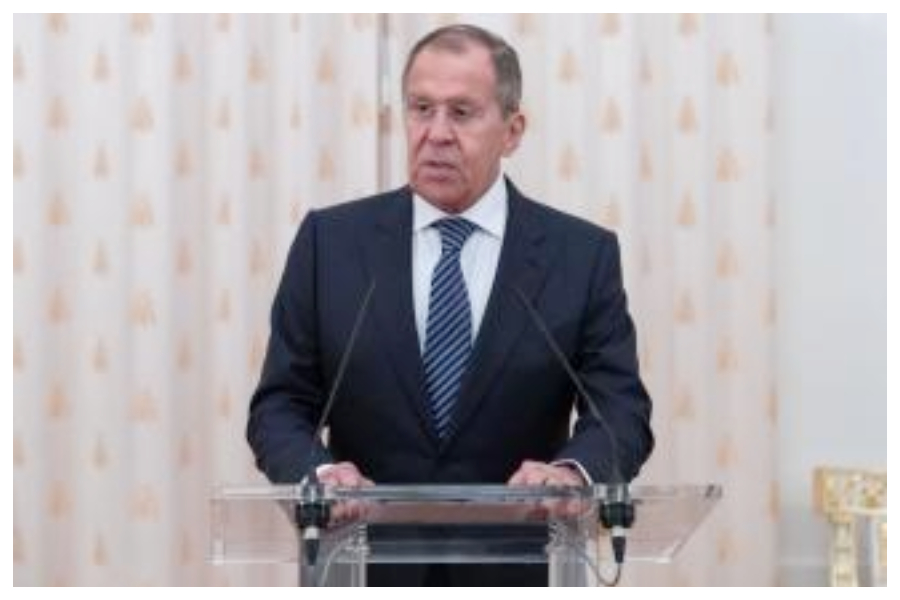
Following a new round of negotiations between Moscow and Kiev amid the ongoing war between the two sides, Russian Foreign Minister Sergei Lavrov said that his country is prepared to continue high-level trilateral negotiations with Ukraine mediated by Turkey.
“If such initiatives appear, we would only be happy to continue communicating in this format,” Xinhua news agency quoted Lavrov as saying at a press conference following his talks with Turkish counterpart Mevlut Cavusoglu in Moscow.
He explained that Russia would only be interested in talks with Ukraine if these would lead to concrete results and solve existing problems.
According to Cavusoglu, Turkey is ready to host a potential meeting between the presidents of Russia and Ukraine.
Lavrov met his Ukrainian counterpart Dmytro Kuleba in Turkey’s southern province of Antalya last week on the sidelines of an international forum.
This was the first high-level meeting between Moscow and Kiev since Russia launched a “special military operation” in Ukraine on February 24.
Earlier on Wednesday, Russian presidential aide Vladimir Medinsky said Russia and Ukraine have achieved some progress on a number of issues during the new round of talks.
“Some progress has been achieved on a number of positions, but not all. The positions of the parties are quite clear, we are moving slowly,” local media reported, citing Medinsky, who is also the head of Moscow’s delegation.
“The preservation and development of Ukraine’s neutral status, Ukraine’s demilitarisation along with a whole range of issues related to the size of the Ukrainian army are being discussed,” Medinsky said, adding that the Ukrainian side had proposed a Swedish or Austrian example of a neutral demilitarised state.
The Russia-Ukraine conflict continues on Thursday as relevant parties are working to broker a peaceful solution.
For South Africa’s Deputy President David Mabuza, diplomacy remains “the key tool” to end the Ukraine-Russia conflict and no amount of condemnation and side taking will resolve this problem.
South Africa continues to call for the parties to work together towards building trust and confidence by “intensifying existing peace mechanisms and dialogue” in order to achieve long-lasting solutions to the conflict, he said.
In another development, NATO General Secretary Jens Stoltenberg said on Wednesday in Brussels that the organization is working on resetting its deterrence and defense in the context of the Russia-Ukraine conflict.
“We face a new reality for our security. So we must reset our collective defence and deterrence for the longer term,” said Stoltenberg following the extraordinary meeting of NATO ministers of defence, of which Defence Ministers from Ukraine, Georgia, Finland and Sweden also participated.
The NATO’s military commanders have been tasked with developing options on land, in air, at sea, in the cyber space, and in space, according to Stoltenberg.
The process for the reset started with a political decision, which is now followed by a consultation of the military commanders, who should issue their advice within weeks, he said, adding that leaders of NATO member states will make a decision by June.

International News
Indian national among two people killed in attack on Saudi Arabia’s airport, two Indians injured

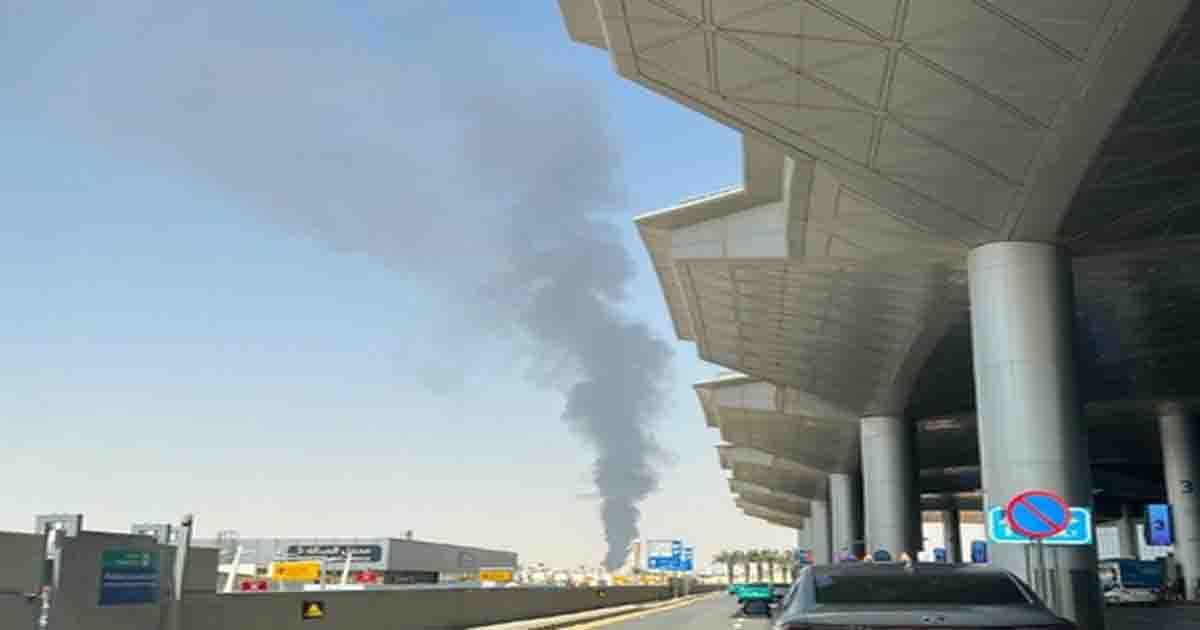
An Indian national was among two people killed, while two other Indian nationals were injured, in an attack on King Fahd International Airport in Saudi Arabia’s Dammam on Wednesday, the Indian Embassy said on Thursday.
The Indian Embassy in Saudi Arabia said that it is ascertaining further details and contacting the affected families.
“Saudi authorities have informed that one Indian national was among two people who unfortunately lost their lives in the attack on Dammam airport yesterday night and two Indian nationals were injured. We are ascertaining further details and contacting the affected families. Our thoughts and prayers are with the family and loved ones of the deceased and we wish speedy recovery of the injured,” it said in a post on X.
Earlier in the day, Saudi Arabia’s General Authority of Civil Aviation (GACA) said that two people were killed in the attack that targeted King Fahd International Airport on Wednesday, which includes one Indian resident and one Saudi citizen. It further said that eight people were injured in the attack.
In a statement shared on X, the GACA said, “Further to its earlier statement regarding the attack that targeted King Fahd International Airport in Dammam on the evening of Wednesday, October 21, 2026, corresponding to 10 Jumada Al-Awwal 1448 AH, the General Authority of Civil Aviation (GACA) clarifies that the number of fatalities has risen to (2) after an additional fatality was confirmed, involving (1) Saudi citizen and (1) Indian resident. The number of the injured remains at (8), including (1) Saudi citizen, and residents of the following nationalities: (2) Indian, (2) Yemeni, (2) Bangladeshi, and (1) Nepalese. Their injuries range from minor to critical, and they are receiving the necessary medical care at several hospitals.”
Saudi Arabia’s GACA stated that it is working in coordination with the relevant authorities to complete the damage assessment, verify the safety of the facilities, and take the necessary measures to ensure the safety of passengers and personnel and maintain the security and safety of Saudi Arabia’s civil aviation system. It further mentioned that airport operations have resumed and air traffic has returned to normal.
On Sunday, the Indian Embassy advised its nationals in Saudi Arabia to take due precautions under the prevailing situation, visit the nearest safe place in case of an aerial attack, and refrain from filming, publishing or sharing any information, photos and videos regarding the ongoing events.
“The Indian Community in Saudi Arabia is advised to take due precautions under the prevailing situation. In case of an aerial attack, immediately proceed to the nearest safe place (inside a building or an interior room away from windows), and refrain from filming, publishing, or sharing any information, photos, or videos related to the ongoing events,” it posted on X.
The Embassy said that its officials continue to visit hospitals where Indian nationals are undergoing treatment and are in constant touch with their families and providing necessary assistance.
International News
First Russian tanker carrying 40,000 tonnes of diesel to depart in 2-3 days: Putin
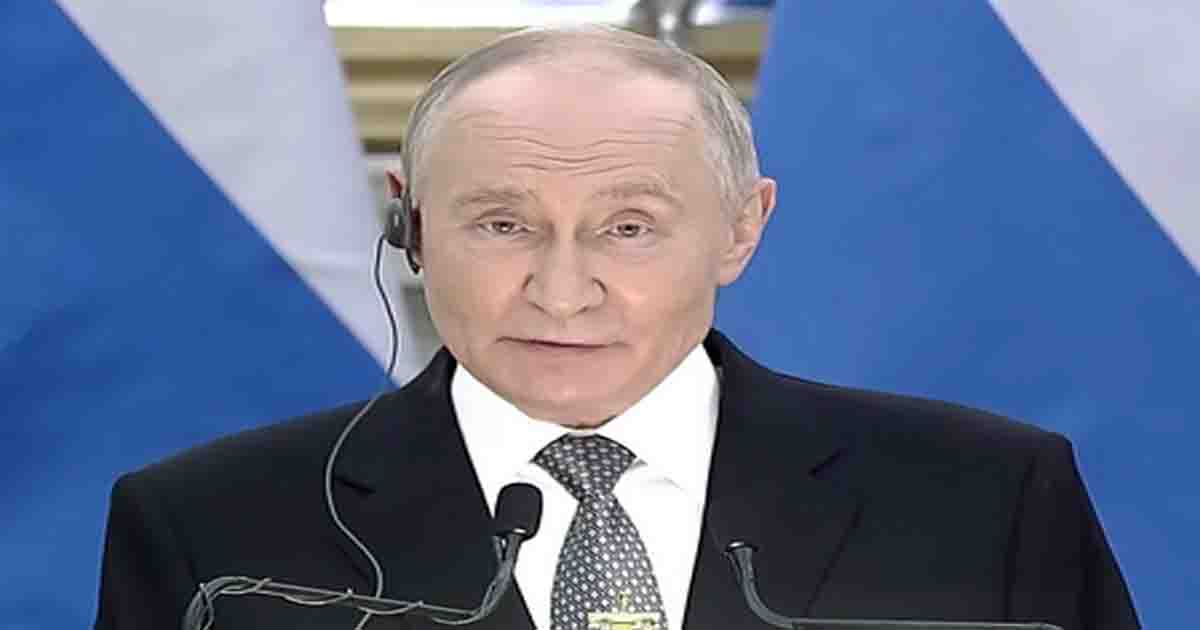
The first tanker carrying 40,000 tonnes of Russian diesel fuel will depart in two to three days, Russian President Vladimir Putin said Wednesday.
Russia is currently preparing shipments of several tankers carrying diesel fuel, Putin said during his meeting with US special envoy Steve Witkoff at the Konstantinovsky Palace in St. Petersburg.
The fuel is for the global and US markets, Xinhua news agency reported.
Putin held a telephone conversation with US President Donald Trump on October 9, during which considerable attention was paid to prospects for resolving the Ukraine crisis, the Kremlin said.
On global energy developments, Russia reaffirmed its readiness to supply oil and petroleum products to US and global markets, according to the Kremlin.
On Tuesday, Ukrainian President Volodymyr Zelensky discussed proposals for various ceasefire formats with Witkoff in Oslo, Norway, Ukraine’s state-run Ukrinform news agency reported.
The meeting was also attended by Norwegian Prime Minister Jonas Gahr Store and Finnish President Alexander Stubb.
Speaking after the meeting, Zelensky said the talks also covered security guarantees for Ukraine and the country’s recovery.
Following the meeting, Witkoff travelled to St. Petersburg in Russia, where he met Russian leadership to discuss peace efforts.
Global energy markets have faced sustained pressure since the outbreak of hostilities in the Middle East earlier this year. The conflict has triggered what the International Energy Agency termed the “largest supply disruption” in the history of global fuel markets.
Last week, US President Donald Trump said that “massive” oil, gas and mineral exploration is “getting ready” to begin in Greenland.
Writing on his Truth Social platform, Trump suggested that experts believe the Arctic island owns an amount of “easily available oil” which is “far greater than that of almost any land, anywhere in the world.”
He did not provide any specific estimates or elaborate on the exploration plans.
Trump also said any future attack on the United States would “have to come across Greenland, where our Defence will routinely knock down drones, missiles, or any other form of weapon not yet even conceived.”
Trump’s remarks followed a wide-ranging deal signed in late September by the United States, Denmark and Greenland to expand the US military presence on the island.
The deal came after months of pressure from Trump, who repeatedly called for acquiring the autonomous Danish territory and did not rule out the use of military or economic means. The proposal has drawn strong opposition from NATO allies and Greenlanders.
International News
EAM Jaishankar and US counterpart Rubio discuss advancing ties, regional developments
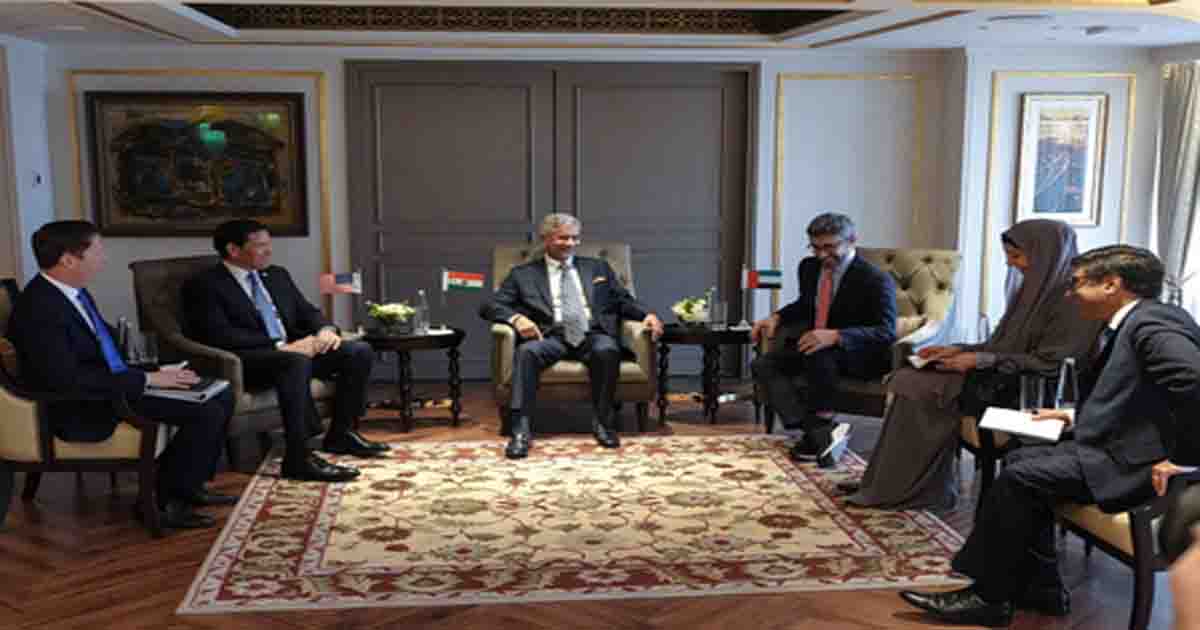
External Affairs Minister (EAM) S Jaishankar held a meeting with US Secretary of State Marco Rubio in Mumbai on Tuesday, with discussions focusing on further advancing bilateral ties.
During the meeting, the two ministers exchanged views on regional developments. Foreign Secretary Vikram Misri, US Ambassador to India Sergio Gor and other officials were also present at the meeting.
“Pleased to meet US Marco Rubio in Mumbai today. We shared views on further advancement of our ties, focusing on trade, energy, technology, defence and people-to-people ties. Also exchanged views on regional developments,” EAM Jaishankar stated on X after the meting.
Rubio said that he and EAM Jaishankar discussed energy security and defence cooperation.
“In Mumbai, Indian External Affairs Minister S Jaishankar and I discussed energy security and defense cooperation while reaffirming the importance of advancing the U.S.-India strategic partnership,” the US Secretary of State posted on X.
Earlier, EAM Jaishankar, Marco Rubio and UAE Foreign Minister Sheikh Abdullah bin Zayed Al Nahyan held a meeting in Mumbai, with discussions held on regional energy security and advancing shared economic priorities.
“It was great to meet with Indian External Affairs Minister S Jaishankar and UAE Foreign Minister Sheikh Abdullah bin Zayed Al Nahyan to discuss regional energy security and advance our shared economic priorities,” Rubio stated on X after the meeting.
Following the meeting, Ambassador Gor also took to X and wrote: “The US, India, and UAE have real opportunities to advance cooperation on energy, trade, technology, and regional connectivity. Marco Rubio, S Jaishankar, and UAE Foreign Minister Sheikh Abdullah bin Zayed Al Nahyan in Mumbai for a discussion on turning our close ties into concrete results!”
Earlier in the day, Marco Rubio arrived in Mumbai for an official visit to India. For his visit to Mumbai, Rubio is accompanied by his wife, Jeanette Rubio and US Ambassador to India Sergio Gor.
The Ministry of External Affairs (MEA) extended a warm welcome to Rubio as he arrived in Mumbai for his second visit to India, noting that it provides an opportunity to further advance cooperation across various pillars of the India-US Comprehensive Global Strategic Partnership.
“Welcome to Mumbai, US Secretary of State Marco Rubio, on your second visit to India! He was received by Shri Ashish Shelar, Minister of Culture, Electronics, IT and AI, Government of Maharashtra at the airport. The visit provides an opportunity to further advance cooperation across the various pillars of the India-US Comprehensive Global Strategic Partnership,” the MEA posted on X.
After concluding his engagements in Mumbai, Rubio will travel to Gujarat’s Jamnagar for talks that will include “enhanced energy cooperation”, the US State Department said.

‘Azam Khan is, and will remain vital to SP’: Akhilesh after meeting jailed leader

Adani Energy Solutions profit more than doubles to Rs 1,364 crore in Q2, revenue rises 51 pc

Mika Singh recalls gatecrashing Amitabh Bachchan’s party, Big B says Jaya Bachchan has kept doors open for all

Shahid Kapoor ‘promptly breaks out of character’ after wrapping up ‘Farzi 2’ shoot

Jantar Mantar protest: Saurav Das, Ranka, Shinde seek more time to appear before police

Rahul, Cong ecosystem want to force regime change: BJP after Neha Bora praises B’desh Gen-Z protest

Attack on democratic rights: INDIA Bloc leaders on detentions of anti-ECI protestors

BJP pays tribute to ex-President Abdul Kalam, recalls his enduring influence on generations of India’s youth

INDIA bloc begins protest march against ECI

Maha Congress stages agitation against Gyanesh Kumar
-

 Crime4 years ago
Class 10 student jumps to death in Jaipur
-

 Maharashtra2 years ago
Mumbai Local Train Update: Central Railway’s New Timetable Comes Into Effect; Check Full List Of Revised Timings & Stations
-

 Maharashtra2 years ago
Mumbai To Go Toll-Free Tonight! Maharashtra Govt Announces Complete Toll Waiver For Light Motor Vehicles At All 5 Entry Points Of City
-

 Maharashtra2 years ago
False photo of Imtiaz Jaleel’s rally, exposing the fooling conspiracy
-

 National News2 years ago
Ministry of Railways rolls out Special Drive 4.0 with focus on digitisation, cleanliness, inclusiveness and grievance redressal
-

 Maharashtra2 years ago
Maharashtra Elections 2024: Mumbai Metro & BEST Services Extended Till Midnight On Voting Day
-

 National News2 years ago
J&K: 4 Jawans Killed, 28 Injured After Bus Carrying BSF Personnel For Poll Duty Falls Into Gorge In Budgam; Terrifying Visuals Surface
-

 Crime2 years ago
Baba Siddique Murder: Mumbai Police Unable To Get Lawrence Bishnoi Custody Due To Home Ministry Order, Says Report