
Maharashtra
RTI: Modi govt ‘crushes’ hinterland terror, only 7 attacks in 8 years

The government of Prime Minister Narendra Modi has come out with flying colours in curbing hinterland terror, with only seven such extremist attacks notched in the past over eight years of the NDA rule, a RTI reply has revealed here.
Besides, there has been minimal loss of lives, 11 civilians and 11 security personnel killed, and injuries sustained by 52 civilians and 44 by security forces, from 2014-till date.
These and other significant revelations came in a RTI reply by the Union Home Ministry to Pune-based activist Prafful Sarda.
“I had sought details of all terror strikes that took place in India, from 2004 till date, implying, during the UPA tenure of former Prime Minister Dr. Manmohan Singh and the NDA government of Prime Minister Modi,” Sarda said.
The RTI reply provides startling details of the UPA regime from 2004-2013, a total of 42 hinterland terror attacks killing 853 civilians and 18 security personnel, and leaving 3,147 civilians injured, with zero casualties on the security side.
The data indicates that 2008 and 2006 were the worst years in terms of extremist strikes in the hinterlands, recording 306 and 238 civilian deaths plus 833 and 1,266 civilian injuries, respectively.
In 2008, which includes the dastardly 26/11 Mumbai terror attacks, 18 security personnel were killed and 9 terrorists from Pakistan were killed while one Ajmal Kasab was caught alive, tried and secretly hanged on November 21, 2012.
The other major incidents of 2008 include: attacks in Rampur (Uttar Pradesh), Jaipur in May, Bengaluru and Ahmedabad in July, Delhi and Mehrauli, Malegaon and Gujarat, all in September, Agartala, Imphal and Assam, all in October.
The 2006 data comprises the terror strikes in Ahmedabad railway station (February 19), Mumbai 7/11 serial bomb blasts in suburban trains (July 11), and the Malegaon blasts (September 8).
The RTI reply by the Ministry’s Director (CT-I) & CPIO Chanchal Yadav had provided the details pertaining only to terror hits or bomb blasts in the �hinterland’ of India, or the civilian areas.
“Its puzzling why the officer restricted the reply to �hinterland’ regions, and conveniently omitted the crucial terror activities in the border states. So, this doesn’t reveal the true picture of how many times the country was really targeted between 2014-till date both on the borders and interiors,” said Sarda.
The activist pointed out that the Centre has named the state �police’ as the first responder to any terrorist/criminal activities, and thereby appears to “club together terror-crime incidents” in the country.
Sarda said the CPIO has directed the RTI queries for Jammu & Kashmir, Left Wing Extremism (Maoist/Naxalism) and North-East to the concerned departments, but their responses are awaited.
However, the Centre has taken various critical administartive and legislative measures to rein in hinterland terrorism in the past 18 years.
The initiatives are: augmenting the Central Armed Police strength, capacity building of special forces, modernising the (state) Police forces, tighter immigration controls, upgrading intelligence set-up and coastal security, and giving more teeth to the UAP and NIA acts.


Maharashtra
‘Everything exposed’: CM Fadnavis targets Cong, CJP over Prashant Bhushan’s ‘regime change’ remarks

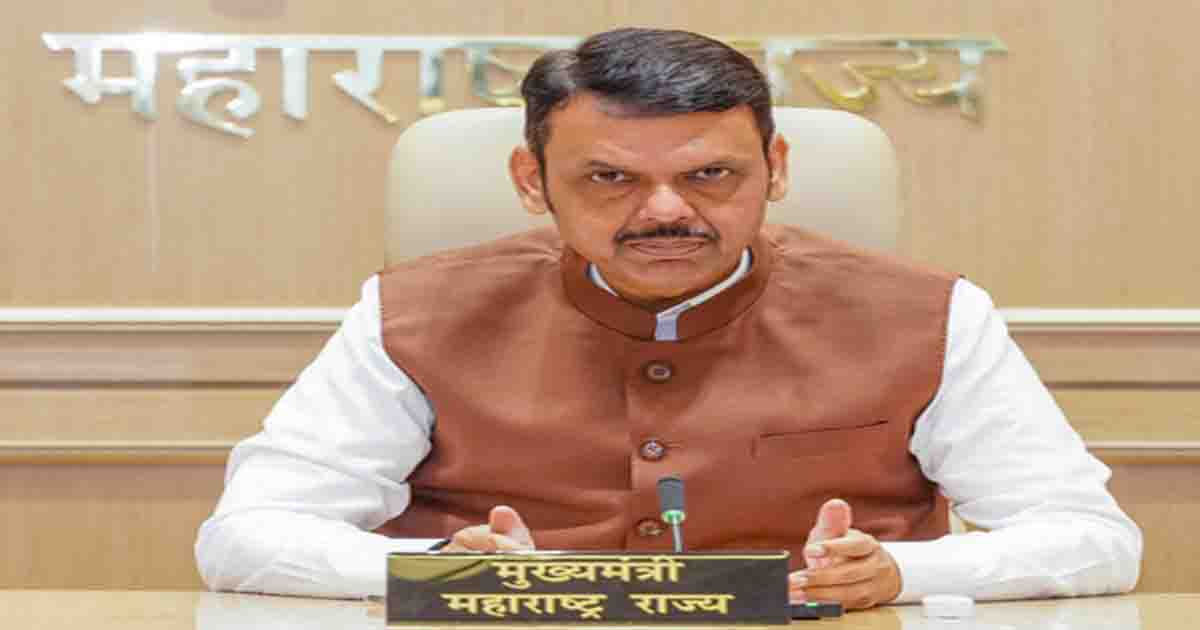
Mumbai, Oct 16: Maharashtra Chief Minister Devendra Fadnavis on Friday launched a scathing attack on the opposition and the CJP, declaring that “the hidden truth is finally out” following the controversial “regime change” statement by senior advocate Prashant Bhushan.
Taking to social media platform X, CM Fadnavis shared a video clip of Bhushan’s remarks, captioning it: “It’s done, bro, everything is exposed!! After all, it was all about ‘Regime Change’.. the hidden thoughts have finally slipped onto the lips.”
CM Fadnavis accused the opposition of using protests as a smokescreen to fuel anarchy and seize power. He alleged that various demonstrations — whether involving students or farmers — alongside campaigns spreading caste and linguistic discord or attempting to tarnish India’s constitutional institutions, are all part of a calculated political game aimed at capturing the seat of power.
The row erupted after Prashant Bhushan, during a press conference alongside CJP representatives and figures like Neha Bora (who previously surfaced during NEET-related protests), openly discussed objectives tied to a “regime change”.
The remarks sparked immediate political fallout. Defence Minister Rajnath Singh also weighed in heavily on the issue, accusing the opposition of exploiting the youth for political mileage and attempting to engineer a Bangladesh-style upheaval in India by undermining key democratic and constitutional institutions.
Following intense backlash and accusations of plotting systemic chaos under the guise of peaceful activism, CJP representatives, including Abhijeet Dipke, scrambled to issue clarifications. In a late-night press conference, Dipke backpedalled on the remarks, asserting that their protests were not aimed at regime change, but rather confined to demanding the resignation of Chief Election Commissioner Gyanesh Kumar. However, ruling coalition leaders maintain that the slip of the tongue has exposed the opposition’s core agenda, providing the Bharatiya Janata Party (BJP) with fresh ammunition to question the motives behind ongoing anti-establishment protests.
Earlier, CM Fadnavis criticised opposition and activist groups while defending Chief Justice of India (CJI) Surya Kant’s decision to decline a meeting with protesters.
Speaking during a media interaction, he accused opposition parties and outfits of running a systematic design to undermine India’s core constitutional institutions and usher in an “ultra-Leftist” brand of anarchy.
Defending the CJI’s refusal to meet demonstrators, CM Fadnavis asked, “Which Constitution states that the Chief Justice of India should meet protesters and marchers?” He emphasised that the CJI acted well within his constitutional rights and praised the judiciary’s stance that grievances must be legally addressed inside courtrooms rather than through street pressure.
CM Fadnavis alleged that a well-crafted conspiracy is underway to systematically devalue independent pillars of democracy, such as the Supreme Court, the Election Commission, and the Reserve Bank of India (RBI). He noted that the ultimate goal of these groups is to convince citizens that constitutional frameworks cannot deliver justice.
Commenting on recent demonstrations — including those by Congress and civil groups — CM Fadnavis distinguished between lawful democratic protest and chaos. Pointing to instances where crowds allegedly crossed the line with provocative sloganeering, he asserted that when thousands with criminal records mobilise to disrupt public order, it amounts to outright anarchy rather than peaceful dissent.
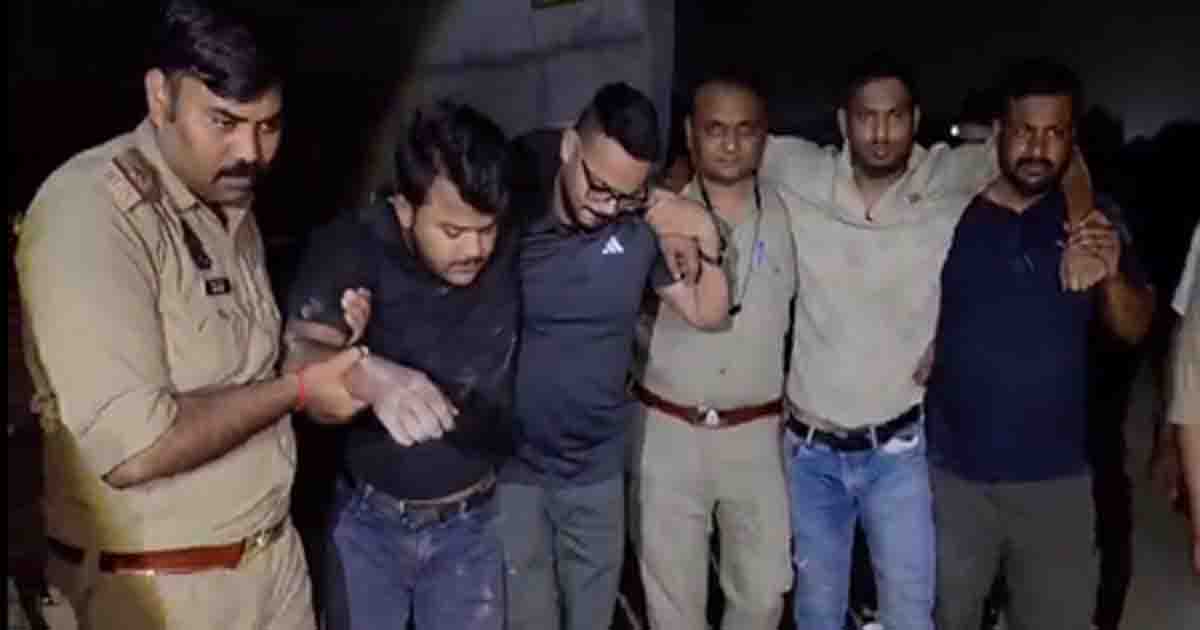
Kanpur, Oct 16: Two wanted accused who were absconding in connection with a cow slaughter incident in the Nawabganj police station area were injured in a police encounter in the Fazalganj police station area in Uttar Pradesh’s Kanpur on Friday.
Police arrested both accused and admitted them to a hospital for treatment. They are being interrogated in connection with the case.
According to police, the cow slaughter incident occurred during the intervening night of October 7 and 8, in the Nawabganj police station area. After cow remains were recovered from the spot, police registered a case under relevant sections of the law.
Teams comprising the Special Weapons and Tactics (SWAT) unit, surveillance, cyber and Nawabganj police were formed to investigate the case. Police arrested one accused on Thursday, while the search for the remaining suspects continued.
On October 16, police received information about the presence of two wanted accused in the Fazalganj police station area. Acting on the tip-off, teams from Fazalganj police station, SWAT, surveillance and the cyber unit jointly launched a search operation and cordoned off the area.
Police claimed that the accused opened fire at the police team with the intention of killing the personnel. In retaliatory firing, both accused sustained gunshot injuries.
The injured accused were subsequently taken to a hospital for treatment. Deputy Commissioner of Police (Central) Atul Srivastava said the accused were being interrogated and that further legal action would be taken based on the facts and evidence gathered during the investigation.
Separately, on October 15, two veterinary officers were suspended over alleged serious negligence in connection with the recent deaths of cattle during heavy rainfall in Badaun.
Departmental action was ordered against the Chief Veterinary Officer, while the Divisional Additional Director was directed to submit a response within 15 days. Suspension and disciplinary action were also recommended against the Block Development Officers of the two blocks concerned.
Maharashtra
‘Intellectual Bankruptcy’: Shiv Sena(UBT) mocks Mahayuti govt’s Rs 5,000 Diwali gift to farmers in ‘Samaana’
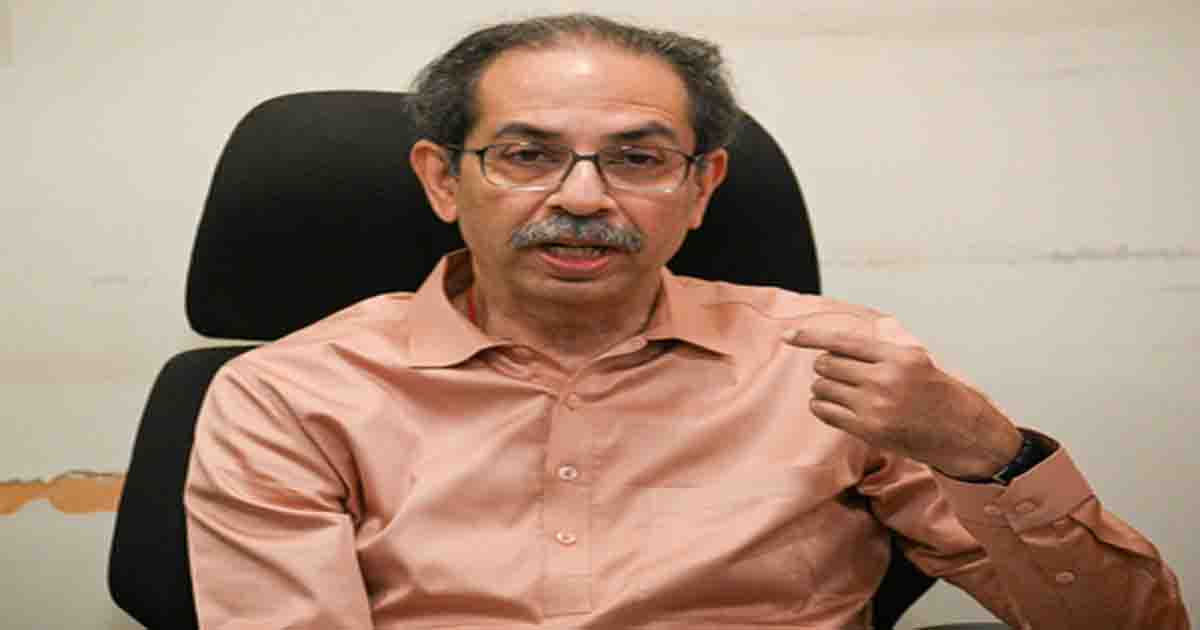
Mumbai, Oct 16: The Shiv Sena Uddhav Balasaheb Thackeray on Friday attacked the Mahayuti government led by Devendra Fadnavis, labelling its festive financial assistance of Rs 5,000 for farmers and Rs 2,000 for Anganwadi workers as an “insult” to the working class.
It said that amid soaring inflation and widespread drought, the announced package is nothing short of a cruel joke. By announcing these as “Diwali gift, the Fadnavis government has “bankrupted its own intellect”.
The Thackeray camp in the party’s mouthpiece, ‘Samaana’, said that over 300 talukas in the state have been officially declared drought-hit, leaving rural families grappling with severe water shortages, failed kharif and rabi crops, and mounting debts. Instead of substantive relief, the administration is merely holding meetings and making empty declarations.
The editorial highlighted that the Rs 5,000 being distributed to farmers is not a special grant, but rather an advance drawn from funds expected from the Central government. It criticised the government for rebranding an advance payment as a benevolent “Diwali gift” to take undeserved credit.
Questioning how a family can celebrate a festival or buy basic essentials and clothing with such a small sum during a massive inflation wave, the editorial labelled the payout a mockery of the hardships faced by the agricultural community and Anganwadi workers. “How to rub salt into the wounds of the poor should be learned only from Chief Minister Devendra Fadnavis. The fire of drought is blazing. The lives of people and cattle are being scorched, and the government is making a dry rain of meetings and announcements on drought relief. Moreover, the whole affair is such that the helping hand is a span wide, but its publicity is a cubit wide,” remarked the editorial.
The editorial further stated that CM Fadnavis has done a great favour to the drought-affected people. “This bountiful assistance is being trumpeted so much that people might mistake this five-thousand figure for five lakhs. Fadnavis and his people must think that this five-thousand assistance will bring a tide of joy into the lives of farmers, make farming families happy, and sweeten their Diwali. If they think that 1.25 crore farmers will benefit from this five-thousand assistance, then they do not know the plight of the devastated farming brethren of rural Maharashtra,” it commented.
The Uddhav Thackeray-led Shiv Sena drew a sharp contrast between the state’s financial allocations, pointing out that while districts receive hefty sums of Rs 50 lakh for events like the Sewa Sankalp Abhiyan, only nominal pittances are doled out to drought-stricken farmers and grassroots workers. “This is not assistance; it is a mockery of their plight and a cruel joke on the ongoing drought,” the editorial said, summing up the widespread discontent in rural Maharashtra.

Kajol gives us a glimpse of today’s Anjali as ‘Kuch Kuch Hota Hai’ turns 28 years old

India-US trade deal 98-99 percent done: US official

CJP Tiranga march: Delhi Police circulate list of rules for respecting national flag

NHRC seeks reports on assault on woman in Gujarat, contaminated borewell water in Maharashtra

‘With arrival of SSR, SIR has become zero’: Akhilesh Yadav’s swipe at EC’s new revision exercise in 17 states

Rahul, Cong ecosystem want to force regime change: BJP after Neha Bora praises B’desh Gen-Z protest

BJP pays tribute to ex-President Abdul Kalam, recalls his enduring influence on generations of India’s youth

Mumbai Cyber Cell arrests 6 members of organized gang in major operation; Beware of cyber fraudsters; Digital arrest has no legal status; DCP Bajrang Bansode

INDIA bloc begins protest march against ECI

Maha Congress stages agitation against Gyanesh Kumar
-

 Crime4 years ago
Class 10 student jumps to death in Jaipur
-

 Maharashtra2 years ago
Mumbai Local Train Update: Central Railway’s New Timetable Comes Into Effect; Check Full List Of Revised Timings & Stations
-

 Maharashtra2 years ago
Mumbai To Go Toll-Free Tonight! Maharashtra Govt Announces Complete Toll Waiver For Light Motor Vehicles At All 5 Entry Points Of City
-

 Maharashtra2 years ago
False photo of Imtiaz Jaleel’s rally, exposing the fooling conspiracy
-

 National News2 years ago
Ministry of Railways rolls out Special Drive 4.0 with focus on digitisation, cleanliness, inclusiveness and grievance redressal
-

 Maharashtra2 years ago
Maharashtra Elections 2024: Mumbai Metro & BEST Services Extended Till Midnight On Voting Day
-

 National News2 years ago
J&K: 4 Jawans Killed, 28 Injured After Bus Carrying BSF Personnel For Poll Duty Falls Into Gorge In Budgam; Terrifying Visuals Surface
-

 Crime2 years ago
Baba Siddique Murder: Mumbai Police Unable To Get Lawrence Bishnoi Custody Due To Home Ministry Order, Says Report