
National News
Prime Minister Modi extends greetings on National Voters’ Day

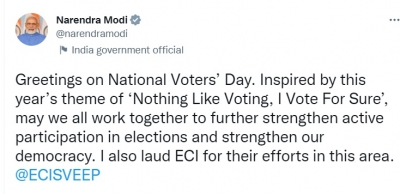
Prime Minister Narendra Modi on Wednesday greeted people of the country on National Voters’ Day.
“Greetings on National Voters’ Day. Inspired by this year’s theme of ‘Nothing Like Voting, I Vote For Sure’, may we all work together to further strengthen active participation in elections and strengthen our democracy. I also laud ECI for their efforts in this area,” he tweeted.
The Election Commission of India (ECI) is celebrating the 13th National Voters’ Day today.
On this occasion, President Droupadi Murmu will be the chief guest at a function being organised by the poll body.
Law Minister Kiren Rijiju will grace the function as guest of honour.
The theme for this year’s National Voters’ Day, ‘Nothing Like Voting, I Vote for Sure’ is dedicated to voters which conveys individual’s feeling and aspiration towards participation in the electoral process through power of their vote.


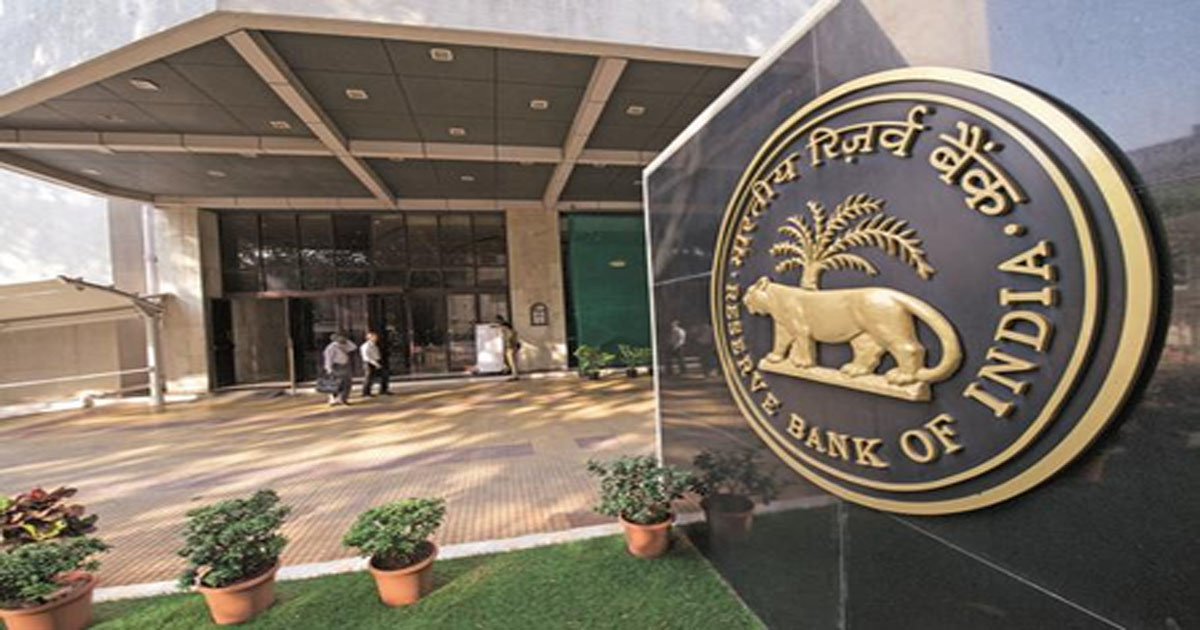
New Delhi, March 19: The Reserve Bank of India (RBI) on Thursday said that HDFC Bank is a Domestic Systemically Important Bank (D-SIB) with sound financials, professionally run board and competent management team, after the resignation of part-time chairman Atanu Chakraborty over alleged “ethical differences” in one of the biggest private lenders.
The Central Bank said in a statement that it has taken note of the recent developments in HDFC Bank.
“A transition arrangement as requested by the Bank has been approved by Reserve Bank as regards the position of Part Time Chairman of the Bank,” said the RBI.
It added that basis its periodical assessment, “there are no material concerns on record as regards its conduct or governance”.
“The bank remains well-capitalised and the financial position of the bank remains satisfactory with sufficient liquidity. Reserve Bank will continue to engage with the Board and management on the way forward,” said the Central Bank in a statement.
Chakraborty had resigned citing differences with the lender over “values and ethics”.
The RBI approved the appointment of long-time group insider Keki Mistry as an interim part-time chairman for three months, effective March 19, the bank said in its exchange filing.
Mistry sought to reassure investors and analysts that there are “no major issues” at the bank following the sudden resignation of Chakraborty, even as the bank shares came under pressure.
Speaking on a conference call, Mistry said he would not have accepted the interim role if it did not align with his values and principles. “I would not have taken this responsibility at the age of 71 if it is not aligning to my values and principles,” Mistry said.
There was no power struggle in the bank as you put it, he said, adding that “there was nothing substantive”.
He further stated that the fact that RBI are comfortable with what is going on in the bank is reflected in the fact that, “within a short period of time, they approved my appointment for three months”.
National News
Fugitive Underworld Don Dawood Ibrahim’s Ancestral Plots In Ratnagiri Finally Find A Buyer

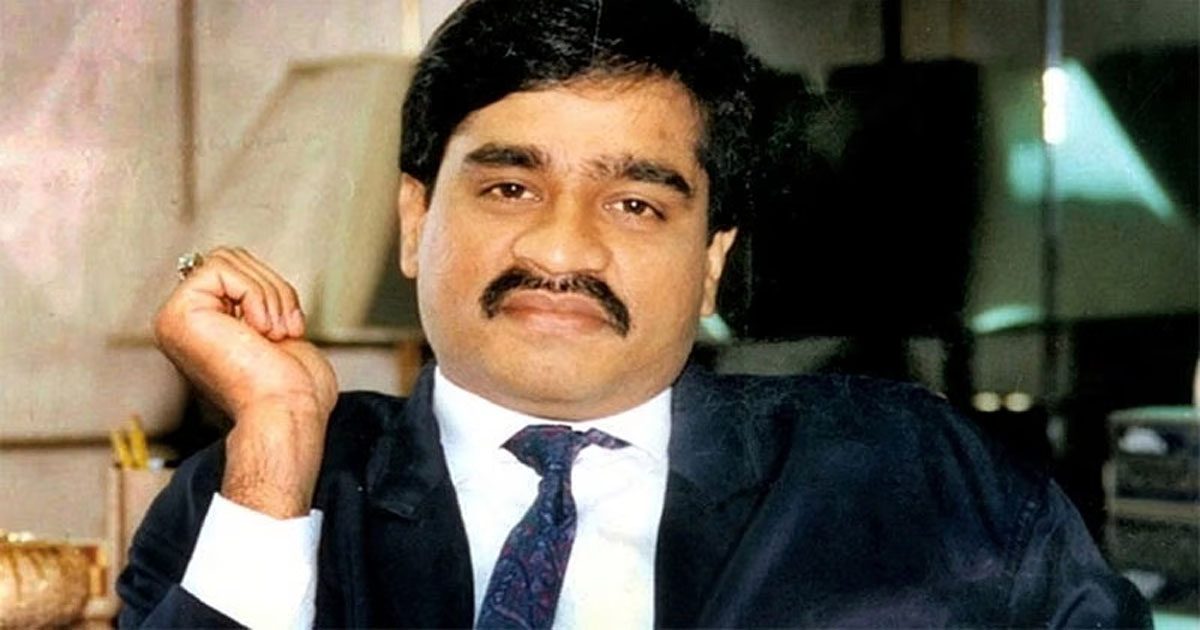
Mumbai: Multiple ancestral properties linked to fugitive underworld don Dawood Ibrahim have found a prospective buyer in a recent government-mandated auction held on March 5, with a Mumbai-based bidder emerging as the highest bidder for all four agricultural land parcels in Ratnagiri district.
The properties were auctioned by the Centre under the Smugglers and Foreign Exchange Manipulators (Forfeiture of Property) Act (SAFEMA), marking a significant step in the long-pending disposal of assets linked to the Kaskar family.
A notice issued by the competent authority under SAFEMA had listed four agricultural land parcels located in Mumbake village in Khed taluka of Ratnagiri, the native place of Dawood. Several of these properties were originally registered in the name of his mother, Amina Bi, officials said.
Officials added that the Mumbai-based bidder, whose identity has not been formally disclosed, is required to complete the payment by early April 2026 in accordance with auction norms. The transaction will be subject to final confirmation by the competent authority, following which the forfeiture and disposal process for the Ratnagiri cluster is expected to be concluded.
The March 5 auction follows an earlier attempt in November 2025 that failed to attract any bidders despite a reduction of nearly 30% in reserve prices. One of the key parcels, survey no. 442 (Hissa No.13-B) with a reserve price of Rs9.41 lakhs was auctioned for over Rs10 lakh, the highest bid. Two bidders participated for this property, including the Mumbai-based bidder who went on to secure all four parcels, and another bidder from Ratnagiri.
The remaining three agricultural land parcels, including survey nos. 533, 453 (Hissa No. 13-B), and 617 (Hissa No. 13-B), with reserve prices ranging from Rs15,440 to over Rs8 lakh, saw only one bidder, who went on to win the bids. Officials said all four properties belonging to the underworld don were auctioned off by SAFEMA.
The official confirmed these properties have been put up for auction multiple times over the past decade, including notable attempts in 2017, 2020, 2024 and 2025, many of which either saw poor participation or failed to attract bidders.
Survey No. 442 and 453, being larger agricultural tracts, were part of earlier high-profile auction rounds but failed to sell at least two to three times due to lack of bidders. Survey 533, a smaller ancestral plot, also remained unsold in previous attempts due to limited interest. Survey 617, although small, saw erratic auction outcomes, including one instance of unusually high bidding, but has otherwise been part of repeated cycles.
The four parcels form part of the Kaskar family’s ancestral holdings attached in the 1990s and later forfeited to the Centre under SAFEMA as part of action against assets linked to organised criminal activities, including those associated with the 1993 Mumbai blasts.
“Despite clear titles backed by the government, factors such as stigma and location have historically affected buyer participation,” an official said.
The latest auction also comes against the backdrop of earlier high-profile bids for Dawood-linked properties, particularly by Delhi-based lawyer Ajay Srivastava, who participated in multiple SAFEMA auctions in two decades.
Srivastava first drew attention in 2001 after successfully bidding for two industrial units in Nagpada. However, he later became embroiled in a prolonged legal dispute with heirs of Haseena Parkar and is yet to secure physical possession, with the matter pending before the Bombay High Court.
He continued to participate in auctions, including the purchase of Ibrahim’s ancestral bungalow in Mumbake village in 2020, where he later set up a trust. In 2024, he drew attention after placing a bid worth Rs2.01 crore for a small agricultural plot (Survey 617) with a reserve price of just Rs15,440, though the bid was later cancelled due to non-payment, leading to a fresh auction this month.
National News
Operation Sindoor impact: ISI moves from ideology to cash, eyes pan-India logistics network

Post Operation Sindoor, the biggest headache for Pakistan has been recruitments. Prior to the operation carried out by the Indian armed forces that took down terror infrastructure, recruitments into groups such as the Jaish-e-Mohammad and Lashkar-e-Tayiba were free flowing.
An Intelligence assessment says that recruitments have fallen by nearly 30 to 40 per cent. This has led to the ISI changing its strategy wherein, the recruitments are more driven by money rather than ideology.
This strategy remains the same when it comes to recruiting for Islamic groups such as the Jaish-e-Mohammad and Lashkar-e-Tayiba, the espionage network and also the Khalistan terror groups, an official said.
The ISI realised that ideology is not exactly a driving force any longer. The damage that Operation Sindoor has done to the morale of terror groups has automatically led to the recruitment drives falling sharply.
The ISI has, however, managed to find some success when it comes to drawing youth by luring them with money. What is interesting, the ISI is ready to recruit the youth irrespective of their religion, faith or caste.
The ISI’s handlers have been scouting for youth in large numbers and has been offering them huge sums of money.
The ISI is ready to spend anything in the range of Rs 10,000 to Rs 200,000 depending on the role that has been assigned to the one who is being recruited.
An Intelligence Bureau official said that the lure of money has been working to some extent for the ISI.
The target audience are students and those who are in need of money. However, an interesting aspect that has cropped up during the multiple investigations that are being carried out is that the ISI has managed to tap more into those who want to lead a high-profile lifestyle.
The traction for this strategy has caught on more for those wanting to better their lifestyle rather than those who are in need of money.
An Intelligence Bureau official says that the ISI has instructed its handlers and recruiters not to bother about the religion of the people they are recruiting. This means that a module or a network would have people from various faiths.
This ensures that these modules come lesser under the radar, the official added.
The ISI implemented the money over ideology strategy first for the Khalistan terror networks. It realised that the movement is not getting enough traction.
The ISI has been trying to exploit the drug problem that is rampant in Punjab. It is reaching out to the youth and offering large sums of money, so that they can pay to buy the drugs that flow into Punjab.
The Intelligence agencies warn that this recruitment drive is only going to get bigger. The target audience is huge and the ISI is recruiting people from all faiths to run the espionage network and also to provide logistic support to terror groups.
There is a particular concern at the border areas, where Pakistani elements are trying to dig out as much information as possible on the movement of troops and military installations.
In the major cities the recruitment drive is more focussed on roping in youth to provide logistic support for the terror groups. These youth are paid money to shoot videos of government offices, the buildings that house the judiciary, police stations, railway stations among others.
Another official said that in a nutshell, if one looks at the pattern, the ISI is clearly not aiming for an immediate strike.
It is biding time trying to build a pan-India network and also gather as much data as possible.
Currently the Pakistanis are busy with their war against the Afghan Taliban, Tehreek-e-Taliban Pakistan (TTP) and the Balochistan Liberation Army (BLA).
The Pakistan Army is getting assistance from terror groups such as the Islamic State Khorasan Province (ISKP), Jaish-e-Mohammad and Lashkar-e-Tayiba.
The strategy that the ISI has adopted for recruitments will not only revive the agency, but also all the other terror groups.
The ISI is hoping that by the time these groups revive, it would have a minefield of information and an army of recruits in India.
The Intelligence agencies have also advised the police to keep a close tab on influencers.
The Indian agencies had busted a huge network of spies, which comprised influencers with a large following.
The ISI would look to target them once again and then try and win a narrative battle against India, Intelligence Bureau officials say.

No material concerns, HDFC Bank has sound financials: RBI

Fugitive Underworld Don Dawood Ibrahim’s Ancestral Plots In Ratnagiri Finally Find A Buyer

Trump says US ‘unaware’ of Israeli strike on South Pars, warns Iran on Qatar

Sensex, Nifty crash in early trade over escalating Middle East tensions, oil prices

Mumbai Coastal Road North Project: Supreme Court To Hear Plea Against BMC Over Mangrove Cutting For Versova-Bhayander Coastal Road

Salim Khan hospitalised following complaints of swelling

Married Mumbai Woman Mocked In Andheri Society Over ‘Lift Kissing’ CCTV Video, Files Police Complaint

Mumbai: JBCN International School In Borivali Gets Bomb Threat, Search Reveals Hoax, Students Safe

Former Arsenal Star Mesut Ozil’s Convoy Gets Involved In Road Accident During Bangladesh Visit

Gold and silver surge on safe haven demand, margin cut
-

 Crime4 years ago
Class 10 student jumps to death in Jaipur
-

 Maharashtra1 year ago
Mumbai Local Train Update: Central Railway’s New Timetable Comes Into Effect; Check Full List Of Revised Timings & Stations
-

 Maharashtra1 year ago
Mumbai To Go Toll-Free Tonight! Maharashtra Govt Announces Complete Toll Waiver For Light Motor Vehicles At All 5 Entry Points Of City
-

 Maharashtra1 year ago
False photo of Imtiaz Jaleel’s rally, exposing the fooling conspiracy
-

 National News1 year ago
Ministry of Railways rolls out Special Drive 4.0 with focus on digitisation, cleanliness, inclusiveness and grievance redressal
-

 Maharashtra1 year ago
Maharashtra Elections 2024: Mumbai Metro & BEST Services Extended Till Midnight On Voting Day
-

 National News1 year ago
J&K: 4 Jawans Killed, 28 Injured After Bus Carrying BSF Personnel For Poll Duty Falls Into Gorge In Budgam; Terrifying Visuals Surface
-

 Crime1 year ago
Baba Siddique Murder: Mumbai Police Unable To Get Lawrence Bishnoi Custody Due To Home Ministry Order, Says Report