
National News
Operation Sindoor impact: ISI moves from ideology to cash, eyes pan-India logistics network


Post Operation Sindoor, the biggest headache for Pakistan has been recruitments. Prior to the operation carried out by the Indian armed forces that took down terror infrastructure, recruitments into groups such as the Jaish-e-Mohammad and Lashkar-e-Tayiba were free flowing.
An Intelligence assessment says that recruitments have fallen by nearly 30 to 40 per cent. This has led to the ISI changing its strategy wherein, the recruitments are more driven by money rather than ideology.
This strategy remains the same when it comes to recruiting for Islamic groups such as the Jaish-e-Mohammad and Lashkar-e-Tayiba, the espionage network and also the Khalistan terror groups, an official said.
The ISI realised that ideology is not exactly a driving force any longer. The damage that Operation Sindoor has done to the morale of terror groups has automatically led to the recruitment drives falling sharply.
The ISI has, however, managed to find some success when it comes to drawing youth by luring them with money. What is interesting, the ISI is ready to recruit the youth irrespective of their religion, faith or caste.
The ISI’s handlers have been scouting for youth in large numbers and has been offering them huge sums of money.
The ISI is ready to spend anything in the range of Rs 10,000 to Rs 200,000 depending on the role that has been assigned to the one who is being recruited.
An Intelligence Bureau official said that the lure of money has been working to some extent for the ISI.
The target audience are students and those who are in need of money. However, an interesting aspect that has cropped up during the multiple investigations that are being carried out is that the ISI has managed to tap more into those who want to lead a high-profile lifestyle.
The traction for this strategy has caught on more for those wanting to better their lifestyle rather than those who are in need of money.
An Intelligence Bureau official says that the ISI has instructed its handlers and recruiters not to bother about the religion of the people they are recruiting. This means that a module or a network would have people from various faiths.
This ensures that these modules come lesser under the radar, the official added.
The ISI implemented the money over ideology strategy first for the Khalistan terror networks. It realised that the movement is not getting enough traction.
The ISI has been trying to exploit the drug problem that is rampant in Punjab. It is reaching out to the youth and offering large sums of money, so that they can pay to buy the drugs that flow into Punjab.
The Intelligence agencies warn that this recruitment drive is only going to get bigger. The target audience is huge and the ISI is recruiting people from all faiths to run the espionage network and also to provide logistic support to terror groups.
There is a particular concern at the border areas, where Pakistani elements are trying to dig out as much information as possible on the movement of troops and military installations.
In the major cities the recruitment drive is more focussed on roping in youth to provide logistic support for the terror groups. These youth are paid money to shoot videos of government offices, the buildings that house the judiciary, police stations, railway stations among others.
Another official said that in a nutshell, if one looks at the pattern, the ISI is clearly not aiming for an immediate strike.
It is biding time trying to build a pan-India network and also gather as much data as possible.
Currently the Pakistanis are busy with their war against the Afghan Taliban, Tehreek-e-Taliban Pakistan (TTP) and the Balochistan Liberation Army (BLA).
The Pakistan Army is getting assistance from terror groups such as the Islamic State Khorasan Province (ISKP), Jaish-e-Mohammad and Lashkar-e-Tayiba.
The strategy that the ISI has adopted for recruitments will not only revive the agency, but also all the other terror groups.
The ISI is hoping that by the time these groups revive, it would have a minefield of information and an army of recruits in India.
The Intelligence agencies have also advised the police to keep a close tab on influencers.
The Indian agencies had busted a huge network of spies, which comprised influencers with a large following.
The ISI would look to target them once again and then try and win a narrative battle against India, Intelligence Bureau officials say.


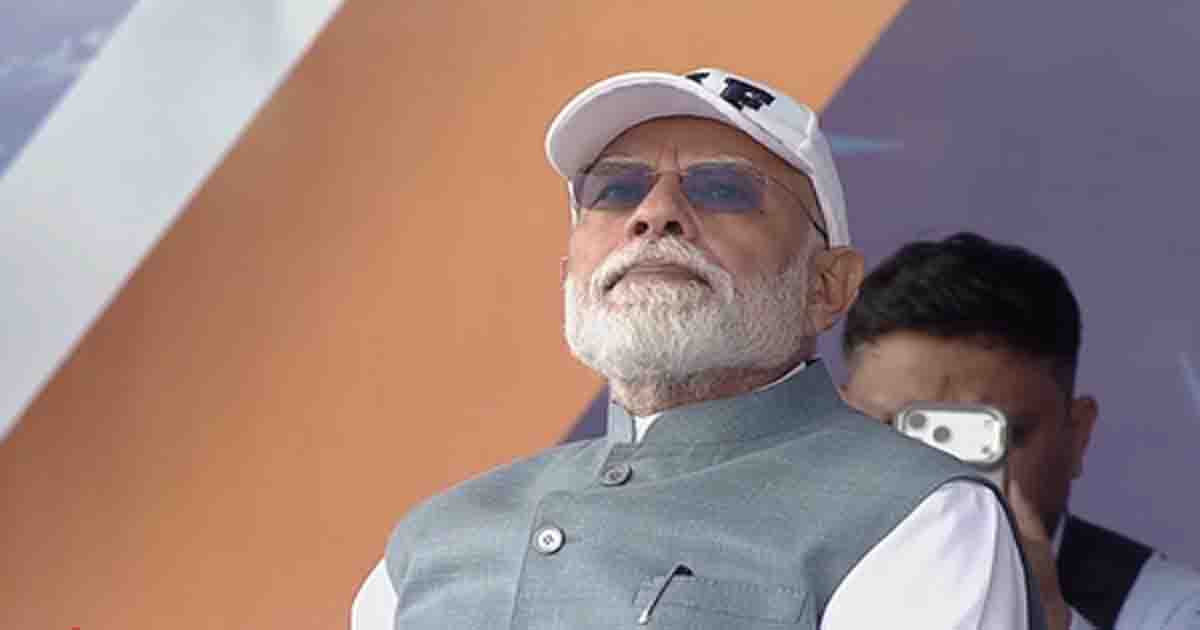
Varanasi witnessed the mega air show ‘Wings Over Ganges’ organised by the Indian Air Force (IAF) over the Ganga River here on Sunday to mark its 94th anniversary, with Prime Minister Narendra Modi among the audience at the Namo Ghat here.
The spectacular aerial display saw various aircraft showcase their capabilities.
Defence Minister Rajnath Singh, Uttar Pradesh Governor Anandiben Patel, and Chief Minister Yogi Adityanath were also present at the event.
The event gave spectators an opportunity to witness a wide variety of aircraft and aerial manoeuvres, showcasing the Indian Air Force’s capabilities across different operational roles, from fighter operations and helicopter formations to transport and coordinated flying.
The air show was organised to commemorate the 94th anniversary of the Indian Air Force, bringing together a range of aircraft for an aerial display highlighting the force’s operational capabilities, precision flying and coordination.
The event featured aircraft such as the Tejas, Light Combat Helicopter (LCH) Prachand, Su-30MKI and Rafale, along with several transport and other military aircraft.
The second phase of the programme began with three Mi-17 V-5 helicopters carrying the national flag and the Indian Air Force flag in an ‘Omkar’ formation.
The formation was led by Group Captain Anuj Gupta, marking the beginning of another series of aerial manoeuvres during the event.
The air show also featured the ‘Bhagirathi’ diamond formation, comprising LCH and Apache helicopters, followed by the Tridev formation.
The latter brought together the Indian Navy’s Kamov 31 helicopter and Advanced Light Helicopter (ALH) Mark 3 helicopters from the Indian Air Force and the Indian Army, showcasing coordination among the three services.
As part of the programme, flowers were showered from the sky, adding a ceremonial element to the display. This was followed by a performance by Rudra aircraft led by Wing Commander S. Bhargava, which carried out a spectacular flare display while soaring across the sky.
The Surya Kiran Aerobatic Team (SKAT) also performed a precision aerial display over the River Ganga, drawing attention with its coordinated manoeuvres and tight formations. The team operates nine red-and-white Hawk Mk 132 aircraft, which painted the skies with a series of signature formations and aerobatic routines during the performance.
The aerial display further showcased the Indian Air Force’s airlift and formation-flying capabilities, with aircraft including the Airborne Early Warning and Control (AEW&C) system, MiG-29, P-8I, IL-78, Mirage-2000 and Su-30MKI participating in different formations. The formations were named Freelocean, Nataraj, Mahadev, and Vishwanath, adding to the significance of the display held in Varanasi.
The ‘Neelkanth’ formation, featuring three Rafale aircraft flying in a ‘V’ formation, was led by Squadron Leader Kaustubh Nalawade. An indigenous Tejas fighter aircraft brought its aerial display over Varanasi to a close with a distinctive Spider-Man farewell, providing a memorable conclusion to the performance.
Large crowds gathered at Namo Ghat and nearby ghats to watch the Indian Air Force aircraft perform their aerial manoeuvres. Spectators also assembled at Bhosale Ghat and along the opposite bank of the Ganga, towards Ramnagar, to catch a glimpse of the spectacular display.
Extensive security arrangements were put in place at the ghats to ensure the smooth conduct of the event. Personnel from the Water Police, the Provincial Armed Constabulary (PAC), the National Disaster Response Force (NDRF), and the State Disaster Response Force (SDRF), along with divers, were deployed at Namo Ghat and surrounding areas.
Prime Minister Modi’s presence at the event generated considerable enthusiasm among residents, with large numbers of people gathering along the route from the police lines to Namo Ghat to welcome him. The atmosphere remained lively as people assembled at designated points to catch a glimpse of the Prime Minister.
BJP workers and local residents greeted PM Modi with rose petals, traditional musical performances and cultural programmes organised at various points along the route. People raised slogans of “Har Har Mahadev” and “Jai Shri Ram” as the Prime Minister stood on the footboard of his vehicle and acknowledged the crowds gathered to welcome him.
Earlier in the day, PM Modi inaugurated a new garment manufacturing unit of Arvind Ltd in the Mirzamurad area of Varanasi. Officials said the facility is aimed at promoting industrial development in the region and strengthening India’s textile and garment manufacturing sector.
During his visit to the facility, the Prime Minister also interacted with around 300 women. Officials said the new unit is expected to create employment opportunities, particularly for women, while giving a boost to local economic activity and supporting industrial growth in the region.
The initiative is also expected to connect garments manufactured in Varanasi with international customers by facilitating access to global markets, thereby providing fresh opportunities for the region’s textile and garment industry.
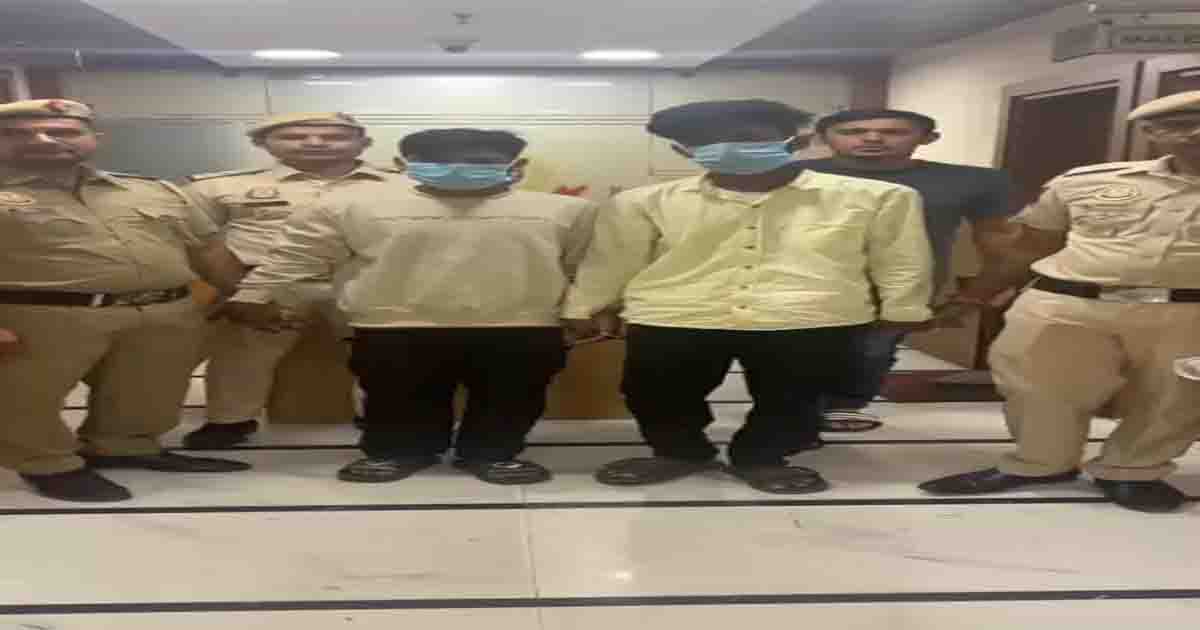
Delhi Police have busted an alleged cyber fraud syndicate operating from Jharkhand and arrested two men, including a B.Tech graduate, for allegedly cheating more than 50 people through fraudulent credit card transactions while impersonating as bank officials, officials said on Sunday.
The accused were identified as Aftab Ansari, age 24, and Abdul Majid, age 23. The Cyber Police Station of Shahdara district arrested the two in Jharkhand’s Dhanbad district after a four-day operation. They recovered three mobile phones allegedly containing WhatsApp chats and other digital evidence linked to fraud.
According to police, the investigation began after a complaint by Tarnjeet Singh, who alleged that unidentified persons posing as HDFC Bank officials contacted him over the phone and WhatsApp, claiming they could help him update his credit card Know Your Customer (KYC) details. The complainant subsequently discovered unauthorized transactions on his credit cards
The police traced a Samsung Galaxy S26 Ultra worth Rs 1,39,999, purchased using the disputed credit card transactions on JioMart, to a delivery address in the Jharia area of Dhanbad district.
After conducting surveillance and field verification for four days, the team devised a trap with the assistance of a delivery agent. Police arranged a decoy mobile phone delivery at a location allegedly used by the suspects. The two accused arrived to receive the purported delivery and were apprehended, officials said.
During the operation, two mobile phones were recovered from Ansari and one from Majid. The devices reportedly contained WhatsApp conversations and other digital material relevant to the investigation.
According to the police, the accused and their associates used social media platforms, including Facebook, to advertise assistance with credit card KYC updates to lure victims. Interested people were directed to online forms through which their personal and contact details were collected.
Mostly, unsuspecting individuals above 50 years of age were targeted by the fraudsters, who posed as bank officials and offered supposed assistance with KYC verification through video calls.
In these video calls, victims were asked to display their credit card details, including card numbers and CVV, on camera and share their mobile phone screens under the pretext of completing electronic verification. Police suspect that this enabled the accused to access the one-time passwords received on the victims’ devices and carry out unauthorised online transactions.
The fraudsters allegedly used compromised credit card details to purchase expensive mobile phones through online shopping platforms. The devices were delivered to locations in Jharkhand and West Bengal, away from the accused’s home district, to avoid detection.
Police said the phones were subsequently sold in local markets at comparatively lower prices. Since the devices were sealed and accompanied by a purchase invoice, they appeared legitimate.
Preliminary investigation suggests that almost 50 people were deceived like that. Police are still verifying the number of victims and the total number of people involved in the crime, presuming that it could be a whole network of other members.
Delhi police have advised the public not to share credit card details, CVVs, OTP or PINs over phone or video calls, or share mobile screens with unknown people.
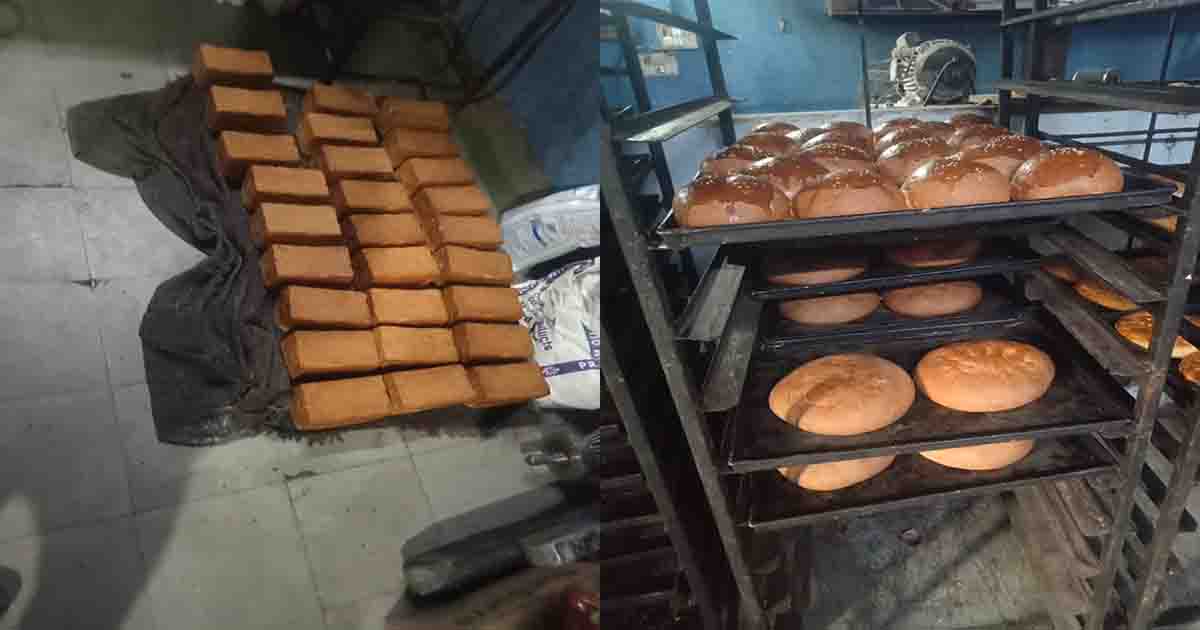
Telangana Standards Authority for Food and Essential Drugs (TG SAFE) found various violations during a special drive on sweet manufacturing and retail units across all districts of Telangana.
The Food Safety Officers of TG SAFE conducted a special drive and inspections at 53 sweet manufacturing and retail units.
The TG SAFE said in a statement on Sunday that during the inspection conducted on Friday (October 23), the officials noticed various violations in some establishments.
The officials found damaged flooring with littering of food waste; an unclean washing area; drains clogged with food waste; walls with dirt, dust and spillage of food waste. There was an absence of records, such as pest control records, health records of food handlers, etc., food handlers found without hairnets, gloves, etc., greasy exhausts and chimneys and improper storage practices, like food articles being stored on the floor, keeping of food and non-food articles together.
The officials collected 38 samples on suspicion of adulteration. An improvement notice will be issued to 20 establishments for rectification of the lapses identified during the inspection.
The establishments will be revisited to verify status of compliance with food safety norms and further action will be taken based on reinspection, and a show cause notice will be issued to one establishment for the violations reported during the inspections and further action will be initiated for imposing penalties, TG SAFE Commissioner said.
The special drive was conducted in districts such as Mancherial, Jangaon, Siddipet, Khammam, Narayanpet, Jogulamba Gadwal, Wanaparthy, Nalgonda, Suryapet, Peddapalli, Kamareddy, Nagarkurnool, Nirmal, Nizamabad, Hanumakonda, Medak, Warangal, Rajanna Sircilla, Jagtiyal, Mahabubnagar and Kothagudem.
Earlier, three sweet shops in Hyderabad lost licences after TG SAFE raids last week.
The officials found hygiene violations and other food safety lapses during inspections and directed three establishments to stop business operations immediately in the interest of public health.
Enforcement officials found cobwebs, greasy exhaust, improper storage practices and poor personal hygiene among food handlers, some of whom had overgrown nails. Officials also reported storage pests in food articles, cockroach infestation and fungal contamination in pickles.
The three establishments were among 21 khoa and sweet manufacturing and retail units inspected by 11 enforcement teams comprising food safety officers and police personnel in the core urban region.
Across the inspections, officials collected 21 samples on suspicion of adulteration and seized 1,035 kg of food articles worth Rs 7,75,850, officials said.

Drug dealer arrested in Mumbai with 1.5 kg of charas (cannabis resin)

Lawrence Bishnoi gang shooters had practised shooting in the Aarey Colony forest before opening fire at Tiger Shroff’s residence.

PM Modi witnesses IAF’s air show, inaugurates garment facility in Varanasi

Major action by Mumbai ANC: Drug peddlers arrested.

Delhi Police bust Jamtara-based cyber fraud syndicate, 2 held for credit card fraud

Rahul, Cong ecosystem want to force regime change: BJP after Neha Bora praises B’desh Gen-Z protest

Attack on democratic rights: INDIA Bloc leaders on detentions of anti-ECI protestors

BJP pays tribute to ex-President Abdul Kalam, recalls his enduring influence on generations of India’s youth

INDIA bloc begins protest march against ECI

Maha Congress stages agitation against Gyanesh Kumar
-

 Crime4 years ago
Class 10 student jumps to death in Jaipur
-

 Maharashtra2 years ago
Mumbai Local Train Update: Central Railway’s New Timetable Comes Into Effect; Check Full List Of Revised Timings & Stations
-

 Maharashtra2 years ago
Mumbai To Go Toll-Free Tonight! Maharashtra Govt Announces Complete Toll Waiver For Light Motor Vehicles At All 5 Entry Points Of City
-

 Maharashtra2 years ago
False photo of Imtiaz Jaleel’s rally, exposing the fooling conspiracy
-

 National News2 years ago
Ministry of Railways rolls out Special Drive 4.0 with focus on digitisation, cleanliness, inclusiveness and grievance redressal
-

 Maharashtra2 years ago
Maharashtra Elections 2024: Mumbai Metro & BEST Services Extended Till Midnight On Voting Day
-

 National News2 years ago
J&K: 4 Jawans Killed, 28 Injured After Bus Carrying BSF Personnel For Poll Duty Falls Into Gorge In Budgam; Terrifying Visuals Surface
-

 Crime2 years ago
Baba Siddique Murder: Mumbai Police Unable To Get Lawrence Bishnoi Custody Due To Home Ministry Order, Says Report