
Politics
PM Modi to share winning mantra with BJP national office-bearers on Friday

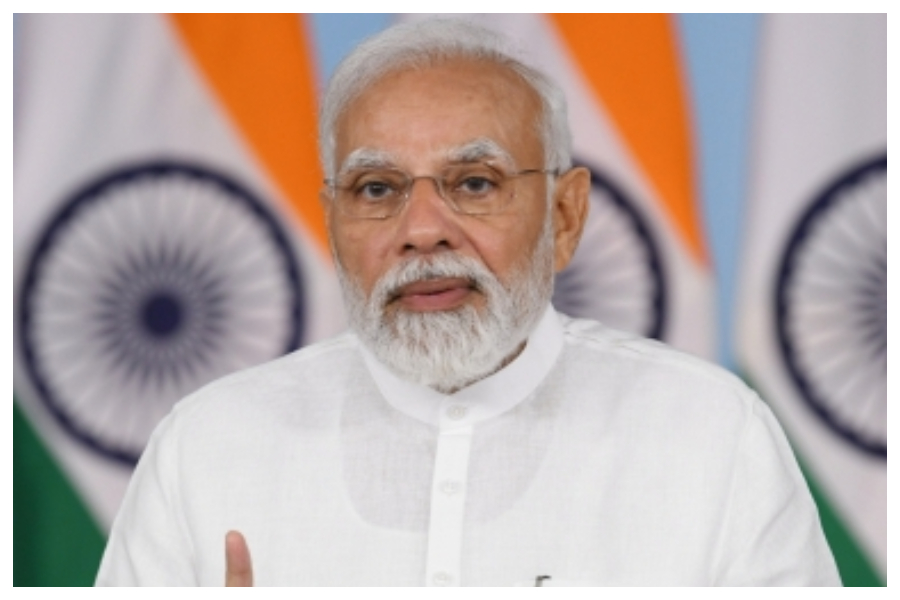
Prime Minister Narendra Modi will share a winning mantra tomorrow virtually with BJP national office-bearers who are gathered in Rajasthan to brainstorm on the forthcoming assembly and lok Sabha 2024 polls.
The three-day national office bearers meeting started in Jaipur on Thursday which will continue till May 21.
Bharatiya Janata Party flags can be seen across the city to welcome the saffron party national office bearers.
BJP National President JP Nadda is reaching Jaipur later on Thursday.
On Thursday evening, a meeting of the national general secretaries will be held at Hotel Leela in Kukas. It is being reported that in this meeting, different tasks will be given to the party office bearers regarding the upcoming assembly elections.
Earlier, BJP National General Secretary Tarun Chugh, who reached Jaipur on Wednesday evening, once again said that assembly elections in Rajasthan will also be contested on the PM’s face, spreading awareness about the schemes launched by the Central government.
In Rajasthan, leaders have started promoting the schemes of the Central government with the face of PM Modi. This is the strategy for winning the Lok Sabha elections 2024, said party workers.
Before the Lok Sabha elections, assembly elections are to be held in 12 states including Rajasthan.
As per the schedule, JP Nadda will leave for Hotel Leela directly from the airport. 75 gates have been put up to welcome him. Nadda will chair a meeting of national general secretaries at 7 p.m. On May 20, PM Narendra Modi will deliver a virtual speech at Hotel Leela at 10 a.m. Modi’s speech will be followed by meetings in four sessions till 6 p.m. Nadda will deliver his speech in the concluding session.
On May 21, Nadda will hold a meeting of organization secretaries of all the states. There will be a special focus on Rajasthan.


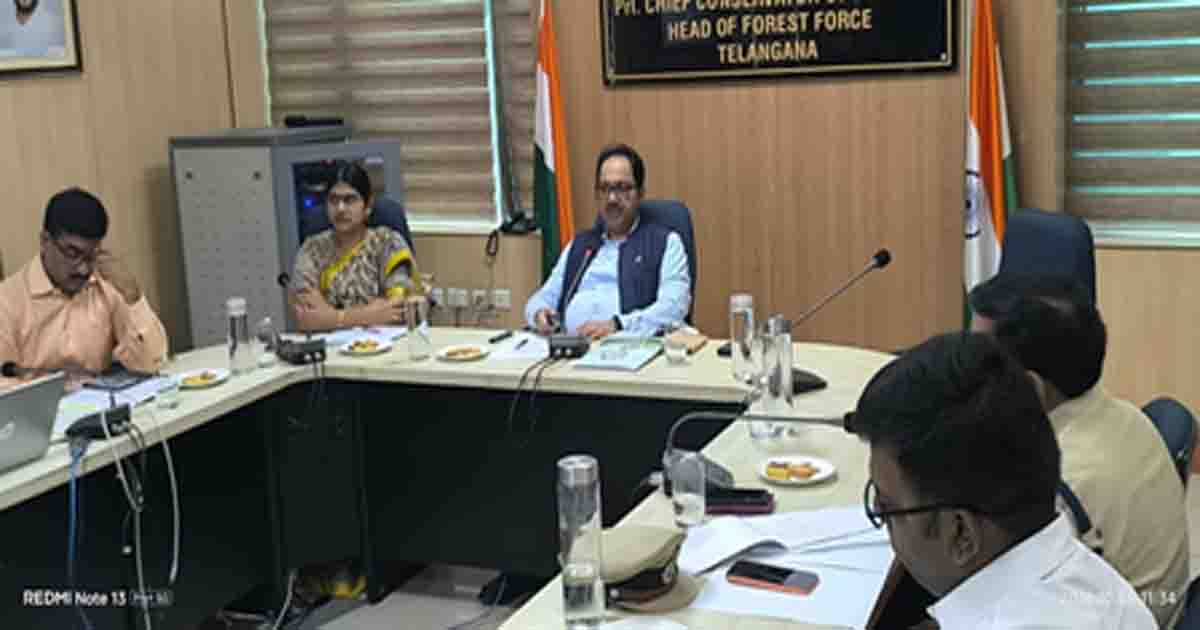
Hyderabad, Oct 9: Licences of shops selling prohibited synthetic manja must be cancelled, Telangana’s Head of Forest Force, Vinay Kumar, on Friday directed officials.
He asked officials to take stringent measures to curb the sale and use of synthetic manja and protect Indian rollers and other wildlife.
He was speaking at a review meeting with senior officials of various government departments held at Aranya Bhavan here on Friday to discuss these issues.
As synthetic manja is being supplied from other States, particularly Rajasthan and Gujarat, Vinay Kumar instructed officials to intensify surveillance on supplies originating from these States.
He directed Greater Hyderabad Municipal Corporation (GHMC) officials to issue instructions to shop owners not to sell synthetic manja and to take stringent action against those violating the rules.
According to an official release, the Head of Forest Force instructed the police to establish special surveillance to prevent the sale of Chinese manja through online platforms.
He emphasised the need to identify sales of synthetic manja on e-commerce websites and coordinate with the concerned organisations to curb such sales.
He also instructed officials to put up posters at all public places, including bus stations, railway stations, markets and other crowded locations, to create public awareness about the ban on synthetic manja.
Vinay Kumar stated that the School Education Department should create awareness among students and their parents about the dangers posed by the use of Chinese manja to human beings and birds.
He further instructed officials to advise bus drivers and conductors to inform the Forest Department helpline if they identify the illegal transportation of synthetic manja or the transportation of Indian rollers and other wildlife on buses.
During the meeting, it was brought to notice that voluntary organisations had lodged complaints regarding the use of Chinese manja at the Kite Festival organised by the Tourism Department.
The Head of Forest Force instructed officials to ensure that synthetic manja was not permitted under any circumstances at this year’s festival and that any synthetic manja identified should be confiscated immediately.
Vinay Kumar directed officials to take measures to prevent Indian rollers from being kept in cages for display at Durga pandals. He instructed Endowments Department officials to ensure that these directions were implemented at all temples. He emphasised that all departments should work in coordination to protect wildlife.
CCFs Priyanka Varghese and Kshitija, CF Prasad, and senior officials from the Police, GHMC, HMDA, School Education, Cinematography, Information and Public Relations, Electricity, Pollution Control Board and Tourism departments, along with officials from other departments, participated in the meeting.
National News
Bihar police driver recruitment aspirants protest in Patna, seek filling of vacant women’s quota posts

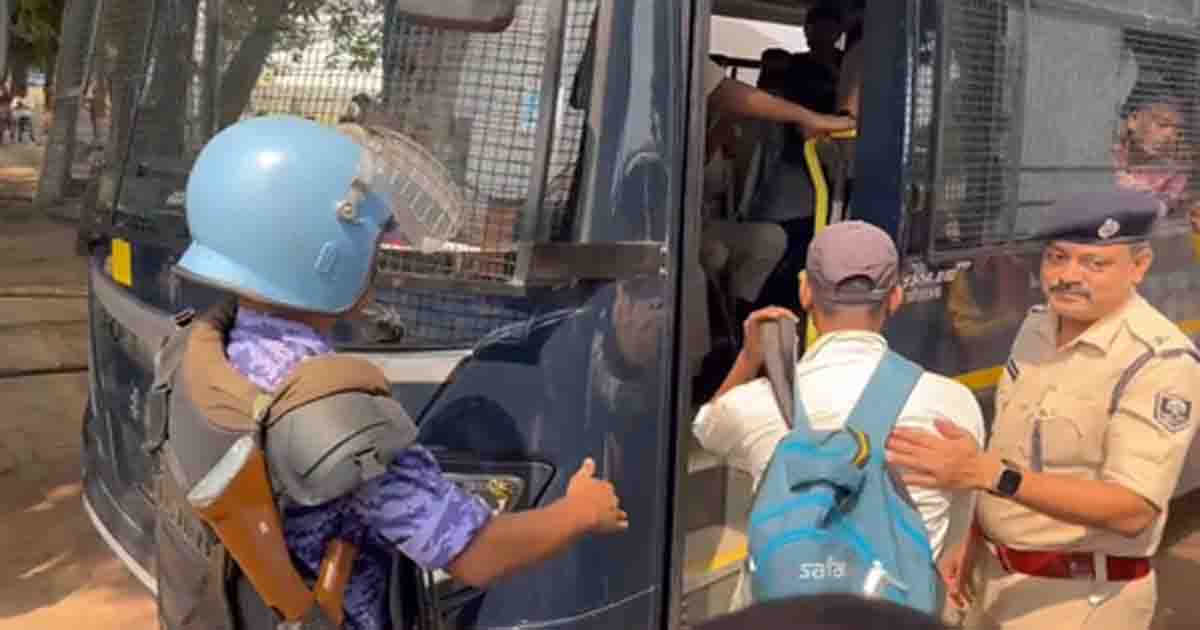
Patna, Oct 9: Candidates of the Bihar Police driver recruitment drive intensified their protest in Patna on Friday, demanding that more than 1,200 posts earmarked for women, which they claim have remained vacant, be filled with eligible male candidates from the respective categories.
The candidates had planned to march towards the Chief Minister’s residence to press their demands. However, police personnel intervened before the proposed march could begin.
Barricades were erected at Gate No. 10, and a large number of security personnel were deployed inside Gandhi Maidan and the surrounding areas.
The protesters alleged they had obtained permission to hold a peaceful sit-in, organise a Kalash Yatra and take out a march, but the administration prevented them from proceeding with their planned programme.
According to the candidates, the protest was scheduled to begin at 11 a.m. with a sit-in at Gandhi Maidan, followed by a Kalash Yatra and a march from Gate No. 10 to Dakbungalow Crossing.
The candidates said more than 1,200 posts reserved for women in the driver recruitment process had remained vacant. They urged the authorities to consider filling these vacancies with eligible male candidates from the respective categories in accordance with the applicable recruitment rules.
They say that this would prevent the posts from remaining unfilled and provide employment opportunities to other qualified applicants.
Radhe Shyam Kumar, one of the protesting candidates, said they had been staging a sit-in at Gardanibagh for several days. He described the difficulties of continuing the agitation, adding that his family had questioned why he was spending time protesting instead of studying.
He maintained that candidates needed to raise their voices to secure their rights. He reiterated the demand that posts remaining vacant after the allocation of seats to female candidates should be considered eligible for male applicants.
He also cited the recruitment process for Sub-Inspectors, arguing that a similar provision should be considered for the driver recruitment drive.
Despite the police barricades and the deployment of security personnel, candidates continued to gather near Gate No. 10 of Gandhi Maidan. The protesters maintained that they intended to put forward their demands peacefully.
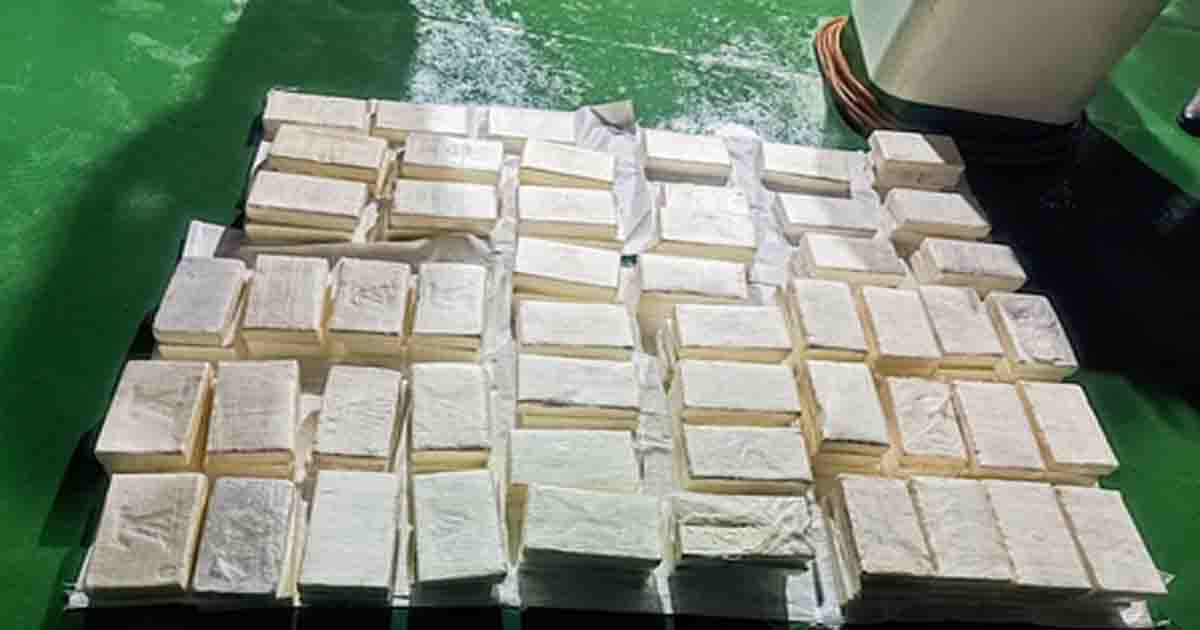
New Delhi, Oct 9: Pakistan-based narcotic cartels are now encouraging their cronies in India to ramp up homegrown production. With agencies such as the Narcotics Control Bureau (NCB) carrying out several drug busts, the cartels from Pakistan have decided to focus more on home-made substances to fuel their trade.
Before the Taliban took control of Afghanistan, poppy fields were in abundance. Opium and heroin were coming out of Afghanistan in large quantities, and Pakistan-based cartels would rely heavily on this product.
The Taliban have taken strict measures and ensured that Afghanistan shall no longer have drug-producing fields. Instead, in the fields of Afghanistan, one gets to see potatoes, grain, and other vegetables being grown.
This decision has resulted in a drop of 95 per cent in the production of drugs. Before the Taliban took over, drugs were being produced or grown on 232,000 hectares.
Following the ban in 2022, Pakistan- and Myanmar-based drug cartels began moving towards synthetic drugs. Drugs such as methamphetamine or meth are in very high demand both in the Indian and international markets.
Unlike opium and heroin, meth can be produced all through the year. This means that the production levels would be ten times higher when compared to heroin or opium. Further, this also ensures that synthetic drugs are cheaper when compared to the field-produced narcotics.
This also drives consumption, as the affordability of such narcotics makes them accessible to a wider section of society.
An Intelligence Bureau official said that drug cartels which had set up massive synthetic drug manufacturing units in Myanmar and Pakistan are now insisting that their recruits in India do the same at home.
“This has been done due to the massive drug busts that have taken place in India in recent months. The new tactic by the narcotic cartels is similar to the one that Pakistan tries to adopt when it comes to terror-related activities,” said the IB official.
There is a major push being made for homegrown terror modules so that Pakistan can have the deniability factor each time a bust takes place, the official added.
Another official said that the creation of multiple homegrown synthetic drug producing units also eliminates the risk of the contraband being intercepted either on Indian or international waters.
The Indian agencies have literally choked every route that is being used by cartels run by the likes of Dawood Ibrahim and Haji Salim.
The Iran war has added to their miseries as the usual routes that would be used to smuggle drugs into India have largely been disrupted.
In 2024, the NCB and Delhi Police busted a clandestine meth lab in Greater Noida, adjacent to the National Capital. During the operation, the NCB seized 95 kg of meth.
Officials say that the cartels would push and also facilitate the setting up of such homegrown drug-producing units in many more parts of the country.
“There is a lot of focus being given to both Tamil Nadu and Kerala. The recent drug busts have affected the southern markets and also the supplies into Sri Lanka and eventually Thailand,” officials say.
The intelligence agencies have learnt that Haji Salim, who controls this route, has been dialling his contacts in Sri Lanka, Kerala and the Maldives. He is also in touch with some of his associates who are behind bars now, the agencies have learnt.
Haji Salim has been instructing them to make all possible arrangements to set up clandestine meth-producing labs in large numbers.
These recent drug busts, which directly affected the southern markets and the other routes leading from there, have put Haji Salim under immense pressure, especially from his international dealers. He feels that ramping up homegrown production will make up for the loss.
Moreover, transporting homegrown drugs is easier than smuggling them in from Pakistan and then through the Indian waters. This, he hopes, would solve the problem, and in case of a bust, Pakistan can always deny any involvement, an official said.

Telangana to cancel licences of shops selling synthetic manja

Bihar police driver recruitment aspirants protest in Patna, seek filling of vacant women’s quota posts

Pak drug cartels turn to India-made meth labs in Kerala, TN as busts choke smuggling routes

SC orders four-week deadline to link accident, vehicle, insurance databases

When Katrina Kaif revealed her biggest learnings from her relationships

Gift to President Putin part of PM Modi bid to globally display India’s heritage

PM Modi’s warm camaraderie with Putin, Xi on full display at BRICS Summit

INDIA bloc begins protest march against ECI

Complaint against Netflix & Mukesh Chhabra for inappropriate language on ‘India’s Got Latent 2’

Maha Congress stages agitation against Gyanesh Kumar
-

 Crime4 years ago
Class 10 student jumps to death in Jaipur
-

 Maharashtra2 years ago
Mumbai Local Train Update: Central Railway’s New Timetable Comes Into Effect; Check Full List Of Revised Timings & Stations
-

 Maharashtra2 years ago
Mumbai To Go Toll-Free Tonight! Maharashtra Govt Announces Complete Toll Waiver For Light Motor Vehicles At All 5 Entry Points Of City
-

 Maharashtra2 years ago
False photo of Imtiaz Jaleel’s rally, exposing the fooling conspiracy
-

 National News2 years ago
Ministry of Railways rolls out Special Drive 4.0 with focus on digitisation, cleanliness, inclusiveness and grievance redressal
-

 Maharashtra2 years ago
Maharashtra Elections 2024: Mumbai Metro & BEST Services Extended Till Midnight On Voting Day
-

 National News2 years ago
J&K: 4 Jawans Killed, 28 Injured After Bus Carrying BSF Personnel For Poll Duty Falls Into Gorge In Budgam; Terrifying Visuals Surface
-

 Crime2 years ago
Baba Siddique Murder: Mumbai Police Unable To Get Lawrence Bishnoi Custody Due To Home Ministry Order, Says Report