
National News
Odisha Minister writes to Centre for sanction of PMAY-G houses

Odisha’s Panchayati Raj and Drinking Water Minister Pratap Jena on Monday wrote a letter to Union Minister Giriraj Singh for sanction of houses under Pradhan Mantri Awas Yojana-Gramin (PMAY-G).
Referring to the previous correspondences made on this issue, Jena urged Singh to sanction 1.84 lakh special PMAY-G houses as promised to Odisha in the aftermath of cyclonic storm ‘Fani’-hit Odisha.
Notably, the Prime Minister had reportedly assured the Odisha government to allot PMAY-G (special) houses to the Fani affected families during his visit in May 2019.
He also demanded opening of the Awaas+ window for some time to incorporate names of eligible left out families and synchronise the data of 6.65 lakh households in the State-run rural housing portal with the Awaas+.
While the genuine demand of Odisha has not been paid heed to by the Ministry of Rural Development so far, synchronisation of data from the Karnataka government MIS into Awaas+ was allowed on January 13, 2022, Jena pointed out.
“Ignoring the repeated requests from the state will not support the cause of Odisha and it will further deprive lakhs of tribal beneficiaries living in the scheduled areas of the state and deserving poor people belonging to KBK region and western parts of the State,” he said.
The Union Minister was requested to rectify this injustice being meted out to the State of Odisha and its people.
In December last year, the Chief Minister had written a letter to Prime Minister Narendra Modi demanding sanction of the rural housing units under PMAY-G.


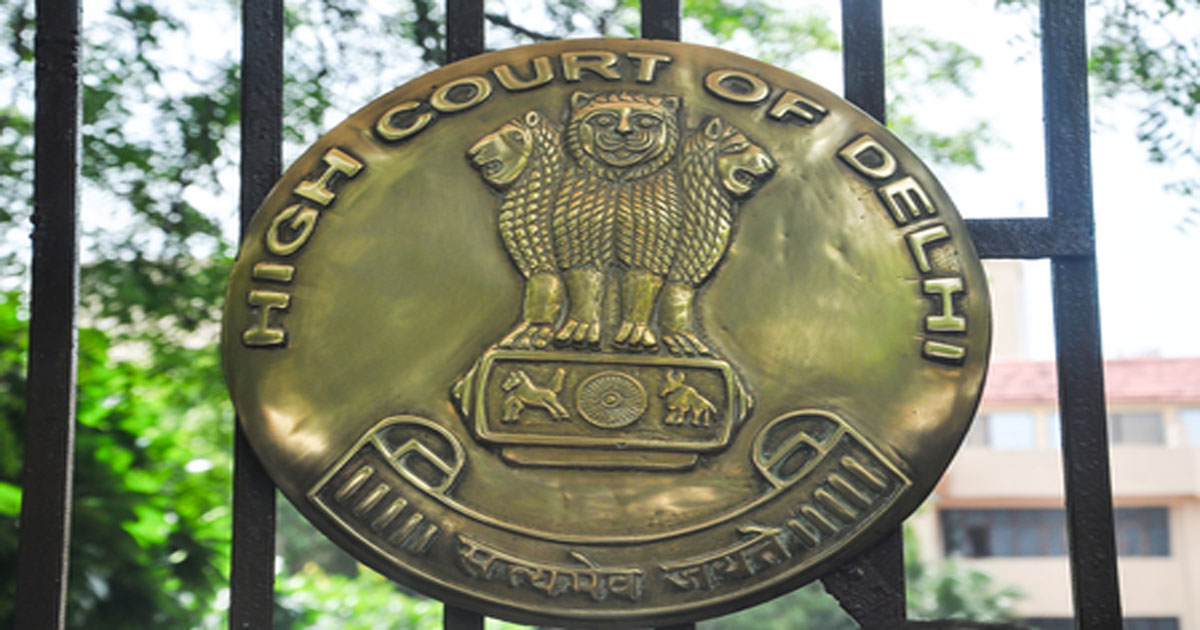
New Delhi, May 19: The Delhi High Court has sentenced YouTuber Gulshan Pahuja, who runs the channel “Fight 4 Judicial Reforms”, to six months’ simple imprisonment in two criminal contempt cases for making derogatory and scandalous remarks against the judiciary and judicial officers.
A division bench of Justices Navin Chawla and Ravinder Dudeja also imposed a fine of Rs 2,000 in each matter while observing that the contemnor had shown no remorse and had, in fact, compounded the contempt through further scandalous submissions made during the hearing.
However, the Delhi High Court suspended the sentence for 60 days to enable Pahuja to challenge its judgment holding him guilty of criminal contempt before the Supreme Court.
The Justice Chawla-led Bench said that despite being given an opportunity to make submissions on punishment, the contemnor questioned the conviction itself and, during oral arguments, made further scandalous remarks against the judicial system.
“He, in fact, compounds his contempt by making further scandalous submissions before this Court and thus, evidently, he is neither repentant nor deserves any mercy,” the order said.
Rejecting his plea to recall the conviction judgment, the Delhi High Court said it could not sit in review of its earlier order and that the contemnor was free to challenge the same in accordance with law.
“As far as his submissions on our judgment dated 21.04.2026 are concerned, we cannot sit in review of the said judgment and the contemnor has full right and had an opportunity to challenge the same in accordance with law,” the bench said.
It further recorded that during oral arguments, Pahuja made remarks such as “adaalaton ki manmarzi badhti jaa rahi hai aur main koi nyay ki umeed nahi kar raha (the wilfulness of the courts is constantly increasing and I am not hopeful of any justice)” and described the functioning of courts as “taanashahi (dictatorship)”.
Advocate Harsh Prabhaka, amicus curiae appointed in the matter, submitted that Pahuja had shown “no course correction or remorse” and continued uploading videos targeting judicial officers despite earlier directions restraining him from doing so.
Considering the nature of the conduct, the Delhi High Court observed that leniency in such circumstances could embolden similar conduct in the future and that the case warranted maximum punishment.
“We also find that by not imposing adequate punishment on him, we may encourage him to repeat these acts in future and to embolden him in doing the same. [W]e are of the opinion that these cases call for the imposition of the maximum punishment,” the bench observed.
Accordingly, the Delhi High Court sentenced Pahuja to six months’ simple imprisonment along with a fine of Rs 2,000 in each case, directing that the sentences would run concurrently.
It further ordered that in case of default in payment of the fine, he would undergo an additional one month’s simple imprisonment.
However, taking note of the contemnor’s submission that he intends to challenge the judgment before the Supreme Court, the bench suspended the sentence for a period of 60 days.
“In case an order suspending the sentence… is not passed by the Supreme Court, the contemnor shall on his own surrender before the Registrar General of this Court forthwith on expiry of the above-mentioned period,” the order said.
The contempt proceedings arose from videos and online content uploaded by Pahuja on his YouTube channel, in which he made sweeping and unverified allegations against judicial officers and the judiciary. In its earlier judgment, the Delhi High Court had held that such remarks were intended to scandalise the institution and lower public confidence in the justice system, and were not protected under the right to free speech.
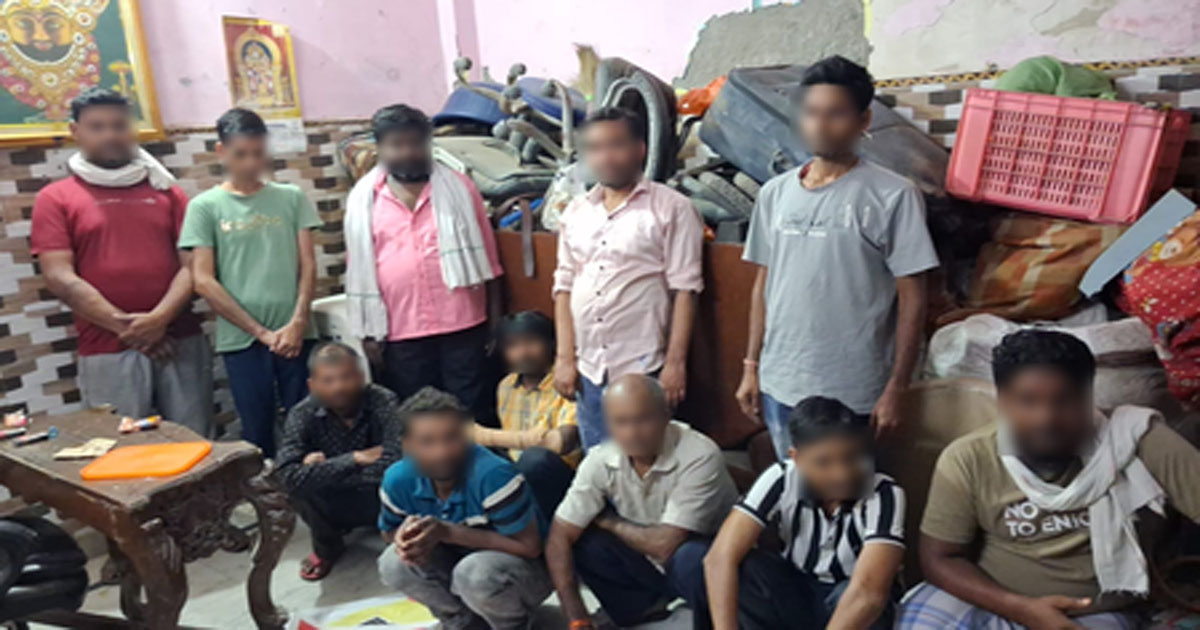
New Delhi, May 19: Continuing its crackdown on illegal activities, the Dwarka District Police on Tuesday busted a gambling racket operating in JJ Colony in Sector-3, Bindapur, and arrested 14 persons allegedly involved in the operation, officials said.
Police recovered stake money amounting to Rs 6,810 along with gambling-related material, including writing pads, charts, satta slips, carbon papers, pens, mobile phones, and electronic devices used for maintaining gambling transaction records.
According to police officials, the operation was carried out as part of the district police’s ongoing campaign to curb organised crimes such as gambling and bootlegging and to maintain a safe and crime-free environment for residents.
To strengthen action against illegal activities, the Special Staff of Dwarka District had intensified intelligence gathering, activated local informers, and increased surveillance in vulnerable areas. A dedicated team was constituted under the leadership of Inspector Kamlesh Kumar, in charge of Special Staff, Dwarka District, under the close supervision of ACP Operations Subhash Malik.
The team comprised SI Dinesh Kumar, SI Topesh, ASI Vijay Singh, HC Jagat Singh, HC Jairam, HC Naresh, HC Rajesh, and Constable Manjeet, who were tasked with collecting intelligence and identifying hotspots where illegal activities were taking place.
On May 7, at around 10 p.m., the team received specific information regarding a gambling racket operating in the Sector-3 JJ Colony area of Bindapur. Acting swiftly on the information, the police team laid a strategic trap near the identified location.
At around 10:30 p.m., the police spotted several individuals gathered in a narrow lane and allegedly engaged in gambling activities. The team immediately conducted a raid and apprehended 14 persons at the spot.
During the search operation, police recovered stake money worth Rs 6,810, along with charts, satta slips, writing pads, carbon papers, pens, and registers allegedly used for maintaining gambling records and transactions. The local beat staff also reached the spot during the operation.
Following the recovery, a case vide FIR No. 255/2026 under Sections 12/09/55 of the Gambling Act was registered at Police Station Bindapur. All the accused were arrested after sustained interrogation.
The arrested accused have been identified as Sandeep (26), Ajay (25), Sartaj (42), Bappi Haldhar (60), Suresh (36), Neeraj Kumar (44), Abul Hasan (40), Chandan Sahni (35), Sudama (27), Maniyappan (42), Ashok (46), Diwari Sahni (37), Mathwef (41), and Jony (35), all residents of different areas of Dwarka, Uttam Nagar, Matiala, and nearby localities in Delhi.
Police said the recovery made during the raid included cash worth Rs 6,810, two charts, eight pads, five carbon papers, three pens, and around 350 satta slips allegedly used in gambling activities.
Officials stated that further investigation is underway to ascertain whether the accused were linked to a larger gambling network operating in the area.
The operation highlights the proactive policing efforts of Dwarka District Police in cracking down on unlawful activities and maintaining law and order in the national capital.
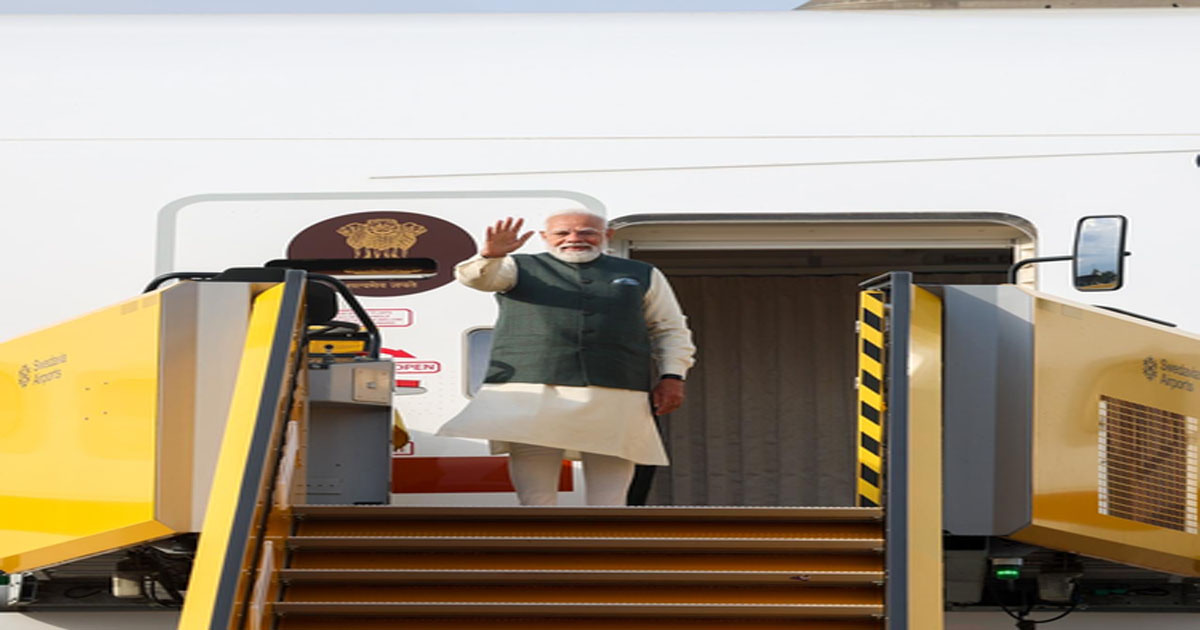
Gothenburg, May 18: Prime Minister Narendra Modi departed from Gothenburg on Monday after successfully concluding his visit to Sweden, during which he elevated the bilateral ties between the two countries to a Strategic Partnership. He is now en route to Norway for the fourth leg of his five-nation tour.
In a post on X, the Ministry of External Affairs (MEA) said, “A visit advancing innovation, sustainability and strategic cooperation. PM Narendra Modi departed from Gothenburg for Oslo after a productive visit marked by the elevation of India-Sweden ties to a Strategic Partnership. The visit opened a new chapter in India-Sweden ties.”
Prime Minister Modi arrived in Sweden on Sunday for a two-day official visit aimed at strengthening bilateral ties between the two nations.
Earlier in the day, Prime Minister Modi thanked the people and the Government of Sweden for the warmth and friendship.
The Sweden visit was marked by several important outcomes that will add new momentum to relations.
“From elevating our ties to a Strategic Partnership, launching the Joint Innovation Partnership 2.0 and the India-Sweden Technology and Artificial Intelligence Corridor, to setting an ambitious goal of doubling bilateral trade in the next five years, the discussions were highly productive,” PM Modi said in a post on X.
During his visit, PM Modi also addressed the European Round Table for Industry (ERT) in Gothenburg.
The Prime Minister said his speech focused on the growing convergence between India and Europe, the opportunities emerging from the India-European Union Free Trade Agreement (FTA), and India’s reform-driven economic growth journey.
He also held wide-ranging conversations with the business leaders in Sweden on how economic linkages between India and Sweden can be enhanced, particularly in futuristic technologies, R&D, AI, security and healthcare.
During the visit, PM Modi was also conferred with the ‘Royal Order of the Polar Star, Degree Commander Grand Cross’ in recognition of his exceptional contribution to India-Sweden relations and his leadership in deepening cooperation between the two countries.
Prime Minister Modi and his Swedish counterpart, Ulf Kristersson, also exchanged special commemorative gifts honouring the enduring legacy of Rabindranath Tagore, highlighting the deep cultural ties between India and Sweden.
PM Modi is now heading to Oslo, where he will hold discussions focusing on strengthening the bilateral cooperation.
He will participate in the 3rd India-Nordic Summit and hold bilateral engagements with Norwegian leaders.
The visit marks PM Modi’s first trip to Norway and the first visit by an Indian Prime Minister to the country in 43 years. During the visit, he is scheduled to call on King Harald V and Queen Sonja, besides holding bilateral talks with Norwegian Prime Minister Jonas Gahr Store.
The Prime Minister will also address the India-Norway Business and Research Summit along with the Norwegian Prime Minister.

A comprehensive action plan has been submitted to the central government for immediate and effective drainage of rainwater accumulated in low-lying areas : Amit Satyam

Delhi HC sentences YouTuber to six months jail for criminal contempt

‘Court Orders Were Clear & Specific’: Western Railway Defends Bandra Garib Nagar Demolition Drive

Delhi Police bust gambling racket in Dwarka, 14 arrested

Mumbai Encroachment Crackdown: Massive Demolition Drive Begins In Bandra Garib Nagar Days After Bombay High Court Order

Maharashtra Shock: 22-Year-Old Arrested For Exploiting & Blackmailing Multiple Women In Kolhapur; Love Jihad Angle Suspected

Google to invest up to $40 billion in Anthropic amid global AI race

27 Years After Gangster Sadiq Kalia’s Encounter By Daya Nayak, His Nephew Arrested For Alleged Revenge Killing In Mumbai

Chembur Police Arrest Four For Trying To Sell Elephant Tusks Worth ₹3.5 Crore; Forest Department Confirms Seizure

India, New Zealand set to sign FTA for improved market access on April 27
-

 Crime4 years ago
Class 10 student jumps to death in Jaipur
-

 Maharashtra2 years ago
Mumbai Local Train Update: Central Railway’s New Timetable Comes Into Effect; Check Full List Of Revised Timings & Stations
-

 Maharashtra2 years ago
Mumbai To Go Toll-Free Tonight! Maharashtra Govt Announces Complete Toll Waiver For Light Motor Vehicles At All 5 Entry Points Of City
-

 Maharashtra2 years ago
False photo of Imtiaz Jaleel’s rally, exposing the fooling conspiracy
-

 National News2 years ago
Ministry of Railways rolls out Special Drive 4.0 with focus on digitisation, cleanliness, inclusiveness and grievance redressal
-

 Maharashtra2 years ago
Maharashtra Elections 2024: Mumbai Metro & BEST Services Extended Till Midnight On Voting Day
-

 National News2 years ago
J&K: 4 Jawans Killed, 28 Injured After Bus Carrying BSF Personnel For Poll Duty Falls Into Gorge In Budgam; Terrifying Visuals Surface
-

 Crime2 years ago
Baba Siddique Murder: Mumbai Police Unable To Get Lawrence Bishnoi Custody Due To Home Ministry Order, Says Report